Kirjojen hintavertailu. Mukana 11 342 296 kirjaa ja 12 kauppaa.

Kirjahaku

Etsi kirjoja tekijän nimen, kirjan nimen tai ISBN:n perusteella.

1000 tulosta hakusanalla Maral Atmaca

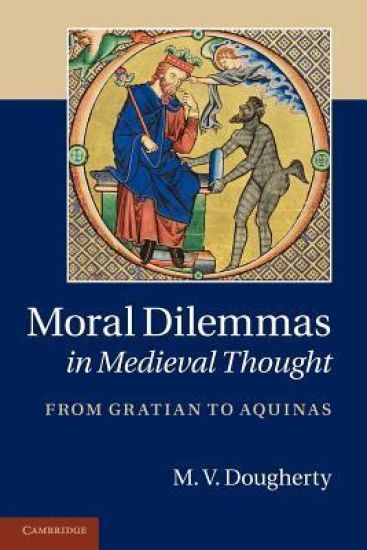
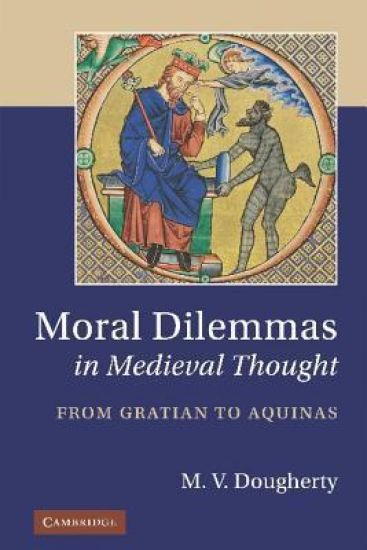
Moral Dilemmas in Medieval Thought

Moral Dilemmas in Medieval Thought

M. V. Dougherty

Cambridge University Press
2011
sidottu
The history of moral dilemma theory often ignores the medieval period, overlooking the sophisticated theorizing by several thinkers who debated the existence of moral dilemmas from 1150 to 1450. In this book Michael V. Dougherty offers a rich and fascinating overview of the debates which were pursued by medieval philosophers, theologians and canon lawyers, illustrating his discussion with a diverse range of examples of the moral dilemmas which they considered. He shows that much of what seems particular to twentieth-century moral theory was well-known long ago - especially the view of some medieval thinkers that some forms of wrongdoing are inescapable, and their emphasis on the principle 'choose the lesser of two evils'. His book will be valuable not only to advanced students and specialists of medieval thought, but also to those interested in the history of ethics.
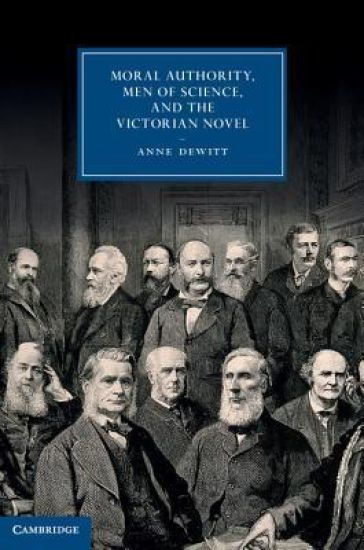
Moral Authority, Men of Science, and the Victorian Novel

Moral Authority, Men of Science, and the Victorian Novel

Anne DeWitt

Cambridge University Press
2013
sidottu
Nineteenth-century men of science aligned scientific practice with moral excellence as part of an endeavor to secure cultural authority for their discipline. Anne DeWitt examines how novelists from Elizabeth Gaskell to H. G. Wells responded to this alignment. Revising the widespread assumption that Victorian science and literature were part of one culture, she argues that the professionalization of science prompted novelists to deny that science offered widely accessible moral benefits. Instead, they represented the narrow aspirations of the professional as morally detrimental while they asserted that moral concerns were the novel's own domain of professional expertise. This book draws on works of natural theology, popular lectures, and debates from the pages of periodicals to delineate changes in the status of science and to show how both familiar and neglected works of Victorian fiction sought to redefine the relationship between science and the novel.
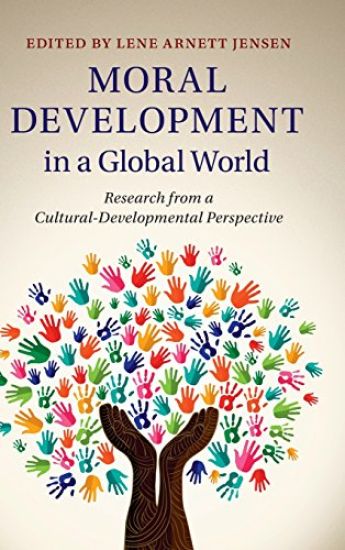
Moral Development in a Global World

Moral Development in a Global World

Cambridge University Press
2015
sidottu
Questions addressing people's moral lives, similarities and differences in the moral concepts of cultural groups, and how these concepts emerge in the course of development are of perennial interest. In a globalizing world, addressing what is universal and what is culturally distinctive about moral development is pressing. More than ever, well-substantiated knowledge of diverse peoples' moral compasses is needed. This book presents the cultural-developmental theory of moral psychology, findings from numerous countries, and four instruments for conducting cultural-developmental research. The central thesis is that humans are born with a shared moral heritage and that, as we develop from childhood into adulthood, we branch off in diverse directions shaped by culture - resulting in novelty and contention. An international group of eminent and cutting-edge scholars from anthropology, psychology, and linguistics addresses this timely topic and explores how gender, social class, and 'culture wars' between liberals and conservatives play into moral development across cultures.
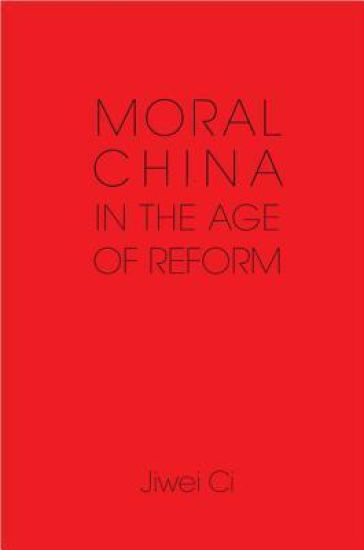
Moral China in the Age of Reform

Moral China in the Age of Reform

Jiwei Ci

Cambridge University Press
2014
sidottu
Three decades of dizzying change in China's economy and society have left a tangible record of successes and failures. Less readily accessible but of no less consequence is the story, as illuminated in this book, of what China's reform has done to its people as moral and spiritual beings. Jiwei Ci examines the moral crisis in post-Mao China as a mirror of deep contradictions in the new self as well as in society. He seeks to show that lack of freedom, understood as the moral and political conditions for subjectivity under modern conditions of life, lies at the root of these contradictions, just as enhanced freedom offers the only appropriate escape from them. Rather than a ready-made answer, however, freedom is treated throughout as a pressing question in China's search for a better moral and political culture.
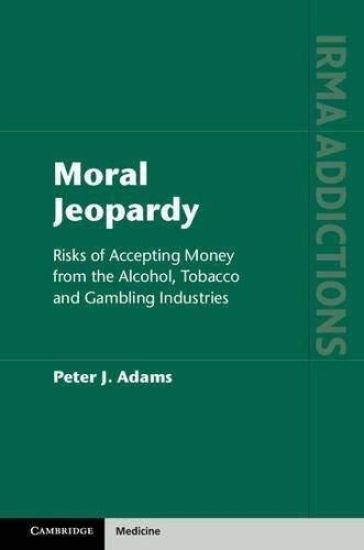
Moral Jeopardy

Moral Jeopardy

Peter J. Adams

Cambridge University Press
2016
sidottu
Tobacco, alcohol and gambling corporations have been highly effective in stalling, diverting and blocking public health measures. This book provides an original and engaging exposé of the ethical issues faced by people and organizations when they accept industry money in ways that facilitate corporate influence with the public and with policy makers. It starts with a detailed examination of the risks of accepting such profits and what might be done to reduce them, then moves on to introduce the concept of a continuum of 'moral jeopardy' which shifts the emphasis from accept/not accept binaries to a focus on the extent to which people are willing to accept funding. This shift encourages people to think and speak more about the risks and to develop clearer positions for themselves. The content will be helpful to those working in government agencies, addiction services, community organizations or anyone interested in reducing the harms of addictive consumption.
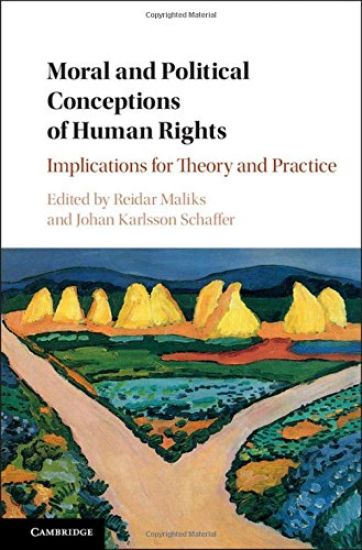
Moral and Political Conceptions of Human Rights
In recent years, political philosophers have debated whether human rights are a special class of moral rights we all possess simply by virtue of our common humanity and which are universal in time and space, or whether they are essentially modern political constructs defined by the role they play in an international legal-political practice that regulates the relationship between the governments of sovereign states and their citizens. This edited volume sets out to further this debate and move it ahead by rethinking some of its fundamental premises and applying it to new and challenging domains, such as socio-economic rights, indigenous rights, the rights of immigrants and the human rights responsibilities of corporations. Beyond the philosophy of human rights, the book has a broader relevance by contributing to key themes in the methodology of political philosophy and addressing urgent issues in contemporary global policy making.
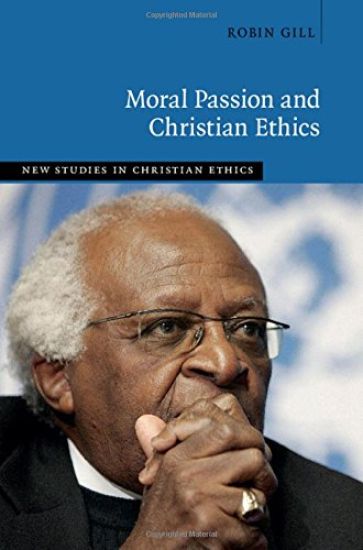
Moral Passion and Christian Ethics

Moral Passion and Christian Ethics

Robin Gill

Cambridge University Press
2017
sidottu
In this book, Robin Gill argues that moral passion and rational ethical deliberation are not enemies, and that moral passion often lurks behind many apparently rational ethical commitments. He also contends that though moral passion is a key component of truly selfless moral action, without rational ethical deliberation it can also be extremely dangerous. Gill maintains that a reanalysis of moral passion is overdue. He inspects the gap between the 'purely rational' accounts of ethics provided by some moral philosophers and the normative positions that they espouse and/or the moral actions that they pursue. He also contends that Christian ethicists have not been adept at identifying their own implicit moral passion or at explaining why it is that doctrinal positions generate passionately held moral conclusions. Using a range of disciplines, including cognitive science and moral psychology, alongside the more usual disciplines of moral philosophy and religious ethics, Gill also makes links with moral passion in other world faith traditions.
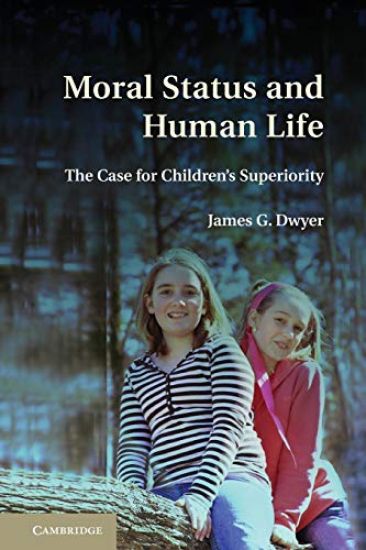
Moral Status and Human Life

Moral Status and Human Life

James G. Dwyer

Cambridge University Press
2013
pokkari
Are children of equal, lesser, or perhaps even greater moral importance than adults? This work of applied moral philosophy develops a comprehensive account of how adults as moral agents ascribe moral status to beings - ourselves and others - and on the basis of that account identifies multiple criteria for having moral status. It argues that proper application of those criteria should lead us to treat children as of greater moral importance than adults. This conclusion presents a basis for critiquing existing social practices, many of which implicitly presuppose that children occupy an inferior status, and for suggesting how government policy, law, and social life might be different if it reflected an assumption that children are actually of superior status.
Moral Values and the Idea of God

Moral Values and the Idea of God

W. R. Sorley

Cambridge University Press
2013
pokkari
First published in 1918 and originally delivered as the Gifford Lectures in the University of Aberdeen in 1914 and 1915, this book is concerned with the relation between the true foundation of ethics and the true knowledge of God. Sorley explores the limits of morality and the problem of the divergence between the order of existence and the moral order, as well as the question of freedom and the very idea of God. This book will be of value to anyone with an interest in ethics or in the theistic grounding of morality.
Moral China in the Age of Reform

Moral China in the Age of Reform

Ci Jiwei

Cambridge University Press
2014
pokkari
Three decades of dizzying change in China's economy and society have left a tangible record of successes and failures. Less readily accessible but of no less consequence is the story, as illuminated in this book, of what China's reform has done to its people as moral and spiritual beings. Jiwei Ci examines the moral crisis in post-Mao China as a mirror of deep contradictions in the new self as well as in society. He seeks to show that lack of freedom, understood as the moral and political conditions for subjectivity under modern conditions of life, lies at the root of these contradictions, just as enhanced freedom offers the only appropriate escape from them. Rather than a ready-made answer, however, freedom is treated throughout as a pressing question in China's search for a better moral and political culture.
Moral Dilemmas in Medieval Thought

Moral Dilemmas in Medieval Thought

M. V. Dougherty

Cambridge University Press
2013
pokkari
The history of moral dilemma theory often ignores the medieval period, overlooking the sophisticated theorizing by several thinkers who debated the existence of moral dilemmas from 1150 to 1450. In this book Michael V. Dougherty offers a rich and fascinating overview of the debates which were pursued by medieval philosophers, theologians and canon lawyers, illustrating his discussion with a diverse range of examples of the moral dilemmas which they considered. He shows that much of what seems particular to twentieth-century moral theory was well-known long ago - especially the view of some medieval thinkers that some forms of wrongdoing are inescapable, and their emphasis on the principle 'choose the lesser of two evils'. His book will be valuable not only to advanced students and specialists of medieval thought, but also to those interested in the history of ethics.
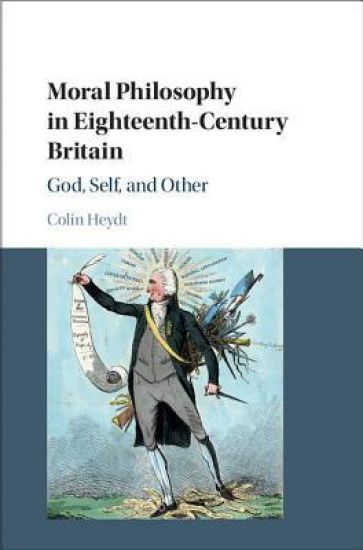
Moral Philosophy in Eighteenth-Century Britain

Moral Philosophy in Eighteenth-Century Britain

Colin Heydt

Cambridge University Press
2017
sidottu
The long eighteenth century is a crucial period in the history of ethics, when our moral relations to God, ourselves and others were minutely examined and our duties, rights and virtues systematically and powerfully presented. Colin Heydt charts the history of practical morality - what we ought to do and to be - from the 1670s, when practical ethics arising from Protestant natural law gained an institutional foothold in England, to early British responses to the French Revolution around 1790. He examines the conventional philosophical positions concerning the content of morality, and utilizes those conventions to reinterpret the work of key figures including Locke, Hume, and Smith. Situating these positions in their thematic and historical contexts, he shows how studying them challenges our assumptions about the originality, intended audience, and aims of philosophical argument during this period. His rich and readable book will appeal to a range of scholars and students.
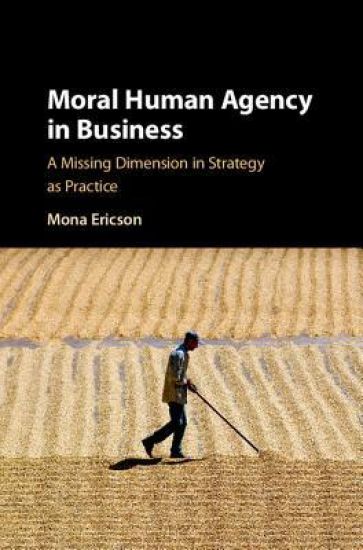
Moral Human Agency in Business

Moral Human Agency in Business

Mona Margareta Ericson

Cambridge University Press
2018
sidottu
In recent years, corporate accounting scandals have received considerable media attention, raising concerns about unethical practice in the business world. Faced with a decline in society's trust in business, research into the ethics of organisations and their leaders is now of critical importance. In this timely book, Ericson focuses on the moral human agency involved in business by leading the reader through the full span of the activities involved in coffee production, from-bean-to-cup. Illustrating the ethical implications and opportunities involved in producing Löfbergs coffee, Ericson highlights the importance of the morally-imbued connections made between practitioners and other participants. These activities can contribute to a sustainable, profitable and competitive future whilst, at the same time, accounting for justice through a reciprocity of mutual benefit, respect and meaning. Promoting the reintroduction of ethics in strategy research, this book will be of great interest and use to strategy researchers, business leaders and sustainability directors.
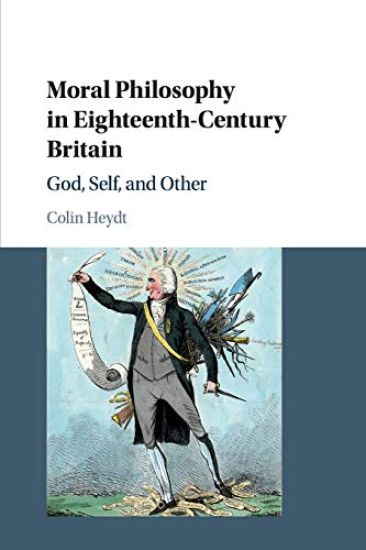
Moral Philosophy in Eighteenth-Century Britain

Moral Philosophy in Eighteenth-Century Britain

Colin Heydt

Cambridge University Press
2019
pokkari
The long eighteenth century is a crucial period in the history of ethics, when our moral relations to God, ourselves and others were minutely examined and our duties, rights and virtues systematically and powerfully presented. Colin Heydt charts the history of practical morality - what we ought to do and to be - from the 1670s, when practical ethics arising from Protestant natural law gained an institutional foothold in England, to early British responses to the French Revolution around 1790. He examines the conventional philosophical positions concerning the content of morality, and utilizes those conventions to reinterpret the work of key figures including Locke, Hume, and Smith. Situating these positions in their thematic and historical contexts, he shows how studying them challenges our assumptions about the originality, intended audience, and aims of philosophical argument during this period. His rich and readable book will appeal to a range of scholars and students.
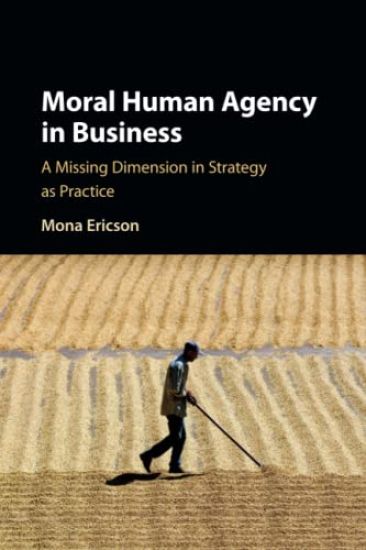
Moral Human Agency in Business

Moral Human Agency in Business

Mona Margareta Ericson

Cambridge University Press
2022
pokkari
In recent years, corporate accounting scandals have received considerable media attention, raising concerns about unethical practice in the business world. Faced with a decline in society's trust in business, research into the ethics of organisations and their leaders is now of critical importance. In this timely book, Ericson focuses on the moral human agency involved in business by leading the reader through the full span of the activities involved in coffee production, from-bean-to-cup. Illustrating the ethical implications and opportunities involved in producing Löfbergs coffee, Ericson highlights the importance of the morally-imbued connections made between practitioners and other participants. These activities can contribute to a sustainable, profitable and competitive future whilst, at the same time, accounting for justice through a reciprocity of mutual benefit, respect and meaning. Promoting the reintroduction of ethics in strategy research, this book will be of great interest and use to strategy researchers, business leaders and sustainability directors.
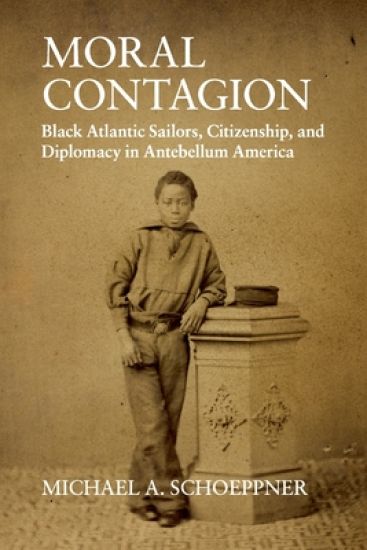
Moral Contagion

Moral Contagion

Michael A. Schoeppner

Cambridge University Press
2020
pokkari
Between 1822 and 1857, eight Southern states barred the ingress of all free black maritime workers. According to lawmakers, they carried a 'moral contagion' of abolitionism and black autonomy that could be transmitted to local slaves. Those seamen who arrived in Southern ports in violation of the laws faced incarceration, corporal punishment, an incipient form of convict leasing, and even punitive enslavement. The sailors, their captains, abolitionists, and British diplomatic agents protested this treatment. They wrote letters, published tracts, cajoled elected officials, pleaded with Southern officials, and litigated in state and federal courts. By deploying a progressive and sweeping notion of national citizenship - one that guaranteed a number of rights against state regulation - they exposed the ambiguity and potential power of national citizenship as a legal category. Ultimately, the Fourteenth Amendment recognized the robust understanding of citizenship championed by Antebellum free people of color, by people afflicted with 'moral contagion'.
Moral Contagion

Moral Contagion

Michael A. Schoeppner

Cambridge University Press
2019
sidottu
Between 1822 and 1857, eight Southern states barred the ingress of all free black maritime workers. According to lawmakers, they carried a 'moral contagion' of abolitionism and black autonomy that could be transmitted to local slaves. Those seamen who arrived in Southern ports in violation of the laws faced incarceration, corporal punishment, an incipient form of convict leasing, and even punitive enslavement. The sailors, their captains, abolitionists, and British diplomatic agents protested this treatment. They wrote letters, published tracts, cajoled elected officials, pleaded with Southern officials, and litigated in state and federal courts. By deploying a progressive and sweeping notion of national citizenship - one that guaranteed a number of rights against state regulation - they exposed the ambiguity and potential power of national citizenship as a legal category. Ultimately, the Fourteenth Amendment recognized the robust understanding of citizenship championed by antebellum free people of color, by people afflicted with 'moral contagion'.
Moral Psychology

Moral Psychology

Christian B. Miller

Cambridge University Press
2021
pokkari
This Element provides an overview of some of the central issues in contemporary moral psychology. It explores what moral psychology is, whether we are always motivated by self-interest, what good character looks like and whether anyone has it, whether moral judgments always motivate us to act, whether what motivates action is always a desire of some kind, and what the role is of reasoning and deliberation in moral judgment and action. This Element is aimed at a general audience including undergraduate students without an extensive background in philosophy.
Moral Enhancement

Moral Enhancement

Cambridge University Press
2018
pokkari
The papers collected in this volume examine moral enhancement: the idea that we should morally improve people through the manipulation of their biological constitution. Whether moral enhancement is possible or even desirable is highly controversial. Proponents argue that it is necessary if we are to address various social ills and avert catastrophic climate change. Detractors have raised a variety of concerns, some of a practical nature and others of principle. Perhaps most fundamentally, however, the proposal forces us to ask anew what being moral actually means, in order for the idea of moral enhancement to make sense at all. The present collection both addresses these issues and moves the debate beyond its current parameters, bringing together authors with a wide range of perspectives and areas of expertise. Chapters variously draw on experimental psychology, social philosophy, pragmatism, Kantian and Aristotelian moral philosophy, and the ethics of care, sex, and psychedelics.
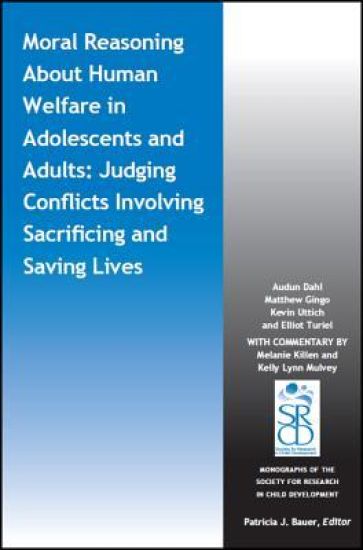
Moral Reasoning About Human Welfare in Adolescents and Adults

Moral Reasoning About Human Welfare in Adolescents and Adults

Audun Dahl; Matthew Gingo; Kevin Uttich; Elliot Turiel

John Wiley Sons Inc
2018
nidottu
The value of human life is a significant moral value for most people. Yet, past research has devoted little attention to the development of moral reasoning about the value of life. The present studies investigated how adolescents and adults reason about the value of life in the context of so-called trolley car situations. These situations, adopted from philosophy, involve the option of sacrificing the life of one person to save five others. Based on past developmental research, we expected that individuals would reason about distinct and sometimes conflicting considerations regarding the value of life. This approach contrasted with past research on adults' responses to trolley car situations, which has been taken to show that most moral evaluations are based not on reasoning but on affective, automatic reactions. In Study 1, 288 adolescents and adults were interviewed about trolley car situations designed to examine considerations like the value of human life and the relationship of those at risk with the actors. In Study 2, 144 college studens were interviewed to further examine the roles of those involved. Participants' justifications referred not only to the number of lives saved, but also to other considerations, such as intrinsic rights and personal responsibility for events. Moreover, responses indicated frequent conflicts about standard trolley car situations, counter to the argument that people's evaluations are automatic based soley on a counting of lives saved. The present findings indicated that adolescents and adults reason about, seek to coordinate, distinct moral considerations regarding the value of life.