Kirjojen hintavertailu. Mukana 11 244 527 kirjaa ja 12 kauppaa.

Kirjahaku

Etsi kirjoja tekijän nimen, kirjan nimen tai ISBN:n perusteella.

1000 tulosta hakusanalla Marcel Proust

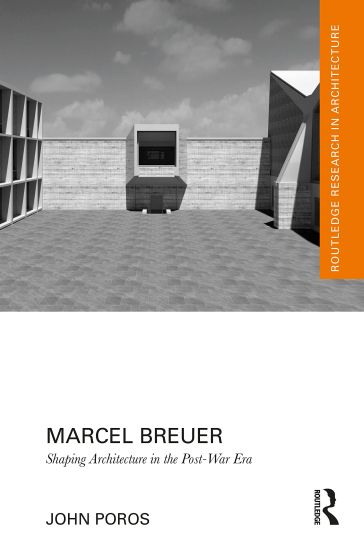
Marcel Breuer

Marcel Breuer

John Poros

TAYLOR FRANCIS LTD
2022
sidottu
This book tracks the development of Marcel Breuer’s aesthetic clash between uniformity and singularity through the detailed examination of his seminal buildings. Each chapter examines a specific building and puts into context Breuer’s other work and the contemporary movements/architects of the post-war era such as Surrealism, Brutalism and structural expressionism. The buildings examined include the UNESCO Headquarters in Paris, France, of 1958; the IBM Research Center in Le Gaude, France, of 1962; the Annunciation Priory in Bismark, North Dakota, of 1963; and the Atlanta Central Library of 1980. Marcel Breuer’s approach to design was inspired by the Spanish phrase, sol y sombra (sun and shadow). Sun and shadow meant for Breuer that a juxtaposition of contrasts was necessary; light glass walls and heavy concrete, masses lifted over voids, and serial precast construction resting on sculptural columns became hallmarks of Breuer’s buildings. By creating an architecture of juxtaposition, Breuer’s work can be interpreted as a surrealist recontre, as fueling a new architectural condition. A critical evaluation of Marcel Breuer’s work, this book is written for graduate students, researchers, and academics interested in his work and how it shaped the architecture of the post-war era.
Marcel Breuer

Marcel Breuer

John Poros

TAYLOR FRANCIS LTD
2024
nidottu
This book tracks the development of Marcel Breuer’s aesthetic clash between uniformity and singularity through the detailed examination of his seminal buildings. Each chapter examines a specific building and puts into context Breuer’s other work and the contemporary movements/architects of the post-war era such as Surrealism, Brutalism and structural expressionism. The buildings examined include the UNESCO Headquarters in Paris, France, of 1958; the IBM Research Center in Le Gaude, France, of 1962; the Annunciation Priory in Bismark, North Dakota, of 1963; and the Atlanta Central Library of 1980. Marcel Breuer’s approach to design was inspired by the Spanish phrase, sol y sombra (sun and shadow). Sun and shadow meant for Breuer that a juxtaposition of contrasts was necessary; light glass walls and heavy concrete, masses lifted over voids, and serial precast construction resting on sculptural columns became hallmarks of Breuer’s buildings. By creating an architecture of juxtaposition, Breuer’s work can be interpreted as a surrealist recontre, as fueling a new architectural condition. A critical evaluation of Marcel Breuer’s work, this book is written for graduate students, researchers, and academics interested in his work and how it shaped the architecture of the post-war era.

Marcel's Geistesblitze - Dinge, die du nicht verstehen würdest, also - Finger weg! Private: Cooles Notizbuch ca. A5 für alle Männer 108 Seiten mit Pun
Zauberhaftes Notizbuch f r M dchen / ca. A5 liniert / 108 SeitenDieses Notizbuch ist eine tolle, kleine Geschenkidee f r M dchen, ideal f r Notizen und Mitteilungen, die Schule, zur Einschulung oder als Tagebuch.PRODUKT DETAILS: ca. A5 (15,2 x 22,8 cm)Taschenbuch (soft cover)Zauberhaftes Design mit tanzendem M dchengl nzender Umschlag 108 Seiten liniertstarkes creme wei es Papierperfekt f r Notizen, Skizzen, Adressen, Mitteilungen, als Tagebuch, ...Es stehen viele andere Namen zur Verf gung. Gib einfach in die Amazon-Suche "DanceNotes Vorname" ein.
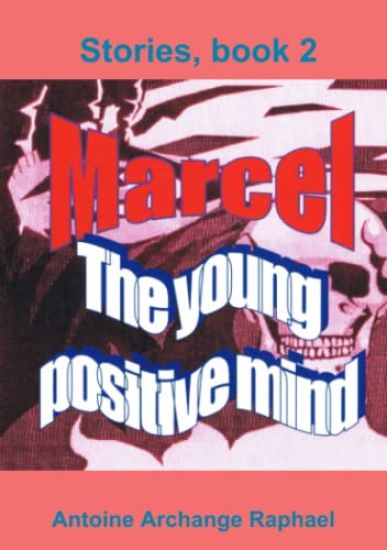
Marcel, the young positive mind (bookII)

Marcel, the young positive mind (bookII)

Antoine Archange Raphael

Lulu.com
2012
pokkari
This book is an instance in which the whole community is mistaken in its apperception of reality, while an adolescent gets it right. In fact, he maintains that systematic doubt allows us to keep things in check. Without it, knowledge would have remained still from the past to eternity.
Marcel, le jeune esprit positif, Livre2

Marcel, le jeune esprit positif, Livre2

Antoine Archange Raphael

Lulu.com
2012
pokkari
Ce livre est un exemple selon lequel la communaute se fourvoie dans son apperception du reel, tandis qu'un adolescent s'engage dans le chemin de la verite. En somme, cet adolescent maintient que le doute systematique nous permet de controler les objets de la connaissance. Sans lui, la connaissance resterait stationnaire du passe a l'eternite.
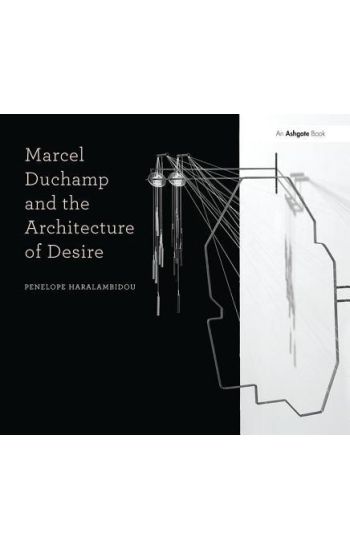
Marcel Duchamp and the Architecture of Desire

Marcel Duchamp and the Architecture of Desire

Penelope Haralambidou

Routledge
2017
sidottu
While much has been written on Marcel Duchamp - one of the twentieth century's most beguiling artists - the subject of his flirtation with architecture seems to have been largely overlooked. Yet, in the carefully arranged plans and sections organising the blueprint of desire in the Large Glass, his numerous pieces replicating architectural fragments, and his involvement in designing exhibitions, Duchamp's fascination with architectural design is clearly evident. As his unconventional architectural influences - Niceron, Lequeu and Kiesler - and diverse legacy - Tschumi, OMA, Webb, Diller plus Scofidio and Nicholson - indicate, Duchamp was not as much interested in 'built' architecture as he was in the architecture of desire, re-constructing the imagination through drawing and testing the boundaries between reality and its aesthetic and philosophical possibilities. Marcel Duchamp and the Architecture of Desire examines the link between architectural thinking and Duchamp's work. By employing design, drawing and making - the tools of the architect - Haralambidou performs an architectural analysis of Duchamp‘s final enigmatic work Given: 1. The Waterfall, 2. The Illuminating Gas... demonstrating an innovative research methodology able to grasp meaning beyond textual analysis. This novel reading of his ideas and methods adds to, but also challenges, other art-historical interpretations. Through three main themes - allegory, visuality and desire - the book defines and theorises an alternative drawing practice positioned between art and architecture that predates and includes Duchamp.
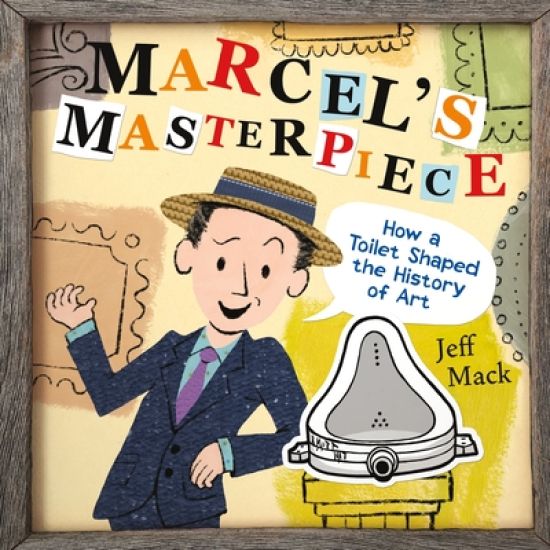
Marcel's Masterpiece

Marcel's Masterpiece

Jeff Mack

HENRY HOLT COMPANY INC
2022
sidottu
This is the story of Marcel Duchamp and how the Dada art movement changed the way people thought about what art could be, and what could be art. From drawing a moustache on the Mona Lisa to attaching a bicycle wheel to a stool, Duchamp's work challenged long-held notions of art and how it should be made. People were amused, confused, and sometimes offended, and that was just the way Marcel Duchamp liked it.
Marcel, the Young Positive Mind, Book3

Marcel, the Young Positive Mind, Book3

self-publisher Antoine Archange Raphael

Lulu.com
2014
nidottu
This book is an instance in which the whole community is mistaken in its apperception of reality, while an adolescent gets it right. In fact, he maintains that systematic doubt allows us to keep things in check. Without it, knowledge would have remained still from the past to eternity
Marcel Duchamp and the Architecture of Desire

Marcel Duchamp and the Architecture of Desire

Penelope Haralambidou

Ashgate Publishing Limited
2013
nidottu
While much has been written on Marcel Duchamp - one of the twentieth century's most beguiling artists - the subject of his flirtation with architecture seems to have been largely overlooked. Yet, in the carefully arranged plans and sections organising the blueprint of desire in the Large Glass, his numerous pieces replicating architectural fragments, and his involvement in designing exhibitions, Duchamp's fascination with architectural design is clearly evident. As his unconventional architectural influences - Niceron, Lequeu and Kiesler - and diverse legacy - Tschumi, OMA, Webb, Diller + Scofidio and Nicholson - indicate, Duchamp was not as much interested in 'built' architecture as he was in the architecture of desire, re-constructing the imagination through drawing and testing the boundaries between reality and its aesthetic and philosophical possibilities. Marcel Duchamp and the Architecture of Desire examines the link between architectural thinking and Duchamp's work. By employing design, drawing and making - the tools of the architect - Haralambidou performs an architectural analysis of Duchamp’s final enigmatic work Given: 1. The Waterfall, 2. The Illuminating Gas... demonstrating an innovative research methodology able to grasp meaning beyond textual analysis. This novel reading of his ideas and methods adds to, but also challenges, other art-historical interpretations. Through three main themes - allegory, visuality and desire - the book defines and theorises an alternative drawing practice positioned between art and architecture that predates and includes Duchamp.