Laut einer umfangreichen Literatur und der ffentlichen Meinung hat die kamerunische Presse eine schlechte Presse. Ihre Pseudojournalisten werden st ndig wegen ihres Mangels an Professionalit t verunglimpft, werden jedoch jedes Jahr von Plattformen ausgezeichnet, die als F rderer journalistischer Exzellenz bezeichnet werden. Es handelt sich dabei um Plattformen, die von neuen Vereinigungen betrieben werden, die sich um den Begriff der journalistischen Mediation gruppieren und die als Instrumente zur Professionalisierung des kamerunischen Journalismus fungieren. Diese Mediationen, die in Kamerun immer zahlreicher werden, sorgen seit fast einem Jahrzehnt f r eine gewisse partizipative Emulation, aber dann in unterschiedlichem Ausma , das ihre Legitimit t in Frage stellt. Welche Darstellung(en) stigmatisieren sie? Wer sind die Vermittler, die die Produktionen in einem so desillusionierten Medienkontext legitimieren? Was steht f r kamerunische Journalisten auf dem Spiel? Im Mittelpunkt der berlegungen stehen zwei Mediatorenverb nde: M diation Club, der mit dem Preis M diations Press Trophies ausgezeichnet wurde, und Tribunal Article 53, der mit dem Preis Bibi Ngota ausgezeichnet wurde.
According to an abundance of literature and public opinion, the Cameroonian press has a bad reputation. Its pseudo-journalists, who are constantly criticised for their lack of professionalism, are nonetheless rewarded every year through platforms that promote journalistic excellence. These are the platforms run by the new associations grouped around the notion of journalistic mediation, which are then transposed as operating mechanisms for the professionalisation of Cameroonian journalists. For nearly a decade now, these increasingly numerous mediations in Cameroon have been creating a certain participatory emulation, but to varying degrees, calling into question their legitimacy. Which representation(s) do they stigmatise? Who are the mediators, who legitimise the productions in such a disenchanted media context? What is at stake for Cameroonian journalists? Two mediating associations are the subject of this reflection, namely M diation Club, of the M diations Press Trophies, and Tribunal Article 53, of the Bibi Ngota Prize.
Secondo un'abbondante letteratura e opinione pubblica, la stampa camerunese ha una cattiva reputazione. I suoi pseudo-giornalisti, costantemente criticati per la loro mancanza di professionalit , vengono tuttavia premiati ogni anno attraverso piattaforme che promuovono l'eccellenza giornalistica. Si tratta delle piattaforme gestite dalle nuove associazioni raggruppate intorno alla nozione di mediazione giornalistica, che vengono poi trasposte come meccanismi operativi per la professionalizzazione dei giornalisti camerunesi. Da quasi un decennio, queste mediazioni sempre pi numerose in Camerun creano una certa emulazione partecipativa, ma in misura diversa, mettendo in discussione la loro legittimit . Quale/i rappresentazione/i stigmatizzano? Chi sono i mediatori che legittimano le produzioni in un contesto mediatico cos disincantato? Qual la posta in gioco per i giornalisti camerunesi? Due associazioni di mediazione sono oggetto di questa riflessione: M diation Club, dei Trofei della stampa M diations, e Tribunal Article 53, del Premio Bibi Ngota.
De acordo com uma abundante literatura e opini o p blica, a imprensa camaronesa tem uma m reputa o. Os seus pseudo-jornalistas, constantemente criticados pela sua falta de profissionalismo, s o no entanto recompensados todos os anos atrav s de plataformas que promovem a excel ncia jornal stica. S o as plataformas geridas pelas novas associa es agrupadas em torno da no o de media o jornal stica, que se transp em como mecanismos operacionais para a profissionaliza o dos jornalistas camaroneses. Desde h cerca de uma d cada, estas media es, cada vez mais numerosas nos Camar es, criam uma certa emula o participativa, mas, em graus diversos, p em em causa a sua legitimidade. Que representa o( es) estigmatizam? Quem s o os mediadores, que legitimam as produ es num contexto medi tico t o desencantado? O que que est em jogo para os jornalistas camaroneses? Duas associa es mediadoras s o objeto desta reflex o: M diation Club, dos Trof us M diations Press, e Tribunal Article 53, do Pr mio Bibi Ngota.
Dieses Buch umrei t die allgemeinen Konturen eines zeitgen ssischen Konzepts der nonverbalen Dimension. Sein Bezugsrahmen ist die zeitgen ssische relationale Psychoanalyse, die Elemente der Bindungstheorie, der S uglingsforschung sowie der affektiven und sozialen Neurowissenschaften integriert. Das Buch kann sowohl f r Psychotherapeuten und Psychoanalytiker als auch f r ein breiteres Publikum von Interesse sein, das sich daf r interessiert, wie wir derzeit ber die nonverbale Dimension menschlicher Interaktionen denken.
This book outlines the general contours of a contemporary conception of the non-verbal dimension. Its frame of reference is contemporary relational psychoanalysis, integrating elements of attachment theory, infant research and affective and social neuroscience. It may be of interest to psychotherapists and psychoanalysts as well as to a wider general audience interested in how we are currently thinking about the non-verbal dimension of human interactions.
Ce livre esquisse les contours g n raux d'une conception contemporaine de la dimension non verbale. Son cadre de r f rence est la psychanalyse relationnelle contemporaine, qui int gre des l ments de la th orie de l'attachement, de la recherche sur les nourrissons et des neurosciences affectives et sociales. Il peut int resser les psychoth rapeutes et les psychanalystes ainsi qu'un public plus large int ress par la fa on dont nous pensons actuellement la dimension non verbale des interactions humaines.
Questo libro delinea i contorni generali di una concezione contemporanea della dimensione non verbale. Il suo quadro di riferimento la psicoanalisi relazionale contemporanea, che integra elementi della teoria dell'attaccamento, della ricerca sull'infanzia e delle neuroscienze affettive e sociali. Pu essere interessante per gli psicoterapeuti e gli psicoanalisti, ma anche per un pubblico pi ampio, interessato al modo in cui stiamo pensando alla dimensione non verbale delle interazioni umane.
Este livro esbo a os contornos gerais de uma conce o contempor nea da dimens o n o-verbal. O seu quadro de refer ncia a psican lise relacional contempor nea, integrando elementos da teoria da vincula o, da investiga o infantil e da neuroci ncia afectiva e social. Poder interessar a psicoterapeutas e psicanalistas, bem como a um p blico mais vasto interessado em saber como pensamos atualmente a dimens o n o-verbal das interac es humanas.
In Voltaire's British visitors, Sir Gavin de Beer and André-Michel Rousseau have collected accounts of one hundred and fifty visits by British travellers to Voltaire in Switzerland, where he spent the last years of his life on the shores of Lake Geneva. One hundred and twenty-three of these visitors have been identified, and they range from men as young as fifteen on a Grand Tour to Thomas Pitt, brother of William, and Edward Gibbon. As the Seven Years' War made Switzerland, rather than France, part of the normal route for Englishmen making their way to Italy, Geneva became a destination for more and more British travellers, and many of these, whether they held letters of recommendation from people known to Voltaire, or had merely read his work, wanted to see the famous Frenchman, their motives ranging, as Rousseau puts it in his introduction, from 'very superficial curiosity to downright admiration'. The accounts run from a bare mention of a visit, consisting of a few lines, to fascinating accounts of lively conversations with Voltaire about politics, religion and English literature and descriptions of his home at Ferney with its chapel and little playhouse. John Morgan in 1764, visiting with a Mr Samuel Powel, writes of his surprise when Voltaire saw a little dog in the room, turned to Mr Powel and 'as I thought, a little abruptly ask'd him, what think you of that little dog; has he any Soul or not, & what do the People in England now think of the Soul.' James Boswell, who stayed for three days in 1764, calls Voltaire's home an 'enchanted castle' and records conversation ranging from impassioned Biblical debate to Voltaire's comment on Scotland's painters when Boswell told him of the failure of an Academy of painting there: 'No; to paint well it is necessary to have warm feet. It's hard to paint when your feet are cold.' Together, these one hundred and fifty vignettes offer a fascinating and unusual glimpse into Voltaire's life from 1754 to 1778 through immediate and personal accounts of his conversation, hospitality and domestic life.
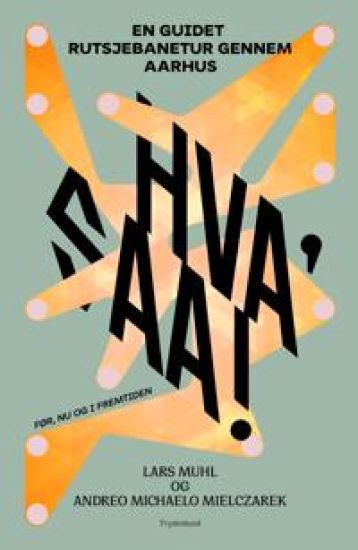
Kan Aarhus være verdens mindste storby og en tosset landsby på samme tid? Tag med de to ærke-aarhusianere Lars Muhl og Andreo Mielczarek, når de stiller sig selv og hinanden spørgsmålet på en kalejdoskopisk guidet tur, hvor du møder over 40 kendte aarhusianere og gæster med byen i hjertet.Hva' saa! er en helt særlig guidebog, der skyder op som vildt ukrudt fra undergrunden med private minder og glemte fortællinger. Den retter nyt lys mod det usete, det uhørt og alt det, som ikke længere vil holdes hemmeligt. Smilets by bliver aldrig den samme.Bogens tips, idéer og forslag kommer fra mennesker, som alle har et helt særligt forhold til Aarhus. Den er udstyret med et hav af billeder og illustrationer, fold ud-sider og digte, historier og anekdoter, restaurant- og musikanbefalinger og så meget mere – den har det hele. Bogen indeholder indslag fra et hav af kendte danske kulturpersonligheder med tilknytning til Aarhus: Julie Rokkjær Birch, Nagin Ravand, Jussi Parikka, Steffen Brandt, John Hassall, Katrine Muff, Niels Rønsholdt, Lars H.U.G., Jacob Kirkegaard, Kjartan Arngrim, Jakob Kullberg, Marie Koldkjær Højlund, iomfro, Søren Leth, Pernille Taagaard Dinesen, Jens Folmer Jepsen, Abdullah Hassan, Jørgen Leth, Thomas Dausgaard, Henryka Mielczarek, Kim Hansen, Peter Laugesen, Den syriske skrædder/Mohamad Eissa, Mads Mygind, Sébastien Doubinsky, Jakob Bro, Flemming Knudsen, Jacob Bundsgaard, Marwan, Thomas Helmig, Josephine Michau, Gerd Laugesen, Kim Kix, Asbjørn, Jørn Erslev Andersen, Marie Louise Arvidsson, Hans Oldau Krull, Puk Ewdokia, Manu Rich, Nina Wengel, Poul Krebs, Bertil Bonde Arvidsson, Nils Malmros, Clement Kjersgaard og med fotos af Kåre Viemose.