This book uses the Anglophone Caribbean as its site of critique to explore two important questions within development studies. First, to what extent has the United Nations' call to implement gender-mainstreaming projects resulted in the realization of gender equity for women within developing societies? Second, does gender-mainstreaming have the conceptual, operational, and technical capacities to address the centrality of the body in 21st-century lobbies for gender equity? In answering these questions, Rowley examines such issues as reproductive rights and equity, sexual harassment, and sexual minorities' rights.
Christen de Troyes uses repeated references to Spain throughout his romances; despite past suggestions that they contain Mozarabic and Islamic themes and motifs, these references have never been commented upon. The book will demonstrate that these allusions to Spain occur at key moments in the romances, and are often coupled with linguistic riddles which serve as roadmaps to the manner in which the romances are to be read. These references and riddles seem to support the idea that some of their themes and motifs in Chrétien's romances are of Andalusi origin. The book also analyzes Chrétien's notion of conjointure and shows it to be the intentional elaboration of a sort of Mischliteratur , which integrates Islamic and Jewish themes and motifs, as well as mystical alchemical symbolism, into the standard religious and literary canons of his time. The contrast afforded by Chrétien's use of irony, and his subtle integration of this matière d'Orient into the standard canon, constitutes a carefully veiled criticism of the social and moral conduct, as well as spiritual beliefs, of twelfth-century Christian society, the crusading mentality, chivalric mores, and even the notion of courtly love . The primary interest of the book lies in the fact that it will be the first to comment upon and analyze Chrétien's references to Spain and the rich matière d'Orient in his romances, while suggesting channels for its transmission, through scholars, merchants, and religious houses, from northern Spain to Champagne.
This book uses the Anglophone Caribbean as its site of critique to explore two important questions within development studies. First, to what extent has the United Nations' call to implement gender-mainstreaming projects resulted in the realization of gender equity for women within developing societies? Second, does gender-mainstreaming have the conceptual, operational, and technical capacities to address the centrality of the body in 21st-century lobbies for gender equity? In answering these questions, Rowley examines such issues as reproductive rights and equity, sexual harassment, and sexual minorities' rights.
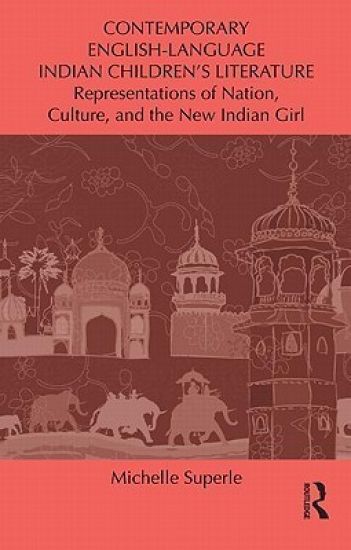
Concurrent with increasing scholarly attention toward national children’s literatures, Contemporary English-language Indian Children’s Literature explores an emerging body of work that has thus far garnered little serious critical attention. Superle critically examines the ways Indian children’s writers have represented childhood in relation to the Indian nation, Indian cultural identity, and Indian girlhood. From a framework of postcolonial and feminist theories, children’s novels published between 1988 and 2008 in India are compared with those from the United Kingdom and North America from the same period, considering the differing ideologies and the current textual constructions of childhood at play in each. Broadly, Superle contends that over the past twenty years an aspirational view of childhood has developed in this literature—a view that positions children as powerful participants in the project of enabling positive social transformation. Her main argument, formed after recognizing several overarching thematic and structural patterns in more than one hundred texts, is that the novels comprise an aspirational literature with a transformative agenda: they imagine apparently empowered child characters who perform in diverse ways in the process of successfully creating and shaping the ideal Indian nation, their own well-adjusted bicultural identities in the diaspora, and/or their own empowered girlhoods.Michelle Superle is a Professor in the department of Communications at Okanagan College. She has taught children’s literature, composition, and creative writing courses at various Canadian universities and has published articles in Papers and IRCL.
By examining the early outbreaks in San Francisco, Cochrane unfolds the "creation" of AIDS in one geographic location and then traces how and why major claims about the transmission of HIV were made, extrapolated and then disseminated to the rest of the world - all important factors in understanding this disease.
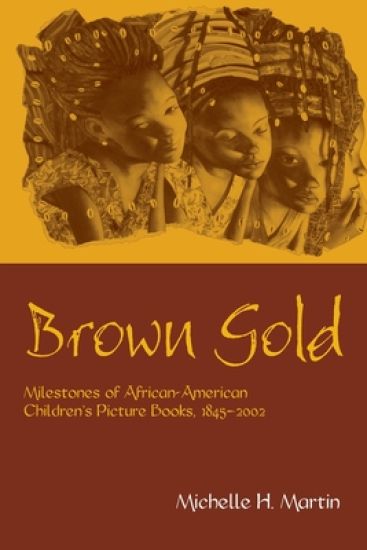
Brown Gold is a compelling history and analysis of African-American children's picturebooks from the mid-nineteenth century to the present. At the turn of the nineteenth century, good children's books about black life were hard to find — if, indeed, young black readers and their parents could even gain entry into the bookstores and libraries. But today, in the "Golden Age" of African-American children's picturebooks, one can find a wealth of titles ranging from Happy to be Nappy to Black is Brown is Tan. In this book, Michelle Martin explores how the genre has evolved from problematic early works such as Epaminondas that were rooted in minstrelsy and stereotype, through the civil rights movement, and onward to contemporary celebrations of blackness. She demonstrates the cultural importance of contemporary favorites through keen historical analysis — scrutinizing the longevity and proliferation of the Coontown series and Ten Little Niggers books, for example — that makes clear how few picturebooks existed in which black children could see themselves and their people positively represented even up until the 1960s. Martin also explores how children's authors and illustrators have addressed major issues in black life and history including racism, the civil rights movement, black feminism, major historical figures, religion, and slavery. Brown Gold adds new depth to the reader's understanding of African-American literature and culture, and illuminates how the round, dynamic characters in these children's novels, novellas, and picturebooks can put a face on the past, a face with which many contemporary readers can identify.
With a fascinating new introduction on the proliferation and development of the field of whiteness studies and updated essays throughout, this much-anticipated second ddition continues to redefine our understanding of race and society. Also inlcludes three maps.
This in-depth comparative study demonstrates that the hospital established in China - its planning and architecture, financing, and all aspects of day-to-day operation - differed from its counterpart at home. These differences were never due to a single, or even dominant cause. They were a result of a complex process involving accommodation, appreciation, negotiation, opportunism and pragmatism.
Chrétien de Troyes uses repeated references to Spain throughout his romances; despite past suggestions that they contain Mozarabic and Islamic themes and motifs, these references have never been commented upon. The book will demonstrate that these allusions to Spain occur at key moments in the romances, and are often coupled with linguistic riddles which serve as roadmaps to the manner in which the romances are to be read. These references and riddles seem to support the idea that some of their themes and motifs in Chrétien's romances are of Andalusi origin. The book also analyzes Chrétien's notion of conjointure and shows it to be the intentional elaboration of a sort of Mischliteratur , which integrates Islamic and Jewish themes and motifs, as well as mystical alchemical symbolism, into the standard religious and literary canons of his time. The contrast afforded by Chrétien's use of irony, and his subtle integration of this matière d'Orient into the standard canon, constitutes a carefully veiled criticism of the social and moral conduct, as well as spiritual beliefs, of twelfth-century Christian society, the crusading mentality, chivalric mores, and even the notion of courtly love . The primary interest of the book lies in the fact that it will be the first to comment upon and analyze Chrétien's references to Spain and the rich matière d'Orient in his romances, while suggesting channels for its transmission, through scholars, merchants, and religious houses, from northern Spain to Champagne.
After years of waiting, it is finally Libby Ryan's turn to shine at the Practical County Fair. Libby is filled with excitement as she and her granddad pick out two calves for her to raise on her family's cattle farm, in hopes of winning the annual steer competition. Against her father's advice, Libby gives the calves names, even though both steers will eventually be auctioned off. After a few months of preparing for the Practical County Fair, Libby finds that she is growing closer to her steers with each passing day, and the pressure to win Grand Champion is mounting. Luckily, Libby can count on her best friend to get her through most of the county fair chaos. Yet once reality sets in and she realizes that her steers will soon be sold to the highest bidder, the chaos in Libby's heart becomestoo much to bear. Michelle Houts lives on a grain and livestock farm in West Central Ohio with her husband and three children. This is her first novel.
Learn how to provide safe, effective nursing care for patients receiving drug therapy! Clayton’s Basic Pharmacology for Nurses, 20th Edition helps you understand the principles of pharmacology and apply them to nursing practice. This text explains how to make informed decisions about drug therapy, educate patients, and administer medications. This edition adds enhanced coverage of the NCSBN Clinical Judgment Measurement Model to prepare you for the critical thinking questions on the Next Generation NCLEX® (NGN) exam. Concise and easy to use, this essential resource helps you master the basics of medication administration and drug actions. NEW! Three new chapters address key topics: Drugs Used to Treat Immune and Inflammatory Disorders; Drugs Used to Treat Headaches; and Drugs Used to Treat Attention Deficit Hyperactivity Disorder NEW! Video and animation icons direct you to supplementary videos or animations on the companion Evolve website UPDATED! Accurate and current content ensures you are learning the most current drugs and treatment protocols EXPANDED! Additional coverage of the NCSBN Clinical Judgment Measurement Model enhances The Nursing Process and Pharmacology chapter Medication Safety Alerts and Clinical Pitfall boxes, as well as Do-Not-Confuse and High Alert icons highlight the importance of safe drug handling and administration Nursing process application provides an overview of general principles of nursing care for each disorder, as well as specific nursing considerations for the drug treatment Medication Administration unit clearly and visually outlines assessment, techniques, procedures, and documentation for safe administration of percutaneous, enteral, and parenteral drugs Drug tables clearly outline generic and brand names, availability, and dosage ranges for key medications for each disorder Lifespan Considerations boxes for Children and for Older Adults draw attention to information that is especially important when giving a specific drug to patients of those age groups Clinical Goldmine boxes focus on best practices in the clinical setting Extensive resources on the Evolve companion website, including math review, patient teaching guides, chapter review questions, video clips of medication administration, and animations of drug actions, help reinforce your understanding of key concepts
Medical and Educational Needs for Autism aims to provide understanding and assistance to clinicians interacting with ASD patients and their caregivers. This book is divided into two clear sections, first the medical coverage and second, an educational section. The first section includes chapters on sleep disorders, feeding/nutrition concerns, and medication. The second section focuses on the education component which includes IEP processes and activities for daily living.
Reinforce your understanding of nursing pharmacology and prepare for success on the NCLEX-PN® exam! With chapters corresponding to the chapters in Clayton’s Basic Pharmacology for Nurses, 20th Edition, this study guide provides a variety of exercises to help you review and practice the LPN/LVN’s role in drug therapy and patient care. Review questions make it easier to achieve the chapter objectives from the textbook, and patient scenarios help you develop clinical judgment skills. Next Generation NCLEX® (NGN)-style questions ensure that you will be ready for the critical thinking questions on the NGN exam. NEW! Three new chapters address key topics: Drugs Used to Treat Immune and Inflammatory Disorders; Drugs Used to Treat Headaches; and Drugs Used to Treat Attention Deficit Hyperactivity Disorder NEW! Updated exercises cover the new content in the text, including newly approved pharmaceutical drugs and treatments Case scenarios in clinical chapters allow you to review, practice, and apply clinical judgment skills Reader-friendly writing style and organization make it easier to review and practice nursing pharmacology concepts A variety of exercises, including matching, multiple-choice, select-all-that-apply, and Next Generation NCLEX® (NGN)-style questions help reinforce your understanding of key content
Michelle Au started medical school armed only with a surfeit of idealism, a handful of old 'ER' episodes to reference, and some vague notion about 'helping people'. This is the story of how she grew up and became a real doctor. Through her years in medical training, she also attempts to maintain a life outside the hospital as she and her resident husband decide to have a baby. A new mother struggling to balance long days and nights in the hospital with her 'real' life, Au finds herself in the classic struggle of working motherhood, trying to do two equally high-stress jobs without losing her sanity or sense of humour. THIS WON'T HURT A BIT is a story about the imperfect, occasionally ridiculous, never boring process of medical training and life outside it, where an ordinary person can learn the kind of doctor and mother she wants to be under the most extraordinary circumstances.
"How do you make love work?" Every single wants the answer to this pressing question, yet the answer eludes many of us as we search our personal experiences for the truth. Unfortunately, we too often get the same frustrating results in our relationships that we find when we don't check the owner's manual before assembling a piece of machinery. HOW TO MAKE LOVE WORK is the must-read owner's manual for anyone who doesn't have all the answers. This book provides comprehensive instruction on parts, accessories, and assembly for lasting love. Along with a complete guide to maintenance, trouble shooting, and tech support, HOW TO MAKE LOVE WORK offers readers practical, insightful love principles based on the love chapter in the Bible--1 Corinthians chapter thirteen. Michelle presents scriptural principles in a down-to-earth, easy-to-grasp manner, along with reflection questions that equip readers with new tools for transforming their relationships and challenge them to try new approaches to dealing with old problems. Those who are willing to do the work will find love working for them.
A lyrical coming-of-age story and an essential retelling of the colonial history of Jamaica. Originally published in 1984, this critically acclaimed novel is the story of Clare Savage, a light-skinned, middle-class twelve-year-old growing up in Jamaica in the 1950s. As Clare tries to find her own identity and place in her culture, she carries the burden of her mixed heritage. There are the Maroons, who used the conch shell--the abeng--to pass messages as they fought against their English enslavers. And there is her white great-great-grandfather, Judge Savage, who committed a terrible act of violence on the eve of emancipation. In Clare's struggle to reconcile the conflicting legacies of her own personal lineage, esteemed Caribbean author Michelle Cliff dramatically confronts the cultural and psychological brutality inflicted upon the island and its people by colonialism.
A brilliant Jamaican-American writer takes on the themes of colonialism, race, myth, and political awakening. Originally published in 1987, this critically acclaimed novel is the continuation of the story that began in Abeng following Clare Savage, a mixed-race woman who returns to her Jamaican homeland after years away. In this deeply poetic novel, Clare must make sense of her middle-class childhood memories in contrast with another side of Jamaica which she is only now beginning to see: one of extreme poverty. And Jamaica--almost a character in the book--comes to life with its extraordinary beauty, coexisting with deep human tragedy. Through the course of the book, Clare sees the violence that rises out of extreme oppression, the split loyalties of a colonized person, and what it means to be neither white nor Black in that environment. The result is a deeply moving, canonical work.
Michelle Singletary is a daughter, wife, mother, entrepreneur and most of all a Servant of most high king, our Savior Jesus. She has served in Ministry for many of years doing what was required and needed. Serving is from the heart no matter what the assignment is; one must be a willing vessel to fulfill it. This book is an assignment that was written to bring self-awareness, build relationship, enhance lives, give hope and compel many to come unto Christ "Jesus," our Lord & Savior. It's all about the way you live and your connection with God. What's your Spiritual Connection? Are you connected?