Kirjojen hintavertailu. Mukana 11 342 296 kirjaa ja 12 kauppaa.

Kirjahaku

Etsi kirjoja tekijän nimen, kirjan nimen tai ISBN:n perusteella.

1000 tulosta hakusanalla Michelle Perry

Counselors Working in Family Courts

Counselors Working in Family Courts

Michelle Mitcham

Routledge
2023
nidottu
Conflict Resolution, or Alternative Dispute Resolution, has the potential to be a rich and lucrative niche for counselors who work with families. Michelle Mitcham, a counselor educator with more than 10 years of experience in this unique field, explains the very specific and various roles that professional counselors may take on if they are interested in working in the court system or with clients involved in family forensic matters, especially high-conflict divorce or other high-litigation cases. Each chapter in her book highlights specialized roles counselors may perform for the court as a way to diversify their private practice and create a niche for themselves. The scope of each chapter includes how the counselor works with the parents, the children, and if necessary the lawyers, judges, and courts. The book illuminates how a counselor navigates through the family court system, differentiating the process with each role. Take-away points at the end of each chapter highlight the challenges and opportunities for working under each hat.
An Introduction to Nineteenth-Century Art
Using the tools of the "new" art history (feminism, Marxism, social context, etc.) An Introduction to Nineteenth-Century Art offers a richly textured, yet clear and logical, introduction to nineteenth-century art and culture. This textbook will provide readers with a basic historical framework of the period and the critical tools for interpreting and situating new and unfamiliar works of art.Michelle Facos goes beyond existing histories of nineteenth-century art, which often focus solely on France, Britain, and the United States, to incorporate artists and artworks from Scandinavia, Germany, and Eastern Europe.The book expertly balances its coverage of trends and individual artworks: where the salient trends are clear, trend-setting works are highlighted, and the complexity of the period is respected by situating all works in their proper social and historical context. In this way, the student reader achieves a more nuanced understanding of the way in which the story of nineteenth-century art is the story of the ways in which artists and society grappled with the problem of modernity.Key pedagogical features include: Data boxes provide statistics, timelines, charts, and historical information about the period to further situate artworks. Text boxes highlight extracts from original sources, citing the ideas of artists and their contemporaries, including historians, philosophers, critics, and theorists, to place artists and works in the broader context of aesthetic, cultural, intellectual, social, and political conditions in which artists were working. Beautifully illustrated with over 250 color images. Margin notes and glossary definitions. Online resources at www.routledge.com/textbooks/facos with access to a wealth of information, including original documents pertaining to artworks discussed in the textbook, contemporary criticism, timelines and maps to enrich your understanding of the period and allow for further comparison and exploration.Chapters take a thematic approach combined within an overarching chronology and more detailed discussions of individual works are always put in the context of the broader social picture, thus providing students with a sense of art history as a controversial and alive arena of study.Michelle Facos teaches art history at Indiana University, Bloomington. Her research explores the changing relationship between artists and society since the Enlightenment and issues of identity. Prior publications include Nationalism and the Nordic Imagination: Swedish Painting of the 1890s (1998), Art, Culture and National Identity in Fin-de-Siècle Europe, co-edited with Sharon Hirsh (2003), and Symbolist Art in Context (2009).
An Introduction to Nineteenth-Century Art
Using the tools of the "new" art history (feminism, Marxism, social context, etc.) An Introduction to Nineteenth-Century Art offers a richly textured, yet clear and logical, introduction to nineteenth-century art and culture. This textbook will provide readers with a basic historical framework of the period and the critical tools for interpreting and situating new and unfamiliar works of art.Michelle Facos goes beyond existing histories of nineteenth-century art, which often focus solely on France, Britain, and the United States, to incorporate artists and artworks from Scandinavia, Germany, and Eastern Europe.The book expertly balances its coverage of trends and individual artworks: where the salient trends are clear, trend-setting works are highlighted, and the complexity of the period is respected by situating all works in their proper social and historical context. In this way, the student reader achieves a more nuanced understanding of the way in which the story of nineteenth-century art is the story of the ways in which artists and society grappled with the problem of modernity.Key pedagogical features include: Data boxes provide statistics, timelines, charts, and historical information about the period to further situate artworks. Text boxes highlight extracts from original sources, citing the ideas of artists and their contemporaries, including historians, philosophers, critics, and theorists, to place artists and works in the broader context of aesthetic, cultural, intellectual, social, and political conditions in which artists were working. Beautifully illustrated with over 250 color images. Margin notes and glossary definitions. Online resources at www.routledge.com/textbooks/facos with access to a wealth of information, including original documents pertaining to artworks discussed in the textbook, contemporary criticism, timelines and maps to enrich your understanding of the period and allow for further comparison and exploration.Chapters take a thematic approach combined within an overarching chronology and more detailed discussions of individual works are always put in the context of the broader social picture, thus providing students with a sense of art history as a controversial and alive arena of study.Michelle Facos teaches art history at Indiana University, Bloomington. Her research explores the changing relationship between artists and society since the Enlightenment and issues of identity. Prior publications include Nationalism and the Nordic Imagination: Swedish Painting of the 1890s (1998), Art, Culture and National Identity in Fin-de-Siècle Europe, co-edited with Sharon Hirsh (2003), and Symbolist Art in Context (2009).

What Can I Know?

What Can I Know?

Michelle Gilmore-Grier

Routledge
2024
sidottu
What can I Know? introduces and assesses what many consider to be the most important of all Kant’s great questions, set out in his Critique of Pure Reason, and one of the most important in philosophy itself: what are the bounds of knowledge? Michelle Grier begins with a helpful survey of the question prior to Kant, in particular the arguments of the rationalists Descartes, Spinoza and Leibniz and the empiricists, above all Hume. She describes, in a clear and engaging style, how Kant attempted to find a middle path between the two and what led to the famous "Copernican turn" in his philosophy. She explains the fundamental theories at the heart of Kant’s epistemology: the distinction between appearances and ‘things in themselves’; the transcendental unity of apperception; and Kant’s arguments concerning space and time.In the second part of the book, Grier introduces the main criticisms of Kant’s philosophy, including those of Hegel and Nietzsche. The final part situates Kant’s epistemology in the context of contemporary philosophical debates including those in cognitive science. These include a priori knowledge, correspondence versus coherentist theories of knowledge, ‘naturalized’ epistemology and perception. Including helpful chapter summaries and guides to further reading, What Can I Know? Is an outstanding introduction to Kant's epistemology and the legacy of Kant's question itself.
What Can I Know?

What Can I Know?

Michelle Gilmore-Grier

Routledge
2024
nidottu
What can I Know? introduces and assesses what many consider to be the most important of all Kant’s great questions, set out in his Critique of Pure Reason, and one of the most important in philosophy itself: what are the bounds of knowledge? Michelle Grier begins with a helpful survey of the question prior to Kant, in particular the arguments of the rationalists Descartes, Spinoza and Leibniz and the empiricists, above all Hume. She describes, in a clear and engaging style, how Kant attempted to find a middle path between the two and what led to the famous "Copernican turn" in his philosophy. She explains the fundamental theories at the heart of Kant’s epistemology: the distinction between appearances and ‘things in themselves’; the transcendental unity of apperception; and Kant’s arguments concerning space and time.In the second part of the book, Grier introduces the main criticisms of Kant’s philosophy, including those of Hegel and Nietzsche. The final part situates Kant’s epistemology in the context of contemporary philosophical debates including those in cognitive science. These include a priori knowledge, correspondence versus coherentist theories of knowledge, ‘naturalized’ epistemology and perception. Including helpful chapter summaries and guides to further reading, What Can I Know? Is an outstanding introduction to Kant's epistemology and the legacy of Kant's question itself.
Behavioural Economics and Finance

Behavioural Economics and Finance

Michelle Baddeley

Routledge
2018
sidottu
Behavioural economics and behavioural finance are rapidly expanding fields that are continually growing in prominence. While orthodox economic models are built upon restrictive and simplifying assumptions about rational choice and efficient markets, behavioural economics offers a robust alternative using insights and evidence that rest more easily with our understanding of how real people think, choose and decide. This insightful textbook introduces the key concepts from this rich, interdisciplinary approach to real-world decision-making.This new edition of Behavioural Economics and Finance is a thorough extension of the first edition, including updates to the key chapters on prospect theory; heuristics and bias; time and planning; sociality and identity; bad habits; personality, moods and emotions; behavioural macroeconomics; and well-being and happiness. It also includes a number of new chapters dedicated to the themes of incentives and motivations, behavioural public policy and emotional trading. Using pedagogical features such as chapter summaries and revision questions to enhance reader engagement, this text successfully blends economic theories with cutting-edge multidisciplinary insights.This second edition will be indispensable to anyone interested in how behavioural economics and finance can inform our understanding of consumers’ and businesses’ decisions and choices. It will appeal especially to undergraduate and graduate students but also to academic researchers, public policy-makers and anyone interested in deepening their understanding of how economics, psychology and sociology interact in driving our everyday decision-making.
Behavioural Economics and Finance

Behavioural Economics and Finance

Michelle Baddeley

Routledge
2018
nidottu
Behavioural economics and behavioural finance are rapidly expanding fields that are continually growing in prominence. While orthodox economic models are built upon restrictive and simplifying assumptions about rational choice and efficient markets, behavioural economics offers a robust alternative using insights and evidence that rest more easily with our understanding of how real people think, choose and decide. This insightful textbook introduces the key concepts from this rich, interdisciplinary approach to real-world decision-making.This new edition of Behavioural Economics and Finance is a thorough extension of the first edition, including updates to the key chapters on prospect theory; heuristics and bias; time and planning; sociality and identity; bad habits; personality, moods and emotions; behavioural macroeconomics; and well-being and happiness. It also includes a number of new chapters dedicated to the themes of incentives and motivations, behavioural public policy and emotional trading. Using pedagogical features such as chapter summaries and revision questions to enhance reader engagement, this text successfully blends economic theories with cutting-edge multidisciplinary insights.This second edition will be indispensable to anyone interested in how behavioural economics and finance can inform our understanding of consumers’ and businesses’ decisions and choices. It will appeal especially to undergraduate and graduate students but also to academic researchers, public policy-makers and anyone interested in deepening their understanding of how economics, psychology and sociology interact in driving our everyday decision-making.
The Lilliputians of Environmental Regulation

The Lilliputians of Environmental Regulation

Michelle C. Pautz; Sara Rinfret

Routledge
2012
sidottu
When we think about environmental policy and regulation in the U.S., our attention invariably falls on the federal level and, more specifically, the U.S. Environmental Protection Agency. Although such a focus is understandable, it neglects the actors most responsible for the implementation and maintenance of the nation's environmental laws - the states. Recognition of the importance of the states still ignores an even smaller subsection of actors, inspectors. These front-line actors in state environmental agencies are the individuals responsible for writing environmental rules and ensuring compliance with those rules. They play an important role in the environmental regulatory state.With data collected from more than 1,200 inspectors across 17 states, Michelle C. Pautz and Sara R. Rinfret take a closer look at these neglected actors to better understand how environmental regulators perceive the regulated community and how they characterize their interactions with them. In doing so, they explore the role these front-line actors play, what it is like to be them, what they think of their place in the environmental regulatory system, and how they interact with the regulated community.An original, timely and unmatched volume advancing the debate on the future of environmental regulation in the U.S.
Photography 4.0: A Teaching Guide for the 21st Century
An invaluable resource for photography educators, this volume is a survey of photographic education in the first decade of the 21st Century. Drawing upon her 25 years of teaching experience and her professional network, Michelle Bogre spoke with 47 photo educators from all over the world to compile this diverse set of interviews. The themes of these conversations explore:Why students should study photographyThe value of a formal photography degreeTeaching philosophiesWhether video and multimedia should be an essential part of a photographic curriculaThe challenges of teaching photography todayChanges in photographic education overallThe second half of the book shares 70 photography assignments of varying level of difficulty from these educators, some paired with examples of how students completed them.This book will inspire and invigorate any photography educator’s curriculum.
Teaching About Dialect Variations and Language in Secondary English Classrooms
Standardized tests demand Standard English, but secondary students (grades 6-12) come to school speaking a variety of dialects and languages, thus creating a conflict between students’ language of nurture and the expectations of school. The purpose of this text is twofold: to explain and illustrate how language varieties function in the classroom and in students’ lives and to detail linguistically informed instructional strategies. Through anecdotes from the classroom, lesson plans, and accessible narrative, it introduces theory and clearly builds the bridge to daily classroom practices that respect students’ language varieties and use those varieties as strengths upon which secondary English teachers can build. The book explains how to teach about language variations and ideologies in the classroom; uses typically taught texts as models for exploring how power, society, and identity interact with language, literature, and students’ lives; connects the Common Core State Standards to the concepts presented; and offers strategies to teach the sense and structure of Standard English and other language variations, so that all students may add Standard English to their linguistic toolboxes.
Teaching About Dialect Variations and Language in Secondary English Classrooms
Standardized tests demand Standard English, but secondary students (grades 6-12) come to school speaking a variety of dialects and languages, thus creating a conflict between students’ language of nurture and the expectations of school. The purpose of this text is twofold: to explain and illustrate how language varieties function in the classroom and in students’ lives and to detail linguistically informed instructional strategies. Through anecdotes from the classroom, lesson plans, and accessible narrative, it introduces theory and clearly builds the bridge to daily classroom practices that respect students’ language varieties and use those varieties as strengths upon which secondary English teachers can build. The book explains how to teach about language variations and ideologies in the classroom; uses typically taught texts as models for exploring how power, society, and identity interact with language, literature, and students’ lives; connects the Common Core State Standards to the concepts presented; and offers strategies to teach the sense and structure of Standard English and other language variations, so that all students may add Standard English to their linguistic toolboxes.
Transatlantic Politics and the Transformation of the International Monetary System
With original archival documents and interviews from the US and Europe, Michelle Frasher brings the reader into the negotiating room with American, German, and French officials as they confronted the collapse of the Bretton Woods monetary system and made decisions that affected the course of European integration and the contemporary neoliberal order.She identifies crisis as the catalyst for change in international monetary policies, but argues that the causes of crisis originated from a multitude of factors such as market speculation, American hegemony, institutional flaws, and ideational conflicts among the leaders themselves. Far from a planned and consensual process, this book shows that the transformation to neoliberalism was riddled with discord and fret with trial and error. She argues that the resulting currency regime allowed governments to entrench themselves in national interests and facilitated the "marketization" of the state, where states have became both clients and participants in the financialized global economy—to the detriment of international stability.Frasher’s is the first work to connect the 1960s and 1970s to the difficulties of inter-state and inter-market cooperation that have plagued the system in the last decades, and it puts the 2008 debacle into historical perspective.
Weapons of Mass Destruction and US Foreign Policy
This book examines the use of concepts – specifically ‘weapons of mass destruction’ (WMD) – in US foreign policy discourse. Current analysis of WMD definition has made headway into identifying the repercussions that the conceptual conflation of such diverse weapons – typically understood as a reference to nuclear, biological and chemical weapons – has for international security. While the concept assumes these weapons are ‘equal’, the vast disparity between them, and their disparity from the conventional weapons from which they are supposedly distinct, means this approach is seen as unreflective of reality, causing miscalculations in security policy. Not least, this has highlighted that the issue of WMD definition is a priority concern where this has direct implications for strategy. In contrast, Weapons of Mass Destruction and US Foreign Policy argues that this approach does not accurately portray conceptual meaning, particularly where it overlooks how political language is constructed. In demonstrating this, the book presents a conceptual history of WMD detailing how this has been defined and used since its emergence into political discourse c.1945. Specifically, it argues that definition is an inherently strategic act; policymakers have deliberately included (or excluded) certain weapons and threats from the classification in order to shape foreign policy dialogues. As such, understanding the WMD concept is not a search for a single interpretation, but an analysis that seeks to comprehend what the concept means at any given time, especially where this relates to the political circumstances of its use. By identifying a variety of ways in which WMD has been defined, the book constructs a dynamic view of conceptual meaning that recognises and, more importantly explains, the inherent diversity in interpretation as the consequence of epistemic and institutional context and the strategic response of policymakers.This book will be of much interest to students of Weapons of Mass Destruction, US foreign and security policy, security studies, political narratives and IR.
Feminist Advocacy and Gender Equity in the Anglophone Caribbean
This book uses the Anglophone Caribbean as its site of critique to explore two important questions within development studies. First, to what extent has the United Nations' call to implement gender-mainstreaming projects resulted in the realization of gender equity for women within developing societies? Second, does gender-mainstreaming have the conceptual, operational, and technical capacities to address the centrality of the body in 21st-century lobbies for gender equity? In answering these questions, Rowley examines such issues as reproductive rights and equity, sexual harassment, and sexual minorities' rights.
Between Courtly Literature and Al-Andaluz
Christen de Troyes uses repeated references to Spain throughout his romances; despite past suggestions that they contain Mozarabic and Islamic themes and motifs, these references have never been commented upon. The book will demonstrate that these allusions to Spain occur at key moments in the romances, and are often coupled with linguistic riddles which serve as roadmaps to the manner in which the romances are to be read. These references and riddles seem to support the idea that some of their themes and motifs in Chrétien's romances are of Andalusi origin. The book also analyzes Chrétien's notion of conjointure and shows it to be the intentional elaboration of a sort of Mischliteratur , which integrates Islamic and Jewish themes and motifs, as well as mystical alchemical symbolism, into the standard religious and literary canons of his time. The contrast afforded by Chrétien's use of irony, and his subtle integration of this matière d'Orient into the standard canon, constitutes a carefully veiled criticism of the social and moral conduct, as well as spiritual beliefs, of twelfth-century Christian society, the crusading mentality, chivalric mores, and even the notion of courtly love . The primary interest of the book lies in the fact that it will be the first to comment upon and analyze Chrétien's references to Spain and the rich matière d'Orient in his romances, while suggesting channels for its transmission, through scholars, merchants, and religious houses, from northern Spain to Champagne.
Feminist Advocacy and Gender Equity in the Anglophone Caribbean
This book uses the Anglophone Caribbean as its site of critique to explore two important questions within development studies. First, to what extent has the United Nations' call to implement gender-mainstreaming projects resulted in the realization of gender equity for women within developing societies? Second, does gender-mainstreaming have the conceptual, operational, and technical capacities to address the centrality of the body in 21st-century lobbies for gender equity? In answering these questions, Rowley examines such issues as reproductive rights and equity, sexual harassment, and sexual minorities' rights.
Contemporary English-Language Indian Children's Literature
Concurrent with increasing scholarly attention toward national children’s literatures, Contemporary English-language Indian Children’s Literature explores an emerging body of work that has thus far garnered little serious critical attention. Superle critically examines the ways Indian children’s writers have represented childhood in relation to the Indian nation, Indian cultural identity, and Indian girlhood. From a framework of postcolonial and feminist theories, children’s novels published between 1988 and 2008 in India are compared with those from the United Kingdom and North America from the same period, considering the differing ideologies and the current textual constructions of childhood at play in each. Broadly, Superle contends that over the past twenty years an aspirational view of childhood has developed in this literature—a view that positions children as powerful participants in the project of enabling positive social transformation. Her main argument, formed after recognizing several overarching thematic and structural patterns in more than one hundred texts, is that the novels comprise an aspirational literature with a transformative agenda: they imagine apparently empowered child characters who perform in diverse ways in the process of successfully creating and shaping the ideal Indian nation, their own well-adjusted bicultural identities in the diaspora, and/or their own empowered girlhoods.Michelle Superle is a Professor in the department of Communications at Okanagan College. She has taught children’s literature, composition, and creative writing courses at various Canadian universities and has published articles in Papers and IRCL.
When AIDS Began

When AIDS Began

Michelle Cochrane

Routledge
2003
sidottu
By examining the early outbreaks in San Francisco, Cochrane unfolds the "creation" of AIDS in one geographic location and then traces how and why major claims about the transmission of HIV were made, extrapolated and then disseminated to the rest of the world - all important factors in understanding this disease.
When AIDS Began

When AIDS Began

Michelle Cochrane

Routledge
2003
nidottu
By examining the early outbreaks in San Francisco, Cochrane unfolds the "creation" of AIDS in one geographic location and then traces how and why major claims about the transmission of HIV were made, extrapolated and then disseminated to the rest of the world - all important factors in understanding this disease.
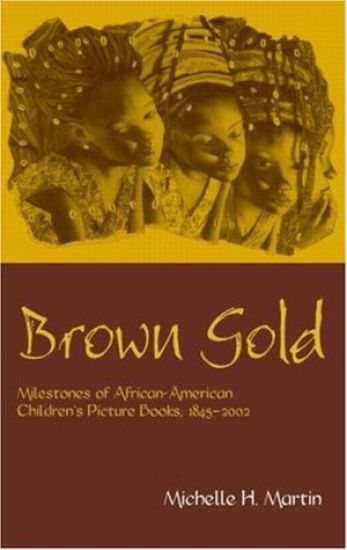
Brown Gold

Brown Gold

Michelle Martin

Routledge
2004
sidottu
Brown Gold is a compelling history and analysis of African-American children's picturebooks from the mid-nineteenth century to the present. At the turn of the nineteenth century, good children's books about black life were hard to find — if, indeed, young black readers and their parents could even gain entry into the bookstores and libraries. But today, in the "Golden Age" of African-American children's picturebooks, one can find a wealth of titles ranging from Happy to be Nappy to Black is Brown is Tan. In this book, Michelle Martin explores how the genre has evolved from problematic early works such as Epaminondas that were rooted in minstrelsy and stereotype, through the civil rights movement, and onward to contemporary celebrations of blackness. She demonstrates the cultural importance of contemporary favorites through keen historical analysis — scrutinizing the longevity and proliferation of the Coontown series and Ten Little Niggers books, for example — that makes clear how few picturebooks existed in which black children could see themselves and their people positively represented even up until the 1960s. Martin also explores how children's authors and illustrators have addressed major issues in black life and history including racism, the civil rights movement, black feminism, major historical figures, religion, and slavery. Brown Gold adds new depth to the reader's understanding of African-American literature and culture, and illuminates how the round, dynamic characters in these children's novels, novellas, and picturebooks can put a face on the past, a face with which many contemporary readers can identify.