
Kirjahaku
Etsi kirjoja tekijän nimen, kirjan nimen tai ISBN:n perusteella.
1000 tulosta hakusanalla Moses Stuart

This book will provide a better understanding of the unity and integrity of Exodus--Numbers in the context of other writings and the general history of the exilic period.
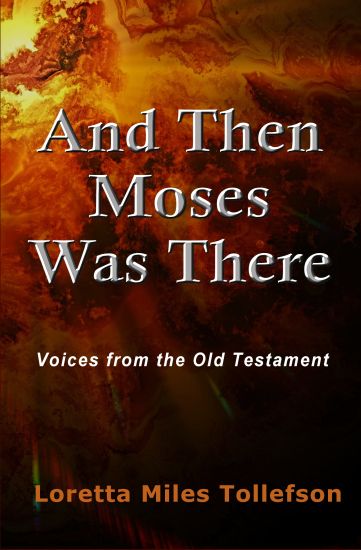
And Then Moses Was There celebrates events in the Old Testament by exploring them through the eyes of people who were there. In these quietly accessible poems, Loretta Miles Tollefson combines her award-winning poetic skills and knowledge of the Bible to look in a new way at the ancient stories and the people who lived them. Read these poems and experience a fresh approach to and appreciation of the Old Testament stories. Each poem focuses on a different event, from Noah's weariness and Pharoah's certainty of his divine rights to Jonathon's admiration for David and the prophet Jeremiah's anger with his people. And Then Moses Was There is the companion volume to Mary At The Cross: Voices From the New Testament.
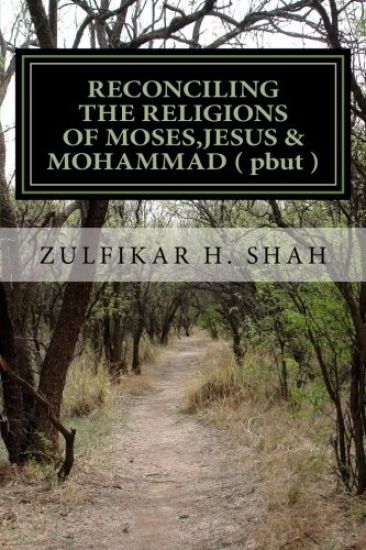
Reconciling the Religions of Moses, Jesus & Mohammad ( Pbut ): For Common Man
Zulfikar H. Shah
Zulfikar Shah
2016
nidottu
To find more information on Rowman & Littlefield titles, please visit www.rlpgbooks.com.
Divine Legation of Moses Demonstrated on the Principles of a Religious Deist, 1738
William Warburton
Kessinger Pub
2003
pokkari
Divine Legation of Moses Demonstrated on the Principles of a Religious Deist, 1738
William Warburton
Kessinger Pub
2003
pokkari
Two verses about Moses in the Bible have been the subject of debate since the first century. In Exodus 33:20, God tells Moses that no one can see God and live, but Numbers 12:8 says that Moses sees the form of the Lord. How does one reconcile these two opposing statements? Did Moses see God, and who gets to decide? The Christian Moses investigates how ancient Christians from the New Testament to Augustine of Hippo resolved questions of who can see God, how one can see God, and what precisely one sees. Jared Calaway explains that the decision about whether and how Moses saw God was not a neutral exercise for an early Christian. Rather, it established the interpreter's authority to determine what was possible in divine-human relations and set the parameters for the nature of humanity. As a result, Calaway argues, interpretations of Moses' visions became a means for Jews and Christians to jockey for power, allowing them to justify particular social arrangements, relations, and identities, to assert the limits of humans in the face of divinity, and to create an Other. Seeing early Christians with new eyes, The Christian Moses reassesses how debates on Moses' visions from the first through the fifth centuries were, in reality, debates on the boundaries of humanity.
Two verses about Moses in the Bible have been the subject of debate since the first century. In Exodus 33:20, God tells Moses that no one can see God and live, but Numbers 12:8 says that Moses sees the form of the Lord. How does one reconcile these two opposing statements? Did Moses see God, and who gets to decide? The Christian Moses investigates how ancient Christians from the New Testament to Augustine of Hippo resolved questions of who can see God, how one can see God, and what precisely one sees. Jared Calaway explains that the decision about whether and how Moses saw God was not a neutral exercise for an early Christian. Rather, it established the interpreter's authority to determine what was possible in divine-human relations and set the parameters for the nature of humanity. As a result, Calaway argues, interpretations of Moses' visions became a means for Jews and Christians to jockey for power, allowing them to justify particular social arrangements, relations, and identities, to assert the limits of humans in the face of divinity, and to create an Other. Seeing early Christians with new eyes, The Christian Moses reassesses how debates on Moses' visions from the first through the fifth centuries were, in reality, debates on the boundaries of humanity.


Harriet Tubman: The Moses of Her People
Citadel Press
1974
nidottu

Five Books of Moses Called the Pentateuch
Southern Illinois Univ Pr
1967
sidottu
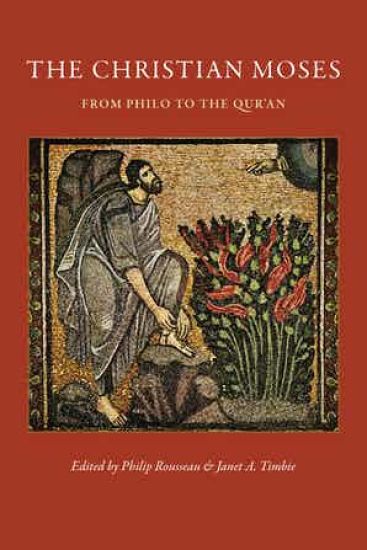
The Christian Moses
The Catholic University of America Press
2019
sidottu
As it developed an increasingly distinctive character of its own during the first six centuries of the common era, Christianity was constantly forced to reassess and adapt its relationship with the Jewish tradition. The process involved a number of preoccupations and challenges: the status of biblical and parabiblical texts (several of them already debatable in Jewish eyes), the nature and purposes of God, patterns of prayer (both personal and liturgical), ritual practices, ethical norms, the acquisition and exercise of religious authority, and the presentation of a religious “face” to the very different culture that surrounded and in many ways dominated both Christians and Jews.The essays in this volume were developed within that broad field of inquiry, and indeed make their contribution to it. For, among the many issues already mentioned, there was also that of persons. What was Christianity to do, not just with Adam or Noah, say, but with Abraham, David and Solomon, the great prophetic figures of Jewish history—and, of course, with Moses?As we move, chapter by chapter, across the early Christian centuries, we see Moses gradually changing in Christian eyes, and at the hands of Christian exegetes and theologians, until he becomes the philosopher par excellence, the forerunner of Plato, the archetype of the lawgiver, the model shepherd of the people of God—yet all on the basis of a scriptural record that Jews would still have been able to recognize.Written by a range of established scholars, younger and older, many of them highly distinguished, The Christian Moses will appeal to graduate and senior students, to those rooted in a range of disciplines—literary, historical, art historical, as well in theology and exegesis—and to everyone interested in Jewish-Christian relations in this early era.