
Kirjahaku
Etsi kirjoja tekijän nimen, kirjan nimen tai ISBN:n perusteella.
1000 tulosta hakusanalla Napolean Hill

Napoleon III: the Man of Prophecy or the Revival of the French Emperorship Anticipated from the Necessity of Prophecy(1859)
G.S. Faber
KESSINGER PUBLISHING CO
2003
pokkari
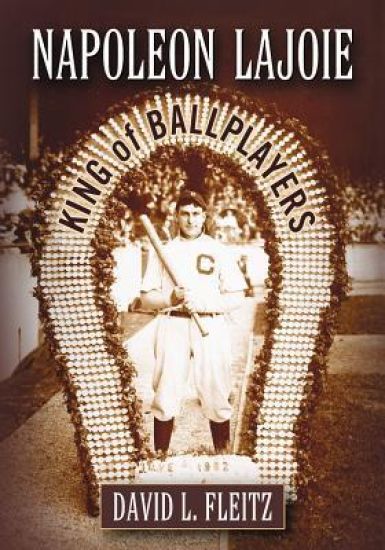
Napoleon Lajoie was the sixth player, and the first second baseman, to be elected to the Baseball Hall of Fame. During his career, which lasted from 1896 to 1916, he was regularly called the "King of Ballplayers" and was widely regarded as the greatest baseball player of all time before Ty Cobb and Babe Ruth came along. Colorful, competitive, and often unpredictable, Lajoie was so popular that the Cleveland team was called the Naps in his honor while he played for them. He was a multiple batting champion, the American League's first Triple Crown winner, and the third member of the 3,000 hits club. This book is the first ever full-length biography of this long ago superstar.
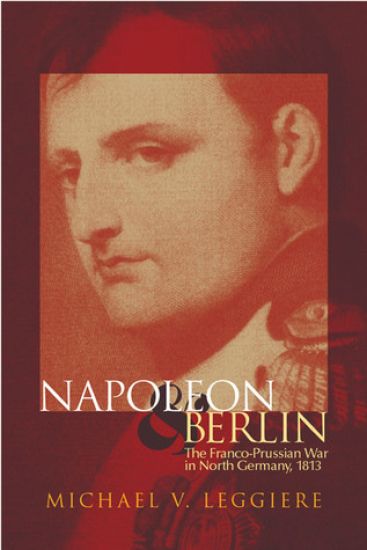
At a time when Napoleon needed all his forces to reassert French dominance in Central Europe, why did he fixate on the Prussian capital of Berlin? Instead of concentrating his forces for a decisive showdown with the enemy, he repeatedly detached large numbers of troops, under ineffective commanders, toward the capture of Berlin. In Napoleon and Berlin, Michael V. Leggiere explores Napoleon's almost obsessive desire to capture Berlin and how this strategy ultimately lost him all of Germany.Napoleon's motives have remained a subject of controversy from his own day until ours. He may have hoped to deliver a tremendous blow to Prussia's war-making capacity and morale. Ironically, the heavy losses and strategic reverses sustained by the French left Napoleon's Grande Armee vulnerable to an Allied coalition that eventually drove Napoleon from Central Europe forever.
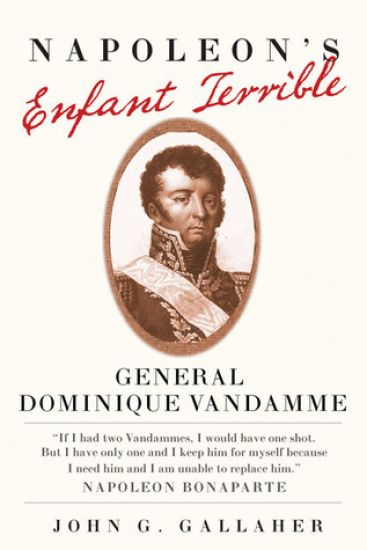
A dedicated career soldier and excellent division and corps commander, Dominique Vandamme was a thorn in the side of practically every officer he served. Outspoken to a fault, he even criticized Napoleon, whom he never forgave for not appointing him marshal. His military prowess so impressed the emperor, however, that he returned Vandamme to command time and again.In this first book-length study of Vandamme in English, John G. Gallaher traces the career of one of Napoleon's most successful midrank officers. He describes Vandamme's rise from a provincial youth with neither fortune nor influence to an officer of the highest rank in the French army. Gallaher thus offers a rare look at a Napoleonic general who served for twenty-five years during the wars of the French Revolution and Napoleonic Empire.This was a time when a general could lose his head if he lost a battle. Despite Vandamme's contentious nature, Gallaher shows, Napoleon needed his skills as a commander, and Vandamme needed Napoleon to further his career. Gallaher draws on a wealth of archival sources in France - notably the Vandamme Papers in Lille - to draw a full portrait of the general. He also reveals new information on such military events as the Silesian campaign of 1807 and the disaster at Kulm in 1813.Gallaher presents Vandamme in the context of the Napoleonic command system, revealing how he related to both subordinates and superiors. Napoleon's Enfant Terrible depicts an officer who was his own worst enemy but who was instrumental in winning an empire.
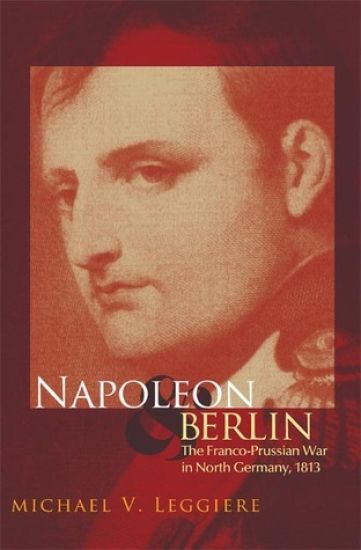
At a time when Napoleon needed all his forces to reassert French dominance in Central Europe, why did he fixate on the Prussian capital of Berlin? Instead of concentrating his forces for a decisive showdown with the enemy, he repeatedly detached large numbers of troops, under ineffective commanders, toward the capture of Berlin. In Napoleon and Berlin, Michael V. Leggiere explores Napoleon's almost obsessive desire to capture Berlin and how this strategy ultimately lost him all of Germany.Napoleon's motives have remained a subject of controversy from his own day until ours. He may have hoped to deliver a tremendous blow to Prussia's war-making capacity and morale. Ironically, the heavy losses and strategic reverses sustained by the French left Napoleon's Grande Armee vulnerable to an Allied coalition that eventually drove Napoleon from Central Europe forever.
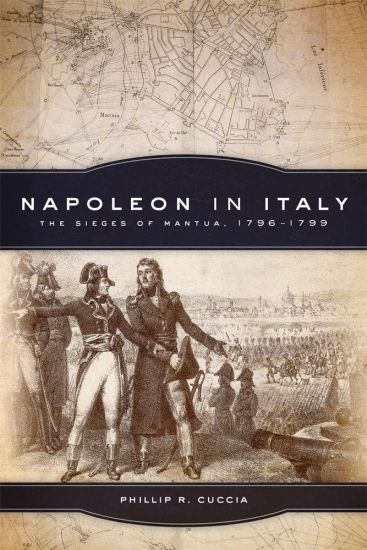
In the center of Mantua, in northern Italy, a covered bridge stretches over the narrow Rio where vendors sell fish from pushcarts just as locals did more than two hundred years ago when Napoleon Bonaparte laid siege to the city. Four cannon balls protruding out of an adjacent wall offer a tacit monument to the sufferings of townspeople during the 1796-1797 siege, when the city, held by Austrian troops, finally fell under French control. Two years later, Mantua was again barraged, this time by a combined Austrian and Russian army, which took it back after four months. In Napoleon in Italy, Phillip R. Cuccia brings to light two understudied aspects of these trying periods in Mantua's history: siege warfare and the conditions it created inside the city.Drawing on underutilized military records in Austrian, French, and Italian archives, Cuccia delves into these important conflicts to integrate political and social issues with a campaign study. Unlike other military histories of the era, Napoleon in Italy brings to light the words of soldiers, leaders, and citizens who experienced the sieges firsthand. Cuccia also shows how the sieges had consequences long after they were over. The surrender and proposed court-martial of François-Philippe de Foissac-Latour, the French general in charge of Mantua in 1799, sheds new light on Napoleon's disdain for defeat. Foissac-Latour faced Napoleon's ire, expulsion from the army, and harsh public criticism.Napoleon in Italy is not only the story of Mantua's strategic importance. Mantua also symbolized Napoleon's voracious determination to win and Austria's desperation to retain its possessions. By placing the sieges of Mantua in an eighteenth-century international context, Cuccia introduces readers to a broader understanding of siege warfare and of how the global impacts the local.
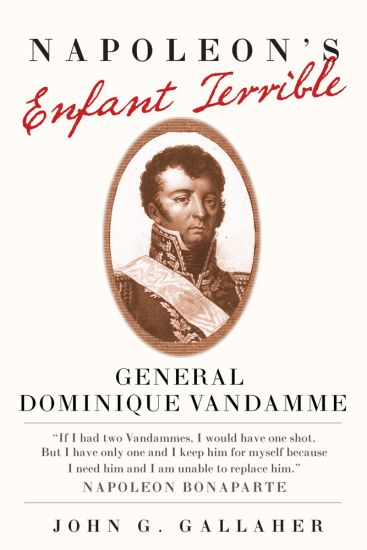
A dedicated career soldier and excellent division and corps commander, Dominique Vandamme was a thorn in the side of practically every officer he served. Outspoken to a fault, he even criticized Napoleon, whom he never forgave for not appointing him marshal. His military prowess so impressed the emperor, however, that he returned Vandamme to command time and again.In this first book-length study of Vandamme in English, John G. Gallaher traces the career of one of Napoleon’s most successful midrank officers. He describes Vandamme’s rise from a provincial youth with neither fortune nor influence to an officer of the highest rank in the French army. Gallaher thus offers a rare look at a Napoleonic general who served for twenty-five years during the wars of the French Revolution and Napoleonic Empire.This was a time when a general could lose his head if he lost a battle. Despite Vandamme’s contentious nature, Gallaher shows, Napoleon needed his skills as a commander, and Vandamme needed Napoleon to further his career. Gallaher draws on a wealth of archival sources in France-notably the Vandamme Papers in Lille-to draw a full portrait of the general. He also reveals new information on such military events as the Silesian campaign of 1807 and the disaster at Kulm in 1813.Gallaher presents Vandamme in the context of the Napoleonic command system, revealing how he related to both subordinates and superiors. Napoleon’s Enfant Terrible depicts an officer who was his own worst enemy but who was instrumental in winning an empire.
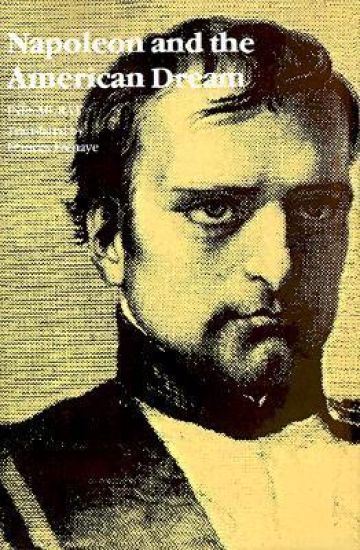
Ines Murat's readable and entertaining narrative introduces us to little-known facts about the adventures and misadventures of numerous French veterans of Waterloo who migrated to the United States. More often than not, their visions of life in this country conflicted with the original New World dream of the peaceful pioneer.For two centuries, the lure of what we now call the American Dream had beckoned rich and poor from the Old World. ""In all respects,"" said Napoleon, ""America was our true refuge."" Reported by Las Cases in the Mémorial de Sainte-Hélène, this statement signifies only one phase of the connections between the Emperor and the United States.Anecdotes and incisive portraits of numerous Bonapartists who came to America vividly portray the complex intermeshing between the Emperor and the United States. Anecdotes and incisive portraits of numerous Bonapartists who came to America vividly portray the complex intermeshing between the ideals of the French Revolution and the new forms of freedom that had been born in America. These dramatic accounts bring to the foreground of history the impact of two world views- that of the Old World, sheltered in the shadow of Napoleon's belief in historical destiny, and that of the New World, more experimental and industrious. The clash produced a resounding din in the Napoleonic epoch, for which Napoleon and the American Dream traces new routes and relationships between two cultures.
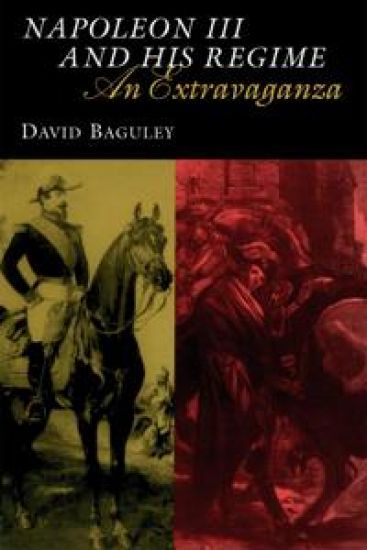
Referred to in his time as ""the Pretender"" and ""the sphinx of the Tuileries,"" Louis Napoléon Bonaparte, the nephew of Emperor Napoleon I of France and himself ruler of the Second Empire (1852-1870), so managed the manufacture of his public image and the masking of his private self that he is, ultimately, unknowable to this day. From the mysterious circumstances of his conception in 1807 to the strange events of his downfall in 1870 and death in 1873, he lived, loved, and reigned in an extraordinary aura of myth and fantasy under the shadow of his more famous uncle. Taking a highly innovative approach to this intriguing historical figure, David Baguley entertains sources in a mélange of media and forms, pictures, performances, spectacles, rituals, music, fiction, poems, plays, architecture, fashion, as well as Louis Napoléon's own writings, to explore how the ruler was represented, invented, and interpreted by detractors and defenders alike. The dynamic process by which the legend of Napoleon III was elaborately fabricated and then vigorously dismantled unfolds under Baguley's hand not chronologically but by generic categories, reflecting the author's underlying conviction that history and literary depictments are not as incompatible as is often assumed. Baguley examines works by, among many others, Victor Hugo, Karl Marx, Émile Zola, Honoré Daumier, Jacques Offenbach, Gustave Flaubert, and Elizabeth Barrett Browning that range from history and biography to romanticized versions of the Emperor's feats to parody, caricature, and satire. With its conspiratorial origins, its rising and dramatically falling action, its schemes, scandals, and tragic denouement, the Second Empire appears designed to inspire writers and artists. Napoleon III, Baguley observes, could well have been the central character, or temperament, in a naturalist novel.While most historians consider Louis Napoléon's coup d'état of December 1851 to be his boldest endeavor, Baguley shows in this expansive and eloquent work that his most extravagant venture was to found a second Napoleonic empire, and he illustrates not only the power of the name and the image but also the precariousness of the Emperor's reliance upon them. For Napoleon III, dissimulation was his natural state; opportunist or utopian reformer, or something in between, he must remain one of history's most elusive and controversial figures, ever resisting final assessment.
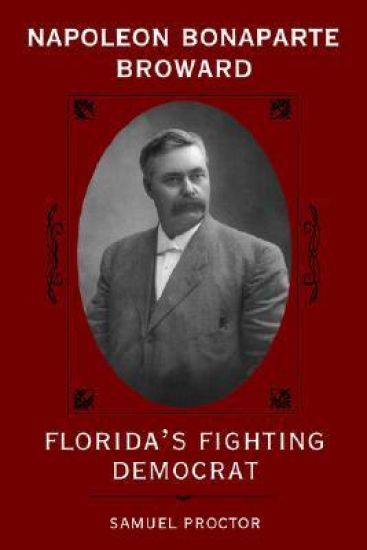
From reviews of the first edition: "The impact of [Broward's] career upon the Florida political scene is told by Samuel Proctor with a skill that combines suspense and accuracy. . . . A great contribution in the field of Florida history."--Miami Daily News "The first full-dress biography of [a] colorful Florida politician. . . . His name is perpetuated in the county created at the height of the drainage boom for which he was chiefly responsible. But to many Floridians the name of Broward means a daring filibusterer who smuggled guns and guerrillas to Cuba's revolutionaries. That melodramatic chapter of Broward's life is not overlooked by biographer Proctor."-- Miami Herald Now in a new paperback edition, Samuel Proctor's popular biography was first described as "a lusty narrative of a lusty age." Revealing the politics and intrigues of frontier Florida in the period still known as the "Broward Era," Proctor describes the life and liberal administration of Napoleon Bonaparte Broward (1857-1910), elected governor of Florida in 1904. Hailed as chief of the "wool hat" faction in Florida and as a leader of the populist movement in the South and throughout the country, Broward identified with laborers, farmers, and tradesmen and fought bitterly against the railroad magnates, lumber barons, and land pirates who dominated Florida politics after the Civil War. Under his leadership the legislature passed the progressive Buckman Act, which consolidated seven state colleges into two universities at Gainesville and Tallahassee and unified them under a Board of Control, and enacted tax reforms, child labor restrictions, and regulations to prevent the sale of cigarettes to minors. In an effort to turn acres of rich muck into productive farmland, Broward initiated the Everglades drainage project (with the now infamous slogan "Water will run downhill"). Through his life passed such figures as Theodore Roosevelt, inspecting newly rebuilt Jacksonville after the 1901 fire; Carry Nation, waving her Prohibition banner; Gentleman Jim Corbett, defending his heavyweight boxing title in Jacksonville; and Cuban patriots boarding Broward's famous river steamer, The Three Friends. For this work Proctor examined newspaper files and letters and documents held by the Broward family and interviewed several of the governor's political associates and his immediate family, including children, a sister, and his widow (who received the first copy of the book off the press in 1952).Samuel Proctor is distinguished service professor of history at the University of Florida and editor of the Bicentennial Floridiana Facsimile Series (UPF). He is the author of Gator History: A Pictorial History of the University of Florida, Jews of the South: Selected Essays, and Florida a Hundred Years Ago and coeditor of Tacachale: Essays on the Indians of Florida and Southeastern Georgia during the Historic Period. He is also the longtime editor of the Florida Historical Quarterly.
Napoleon in America: Bonaparte and the Rhetoric of Us Empire
Mark F. Ehlers
UNIVERSITY OF VIRGINIA PRESS
2025
sidottu
Napoleon in America: Bonaparte and the Rhetoric of Us Empire
Mark F. Ehlers
UNIVERSITY OF VIRGINIA PRESS
2025
nidottu
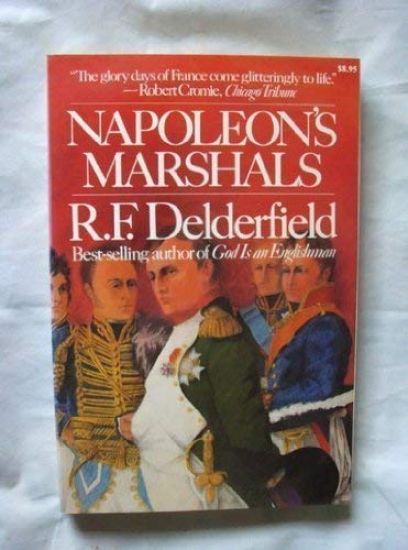
Napoleon's Marshals led the troops of France in battles across Europe from 1804 to 1815. A mixed group of twenty-six men, some of the Marshals came from aristocratic backgrounds, some had originally pursued tradesmen careers as drapers and bakers, and others rose from total poverty to hold the highest positions in the empire below the emperor himself. Delderfield's exciting chronicle of these men and their battles tells of their origins, their elevation under the rule of Napoleon, the kingships achieved by some and the betrayals of others, and the Marshals' changing relationship with their leader as the fortunes of the empire rose and fell.

NAPOLEON AND ALEXANDER
RowmanLittlefield
1978
sidottu

Beginning with the earliest days of his meteoric rise to power at the turn of the nineteenth century and continuing into the post-soviet era, Napoleon Bonaparte has maintained a peculiar grip on Russian popular and literary imagination. Heralded as the Messiah, condemned as the Antichrist, and lauded as the spirit of the Revolution, Napoleon invaded Russia at a critical period in its historical development, when ideas about nation and identity were beginning to take form in literature and public debate. Using traditional methods and tools of literary analysis, this book examines the figure of Napoleon in the context of uniquely Russian paradigms and myths. It analyzes the motifs, images, and plots that underlie the ongoing process of the mythologization of Napoleon and demonstrates how the speaking terms in which Russians regaled this outsider, at various moments and in different contexts, expose strategies Russians used in common to fashion their own self-image and that of their nation.
This is the first book in English devoted to the history of Italy as a whole under the rule of Napoleon Bonaparte. Drawing largely on printed primary sources and the large number of secondary works that have been written in French and Italian, it seeks to present a balanced summary of conclusions reached by historians. Napoleon's Italy addresses the source of Napoleon's continued interest in Italy, exploring not only his apparent intentions with regard to the future of that country but the effect of fifteen years of Napoleonic rule. This book examines the impact of his continued interest in Italy on the country's economy in its various and diverse regions; on its legal, judicial, and administrative systems; and on Napoleon's use of Italy's conscripted armies. It assesses the degree of support and hostility his rule received, as well as the nature of the resistance to it. Finally, this book seeks to compute what sort of legacy Napoleon's rule has left behind in Italy. Desmond Gregory has published widely, including eight academic history books.
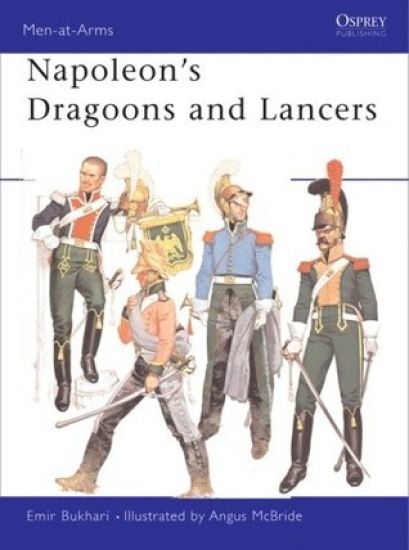
France was to call up a total of 1,600,000 men during the Napoleonic Wars, of whom a mere 600,000 were to survive. For those conscripted into service, one of the better fates would be recruitment as a cavalryman. Napoleon's dragoons were not just any band of individuals sorted and labelled cavalrymen; they were mounted infantrymen, trained to be adept with both musket and sabre, and proud of that distinction. Originally mounted for the sake of mobility but generally fighting on foot, they evolved into an army equally at home sabring at the charge as firing dismounted.