Kirjojen hintavertailu. Mukana 11 342 296 kirjaa ja 12 kauppaa.

Kirjahaku

Etsi kirjoja tekijän nimen, kirjan nimen tai ISBN:n perusteella.

1000 tulosta hakusanalla Neil T. Sinclair

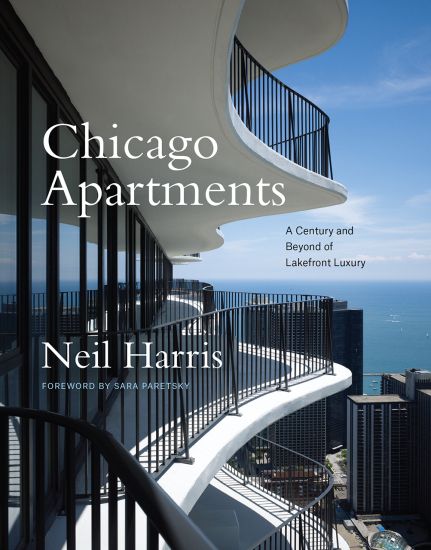
Chicago Apartments

Chicago Apartments

Neil Harris; Teri J Edelstein; Sara Paretsky

University of Chicago Press
2020
sidottu
The Chicago lakefront is one of America's urban wonders. The ribbon of high rise luxury apartment buildings along the Lake Michigan shore has few, if any, rivals nationwide for sustained architectural significance. This historic confluence of site, money, style, and development lies at the heart of the updated edition of Neil Harris's Chicago Apartments: A Century and Beyond of Lakefront Luxury. The book features more than 100 buildings, stretching from south to north and across more than a century, each with its own special combination of design choice, floor plans, and background story. Harris, with the assistance of Teri J. Edelstein, proves to be an affable and knowledgeable tour guide, guiding us through dozens of buildings, detailing a host of inimitable development histories, design choices, floor plans, and more along the way. Of particular note are recent structures on the Chicago River and south of the Loop that are proposing new definitions of comfort and extravagance. Featuring nearly 350 stunning images and a foreword by renowned Chicago author Sara Paretsky, this new edition of Chicago Apartments offers a wide-ranging look inside some of the Windy City's most magnificent abodes.
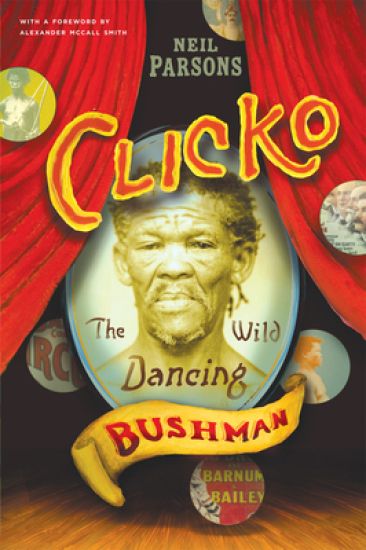
Clicko

Clicko

Neil Parsons; Alexander McCall Smith

University of Chicago Press
2010
sidottu
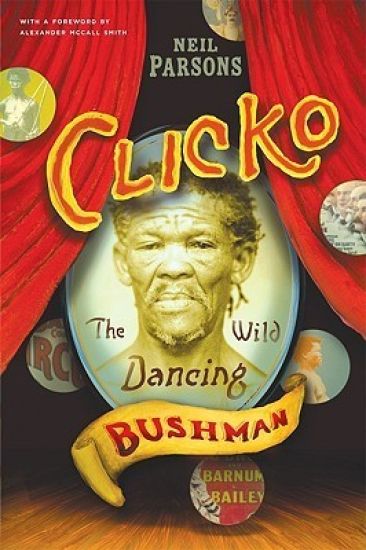
During the 1920s and '30s, Franz Taibosh - whose stage name was Clicko - performed in front of millions as one of the stars of the Ringling Brothers and Barnum & Bailey Circus. Prior to his fame in the United States, Taibosh toured the world as the 'Wild Dancing Bushman', showing off his frenzied dance moves in freak shows, sideshows, and music halls from Australia to Cuba. When he died in 1940, the "New York Times" called him 'the only African bushman ever exhibited in this country'. In "Clicko", Neil Parsons unearths the untold story of Taibosh's journey from boyhood on a small farm in South Africa to top billing as one of the travelling World's Fair Freaks. Through Taibosh's tale, Parsons brings to life the bizarre golden age of entertainment as well as the role that the dubious new science of race played in it. Beginning with Taibosh's early life, Clicko untangles the real story of his ancestry from the web of myths spun around him on his rise to international stardom. Parsons then chronicles the unhappy middle period of Taibosh's career, when he suffered under the heel of a vicious manager. Left to freeze and nearly starve in an unheated apartment, Taibosh was rescued by Frank Cook, Barnum & Bailey's lawyer. The Cooks adopted Taibosh as a member of their family of circus managers and performers, and his happy - if far from average - years with them make up the final chapter of this remarkable story. Equal parts entertaining and disturbing, "Clicko" vividly evokes a forgotten era when vaudeville drew massive crowds and circus freaks were featured in Billboard and Variety. Parsons introduces us to colorful characters such as George Auger the giant and the original Zip the Pinhead, but above all, he gives us an unforgettable portrait of Franz Taibosh, rescued at last from the racists and the romantics and revealed here as an ordinary man with an extraordinary life.
Clicko

Clicko

Neil Parsons; Alexander McCall Smith

University of Chicago Press
2010
nidottu
During the 1920s and '30s, Franz Taibosh - whose stage name was Clicko - performed in front of millions as one of the stars of the Ringling Brothers and Barnum & Bailey Circus. Prior to his fame in the United States, Taibosh toured the world as the 'Wild Dancing Bushman', showing off his frenzied dance moves in freak shows, sideshows, and music halls from Australia to Cuba. When he died in 1940, the "New York Times" called him 'the only African bushman ever exhibited in this country'. In "Clicko", Neil Parsons unearths the untold story of Taibosh's journey from boyhood on a small farm in South Africa to top billing as one of the travelling World's Fair Freaks. Through Taibosh's tale, Parsons brings to life the bizarre golden age of entertainment as well as the role that the dubious new science of race played in it. Beginning with Taibosh's early life, Clicko untangles the real story of his ancestry from the web of myths spun around him on his rise to international stardom. Parsons then chronicles the unhappy middle period of Taibosh's career, when he suffered under the heel of a vicious manager. Left to freeze and nearly starve in an unheated apartment, Taibosh was rescued by Frank Cook, Barnum & Bailey's lawyer. The Cooks adopted Taibosh as a member of their family of circus managers and performers, and his happy - if far from average - years with them make up the final chapter of this remarkable story. Equal parts entertaining and disturbing, "Clicko" vividly evokes a forgotten era when vaudeville drew massive crowds and circus freaks were featured in Billboard and Variety. Parsons introduces us to colorful characters such as George Auger the giant and the original Zip the Pinhead, but above all, he gives us an unforgettable portrait of Franz Taibosh, rescued at last from the racists and the romantics and revealed here as an ordinary man with an extraordinary life.
Richard Rorty

Richard Rorty

Neil Gross

University of Chicago Press
2019
pokkari
On his death in 2007, Richard Rorty was heralded by the New York Times as "one of the world's most influential contemporary thinkers." Controversial on the left and the right for his critiques of objectivity and political radicalism, Rorty experienced a renown denied to all but a handful of living philosophers. In this masterly biography, Neil Gross explores the path of Rorty's thought over the decades in order to trace the intellectual and professional journey that led him to that prominence. The child of a pair of leftist writers who worried that their precocious son "wasn't rebellious enough," Rorty enrolled at the University of Chicago at the age of fifteen. There he came under the tutelage of polymath Richard McKeon, whose catholic approach to philosophical systems would profoundly influence Rorty's own thought. Doctoral work at Yale led to Rorty's landing a job at Princeton, where his colleagues were primarily analytic philosophers. With a series of publications in the 1960s, Rorty quickly established himself as a strong thinker in that tradition--but by the late 1970s Rorty had eschewed the idea of objective truth altogether, urging philosophers to take a "relaxed attitude" toward the question of logical rigor. Drawing on the pragmatism of John Dewey, he argued that philosophers should instead open themselves up to multiple methods of thought and sources of knowledge--an approach that would culminate in the publication of Philosophy and the Mirror of Nature, one of the most seminal and controversial philosophical works of our time. In clear and compelling fashion, Gross sets that surprising shift in Rorty's thought in the context of his life and social experiences, revealing the many disparate influences that contribute to the making of knowledge. As much a book about the growth of ideas as it is a biography of a philosopher, Richard Rorty will provide readers with a fresh understanding of both the man and the course of twentieth-century thought.
Measuring the New World

Measuring the New World

Neil Safier

University of Chicago Press
2008
sidottu
Prior to 1735, South America was largely terra incognita to many Europeans. But that year, the Paris Academy of Sciences sent a joint French and Spanish mission to the Spanish American province of Quito (in present-day Ecuador) to study the curvature of the Earth at the Equator - an expedition that would put South America on the map and in the minds of Europeans for centuries to come. Equipped with quadrants and telescopes, the mission's participants referred to the transfer of scientific knowledge from Europe to the Andes as a "sacred fire" passing mysteriously through European astronomical instruments to curious observers in South America.By looking at the social and material traces of this expedition, "Measuring the New World" examines the transatlantic flow of knowledge in reverse - from West to East. Through ephemeral monuments and geographical maps, from the Andes to the Amazon River, the book explores how the social and cultural worlds of South America contributed to the production of European scientific knowledge during the Enlightenment. Neil Safier uses the notebooks of traveling philosophers, including Charles-Marie de La Condamine and others, as well as maps and specimens from the expedition, to place this particular scientific endeavor in the larger context of early modern print culture and the emerging intellectual category of scientist as author.
Measuring the New World

Measuring the New World

Neil Safier

University of Chicago Press
2012
nidottu
Prior to 1735, South America was terra incognita to many Europeans. But that year, the Paris Academy of Sciences sent a mission to the Spanish-American province of Quito (in present-day Ecuador) to study the curvature of the earth at the Equator. Equipped with quadrants and telescopes, the mission's participants referred to the transfer of scientific knowledge from Europe to the Andes as a "sacred fire" passing mysteriously through European astronomical instruments to observers in South America. By taking an innovative interdisciplinary look at the traces of this expedition, "Measuring the New World" examines the transatlantic flow of knowledge from West to East. Through ephemeral monuments and geographical maps, this book explores how the social and cultural worlds of South America contributed to the production of European scientific knowledge during the Enlightenment. Neil Safier uses the notebooks of traveling philosophers, as well as specimens from the expedition, to place this particular scientific endeavor in the larger context of early modern print culture and the emerging intellectual category of scientist as author.
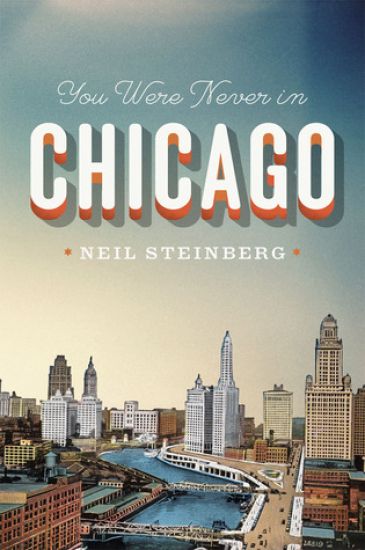
You Were Never in Chicago

You Were Never in Chicago

Neil Steinberg

University of Chicago Press
2012
sidottu
In 1952 the "New Yorker" published a three-part essay by A.J. Liebling in which he dubbed "Chicago the Second City". From garbage collection to the skyline, nothing escaped Liebling's withering gaze. Among the outraged responses from Chicago residents was one that Liebling described as the apotheosis of such criticism: a postcard that read, simply, "You were never in Chicago." Neil Steinberg has lived in and around Chicago for more than three decades - ever since he left his hometown of Berea, Ohio, to attend Northwestern University - yet he remains fascinated by the dynamics captured in Liebling's anecdote. In "You Were Never in Chicago" Steinberg weaves the story of his own coming-of-age as a young outsider who made his way into the inner circles and upper levels of Chicago journalism with a nuanced portrait of the city that will surprise even lifelong residents. Steinberg takes readers through Chicago's vanishing industrial past and explores the city from such vantages as the quaint skybridge between the towers of the Wrigley Building and the depths of the vast Deep Tunnel system below the streets. He deftly explains the city's complex web of political favoritism and carefully profiles the characters he meets along the way, from greats of jazz and journalism to small-business owners just getting by. Throughout, Steinberg never loses the curiosity and close observation of an outsider, while thoughtfully considering how this perspective has shaped the city, and what it really means to belong. Intimate and layered, "You Were Never in Chicago" will be a welcome addition to the bookshelves of all Chicagoans - be they born in the city or forever transplanted.
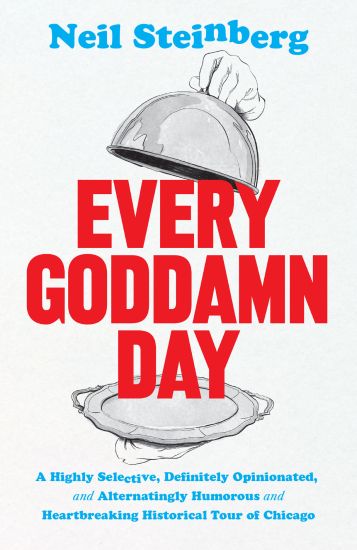
Every Goddamn Day: A Highly Selective, Definitely Opinionated, and Alternatingly Humorous and Heartbreaking Historical Tour of Chicago
A daily celebration of Chicago's history, both known and obscure, and always entertaining. Every day in Chicago is a day to remember. In a city so rich with history, every day is the anniversary of some storied historical or cultural moment, whether it's the dedication of the Pablo Picasso sculpture downtown on August 15, or the arrest of Rod Blagojevich at his Ravenswood home on December 9, or a fire that possibly involved a cow on October 8. In Every Goddamn Day, acerbic Chicago Sun-Times columnist Neil Steinberg takes the story of the city, pares away the dull, eat-your-peas parts, and provides 366 captivating daily readings in what makes Chicago Chicago and America America. It calls upon a wide cast of characters, from Oscar Wilde to Muhammad Ali, from Emma Goldman to Teddy Roosevelt, and from Richard M. Daley to Fred Hampton, to create a compelling narrative that can be read at a sitting or in a yearlong series of daily doses. From New Year's Day to New Years' Eve, Steinberg takes us on a vivid and entertaining tour, illuminating the famous, obscure, tragic, and hilarious elements that make each day in Chicago memorable.
The Gardener's Guide to Prairie Plants

The Gardener's Guide to Prairie Plants

Neil Diboll; Hilary Cox

THE UNIVERSITY OF CHICAGO PRESS
2023
nidottu
A comprehensive and beautifully illustrated reference for all gardeners passionate about native plants and prairie restoration. The Gardener’s Guide to Prairie Plants is the one-stop compendium for all gardeners aspiring to use native prairie plants in their gardens. Neil Diboll and Hilary Cox—two renowned prairie gardeners—compile more than four decades’ worth of research to offer a wide-ranging and definitive reference for starting and maintaining prairie and meadow gardens and restorations. Alongside detailed synopses of plant life cycles, meticulous range maps, and sweeping overviews of natural history, Diboll and Cox also include photographs of 148 prairie plants in every stage of development, from seedling to seedhead. North America’s grasslands once stretched from the Blue Ridge to the Rocky Mountains, and from Texas to Manitoba, blanketing the mid-continent with ecologically important, garden-worthy, native species. This book provides all the inspiration and information necessary for eager native planters from across the country to welcome these plants back to their landscapes. The Gardener’s Guide to Prairie Plants is a must-have reference for gardeners, restorationists, and every flora fan with a passion for native plants, prairies and meadows.
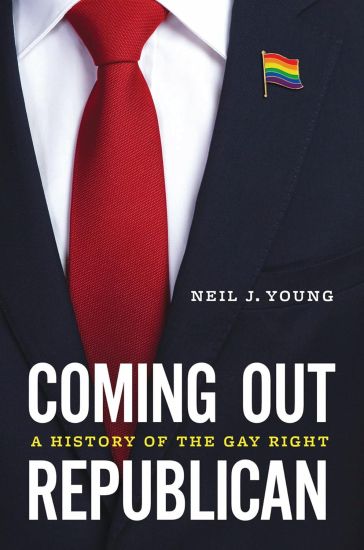
Coming Out Republican

Coming Out Republican

Neil J. Young

THE UNIVERSITY OF CHICAGO PRESS
2024
sidottu
A revelatory and comprehensive history of the gay Right from incisive political commentator Neil J. Young.? One of the most maligned, misunderstood, and even mocked constituencies in American politics, gay Republicans regularly face condemnation from both the LGBTQ+ community and their own political party. Yet they’ve been active and influential for decades. Gay conservatives were instrumental, for example, in ending “Don’t Ask, Don’t Tell” and securing the legalization of same-sex marriage—but they also helped lay the groundwork for the rise of Donald Trump. In Coming Out Republican, political historian and commentator Neil J. Young provides the first comprehensive history of the gay Right. From the 1950s up to the present day, Young excavates the multifarious origins, motivations, and evolutions of LGBTQ+ people who found their way to the institutions and networks of modern conservatism. Many on the gay Right have championed conservative values—like free markets, a strong national defense, and individual liberty—and believed that the Republican Party therefore offered LGBTQ+ people the best pathway to freedom. Meanwhile, that same party has actively and repeatedly demonized them. With his precise and provocative voice, Young details the complicated dynamics of being in—and yet never fully accepted into—the Republican Party.Coming Out Republican provides striking insight into who LGBTQ+ conservatives are, what they want, and why many of them continue to align with a party whose rank and file largely seem to hate them. As the Republican Party renews its assaults on LGBTQ+ rights, understanding the significant history of the gay Right has never been more critical.
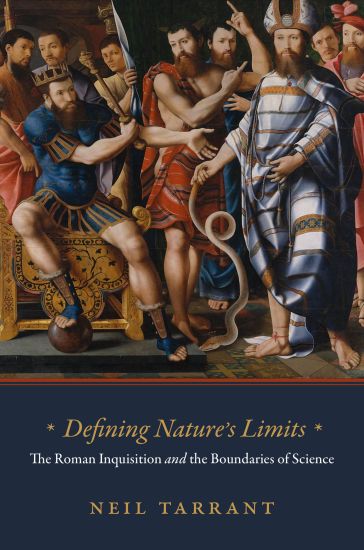
Defining Nature's Limits

Defining Nature's Limits

Neil Tarrant

THE UNIVERSITY OF CHICAGO PRESS
2022
sidottu
A look at the history of censorship, science, and magic from the Middle Ages to the post-Reformation era. Neil Tarrant challenges conventional thinking by looking at the longer history of censorship, considering a five-hundred-year continuity of goals and methods stretching from the late eleventh century to well into the sixteenth. Unlike earlier studies, Defining Nature's Limits engages the history of both learned and popular magic. Tarrant explains how the church developed a program that sought to codify what was proper belief through confession, inquisition, and punishment and prosecuted what they considered superstition or heresy that stretched beyond the boundaries of religion. These efforts were continued by the Roman Inquisition, established in 1542. Although it was designed primarily to combat Protestantism, from the outset the new institution investigated both practitioners of "illicit" magic and inquiries into natural philosophy, delegitimizing certain practices and thus shaping the development of early modern science. Describing the dynamics of censorship that continued well into the post-Reformation era, Defining Nature's Limits is revisionist history that will interest scholars of the history science, the history of magic, and the history of the church alike.
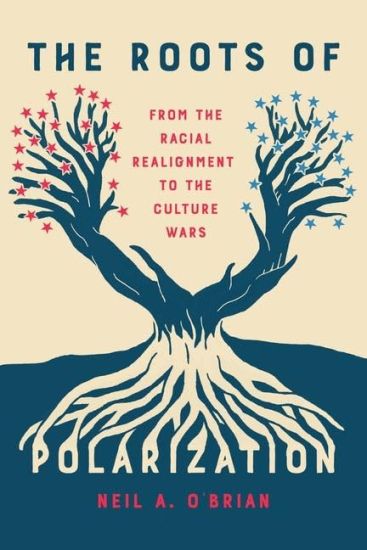
The Roots of Polarization

The Roots of Polarization

Neil A. O'Brian

THE UNIVERSITY OF CHICAGO PRESS
2024
sidottu
A deeply researched account of how battles over civil rights in the 1960s shaped today’s partisan culture wars. In the late twentieth century, gay rights, immigration, gun control, and abortion debates all burst onto the political scene, scrambling the parties and polarizing the electorate. Neil A. O’Brian traces the origins of today’s political divide on these issues to the 1960s when Democrats and Republicans split over civil rights. It was this partisan polarization over race, he argues, that subsequently shaped partisan fault lines on other culture war issues that persist to this day. Using public opinion data dating to the 1930s, O’Brian shows that attitudes about civil rights were already linked with a range of other culture war beliefs decades before the parties split on these issues—and much earlier than previous scholarship realized. Challenging a common understanding of partisan polarization as an elite-led phenomenon, The Roots of Polarization argues politicians and interest groups, jockeying for power in the changing party system, seized on these preexisting connections in the mass public to build the parties’ contemporary coalitions.
The Roots of Polarization

The Roots of Polarization

Neil A. O'Brian

THE UNIVERSITY OF CHICAGO PRESS
2024
nidottu
A deeply researched account of how battles over civil rights in the 1960s shaped today’s partisan culture wars. In the late twentieth century, gay rights, immigration, gun control, and abortion debates all burst onto the political scene, scrambling the parties and polarizing the electorate. Neil A. O’Brian traces the origins of today’s political divide on these issues to the 1960s when Democrats and Republicans split over civil rights. It was this partisan polarization over race, he argues, that subsequently shaped partisan fault lines on other culture war issues that persist to this day. Using public opinion data dating to the 1930s, O’Brian shows that attitudes about civil rights were already linked with a range of other culture war beliefs decades before the parties split on these issues—and much earlier than previous scholarship realized. Challenging a common understanding of partisan polarization as an elite-led phenomenon, The Roots of Polarization argues politicians and interest groups, jockeying for power in the changing party system, seized on these preexisting connections in the mass public to build the parties’ contemporary coalitions.
The Symphony Concert in Nazi Germany

The Symphony Concert in Nazi Germany

Neil Gregor

THE UNIVERSITY OF CHICAGO PRESS
2025
sidottu
A new history of how the musical worlds of German towns and cities were transformed during the Nazi era. In the years after the Nazis came to power in January 1933 and through the war years all aspects of life in Germany changed. However, despite the social and political upheaval, gentile citizens were able to continue leisure activities such as attending concerts. In this book, historian Neil Gregor surveys the classical concert scene in Nazi Germany from the perspective of the audience, rather than institutions or performers. Gregor delves into the cultural lives of ordinary Germans under conditions of dictatorship. Did the ways in which Germans heard music in the period change? Did a Nazi way of listening emerge? For audiences, Gregor shows, changes to the concert experience were small and often took place around the edges. This, combined with the preserved idea of the concert hall as a space of imagined civility and cultivation, led many concertgoers and music lovers to claim after the war that their field and their practice had been innocent-a place to retreat from the vicious violence and racism of the Nazi regime. Drawing on untapped archival sources, The Symphony Concert in Nazi Germany reveals that the true history was one of disruption but also of near effortless adaptation. Through countless small acts, the symphony concert was reframed within the languages of strident nationalism, racism, and militarism to ensure its place inside the cultural cosmos of National Socialist Germany.
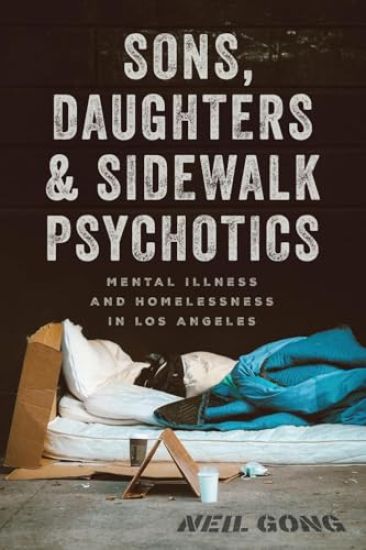
Sons, Daughters, and Sidewalk Psychotics

Sons, Daughters, and Sidewalk Psychotics

Neil Gong

THE UNIVERSITY OF CHICAGO PRESS
2025
nidottu
Sociologist Neil Gong explains why mental health treatment in Los Angeles rarely succeeds, for the rich, the poor, and everyone in between. In 2022, Los Angeles became the US county with the largest population of unhoused people, drawing a stark contrast with the wealth on display in its opulent neighborhoods. In Sons, Daughters, and Sidewalk Psychotics, sociologist Neil Gong traces the divide between the haves and have-nots in the psychiatric treatment systems that shape the life trajectories of people living with serious mental illness. In the decades since the United States closed its mental hospitals in favor of non-institutional treatment, two drastically different forms of community psychiatric services have developed: public safety-net clinics focused on keeping patients housed and out of jail, and elite private care trying to push clients toward respectable futures. In Downtown Los Angeles, many people in psychiatric crisis only receive help after experiencing homelessness or arrests. Public providers engage in guerrilla social work to secure them housing and safety, but these programs are rarely able to deliver true rehabilitation for psychological distress and addiction. Patients are free to refuse treatment or use illegal drugs—so long as they do so away from public view. Across town in West LA or Malibu, wealthy people diagnosed with serious mental illness attend luxurious treatment centers. Programs may offer yoga and organic meals alongside personalized therapeutic treatments, but patients can feel trapped, as their families pay exorbitantly to surveil and “fix” them. Meanwhile, middle-class families—stymied by private insurers, unable to afford elite providers, and yet not poor enough to qualify for social services—struggle to find care at all. Gong’s findings raise uncomfortable questions about urban policy, family dynamics, and what it means to respect individual freedom. His comparative approach reminds us that every “sidewalk psychotic” is also a beloved relative and that the kinds of policies we support likely depend on whether we see those with mental illness as a public social problem or as somebody’s kin. At a time when many voters merely want streets cleared of “problem people,” Gong’s book helps us imagine a fundamentally different psychiatric system—one that will meet the needs of patients, families, and society at large.
Theater of the Mind

Theater of the Mind

Neil Verma

University of Chicago Press
2012
sidottu
For generations, fans and critics have characterized classic American radio drama as a "theater of the mind". This book examines that characterization by recasting the radio play as an aesthetic object within its unique historical context. In "Theater of the Mind", Neil Verma applies an array of critical methods to more than six thousand recordings to produce a vivid new account of radio drama from the Depression to the Cold War. In this sweeping exploration of dramatic conventions, Verma investigates legendary dramas by the likes of Norman Corwin, Lucille Fletcher, and Wyllis Cooper on key programs ranging from The Columbia Workshop, The Mercury Theatre on the Air, and Cavalcade of America to Lights Out!, Suspense, and Dragnet to reveal how these programs promoted and evolved a series of models of the imagination. With close readings of individual sound effects and charts of broad trends among formats, Verma not only gives us a new account of the most flourishing form of genre fiction in the mid-twentieth century but also presents a powerful case for the central place of the aesthetics of sound in the history of modern experience.
Theater of the Mind

Theater of the Mind

Neil Verma

University of Chicago Press
2012
nidottu
For generations, fans and critics have characterized classic American radio drama as a "theater of the mind". This book examines that characterization by recasting the radio play as an aesthetic object within its unique historical context. In "Theater of the Mind", Neil Verma applies an array of critical methods to more than six thousand recordings to produce a vivid new account of radio drama from the Depression to the Cold War. In this sweeping exploration of dramatic conventions, Verma investigates legendary dramas by the likes of Norman Corwin, Lucille Fletcher, and Wyllis Cooper on key programs ranging from The Columbia Workshop, The Mercury Theatre on the Air, and Cavalcade of America to Lights Out!, Suspense, and Dragnet to reveal how these programs promoted and evolved a series of models of the imagination. With close readings of individual sound effects and charts of broad trends among formats, Verma not only gives us a new account of the most flourishing form of genre fiction in the mid-twentieth century but also presents a powerful case for the central place of the aesthetics of sound in the history of modern experience.
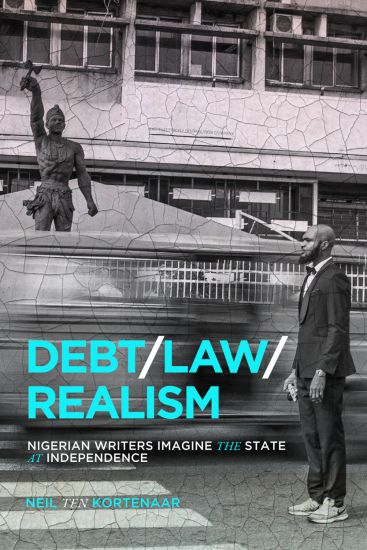
Debt, Law, Realism

Debt, Law, Realism

Neil ten Kortenaar

McGill-Queen's University Press
2021
sidottu
In the decade before and after independence, Nigerians not only adopted the novel but reinvented the genre. Nigerian novels imagined the new state, with its ideals of the rule of law, state sovereignty, and a centralized administration.Debt, Law, Realism argues that Nigerian novels were not written for a Western audience, as often stated, but to teach fellow citizens how to envision the state. The first Nigerian novels were overwhelmingly realist because realism was a way to convey the understanding shared by all subject to the rule of law. Debt was an important theme used to illustrate the social trust needed to live with strangers. But the novelists felt an ambivalence towards the state, which had been imposed by colonial military might. Even as they embraced the ideal of the rule of law, they kept alive a memory of other ways of governing themselves. Many of the first novelists – including Chinua Achebe – were Igbos, a people who had been historically stateless, and for whom justice had been a matter of interpersonal relations, consensus, and reciprocity, rather than a citizen’s subordination to a higher authority.Debt, Law, Realism reads African novels as political philosophy, offering important lessons about the foundations of social trust, the principle of succession, and the nature of sovereignty, authority, and law.
Debt, Law, Realism

Debt, Law, Realism

Neil ten Kortenaar

McGill-Queen's University Press
2021
nidottu
In the decade before and after independence, Nigerians not only adopted the novel but reinvented the genre. Nigerian novels imagined the new state, with its ideals of the rule of law, state sovereignty, and a centralized administration.Debt, Law, Realism argues that Nigerian novels were not written for a Western audience, as often stated, but to teach fellow citizens how to envision the state. The first Nigerian novels were overwhelmingly realist because realism was a way to convey the understanding shared by all subject to the rule of law. Debt was an important theme used to illustrate the social trust needed to live with strangers. But the novelists felt an ambivalence towards the state, which had been imposed by colonial military might. Even as they embraced the ideal of the rule of law, they kept alive a memory of other ways of governing themselves. Many of the first novelists – including Chinua Achebe – were Igbos, a people who had been historically stateless, and for whom justice had been a matter of interpersonal relations, consensus, and reciprocity, rather than a citizen’s subordination to a higher authority.Debt, Law, Realism reads African novels as political philosophy, offering important lessons about the foundations of social trust, the principle of succession, and the nature of sovereignty, authority, and law.
The Urbanization of Forced Displacement

The Urbanization of Forced Displacement

Neil James Wilson Crawford

McGill-Queen's University Press
2021
sidottu
Displacement in the twenty-first century is urbanized. The United Nations Refugee Agency (UNHCR), the world’s largest humanitarian organization and the main body charged with assisting displaced people globally, estimates that over 60 per cent of refugees now live in urban areas, a proportion that only increases in the case of internally displaced people and asylum seekers.Though cities and local authorities have become essential participants in the protection of refugees, only three decades ago they were considered to sit firmly beyond UNHCR’s remit, with urban refugees typically characterized as aberrations. In The Urbanization of Forced Displacement Neil James Wilson Crawford examines the organization’s response to the growing number of refugees migrating to urban areas. Introducing a broader study of policy-making in international organizations, Crawford addresses how and why UNHCR changed its policy and practice in response to shifting trends in displacement. Citing over 400 primary UN documents, Crawford provides an in-depth study of the internal and external pressures faced by UNHCR – pressures from above, below, and within – that explain why it has radically transformed its position from the 1990s onward.UNHCR and global refugee policies have come to play an increasingly important role in the governance of global displacement. The Urbanization of Forced Displacement sheds new light on how the organization works and how it conceives its role in global politics today.