Una delle opere pi dense e divertenti, ironiche e strampalate di uno dei maggiori autori ungheresi ed europei.Oliver VII: uno scritto - in realt un vero e proprio pezzo teatrale - con Venezia sullo sfondo della vicenda umana e personale di re Oliver VII, e di tutti i persoanggi del Paese di Lara che lo circondano.
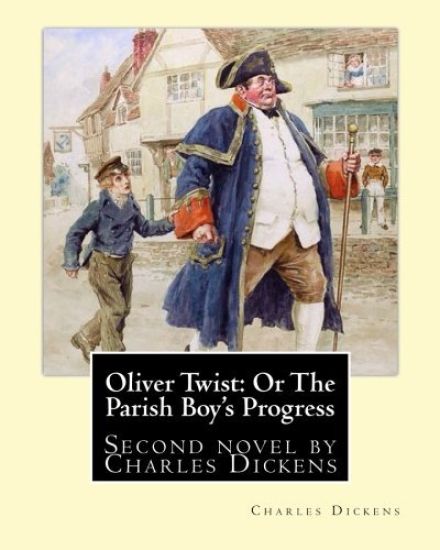
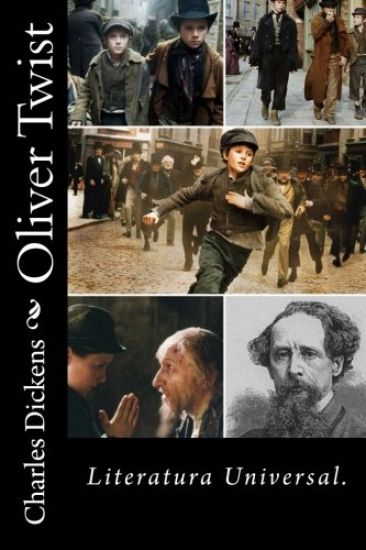
Oliver Twist, or The Parish Boy's Progress, is the second novel by English author Charles Dickens and was first published as a serial 1837-39. The story is of the orphan Oliver Twist, who starts his life in a workhouse and is then sold into apprenticeship with an undertaker. He escapes from there and travels to London, where he meets the Artful Dodger, a member of a gang of juvenile pickpockets led by the elderly criminal, Fagin. Oliver Twist is notable for its unromantic portrayal by Dickens of criminals and their sordid lives, as well as for exposing the cruel treatment of the many orphans in London in the mid-19th century. The alternate title, The Parish Boy's Progress, alludes to Bunyan's The Pilgrim's Progress, as well as the 18th-century caricature series by William Hogarth, A Rake's Progress and A Harlot's Progress.In this early example of the social novel, Dickens satirizes the hypocrisies of his time, including child labour, the recruitment of children as criminals, and the presence of street children. The novel may have been inspired by the story of Robert Blincoe, an orphan whose account of working as a child labourer in a cotton mill was widely read in the 1830s. It is likely that Dickens's own youthful experiences contributed as well. Oliver Twist has been the subject of numerous adaptations for various media, including a highly successful musical play, Oliver , and the multiple Academy Award-winning 1968 motion picture. Disney also put its spin on the novel with the movie called Oliver & Company in 1988. PLOT: Oliver Twist was born into a life of poverty and misfortune in a workhouse in an unnamed town (although when originally published in Bentley's Miscellany in 1837, the town was called Mudfog and said to be within 70 miles north of London - in reality, this is the location of the town of Northampton). Orphaned by his mother's death in childbirth and his father's mysterious absence, Oliver is meagerly provided for under the terms of the Poor Law and spends the first nine years of his life living at a baby farm in the 'care' of a woman named Mrs. Mann. Oliver is brought up with little food and few comforts. Around the time of Oliver's ninth birthday, Mr. Bumble, the parish beadle, removes Oliver from the baby farm and puts him to work picking and weaving oakum at the main workhouse. Oliver, who toils with very little food, remains in the workhouse for six months. One day, the desperately hungry boys decide to draw lots; the loser must ask for another portion of gruel. The task falls to Oliver, who at the next meal tremblingly comes up forward, bowl in hand, and begs Mr. Bumble for gruel with his famous request: "Please, sir, I want some more". A great uproar ensues. The board of well-fed gentlemen who administer the workhouse hypocritically offer 5 to any person wishing to take on the boy as an apprentice. Mr. Gamfield, a brutal chimney sweep, almost claims Oliver. However, when he begs despairingly not to be sent away with "that dreadful man", a kindly old magistrate refuses to sign the indentures. Later, Mr. Sowerberry, an undertaker employed by the parish, takes Oliver into his service. He treats Oliver better and, because of the boy's sorrowful countenance, uses him as a mourner at children's funerals. However, Mr. Sowerberry is in an unhappy marriage, and his wife looks down to Oliver - primarily because her husband seems to like him better - and loses few opportunities to underfeed and mistreat him. He also suffers torment at the hands of Noah Claypole, an oafish but bullying fellow apprentice and "charity boy" who is jealous of Oliver's promotion to mute, and Charlotte, the Sowerberrys' maidservant, who is in love with Noah... Charles John Huffam Dickens (7 February 1812 - 9 June 1870) was an English writer and social critic.
Es la primera novela en lengua inglesa que tiene a un ni o como protagonista. Asimismo, destaca por su tratamiento del mundo de los criminales y sus s rdidas vidas, pr cticamente carente de Romanticismo.
Charles Dickens's famous second novel recounts the story of a boy born in the workhouse and raised in an infant farm as he tries to make his way in the world. Intended to raise feeling against the Poor Law Amendment Act of 1834 (which had emphasized the workhouse as an appropriate means of dealing with the problem of poverty), Oliver Twist also provides a sweeping portrait of London life in the 1830s-including the life of the criminal elements in society.Oliver Twist was first published in serialised form (with illustrations by George Cruikshank) in Bentley's Miscellany between February 1837 and April 1839. It was issued with some corrections and revisions in ten numbers in 1846 by Bradbury and Evans (which then also issued the same text in a single volume). Each of these ten numbers, including the Cruikshank illustrations and the advertisements, is included in this facsimile reprint of the 1846 edition.This is one of a series from Broadview Press of facsimile reprint editions-editions that provide readers with a direct sense of these works as the Victorians themselves experienced them.
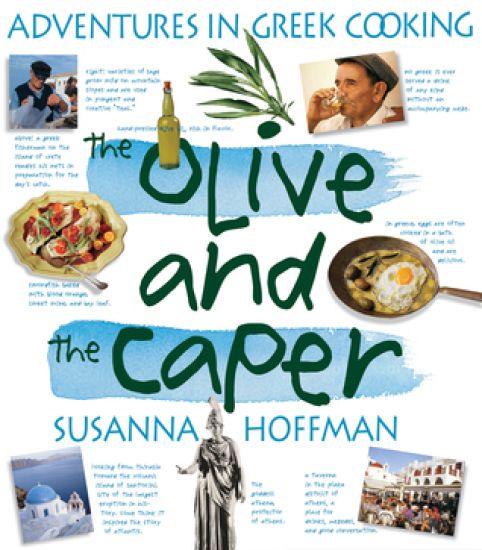
This is the year "It's Greek to me" becomes the happy answer to what's for dinner. My Big Fat Greek Wedding, the upcoming epic Troy, the 2004 Summer Olympics returning to Athens--and now, yet another reason to embrace all things Greek: The Olive and the Caper, Susanna Hoffman's 700-plus-page serendipity of recipes and adventure. In Corfu, Ms. Hoffman and a taverna owner cook shrimp fresh from the trap--and for us she offers the boldly-flavored Shrimp with Fennel, Green Olives, Red Onion, and White Wine. She gathers wild greens and herbs with neighbors, inspiring Big Beans with Thyme and Parsley, and Field Greens and Ouzo Pie. She learns the secret to chewy country bread from the baker on Santorini and translates it for American kitchens. Including 325 recipes developed in collaboration with Victoria Wise (her co-author on The Well-Filled Tortilla Cookbook, with over 258,000 copies in print), The Olive and the Caper celebrates all things Greek: Chicken Neo-Avgolemeno. Fall-off-the-bone Lamb Shanks seasoned with garlic, thyme, cinnamon and coriander. Siren-like sweets, from world-renowned Baklava to uniquely Greek preserves: Rose Petal, Cherry and Grappa, Apricot and Metaxa. In addition, it opens with a sixteen-page full-color section and has dozens of lively essays throughout the book--about the origins of Greek food, about village life, history, language, customs--making this a lively adventure in reading as well as cooking.
Oliver Otter loves his little sister and brother. But the twins are always tearing or poking or losing or soaking Oliver's homework. What will Oliver do about his double dose of trouble?
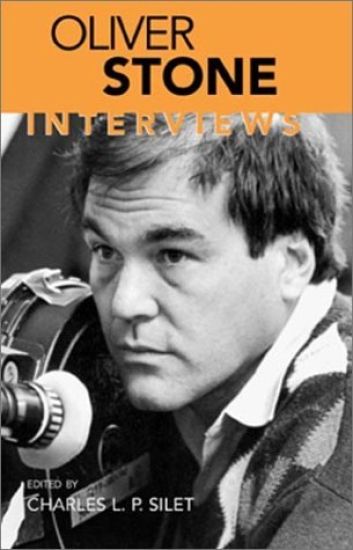
Throughout his career Oliver Stone (b. 1946) has broken traditions and challenged audiences with a series of daring, angry, violent, and often confrontational films. Politically charged movies such as Nixon (1995), JFK (1991), and Wall Street (1987), and his Vietnam trilogy of Platoon (1986), Born on the 4th of July (1989), and Heaven and Earth (1993) provoke and enrage critics and audiences from all ideological walks. In a short time, Stone has established himself as one of the most admired and most reviled directors in American cinema. Ranging from 1981 to 1997, the fifteen conversations featured in Oliver Stone: Interviews reveal a man frustrated by what he sees as the hypocrisies of American politics, of conservatism, and of the Hollywood film industry. But the conflicts and tensions these issues generate spellbind him. In the interviews, Stone comes off as a man as brash, outspoken, confident, and complicated as his movies. His obsessions -- the 1960s, the ways in which Vietnam shaped the country, the nature of violence, and the role of the media in shaping it -- resurface again and again, no matter what film Stone is discussing. Though the subjects of Nixon, JFK, Born on the 4th of July, The Doors (1991), and Heaven and Earth are rooted in the turbulent 1960s, Stone as interviewee and filmmaker is firmly entrenched in the present. He fiercely discusses how the attitudes and political effects of the 1960s have defined later decades and generations, as he talks about his satire of the stock market (Wall Street, 1987) and media exposure (Natural Born Killers, 1994). Bolts of the director's raw wit and enthusiasm for the cinema shine through all of Stone's ferocious rage. Stone loves writing as well as directing. Whether discussing his screenplays written for other directors -- which include Scarface (1983), Midnight Express (1978), or Conan the Barbarian (1982, with director John Milius) -- or his own films, Stone emphasizes how crucial screenwriting is to making great movies. ""Directing is a natural extension of writing,"" he says in a 1987 interview with Michel Ciment. ""A director can always pull through with noise everywhere and his colleagues around. I don't think a good director can make a good film with a bad screenplay, but a bad director can deliver an acceptable film if he has a good screenplay. So for me, that's the number one priority."" Charles L. P. Silet is a professor of English at Iowa State University.