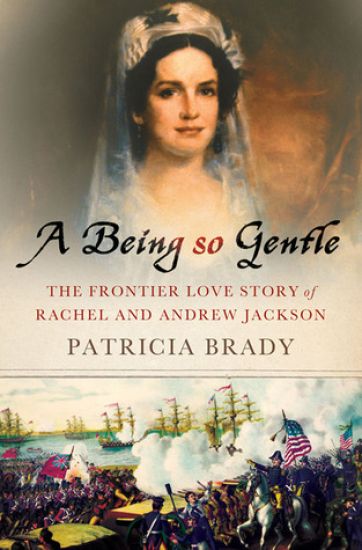
The forty-year love affair between Rachel and Andrew Jackson parallels a tumultuous period in American history. During this time, the fledgling United States more than doubled in size, and political power moved closer to true democracy for white men. Andrew Jackson was at the forefront of that revolution - but he never could have made it without the support of his wife. Beautiful, charismatic and generous, Rachel Jackson had the courage to go against the mores of her times in the name of love. As the wife of a great general in wartime, she often found herself running their plantation alone and, a true Revolutionary War-era heroine, she took in and raised the orphaned children her husband brought home from the front. Like all great love stories, this one also ends tragically when Rachel dies, only a few weeks after Andrew is elected president. He moved into the White House alone and never remarried. Andrew and Rachel Jackson's devotion to one another is inspiring, and here, for the first time, their story of love and loss comes to life in Patricia Brady's vivid prose.
College basketball experienced its greatest rise in popularity during the eighties, becoming one of the most commercially successful spectator sports in America. With this rise came an era of scandal: recruiting violations, spurious admittance practices, and controversial treatment of student athletes. Within this guarded context of scrutiny, allegations of improprieties, and media celebrity, Patricia and Peter Adler penetrated the public front of a top twenty basketball team. The result of their efforts, Backboards and Blackboards: College Athletes and Role Engulfment, is a compelling inside account of an exciting, intimidating, and glamorous hidden arena.
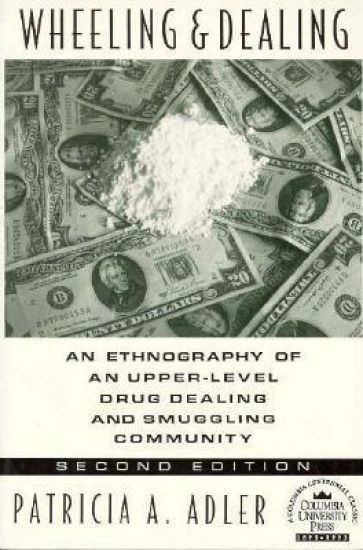
Wheeling and Dealing is a vivid account of the world inhabited by "wholesale" illicit drug traffickers. Based on six years of participant observation, fieldwork, and extensive interviews in an elite Southern California community of dealers, the book gives a rare glimpse into the decadent yet fascinating "subculture of drug trafficking and unending partying, mixed with occasional cloak-and-dagger subterfuge." This second edition brings the story up to date by revealing the fate of several of Adler's key informants. By tracing their lives over a fifteen-year span, Adler offers a unique longitudinal perspective on deviant careers and the reintegration of dealers into conventional society. She also analyzes the unintended consequences of the federal government's war on drugs, tying it to the increasing violence and organizational sophistication of drug traffickers and the rise of international cartels.
Wheeling and Dealing is a vivid account of the world inhabited by "wholesale" illicit drug traffickers. Based on six years of participant observation, fieldwork, and extensive interviews in an elite Southern California community of dealers, the book gives a rare glimpse into the decadent yet fascinating "subculture of drug trafficking and unending partying, mixed with occasional cloak-and-dagger subterfuge." This second edition brings the story up to date by revealing the fate of several of Adler's key informants. By tracing their lives over a fifteen-year span, Adler offers a unique longitudinal perspective on deviant careers and the reintegration of dealers into conventional society. She also analyzes the unintended consequences of the federal government's war on drugs, tying it to the increasing violence and organizational sophistication of drug traffickers and the rise of international cartels.
In many works by modern British women writers, two women form a strong bond only to have that relationship stymied, paralyzed or interrupted. A female character, fearing discovery of covert lesbian desires, lashes out at another woman, resulting in emotional or physical harm to herself or others. Patricia Smith defines this narrative as "lesbian panic". What happens when a character or an author is unwilling to confront or reveal her own lesbianism or lesbian desire? For Smith, lesbian panic is often a fear of losing one's identity and value within the heterosexual paradigm. Smith traces the history of "lesbian panic" through key works: Woolfe's "The Voyage Out" and "Mrs Dalloway"; Bowen's "The Little Girls" and "Eva Trout"; Brophy's "King of a Rainy Day"; Lessing's "The Golden Notebook"; and Spark's "The Prime of Miss Jean Brodie". Smith reveals how and why this panic is represented and she explores how postmodern lesbian writers have attempted to break away from this narrative.
Almost forty percent of American adults age sixty-five and over spend some time in a nursing home, and residents in nursing homes will be increasingly diverse racially and ethnically because of changing demographics. The decision to place a family member in a nursing home is often extremely difficult, especially when the family belongs to a group with a strong tradition of filial responsibility. Despite these realities, little has been written about the stresses families of diverse cultural backgrounds experience in making this challenging decision. This book describes the experiences of seventy-five African American and Afro-Caribbean, white Jewish, and Latina/o residents and their relatives and friends who have been their caregivers. Integrating original qualitative research with quantitative data and theoretical perspectives and findings from other studies, Patricia Kolb not only presents new perspectives on how caregiving varies across racial and ethnic backgrounds but also dispels numerous stereotypes about nursing home placement among diverse groups.
Almost forty percent of American adults age sixty-five and over spend some time in a nursing home, and residents in nursing homes will be increasingly diverse racially and ethnically because of changing demographics. The decision to place a family member in a nursing home is often extremely difficult, especially when the family belongs to a group with a strong tradition of filial responsibility. Despite these realities, little has been written about the stresses families of diverse cultural backgrounds experience in making this challenging decision. This book describes the experiences of seventy-five African American and Afro-Caribbean, white Jewish, and Latina/o residents and their relatives and friends who have been their caregivers. Integrating original qualitative research with quantitative data and theoretical perspectives and findings from other studies, Patricia Kolb not only presents new perspectives on how caregiving varies across racial and ethnic backgrounds but also dispels numerous stereotypes about nursing home placement among diverse groups.
Providing comparisons to the United States and Britain, this book examines Japan's postwar consumer protection movement. Organized largely by and for housewives and spurred by major cases of price gouging and product contamination, the movement led to the passage of basic consumer protection legislation in 1968. Although much of the story concerns the famous "iron triangle" of big business, national bureaucrats, and conservative party politics, Maclachlan takes a broader perspective. She points to the importance of activity at the local level, the role of minority parties, the limited utility of the courts, and the place of lawyers and academics in providing access to power. These mild social strategies have resulted in a significant amount of consumer protection.
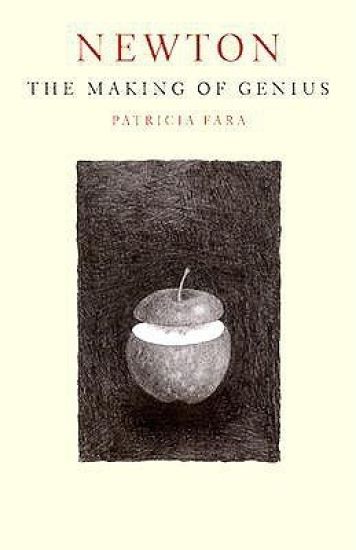
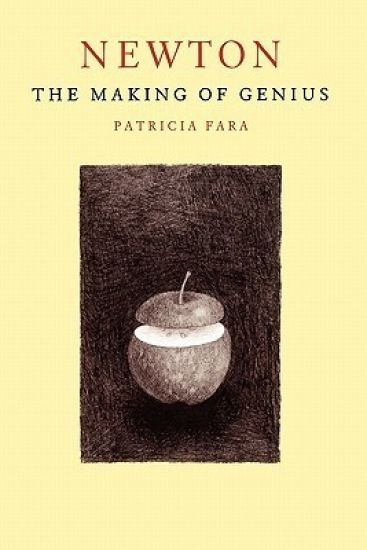
Isaac Newton has become an intellectual avatar for our modern age, the man who, as even children know, was inspired to codify nature's laws by watching an apple fall from a tree. Yet Newton devoted much of his energy to deciphering the mysteries of alchemy, theology, and ancient chronology. How did a man who was at first obscure to all but a few esoteric natural philosophers and Cambridge scholars, was preoccupied with investigations of millennial prophecies, and spent decades as Master of the London Mint become famous as the world's first great scientist? Patricia Fara demonstrates that Newton's reputation, surprisingly limited in his day, was carefully cultivated by devoted followers so that Newton's prestige became inseparable from the explosive growth of science itself. Newton: The Making of Genius is not a conventional biography of the man but a cultural history of the interrelated origins of modern science, the concept of genius, and the phenomenon of fame. Beginning with the eighteenth century, when the word "scientist" had not even been coined, Fara reveals how the rise of Isaac Newton's status was inextricably linked to the development of science. His very surname has acquired brand-name-like associations with science, genius, and Britishness-Apple Computers used it for an ill-fated companion to the Mac, and Margaret Thatcher has his image in her coat of arms. Fara argues that Newton's escalating fame was intertwined with larger cultural changes: promoting him posthumously as a scientific genius was strategically useful for ambitious men who wanted to advertise the power of science. Because his reputation has been repeatedly reinterpreted, Newton has become an iconic figure who exists in several forms. His image has been so malleable, in fact, that we do not even reliably know what he looked like. Newton's apotheosis was made possible by the consumer revolution that swept through the Atlantic world in the eighteenth century. His image adorned the walls, china, and ornamental coinage of socially aspiring British consumers seeking to identify themselves with this very smart man. Traditional impulses to saint worship were transformed into altogether new phenomena: commercialized fame and scientific genius, a secularized version of sanctity. Handsomely illustrated and engagingly written, this is an eye-opening history of the way Newton became a cultural icon whose ideas spread throughout the world and pervaded every aspect of life.
Isaac Newton has become an intellectual avatar for our modern age, the man who, as even children know, was inspired to codify nature's laws by watching an apple fall from a tree. Yet Newton devoted much of his energy to deciphering the mysteries of alchemy, theology, and ancient chronology. How did a man who was at first obscure to all but a few esoteric natural philosophers and Cambridge scholars, was preoccupied with investigations of millennial prophecies, and spent decades as Master of the London Mint become famous as the world's first great scientist? Patricia Fara demonstrates that Newton's reputation, surprisingly limited in his day, was carefully cultivated by devoted followers so that Newton's prestige became inseparable from the explosive growth of science itself. Newton: The Making of Genius is not a conventional biography of the man but a cultural history of the interrelated origins of modern science, the concept of genius, and the phenomenon of fame. Beginning with the eighteenth century, when the word "scientist" had not even been coined, Fara reveals how the rise of Isaac Newton's status was inextricably linked to the development of science. His very surname has acquired brand-name-like associations with science, genius, and Britishness-Apple Computers used it for an ill-fated companion to the Mac, and Margaret Thatcher has his image in her coat of arms. Fara argues that Newton's escalating fame was intertwined with larger cultural changes: promoting him posthumously as a scientific genius was strategically useful for ambitious men who wanted to advertise the power of science. Because his reputation has been repeatedly reinterpreted, Newton has become an iconic figure who exists in several forms. His image has been so malleable, in fact, that we do not even reliably know what he looked like. Newton's apotheosis was made possible by the consumer revolution that swept through the Atlantic world in the eighteenth century. His image adorned the walls, china, and ornamental coinage of socially aspiring British consumers seeking to identify themselves with this very smart man. Traditional impulses to saint worship were transformed into altogether new phenomena: commercialized fame and scientific genius, a secularized version of sanctity. Handsomely illustrated and engagingly written, this is an eye-opening history of the way Newton became a cultural icon whose ideas spread throughout the world and pervaded every aspect of life.
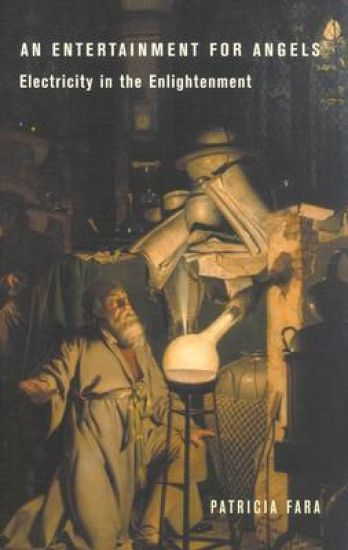
An Entertainment for Angels, rather than for Men, one observer called electricity, and it proved to be the most significant scientific discovery of the Enlightenment. Lecturers attracted huge audiences who marveled at sparkling fountains, flaming drinks, pirouetting dancers, and electrified boys. Flamboyant experimenters made chains of soldiers leap into the air, while wealthy women titillated their admirers with a sensational electric kiss. Optimists predicted that this strange power of nature would cure illnesses, improve crop production, even bring the dead back to life. An Entertainment for Angels tells the story of how electricity charged the eighteenth-century imagination. With contemporary illustrations and engaging prose, Patricia Fara vividly portrays the struggles to understand the unusual and exciting effects that electrical experiments were producing. One of the heroes of the story is Benjamin Franklin, renowned on both sides of the Atlantic as an expert on electricity, who introduced lightning rods to protect tall buildings, pioneered techniques to treat paralyzed patients, and developed one of the most successful explanations of this mysterious phenomenon. Others include Luigi Galvani, whose electrical research on frogs and animals makes for grisly reading but led to the discovery of direct current electricity; and Alessandro Volta, who-with Napoleon's enthusiastic support-became one of Europe's leading scientific practitioners and invented the world's first battery.
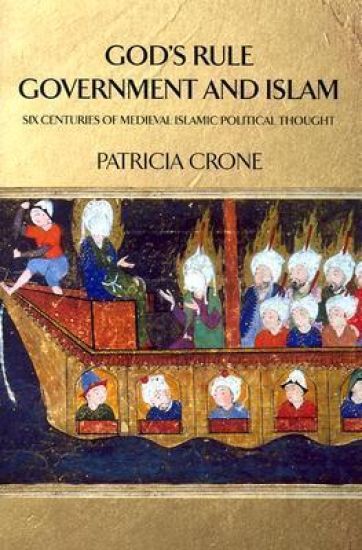
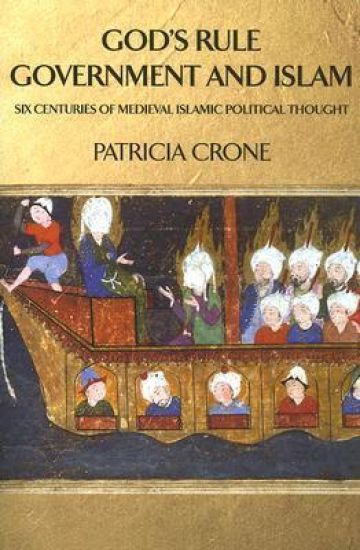
Patricia Crone's God's Rule is a fundamental reconstruction and analysis of Islamic political thought focusing on its intellectual development during the six centuries from the rise of Islam to the Mongol invasions. Based on a wide variety of primary sources-including some not previously considered from the point of view of political thought-this is the first book to examine the medieval Muslim answers to questions crucial to any Western understanding of Middle Eastern politics today, such as why states are necessary, what functions they are meant to fulfill, and whether or why they must be based on religious law. The character of Muslim political thought differs fundamentally from its counterpart in the West. The Christian West started with the conviction that truth (both cognitive and moral) and political power belonged to separate spheres. Ultimately, both power and truth originated with God, but they had distinct historical trajectories and regulated different aspects of life. The Muslims started with the opposite conviction: truth and power appeared at the same time in history and regulated the same aspects of life. In medieval Europe, the disagreement over the relationship between religious authority and political power took the form of a protracted controversy regarding the roles of church and state. In the medieval Middle East, religious authority and political power were embedded in a single, divinely sanctioned Islamic community-a congregation and state made one. The disagreement, therefore, took the form of a protracted controversy over the nature and function of the leadership of Islam itself. Crone makes Islamic political thought accessible by relating it to the contexts in which it was formulated, analyzing it in terms familiar to today's reader, and, where possible, comparing it with medieval European and modern political thought. By examining the ideological point of departure for medieval Islamic political thought, Crone provides an invaluable foundation for a better understanding of contemporary Middle Eastern politics and current world events.
Patricia Crone's God's Rule is a fundamental reconstruction and analysis of Islamic political thought focusing on its intellectual development during the six centuries from the rise of Islam to the Mongol invasions. Based on a wide variety of primary sources-including some not previously considered from the point of view of political thought-this is the first book to examine the medieval Muslim answers to questions crucial to any Western understanding of Middle Eastern politics today, such as why states are necessary, what functions they are meant to fulfill, and whether or why they must be based on religious law. The character of Muslim political thought differs fundamentally from its counterpart in the West. The Christian West started with the conviction that truth (both cognitive and moral) and political power belonged to separate spheres. Ultimately, both power and truth originated with God, but they had distinct historical trajectories and regulated different aspects of life. The Muslims started with the opposite conviction: truth and power appeared at the same time in history and regulated the same aspects of life. In medieval Europe, the disagreement over the relationship between religious authority and political power took the form of a protracted controversy regarding the roles of church and state. In the medieval Middle East, religious authority and political power were embedded in a single, divinely sanctioned Islamic community-a congregation and state made one. The disagreement, therefore, took the form of a protracted controversy over the nature and function of the leadership of Islam itself. Crone makes Islamic political thought accessible by relating it to the contexts in which it was formulated, analyzing it in terms familiar to today's reader, and, where possible, comparing it with medieval European and modern political thought. By examining the ideological point of departure for medieval Islamic political thought, Crone provides an invaluable foundation for a better understanding of contemporary Middle Eastern politics and current world events.
Sister to the king of France, queen of Navarre, gifted writer, religious reformer, and patron of the arts-in her many roles, Marguerite de Navarre (1492-1549) was one of the most important figures of the French Renaissance. In this, the first major biography in English, Patricia F. Cholakian and Rouben C. Cholakian draw on her writings to provide a vivid portrait of Marguerite's public and private life. Freeing her from the shadow of her brother Francois I, they recognize her immense influence on French politics and culture, and they challenge conventional views of her family relationships. The authors highlight Marguerite's considerable role in advancing the cause of religious reform in France-her support of vernacular translations of sacred works, her denunciation of ecclesiastical corruption, her founding of orphanages and hospitals, and her defense and protection of persecuted reformists. Had this plucky and spirited woman not been sister to the king, she would most likely have ended up at the stake. Though she remained a devout catholic, her theological poem Miroir de l'A me pecheresse, a mystical summa of evangelical doctrine that was viciously attacked by conservatives, remains to this day an important part of the Protestant corpus. Marguerite, along with her brother the king, was a key architect and animator of the refined entertainments that became the hallmark of the French court. Always eager to encourage new ideas, she supported many of the illustrious writers and thinkers of her time. Moreover, uniquely for a queen, she was herself a prolific poet, dramatist, and prose writer and published a two-volume anthology of her works. In reassessing Marguerite's enormous oeuvre, the authors reveal the range and quality of her work beyond her famous collection of tales, posthumously called the Heptameron. The Cholakians' groundbreaking reading of the rich body of her work, which uncovers autobiographical elements previously unrecognized by most scholars, and their study of her surviving correspondence portray a life that fully justifies Marguerite's sobriquet, "Mother of the Renaissance."
Enlightenment botany was replete with sexual symbolism-to the extent that many botanical textbooks were widely considered pornographic. Carl Linnaeus's controversial new system for classifying plants based on their sexual characteristics, as well as his use of language resonating with erotic allusions, provoked intense public debate over the morality of botanical study. And the renowned Tahitian exploits of Joseph Banks-whose trousers were reportedly stolen while he was inside the tent of Queen Oberea of Tahiti-reinforced scandalous associations with the field. Yet Linnaeus and Banks became powerful political and scientific figures who were able to promote botanical exploration alongside the exploitation of territories, peoples, and natural resources. Sex, Botany, and Empire explores the entwined destinies of these two men and how their influence served both science and imperialism. Patricia Fara reveals how Enlightenment botany, under the veil of rationality, manifested a drive to conquer, subdue, and deflower-all in the name of British empire. Linnaeus trained his traveling disciples in a double mission-to bring back specimens for the benefit of the Swedish economy and to spread the gospel of Linnaean taxonomy. Based in London at the hub of an international exchange and correspondence network, Banks ensured that Linnaeus's ideas became established throughout the world. As the president of the Royal Society for more than forty years, Banks revolutionized British science, and his innovations placed science at the heart of trade and politics. He made it a policy to collect and control resources not only for the sake of knowledge but also for the advancement of the empire. Although Linnaeus is often celebrated as modern botany's true founder, Banks has had a greater long-term impact. It was Banks who ensured that science and imperialism flourished together, and it was he who first forged the interdependent relationship between scientific inquiry and the state that endures to this day.
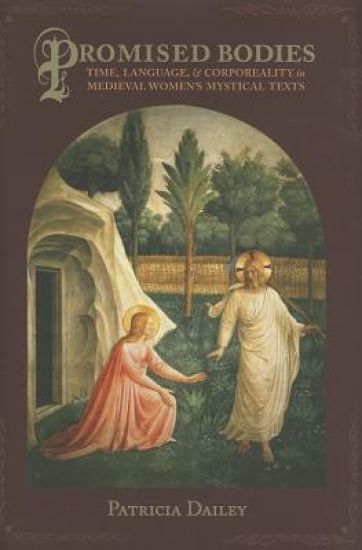
In the Christian tradition, especially in the works of Paul, Augustine, and the exegetes of the Middle Ages, the body is a twofold entity consisting of inner and outer persons that promises to find its true materiality in a time to come. A potentially transformative vehicle, it is a dynamic mirror that can reflect the work of the divine within and substantially alter its own materiality if receptive to divine grace. The writings of Hadewijch of Brabant, a thirteenth-century beguine, engage with this tradition in sophisticated ways both singular to her mysticism and indicative of the theological milieu of the twelfth and thirteenth centuries. Crossing linguistic and historical boundaries, Patricia Dailey connects the embodied poetics of Hadewijch's visions, writings, and letters to the work of Julian of Norwich, Hildegard of Bingen, Marguerite of Oingt, and other mystics and visionaries. She establishes new criteria to more consistently understand and assess the singularity of women's mystical texts and, by underscoring the similarities between men's and women's writings of the time, collapses traditional conceptions of gender as they relate to differences in style, language, interpretative practices, forms of literacy, and uses of textuality.
This book is a comprehensive and inviting introduction to the literary forms and cultural significance of Chinese drama as both text and performance. Each chapter offers an accessible overview and critical analysis of one or more plays—canonical as well as less frequently studied works—and their historical contexts. How to Read Chinese Drama highlights how each play sheds light on key aspects of the dramatic tradition, including genre conventions, staging practices, musical performance, audience participation, and political resonances, emphasizing interconnections among chapters. It brings together leading scholars spanning anthropology, art history, ethnomusicology, history, literature, and theater studies.How to Read Chinese Drama is straightforward, clear, and concise, written for undergraduate students and their instructors as well as a wider audience interested in world theater. For students of Chinese literature and language, the book provides questions to explore when reading, watching, and listening to plays, and it features bilingual excerpts. For teachers, an analytical table of contents, a theater-specific chronology of events, and lists of visual resources and translations provide pedagogical resources for exploring Chinese theater within broader cultural and comparative contexts. For theater practitioners, the volume offers deeply researched readings of important plays together with background on historical performance conventions, audience responses, and select modern adaptations.
This book is a comprehensive and inviting introduction to the literary forms and cultural significance of Chinese drama as both text and performance. Each chapter offers an accessible overview and critical analysis of one or more plays—canonical as well as less frequently studied works—and their historical contexts. How to Read Chinese Drama highlights how each play sheds light on key aspects of the dramatic tradition, including genre conventions, staging practices, musical performance, audience participation, and political resonances, emphasizing interconnections among chapters. It brings together leading scholars spanning anthropology, art history, ethnomusicology, history, literature, and theater studies.How to Read Chinese Drama is straightforward, clear, and concise, written for undergraduate students and their instructors as well as a wider audience interested in world theater. For students of Chinese literature and language, the book provides questions to explore when reading, watching, and listening to plays, and it features bilingual excerpts. For teachers, an analytical table of contents, a theater-specific chronology of events, and lists of visual resources and translations provide pedagogical resources for exploring Chinese theater within broader cultural and comparative contexts. For theater practitioners, the volume offers deeply researched readings of important plays together with background on historical performance conventions, audience responses, and select modern adaptations.