Kirjojen hintavertailu. Mukana 11 717 486 kirjaa ja 12 kauppaa.

Kirjahaku

Etsi kirjoja tekijän nimen, kirjan nimen tai ISBN:n perusteella.

1000 tulosta hakusanalla Paula Napper

Poets in the Public Sphere

Poets in the Public Sphere

Paula Bernat Bennett

Princeton University Press
2003
pokkari
Based entirely on archival research, Poets in the Public Sphere traces the emergence of the "New Woman" by examining poetry published by American women in newspapers and magazines between 1800 and 1900. Using sources like the Kentucky Reporter, the Cherokee Phoenix, the Cincinnati Israelite, and the Atlantic Monthly, Bennett is able to track how U.S. women from every race, class, caste, region, and religion exploited the freedom offered by the nation's periodical press, especially the poetry columns, to engage in heated debate with each other and with men over matters of mutual concern. Far from restricting their poems to the domestic and personal, these women addressed a significant array of political issues--abolition, Indian removals, economic and racial injustice, the Civil War, and, not least, their own changing status as civil subjects. Overflowing with a wealth of heretofore untapped information, their poems demonstrate conclusively that "ordinary" nineteenth-century women were far more influenced by the women's rights movement than historians have allowed. In showing how these women turned the sentimental and ideologically saturated conventions of the period's verse to their own ends, Bennett argues passionately and persuasively for poetry's power as cultural and political discourse. As much women's history as literary history, this book invites readers to rethink not only the role that nineteenth-century women played in their own emancipation but the role that poetry plays in cultural life.
Seashells of Southern Florida

Seashells of Southern Florida

Paula M. Mikkelsen; Rüdiger Bieler

Princeton University Press
2007
sidottu
Located where the Atlantic Ocean, Gulf of Mexico, and Caribbean Sea converge, the Florida Keys are distinctive for their rich and varied marine fauna. The Keys are home to nearly sixty taxonomic families of bivalves such as clams and mussels--roughly half the world's bivalve family diversity. The first in a series of three volumes on the molluscan fauna of the Keys and adjacent regions, Seashells of Southern Florida: Bivalves provides a comprehensive treatment of these bivalves, and also serves as a comparative anatomical guide to bivalve diversity worldwide. Paula Mikkelsen and Rudiger Bieler cover more than three hundred species of bivalves, including clams, scallops, oysters, mussels, shipworms, jewel boxes, tellins, and many lesser-known groups. For each family they select an exemplar species and illustrate its shell and anatomical features in detail. They describe habitat and other relevant information, and accompany each species account with high-resolution shell photographs of other family members. Text and images combine to present species--to family-level characteristics in a complete way never before seen. The book includes fifteen hundred mostly color photographs and images of shells, underwater habitats, bivalves in situ, original anatomical and hinge drawings, scanning electron micrographs, and unique transparent--shell illustrations with major organ systems color-coded and clearly shown. Seashells of Southern Florida: Bivalves is the most complete guide to subtropical bivalves available. It is an essential tool for students and teachers of molluscan diversity and systematics, and an indispensable identification guide for collectors, scuba divers, naturalists, environmental consultants, and natural-resource managers.
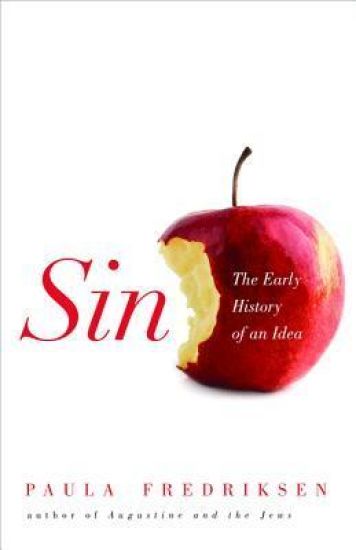
Sin

Sin

Paula Fredriksen

Princeton University Press
2012
sidottu
Ancient Christians invoked sin to account for an astonishing range of things, from the death of God's son to the politics of the Roman Empire that worshipped him. In this book, award-winning historian of religion Paula Fredriksen tells the surprising story of early Christian concepts of sin, exploring the ways that sin came to shape ideas about God no less than about humanity. Long before Christianity, of course, cultures had articulated the idea that human wrongdoing violated relations with the divine. But "Sin" tells how, in the fevered atmosphere of the four centuries between Jesus and Augustine, singular new Christian ideas about sin emerged in rapid and vigorous variety, including the momentous shift from the belief that sin is something one does to something that one is born into. As the original defining circumstances of their movement quickly collapsed, early Christians were left to debate the causes, manifestations, and remedies of sin. This is a powerful and original account of the early history of an idea that has centrally shaped Christianity and left a deep impression on the secular world as well.
Complex Ball Quotients and Line Arrangements in the Projective Plane
This book introduces the theory of complex surfaces through a comprehensive look at finite covers of the projective plane branched along line arrangements. Paula Tretkoff emphasizes those finite covers that are free quotients of the complex two-dimensional ball. Tretkoff also includes background on the classical Gauss hypergeometric function of one variable, and a chapter on the Appell two-variable F1 hypergeometric function. The material in this book began as a set of lecture notes, taken by Tretkoff, of a course given by Friedrich Hirzebruch at ETH Zurich in 1996. The lecture notes were then considerably expanded by Hirzebruch and Tretkoff over a number of years. In this book, Tretkoff has expanded those notes even further, still stressing examples offered by finite covers of line arrangements. The book is largely self-contained and foundational material is introduced and explained as needed, but not treated in full detail. References to omitted material are provided for interested readers. Aimed at graduate students and researchers, this is an accessible account of a highly informative area of complex geometry.
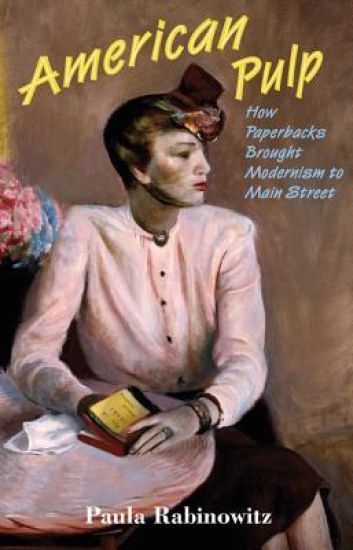
American Pulp

American Pulp

Paula Rabinowitz

Princeton University Press
2014
sidottu
"There is real hope for a culture that makes it as easy to buy a book as it does a pack of cigarettes."--a civic leader quoted in a New American Library ad (1951) American Pulp tells the story of the midcentury golden age of pulp paperbacks and how they brought modernism to Main Street, democratized literature and ideas, spurred social mobility, and helped readers fashion new identities. Drawing on extensive original research, Paula Rabinowitz unearths the far-reaching political, social, and aesthetic impact of the pulps between the late 1930s and early 1960s. Published in vast numbers of titles, available everywhere, and sometimes selling in the millions, pulps were throwaway objects accessible to anyone with a quarter. Conventionally associated with romance, crime, and science fiction, the pulps in fact came in every genre and subject. American Pulp tells how these books ingeniously repackaged highbrow fiction and nonfiction for a mass audience, drawing in readers of every kind with promises of entertainment, enlightenment, and titillation. Focusing on important episodes in pulp history, Rabinowitz looks at the wide-ranging effects of free paperbacks distributed to World War II servicemen and women; how pulps prompted important censorship and First Amendment cases; how some gay women read pulp lesbian novels as how-to-dress manuals; the unlikely appearance in pulp science fiction of early representations of the Holocaust; how writers and artists appropriated pulp as a literary and visual style; and much more. Examining their often-lurid packaging as well as their content, American Pulp is richly illustrated with reproductions of dozens of pulp paperback covers, many in color. A fascinating cultural history, American Pulp will change the way we look at these ephemeral yet enduringly intriguing books.
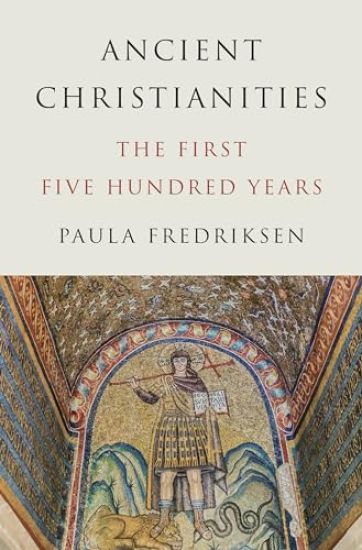
Ancient Christianities

Ancient Christianities

Paula Fredriksen

PRINCETON UNIVERSITY PRESS
2024
sidottu
How, over the course of five centuries, one particular god and one particular Christianity came to dominate late Roman imperial politics and piety The ancient Mediterranean teemed with gods. For centuries, a practical religious pluralism prevailed. How, then, did one particular god come to dominate the politics and piety of the late Roman Empire? In Ancient Christianities, Paula Fredriksen traces the evolution of early Christianity—or rather, of early Christianities—through five centuries of Empire, mapping its pathways from the hills of Judea to the halls of Rome and Constantinople. It is a story with a sprawling cast of characters: not only theologians, bishops, and emperors, but also gods and demons, angels and magicians, astrologers and ascetics, saints and heretics, aristocratic patrons and millenarian enthusiasts. All played their part in the development of what became and remains an energetically diverse biblical religion.The New Testament, as we know it, represents only a small selection of the many gospels, letters, acts of apostles, and revelations that circulated before the establishment of the imperial church. It tells how the gospel passed from Jesus, to the apostles, thence to Paul. But by using our peripheral vision, by looking to noncanonical and paracanonical texts, by availing ourselves of information derived from papyri, inscriptions, and archaeology, we can see a different, richer, much less linear story emerging. Fredriksen brings together these many sources to reconstruct the lively interactions of pagans, Jews, and Christians, tracing the conversions of Christianity from an energetic form of Jewish messianism to an arm of the late Roman state.
Sin

Sin

Paula Fredriksen

Princeton University Press
2014
pokkari
Ancient Christians invoked sin to account for an astonishing range of things, from the death of God's son to the politics of the Roman Empire that worshipped him. In this book, award-winning historian of religion Paula Fredriksen tells the surprising story of early Christian concepts of sin, exploring the ways that sin came to shape ideas about God no less than about humanity. Long before Christianity, of course, cultures had articulated the idea that human wrongdoing violated relations with the divine. But Sin tells how, in the fevered atmosphere of the four centuries between Jesus and Augustine, singular new Christian ideas about sin emerged in rapid and vigorous variety, including the momentous shift from the belief that sin is something one does to something that one is born into. As the original defining circumstances of their movement quickly collapsed, early Christians were left to debate the causes, manifestations, and remedies of sin. This is a powerful and original account of the early history of an idea that has centrally shaped Christianity and left a deep impression on the secular world as well.
The End of American Childhood

The End of American Childhood

Paula S. Fass

PRINCETON UNIVERSITY PRESS
2016
sidottu
The End of American Childhood takes a sweeping look at the history of American childhood and parenting, from the nation's founding to the present day. Renowned historian Paula Fass shows how, since the beginning of the American republic, independence, self-definition, and individual success have informed Americans' attitudes toward children. But as parents today hover over every detail of their children's lives, are the qualities that once made American childhood special still desired or possible? Placing the experiences of children and parents against the backdrop of social, political, and cultural shifts, Fass challenges Americans to reconnect with the beliefs that set the American understanding of childhood apart from the rest of the world. Fass examines how freer relationships between American children and parents transformed the national culture, altered generational relationships among immigrants, helped create a new science of child development, and promoted a revolution in modern schooling. She looks at the childhoods of icons including Margaret Mead and Ulysses S. Grant--who, as an eleven-year-old, was in charge of his father's fields and explored his rural Ohio countryside. Fass also features less well-known children like ten-year-old Rose Cohen, who worked in the drudgery of nineteenth-century factories. Bringing readers into the present, Fass argues that current American conditions and policies have made adolescence socially irrelevant and altered children's road to maturity, while parental oversight threatens children's competence and initiative. Showing how American parenting has been firmly linked to historical changes, The End of American Childhood considers what implications this might hold for the nation's future.
American Pulp

American Pulp

Paula Rabinowitz

Princeton University Press
2016
pokkari
"There is real hope for a culture that makes it as easy to buy a book as it does a pack of cigarettes."--a civic leader quoted in a New American Library ad (1951) American Pulp tells the story of the midcentury golden age of pulp paperbacks and how they brought modernism to Main Street, democratized literature and ideas, spurred social mobility, and helped readers fashion new identities. Drawing on extensive original research, Paula Rabinowitz unearths the far-reaching political, social, and aesthetic impact of the pulps between the late 1930s and early 1960s. Published in vast numbers of titles, available everywhere, and sometimes selling in the millions, pulps were throwaway objects accessible to anyone with a quarter. Conventionally associated with romance, crime, and science fiction, the pulps in fact came in every genre and subject. American Pulp tells how these books ingeniously repackaged highbrow fiction and nonfiction for a mass audience, drawing in readers of every kind with promises of entertainment, enlightenment, and titillation. Focusing on important episodes in pulp history, Rabinowitz looks at the wide-ranging effects of free paperbacks distributed to World War II servicemen and women; how pulps prompted important censorship and First Amendment cases; how some gay women read pulp lesbian novels as how-to-dress manuals; the unlikely appearance in pulp science fiction of early representations of the Holocaust; how writers and artists appropriated pulp as a literary and visual style; and much more. Examining their often-lurid packaging as well as their content, American Pulp is richly illustrated with reproductions of dozens of pulp paperback covers, many in color. A fascinating cultural history, American Pulp will change the way we look at these ephemeral yet enduringly intriguing books.
The End of American Childhood

The End of American Childhood

Paula S. Fass

Princeton University Press
2017
pokkari
The End of American Childhood takes a sweeping look at the history of American childhood and parenting, from the nation's founding to the present day. Renowned historian Paula Fass shows how, since the beginning of the American republic, independence, self-definition, and individual success have informed Americans' attitudes toward children. But as parents today hover over every detail of their children's lives, are the qualities that once made American childhood special still desired or possible? Placing the experiences of children and parents against the backdrop of social, political, and cultural shifts, Fass challenges Americans to reconnect with the beliefs that set the American understanding of childhood apart from the rest of the world. Fass examines how freer relationships between American children and parents transformed the national culture, altered generational relationships among immigrants, helped create a new science of child development, and promoted a revolution in modern schooling. She looks at the childhoods of icons including Margaret Mead and Ulysses S. Grant--who, as an eleven-year-old, was in charge of his father's fields and explored his rural Ohio countryside. Fass also features less well-known children like ten-year-old Rose Cohen, who worked in the drudgery of nineteenth-century factories. Bringing readers into the present, Fass argues that current American conditions and policies have made adolescence socially irrelevant and altered children's road to maturity, while parental oversight threatens children's competence and initiative. Showing how American parenting has been firmly linked to historical changes, The End of American Childhood considers what implications this might hold for the nation's future.
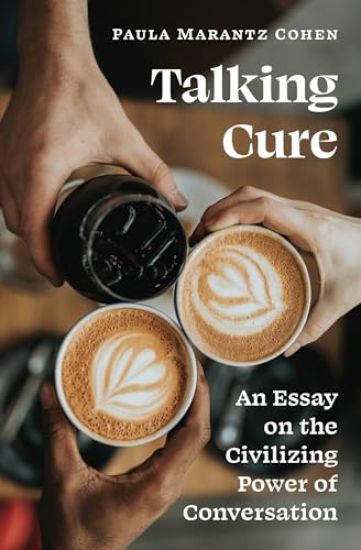
Talking Cure

Talking Cure

Paula Marantz Cohen

PRINCETON UNIVERSITY PRESS
2023
sidottu
An invigorating exploration of the pleasures and social importance of conversationTalking Cure is a timely and enticing excursion into the art of good conversation. Paula Marantz Cohen reveals how conversation connects us in ways that social media never can and explains why simply talking to each other freely and without guile may be the first step to curing what ails our troubled society.Drawing on her lifelong immersion in literature and culture and her decades of experience as a teacher and critic, Cohen argues that we learn to converse in our families and then carry that knowledge into a broader world where we encounter diverse opinions and sensibilities. She discusses the role of food in encouraging conversation, the challenges of writing dialogue in fiction, the pros and cons of Zoom, the relationship of conversation to vaudeville acts, and the educational value of a good college seminar where students learn to talk about ideas. Cohen looks at some of the famous groups of writers and artists in history whose conversation fed their creativity, and details some of the habits that can result in bad conversation.Blending the immediacy of a beautifully crafted memoir with the conviviality of an intimate gathering with friends, Talking Cure makes a persuasive case for the civilizing value of conversation and is essential reading for anyone interested in the chatter that fuels culture.
Talking Cure

Talking Cure

Paula Marantz Cohen

PRINCETON UNIVERSITY PRESS
2025
pokkari
An invigorating exploration of the pleasures and social importance of conversationTalking Cure is a timely and enticing excursion into the art of good conversation. Paula Marantz Cohen reveals how conversation connects us in ways that social media never can and explains why simply talking to each other freely and without guile may be the first step to curing what ails our troubled society.Drawing on her lifelong immersion in literature and culture and her decades of experience as a teacher and critic, Cohen argues that we learn to converse in our families and then carry that knowledge into a broader world where we encounter diverse opinions and sensibilities. She discusses the role of food in encouraging conversation, the challenges of writing dialogue in fiction, the pros and cons of Zoom, the relationship of conversation to vaudeville acts, and the educational value of a good college seminar where students learn to talk about ideas. Cohen looks at some of the famous groups of writers and artists in history whose conversation fed their creativity, and details some of the habits that can result in bad conversation.Blending the immediacy of a beautifully crafted memoir with the conviviality of an intimate gathering with friends, Talking Cure makes a persuasive case for the civilizing value of conversation and is essential reading for anyone interested in the chatter that fuels culture.
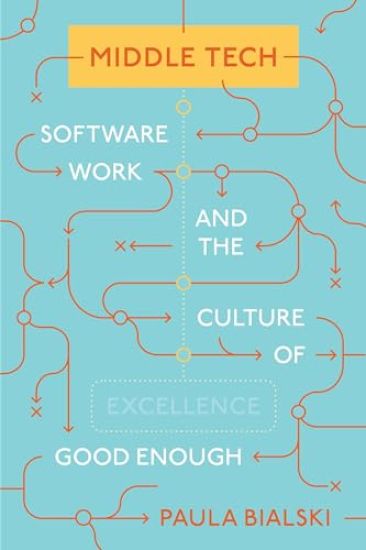
Middle Tech

Middle Tech

Paula Bialski

PRINCETON UNIVERSITY PRESS
2024
sidottu
Why software isn’t perfect, as seen through the stories of software developers at a run-of-the-mill tech companyContrary to much of the popular discourse, not all technology is seamless and awesome; some of it is simply “good enough.” In Middle Tech, Paula Bialski offers an ethnographic study of software developers at a non-flashy, non-start-up corporate tech company. Their stories reveal why software isn’t perfect and how developers communicate, care, and compromise to make software work—or at least work until the next update. Exploring the culture of good enoughness at a technology firm she calls “Middletech,” Bialski shows how doing good-enough work is a collectively negotiated resistance to the organizational ideology found in corporate software settings.The truth, Bialski reminds us, is that technology breaks due to human-related issues: staff cutbacks cause media platforms to crash, in-car GPS systems cause catastrophic incidents, and chatbots can be weird. Developers must often labor to patch and repair legacy systems rather than dream up killer apps. Bialski presents a less sensationalist, more empirical portrait of technology work than the frequently told Silicon Valley narratives of disruption and innovation. She finds that software engineers at Middletech regard technology as an ephemeral object that only needs to be good enough to function until its next iteration. As a result, they don’t feel much pressure to make it perfect. Through the deeply personal stories of people and their practices at Middletech, Bialski traces the ways that workers create and sustain a complex culture of good enoughness.
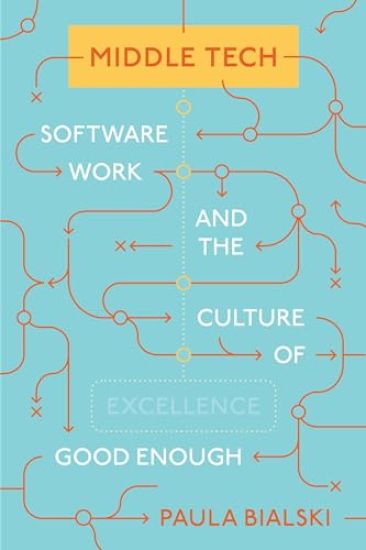
Middle Tech

Middle Tech

Paula Bialski

PRINCETON UNIVERSITY PRESS
2024
pokkari
Why software isn’t perfect, as seen through the stories of software developers at a run-of-the-mill tech companyContrary to much of the popular discourse, not all technology is seamless and awesome; some of it is simply “good enough.” In Middle Tech, Paula Bialski offers an ethnographic study of software developers at a non-flashy, non-start-up corporate tech company. Their stories reveal why software isn’t perfect and how developers communicate, care, and compromise to make software work—or at least work until the next update. Exploring the culture of good enoughness at a technology firm she calls “Middletech,” Bialski shows how doing good-enough work is a collectively negotiated resistance to the organizational ideology found in corporate software settings.The truth, Bialski reminds us, is that technology breaks due to human-related issues: staff cutbacks cause media platforms to crash, in-car GPS systems cause catastrophic incidents, and chatbots can be weird. Developers must often labor to patch and repair legacy systems rather than dream up killer apps. Bialski presents a less sensationalist, more empirical portrait of technology work than the frequently told Silicon Valley narratives of disruption and innovation. She finds that software engineers at Middletech regard technology as an ephemeral object that only needs to be good enough to function until its next iteration. As a result, they don’t feel much pressure to make it perfect. Through the deeply personal stories of people and their practices at Middletech, Bialski traces the ways that workers create and sustain a complex culture of good enoughness.
Ancient Christianities

Ancient Christianities

Paula Fredriksen

PRINCETON UNIVERSITY PRESS
2026
pokkari
How, over the course of five centuries, one particular god and one particular Christianity came to dominate late Roman imperial politics and piety The ancient Mediterranean teemed with gods. For centuries, a practical religious pluralism prevailed. How, then, did one particular god come to dominate the politics and piety of the late Roman Empire? In Ancient Christianities, Paula Fredriksen traces the evolution of early Christianity—or rather, of early Christianities—through five centuries of Empire, mapping its pathways from the hills of Judea to the halls of Rome and Constantinople. It is a story with a sprawling cast of characters: not only theologians, bishops, and emperors, but also gods and demons, angels and magicians, astrologers and ascetics, saints and heretics, aristocratic patrons and millenarian enthusiasts. All played their part in the development of what became and remains an energetically diverse biblical religion. The New Testament, as we know it, represents only a small selection of the many gospels, letters, acts of apostles, and revelations that circulated before the establishment of the imperial church. It tells how the gospel passed from Jesus, to the apostles, thence to Paul. But by using our peripheral vision, by looking to noncanonical and paracanonical texts, by availing ourselves of information derived from papyri, inscriptions, and archaeology, we can see a different, richer, much less linear story emerging. Fredriksen brings together these many sources to reconstruct the lively interactions of pagans, Jews, and Christians, tracing the conversions of Christianity from an energetic form of Jewish messianism to an arm of the late Roman state.
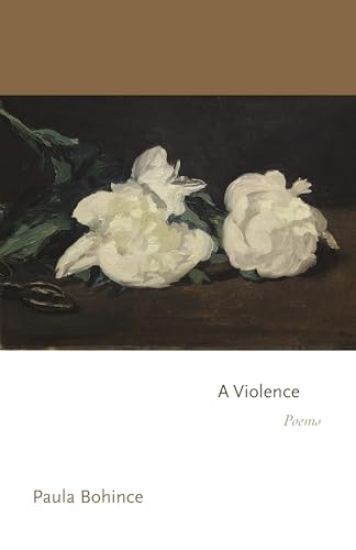
A Violence

A Violence

Paula Bohince

PRINCETON UNIVERSITY PRESS
2025
pokkari
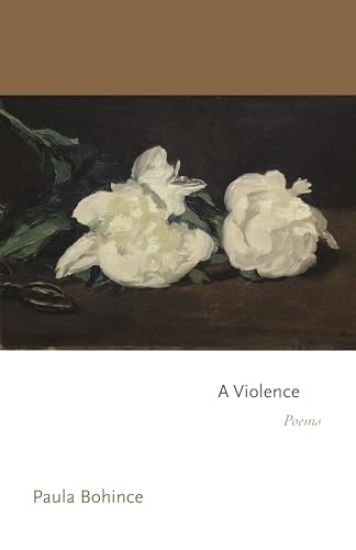
A reckoning with psychological and ecological crises from a poet whose work has been praised as “beautiful and riveting” (Los Angeles Review of Books)A poetic representation of PTSD and its evocative bewilderments, Paula Bohince’s mesmerizing new collection, A Violence, is written at inflection points: a waking from dissociation borne from a harrowing childhood; a breakdown; and a struggle toward wholeness by means of mystified recollection amid ecological disturbances. Praised for poems that “reward enormously upon first encounter, and only more so upon subsequent reads” (The Rumpus), Bohince is here alert to surprise, the enthralling image “rushing through such wreckage a brain becomes.” Contemplating vulnerability and resilience in the entwined human and natural worlds, with a voice precise and powerful, A Violence is a haunting collection that builds symphonically to recover a self “gone away,” where the ordinary is imbued with transcendental significance.
A Violence

A Violence

Paula Bohince

PRINCETON UNIVERSITY PRESS
2025
sidottu
A reckoning with psychological and ecological crises from a poet whose work has been praised as “beautiful and riveting” (Los Angeles Review of Books)A poetic representation of PTSD and its evocative bewilderments, Paula Bohince’s mesmerizing new collection, A Violence, is written at inflection points: a waking from dissociation borne from a harrowing childhood; a breakdown; and a struggle toward wholeness by means of mystified recollection amid ecological disturbances. Praised for poems that “reward enormously upon first encounter, and only more so upon subsequent reads” (The Rumpus), Bohince is here alert to surprise, the enthralling image “rushing through such wreckage a brain becomes.” Contemplating vulnerability and resilience in the entwined human and natural worlds, with a voice precise and powerful, A Violence is a haunting collection that builds symphonically to recover a self “gone away,” where the ordinary is imbued with transcendental significance.
Kibbutz Community and Nation Building

Kibbutz Community and Nation Building

Paula M. Rayman

Princeton University Press
2014
pokkari
Focusing on the evolution of one border kibbutz from 1938 to the present, Paula Rayman explores the dynamics between internal community organization and external national and international forces. Originally published in 1982. The Princeton Legacy Library uses the latest print-on-demand technology to again make available previously out-of-print books from the distinguished backlist of Princeton University Press. These editions preserve the original texts of these important books while presenting them in durable paperback and hardcover editions. The goal of the Princeton Legacy Library is to vastly increase access to the rich scholarly heritage found in the thousands of books published by Princeton University Press since its founding in 1905.
Kibbutz Community and Nation Building

Kibbutz Community and Nation Building

Paula M. Rayman

PRINCETON UNIVERSITY PRESS
2016
sidottu
Focusing on the evolution of one border kibbutz from 1938 to the present, Paula Rayman explores the dynamics between internal community organization and external national and international forces. Originally published in 1982. The Princeton Legacy Library uses the latest print-on-demand technology to again make available previously out-of-print books from the distinguished backlist of Princeton University Press. These editions preserve the original texts of these important books while presenting them in durable paperback and hardcover editions. The goal of the Princeton Legacy Library is to vastly increase access to the rich scholarly heritage found in the thousands of books published by Princeton University Press since its founding in 1905.