Kirjojen hintavertailu. Mukana 11 699 587 kirjaa ja 12 kauppaa.

Kirjahaku

Etsi kirjoja tekijän nimen, kirjan nimen tai ISBN:n perusteella.

1000 tulosta hakusanalla Peter G Filene

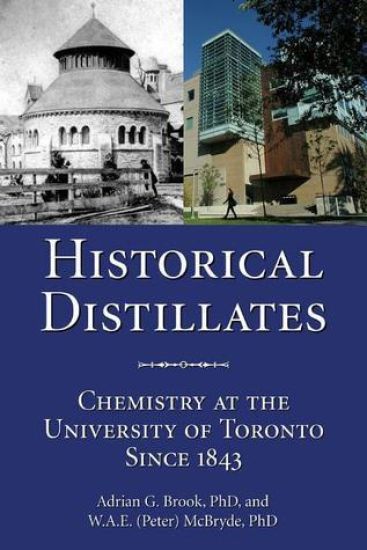
Historical Distillates

Historical Distillates

Adrian G. Brook; W.A.E. (Peter) McBryde

Dundurn Group Ltd
2007
pokkari
Historical Distillates examines the history of the Chemistry Department at the University of Toronto from its beginnings in 1843, when it was housed in simple quarters in the Parliament Buildings on Front Street and had just one faculty member. During the founding era (1843-1920) three British gentlemen professors guided the department through four homes; between 1920 and 1960 three Canadian heads built a highly influential department. Since 1960 eight chairmen have effectively managed a growing and diverse department while it ventured into exciting new fields and emerging sub-disciplines. New colleges and a Nobel Prize have been highlights of the past two decades. With the completion of recent renovations and additions (such as the Davenport Research Building and Garden), with its distinguished faculty, top-rate staff, and excellent students, and with its dazzling array of equipment to support research, the department’s future indeed looks bright.

Raman Spectroscopy in Cultural Heritage Preservation

Raman Spectroscopy in Cultural Heritage Preservation

Howell G. M. Edwards; Peter Vandenabeele; Philippe Colomban

Springer International Publishing AG
2022
sidottu
This book addresses the application of Raman spectroscopic techniques to a range of diverse problems which arise in the study, conservation and restoration of artefacts and sites closely related to our cultural heritage as well as in authentication. These themes are naturally wider than what at first might be considered as artworks and archaeological artefacts and the topics include pigments, paintings, ceramics, glass, sculpture and patination / corrosion, textiles, industrial archaeology, the degradation and preservation of biomaterials, mummies and human skeletal remains. An interesting feature is the inclusion of modern case studies which describe specific problems and approaches to the Raman spectral analysis of items important to our cultural heritage. The text is prefaced with an introduction to the important parameters used in nondestructive Raman measurements and also highlights some future applications based upon novel miniaturised instrumentation for in-field studies andpotential screening work which will identify specimens which would repay further studies in the laboratory. An attempt is made to give a snapshot of the state-of-the-art evolution since the beginning of the technique (1970s) and to point out potential further development. The book is co-edited by three international experts with many years' experience in the application of Raman spectroscopy to artworks, archaeological artefacts and in the investigation of materials and sites for cultural heritage preservation and each editor has undertaken to write individual chapters and different topics personally. The adopted approach is designed to convey the sort of information which has become available from the adoption of analytical Raman spectroscopy to different problems in the field of cultural heritage preservation through the spectral interrogation of artefacts and how the interpretation of the spectral data can assist museum curators, archaeologists and cultural heritage historians in the preservation and conservation of ancient materials and sites : a particular advantage in this respect is the ability of Raman spectroscopy to determine –generally in a strictly noninvasive procedure - at the laboratory or on-site with mobile instruments, the presence of both organic and inorganic components in a particular specimen together nondestructively without any chemical and mechanical pretreatment being undertaken, which is an essential requirement for rare and valuable samples . An important aside from this work is the means of spectral identification of ongoing biodeterioration and biological colonisation in specimens in storage and the effects of environmental deterioration such as humidity and temperature upon their integrity.
Raman Spectroscopy in Cultural Heritage Preservation

Raman Spectroscopy in Cultural Heritage Preservation

Howell G. M. Edwards; Peter Vandenabeele; Philippe Colomban

Springer International Publishing AG
2023
nidottu
This book addresses the application of Raman spectroscopic techniques to a range of diverse problems which arise in the study, conservation and restoration of artefacts and sites closely related to our cultural heritage as well as in authentication. These themes are naturally wider than what at first might be considered as artworks and archaeological artefacts and the topics include pigments, paintings, ceramics, glass, sculpture and patination / corrosion, textiles, industrial archaeology, the degradation and preservation of biomaterials, mummies and human skeletal remains. An interesting feature is the inclusion of modern case studies which describe specific problems and approaches to the Raman spectral analysis of items important to our cultural heritage. The text is prefaced with an introduction to the important parameters used in nondestructive Raman measurements and also highlights some future applications based upon novel miniaturised instrumentation for in-field studies andpotential screening work which will identify specimens which would repay further studies in the laboratory. An attempt is made to give a snapshot of the state-of-the-art evolution since the beginning of the technique (1970s) and to point out potential further development. The book is co-edited by three international experts with many years' experience in the application of Raman spectroscopy to artworks, archaeological artefacts and in the investigation of materials and sites for cultural heritage preservation and each editor has undertaken to write individual chapters and different topics personally. The adopted approach is designed to convey the sort of information which has become available from the adoption of analytical Raman spectroscopy to different problems in the field of cultural heritage preservation through the spectral interrogation of artefacts and how the interpretation of the spectral data can assist museum curators, archaeologists and cultural heritage historians in the preservation and conservation of ancient materials and sites : a particular advantage in this respect is the ability of Raman spectroscopy to determine –generally in a strictly noninvasive procedure - at the laboratory or on-site with mobile instruments, the presence of both organic and inorganic components in a particular specimen together nondestructively without any chemical and mechanical pretreatment being undertaken, which is an essential requirement for rare and valuable samples . An important aside from this work is the means of spectral identification of ongoing biodeterioration and biological colonisation in specimens in storage and the effects of environmental deterioration such as humidity and temperature upon their integrity.
Physician's Guide

Physician's Guide

Roger G. Kathol; Katherine Hobbs Knutson; Peter J. Dehnel

Springer International Publishing AG
2016
nidottu
Improving the outcomes for patients in our changing healthcare system is not straightforward. This grounding publication on case management helps physicians better meet the unique needs of patients who present with poor health and high healthcare-related costs, i.e., health complexity. It details the many challenges and optimal practices needed to work effectively with various types of case managers to improve patient outcomes. Special attention is given to integrated case management (ICM), specifically designed for those with health complexity. The book provides a systematic method for identifying and addressing the needs of patients with biological, psychological, social, and health-system related clinical and non-clinical barriers to improvement. Through ICM, case managers are trained to conduct relationship-building multidisciplinary comprehensive assessments that allow development of prioritized care plans,to systematically assist patients to achieve and document health outcomes in real time, and then graduate stabilized patients so that others can enter the case management process. Patient-centered practitioner-case manager collaboration is the goal. This reference provides a lexicon and a roadmap for physicians in working with case managers as our health system explores innovative ways to improve outcomes and reduce health costs for patients with health complexity. An invaluable, gold-standard title, it adds to the literature by capturing the authors' personal experiences as clinicians, researchers, teachers, and consultants. The Physician's Guide: Understanding and Working With Integrated Case Managers summarizes how physicians and other healthcare leadership can successfully collaborate with case managers indelivering a full package of outcome changing and cost reducing assistance to patients with chronic, treatment resistant, and multimorbid conditions.
The Integrated Case Management Manual

The Integrated Case Management Manual

Roger G. Kathol; Rachel L. Andrew; Michelle Squire; Peter J. Dehnel

Springer International Publishing AG
2018
nidottu
Thoroughly revised and updated since its initial publication in 2010, the second edition of this gold standard guide for case managers again helps readers enhance their ability to work with complex, multimorbid patients, to apply and document evidence-based assessments, and to advocate for improved quality and safe care for all patients. Much has happened since Integrated Case Management (ICM), now Value-Based Integrated Case Management (VB-ICM), was first introduced in the U.S. in 2010. The Integrated Case Management Manual: Valued-Based Assistance to Complex Medical and Behavioral Health Patients, 2nd Edition emphasizes the field has now moved from “complexity assessments” to “outcome achievement” for individuals/patients with health complexity. It also stresses that the next steps in VB-ICM must be to implement a standardized process, which documents, analyzes, and reports the impact of VB-ICM services in removing patient barriers to health improvement, enhancing quality and care coordination, and lowering the financial impact to patients, providers, and employer groups. Written by two expert case managers who have used VB-ICM in their large fully disseminated VB-ICM program and understand its practical deployment and use, the second edition also includes two authors with backgrounds as physician support personnel to case managers working with complex individuals. This edition builds on the consolidation of biopsychosocial and health system case management activities that were emphasized in the first edition. A must-have resource for anyone in the field, The Integrated Case Management Manual: Value-Based Assistance to Complex Medical and Behavioral Health Patients, 2nd Edition is an essential reference for not only case managers but all clinicians and allied personnel concerned with providing state-of-the-art, value-based integrated case management.
Paris-Princeton Lectures on Mathematical Finance 2002

Paris-Princeton Lectures on Mathematical Finance 2002

Peter Bank; Fabrice Baudoin; Hans Föllmer; L. C. G. Rogers; Halil Mete Soner; Nizar Touzi

Springer-Verlag Berlin and Heidelberg GmbH Co. K
2003
nidottu
The Paris-Princeton Lectures in Financial Mathematics, of which this is the first volume, will, on an annual basis, publish cutting-edge research in self-contained, expository articles from outstanding - established or upcoming! - specialists. The aim is to produce a series of articles that can serve as an introductory reference for research in the field. It arises as a result of frequent exchanges between the finance and financial mathematics groups in Paris and Princeton. The present volume sets standards with articles by P. Bank/H. Föllmer, F. Baudoin, L.C.G. Rogers, and M. Soner/N. Touzi.
Klassifikation maligner Thoraxtumoren

Klassifikation maligner Thoraxtumoren

Peter Drings; J. Hasse; P. Hermanek; G. Wagner

Springer-Verlag Berlin and Heidelberg GmbH Co. K
2002
nidottu
Die Buchreihe "Klassifikation maligner Tumoren" wird im Auftrag der Deutschen Krebsgesellschaft herausgegeben. Sie stellt in mehreren Banden die aktuelle Tumorklassifikation verschiedener Organe bzw. Organsysteme systematisch und entsprechend den neuesten internationalen Standards dar. Dabei wird die Klassifikation - der Lokalisation- der Histomorphologie (Typing, Grading)- der anatomischen Ausbreitung vor Therapie (TNM, pTNM) und nach Therapie (R-Klassifikation)behandelt. Die Klassifikation maligner Thoraxtumoren behandelt die malignen Tumoren der Lunge, der Pleura und des Mediastinums."
Depth of Field

Depth of Field

G.L. Ercolini; Pat J. Gehrke; Diane Johnson; Tim Kreider; Vincent LoBrutto; Peter Lowenberg; Mark Crispin Miller

University of Wisconsin Press
2006
sidottu
Director of some of the most controversial films of the twentieth century, Stanley Kubrick created a reputation as a Hollywood outsider as well as a cinematic genius. His diverse yet relatively small oeuvre - he directed only thirteen films during a career that spanned more than four decades - covers a broad range of the themes that shaped his century and continues to shape the twenty-first: war and crime, gender relations and class conflict, racism, and the fate of individual agency in a world of increasing social surveillance and control. In ""Depth of Field"", leading screenwriters and scholars analyze Kubrick's films from a variety of perspectives. They examine such groundbreaking classics as ""Dr. Strangelove and 2001: A Space Odyssey"" and later films whose critical reputations are still in flux. ""Depth of Field"" ends with three viewpoints on Kubrick's final film, ""Eyes Wide Shut"", placing it in the contexts of film history, the history and theory of psychoanalysis, and the sociology of sex and power. Probing Kubrick's whole body of work, ""Depth of Field"" is the first truly multidisciplinary study of one of the most innovative and controversial filmmakers of the twentieth century.
Depth of Field

Depth of Field

G.L. Ercolini; Pat J. Gehrke; Diane Johnson; Tim Kreider; Vincent LoBrutto; Peter Lowenberg; Mark Crispin Miller

University of Wisconsin Press
2006
nidottu
Director of some of the most controversial films of the twentieth century, Stanley Kubrick created a reputation as a Hollywood outsider as well as a cinematic genius. His diverse yet relatively small oeuvre - he directed only thirteen films during a career that spanned more than four decades - covers a broad range of the themes that shaped his century and continues to shape the twenty-first: war and crime, gender relations and class conflict, racism, and the fate of individual agency in a world of increasing social surveillance and control. In ""Depth of Field"", leading screenwriters and scholars analyze Kubrick's films from a variety of perspectives. They examine such groundbreaking classics as ""Dr. Strangelove and 2001: A Space Odyssey"" and later films whose critical reputations are still in flux. ""Depth of Field"" ends with three viewpoints on Kubrick's final film, ""Eyes Wide Shut"", placing it in the contexts of film history, the history and theory of psychoanalysis, and the sociology of sex and power. Probing Kubrick's whole body of work, ""Depth of Field"" is the first truly multidisciplinary study of one of the most innovative and controversial filmmakers of the twentieth century.
Canadian Science, Technology, and Innovation Policy

Canadian Science, Technology, and Innovation Policy

G. Bruce Doern; David Castle; Peter W.B. Phillips

McGill-Queen's University Press
2016
sidottu
Canadian Science, Technology, and Innovation Policy presents new critical analysis about related developments in the field such as significantly changed concepts of peer review, merit review, the emergence of big data in the digital age, and the rise of an economy and society dominated by the internet and information. The authors scrutinize the different ways in which federal and provincial policies have impacted both levels of government, including how such policies impact on Canada's natural resources. They also study key government departments and agencies involved with science, technology, and innovation to show how these organizations function increasingly in networks and partnerships, as Canada seeks to keep up and lead in a highly competitive global system. The book also looks at numerous realms of technology across Canada in universities, business, and government and various efforts to analyze biotechnology, genomics, and the Internet, as well as earlier technologies such as nuclear reactors, and satellite technology. The authors assess whether a science-and-technology-centred innovation economy and society has been established in Canada - one that achieves a balance between commercial and social objectives, including the delivery of public goods and supporting values related to redistribution, fairness, and community and citizen empowerment. Probing the nature of science advice across prime ministerial eras, including recent concerns over the Harper government's claimed muzzling of scientists in an age of attack politics, Canadian Science, Technology, and Innovation Policy provides essential information for academics and practitioners in business and government in this crucial and complex field.
Canadian Science, Technology, and Innovation Policy

Canadian Science, Technology, and Innovation Policy

G. Bruce Doern; David Castle; Peter W.B. Phillips

McGill-Queen's University Press
2016
nidottu
Canadian Science, Technology, and Innovation Policy presents new critical analysis about related developments in the field such as significantly changed concepts of peer review, merit review, the emergence of big data in the digital age, and the rise of an economy and society dominated by the internet and information. The authors scrutinize the different ways in which federal and provincial policies have impacted both levels of government, including how such policies impact on Canada's natural resources. They also study key government departments and agencies involved with science, technology, and innovation to show how these organizations function increasingly in networks and partnerships, as Canada seeks to keep up and lead in a highly competitive global system. The book also looks at numerous realms of technology across Canada in universities, business, and government and various efforts to analyze biotechnology, genomics, and the Internet, as well as earlier technologies such as nuclear reactors, and satellite technology. The authors assess whether a science-and-technology-centred innovation economy and society has been established in Canada - one that achieves a balance between commercial and social objectives, including the delivery of public goods and supporting values related to redistribution, fairness, and community and citizen empowerment. Probing the nature of science advice across prime ministerial eras, including recent concerns over the Harper government's claimed muzzling of scientists in an age of attack politics, Canadian Science, Technology, and Innovation Policy provides essential information for academics and practitioners in business and government in this crucial and complex field.
The Education-Drug Use Connection

The Education-Drug Use Connection

Jerald G. Bachman; Patrick M. O'Malley; John E. Schulenberg; Lloyd D. Johnston; Peter Freedman-Doan; Emily E. Messersmith

Psychology Press
2007
sidottu
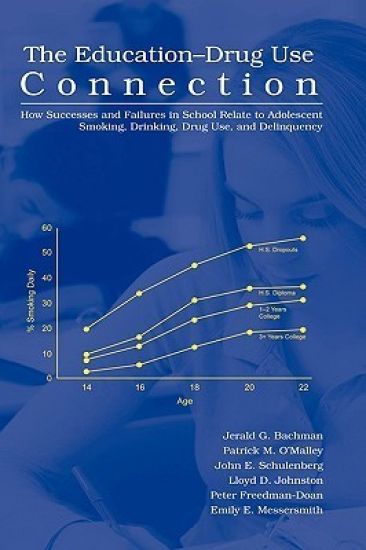
Does success in school protect teenagers from drug use? Does drug use impair scholastic success? This book tackles a key issue in adolescent development and health - the education-drug use connection. The authors examine the links and likely causal connections between educational experiences, delinquent behavior, and adolescent use of tobacco, alcohol, marijuana, and cocaine.The book uses data from the University of Michigan's Monitoring the Future project. It focuses on a large and nationally representative sample of 8th grade students in the United States who were initially surveyed in 1991-1993 and then followed over the vitally important developmental period between ages 14 and 22. The volume uses a variety of statistical analysis techniques, and the findings can be understood by individuals with limited, as well as with extensive, backgrounds in research design. The findings convincingly demonstrate that if young people can be successful in school, it can improve a broad range of outcomes in their lives, not the least of which is their ability to resist pressures to use drugs. The book provides: a summary of the findings and conclusions; a review of relevant literature; a detailed discussion of the survey and analysis methods; the academic attainment of those in the longitudinal panel; the delinquent behaviors of panel members as they relate to measures of educational success; and the patterns of initiation, continuation, and cessation for each substance: cigarettes, marijuana, cocaine, and alcohol.This book is intended for anyone who deals with education and/or substance use, including educational, developmental, and social psychologists; sociologists; epidemiologists; educators; and policy makers. The analysis of panel survey data, using a variety of techniques, will also appeal to survey methodologists and students.
The Education-Drug Use Connection

The Education-Drug Use Connection

Jerald G. Bachman; Patrick M. O'Malley; John E. Schulenberg; Lloyd D. Johnston; Peter Freedman-Doan; Emily E. Messersmith

Psychology Press
2007
nidottu
Does success in school protect teenagers from drug use? Does drug use impair scholastic success? This book tackles a key issue in adolescent development and health - the education-drug use connection. The authors examine the links and likely causal connections between educational experiences, delinquent behavior, and adolescent use of tobacco, alcohol, marijuana, and cocaine.The book uses data from the University of Michigan's Monitoring the Future project. It focuses on a large and nationally representative sample of 8th grade students in the United States who were initially surveyed in 1991-1993 and then followed over the vitally important developmental period between ages 14 and 22. The volume uses a variety of statistical analysis techniques, and the findings can be understood by individuals with limited, as well as with extensive, backgrounds in research design. The findings convincingly demonstrate that if young people can be successful in school, it can improve a broad range of outcomes in their lives, not the least of which is their ability to resist pressures to use drugs. The book provides: a summary of the findings and conclusions; a review of relevant literature; a detailed discussion of the survey and analysis methods; the academic attainment of those in the longitudinal panel; the delinquent behaviors of panel members as they relate to measures of educational success; and the patterns of initiation, continuation, and cessation for each substance: cigarettes, marijuana, cocaine, and alcohol.This book is intended for anyone who deals with education and/or substance use, including educational, developmental, and social psychologists; sociologists; epidemiologists; educators; and policy makers. The analysis of panel survey data, using a variety of techniques, will also appeal to survey methodologists and students.
Advances and Open Problems in Federated Learning

Advances and Open Problems in Federated Learning

Peter Kairouz; H. Brendan McMahan; Brendan Avent; Aurélien Bellet; Mehdi Bennis; Arjun Nitin Bhagoji; Kallista Bonawit; Zachary Charles; Graham Cormode; Rachel Cummings; Rafael G. L. D’Oliveira; Hubert Eichner; Salim El Rouayheb; David Evans; Josh Gardner; Zachary Garrett; Adrià Gascón; Badih Ghazi; Phillip B. Gibbons; Marco Gruteser; Zaid Harchaoui; Chaoyang He; Lie He; Zhouyuan Huo; Ben Hutchinson; Justin Hsu; Martin Jaggi; Tara Javidi; Gauri Joshi; Mikhail Khodak; Jakub Konecný; Aleksandra Korolova; Farinaz Koushanfar

Now Publishers Inc
2021
nidottu
The term Federated Learning was coined as recently as 2016 to describe a machine learning setting where multiple entities collaborate in solving a machine learning problem, under the coordination of a central server or service provider. Each client’s raw data is stored locally and not exchanged or transferred; instead, focused updates intended for immediate aggregation are used to achieve the learning objective. Since then, the topic has gathered much interest across many different disciplines and the realization that solving many of these interdisciplinary problems likely requires not just machine learning but techniques from distributed optimization, cryptography, security, differential privacy, fairness, compressed sensing, systems, information theory, statistics, and more. This monograph has contributions from leading experts across the disciplines, who describe the latest state-of-the art from their perspective. These contributions have been carefully curated into a comprehensive treatment that enables the reader to understand the work that has been done and get pointers to where effort is required to solve many of the problems before Federated Learning can become a reality in practical systems. Researchers working in the area of distributed systems will find this monograph an enlightening read that may inspire them to work on the many challenging issues that are outlined. This monograph will get the reader up to speed quickly and easily on what is likely to become an increasingly important topic: Federated Learning.
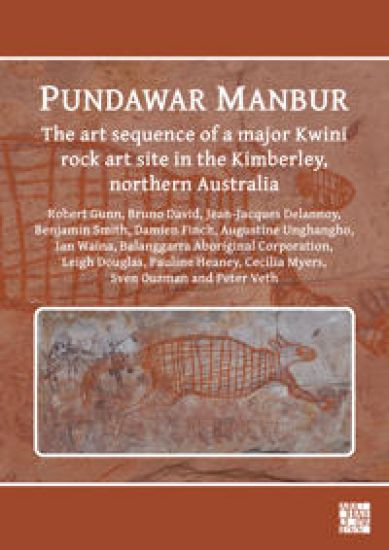
Pundawar Manbur

Pundawar Manbur

Robert G. Gunn; Bruno David; Jean-Jacques Delannoy; Benjamin Smith; Damien Finch; Augustine Unghangho; Ian Waina; Leigh Douglas; Pauline Heaney; Cecilia Myers; Sven Ouzman; Peter Veth

Archaeopress
2025
nidottu
Pundawar Manbur is one of the largest painted rock shelters in the Drysdale River valley of the Kimberley, Western Australia. It contains more than 600 rock paintings, engravings and rock markings with a complex series of overlapping styles of rock art. It is a cultural jewel of Kwini Country, within the lands of the Balanggarra Native Title determination. This monograph presents the first detailed recording and analysis of the site and its art. There are many figures in superposition, and many also in carefully targeted patterns of superimposition, making for a rich story of sequential engagements going back many thousands of years. There is much figurative art, including images from the earliest purported phase of Kimberley art, the Irregular Infill Animal Period, but there are also stencils and other markings. There is evidence of additive reuse – some of the figures have been repainted. There is also fascinating evidence of subtractive reuse, some of the images showing signs of having been ‘battered’ and/or scratched, that is, directly engaged with subsequent to their painting. This monograph is unusual in Australian archaeology as it does not focus on an excavated site; it focuses solely on the rock art of Pundawar Manbur and gives it the attention it deserves.
Rural Roads And Poverty Alleviation

Rural Roads And Poverty Alleviation

John Howe; Peter Richards; J D G F Howe

Routledge
2019
sidottu
This book analyses the use of rural road networks and the causes and effects of road programmes in the areas of personal travel, education, health and poverty alleviation. It discusses the criteria which are being used for rural road selection and their impact in Egypt, India, Botswana and Thailand.