Kirjojen hintavertailu. Mukana 11 342 296 kirjaa ja 12 kauppaa.

Kirjahaku

Etsi kirjoja tekijän nimen, kirjan nimen tai ISBN:n perusteella.

1000 tulosta hakusanalla Philo

Philosophy, Ethics, and Public Policy: An Introduction
What makes a policy work? What should policies attempt to do, and what ought they not do? These questions are at the heart of both policy-making and ethics. Philosophy, Ethics and Public Policy: An Introduction examines these questions and more. Andrew I. Cohen uses contemporary examples and controversies, mainly drawn from policy in a North American context, to illustrate important flashpoints in ethics and public policy, such as:public policy and globalization: sweatshops; medicine and the developing world; immigrationmarriage, family and education: same-sex marriage; women and the family; education and Intelligent Designjustifying and responding to state coercion: torture; reparations and restorative justicethe ethics of the body and commodification: the human organ trade, and factory farming of animals.Each chapter illustrates how ethics offers ways of prioritizing some policy alternatives and imagining new ones. Reflecting on various themes in globalization, markets, and privacy, the chapters are windows to enduring significant debates about what states may do to shape our behavior. Overall, the book will help readers understand how ethics can frame policymaking, while also suggesting that sometimes the best policy is no policy. Including annotated further reading, this is an excellent introduction to a fast-growing subject for students in Philosophy, Public Policy, and related disciplines.
Philosophy of Law

Philosophy of Law

Mark Tebbit

Routledge
2017
sidottu
Philosophy of Law: An Introduction provides an ideal starting point for students of philosophy and law. Setting it clearly against the historical background, Mark Tebbit quickly leads readers into the heart of the philosophical questions that dominate philosophy of law today. He provides an exceptionally wide-ranging overview of the contending theories that have sought to resolve these problems. He does so without assuming prior knowledge either of philosophy or law on the part of the reader.The book is structured in three parts around the key issues and themes in philosophy of law: What is the law? – the major legal theories addressing the question of what we mean by law, including natural law, legal positivism and legal realism. The reach of the law – the various legal theories on the nature and extent of the law’s authority, with regard to obligation and civil disobedience, rights, liberty and privacy. Criminal law – responsibility and mens rea, intention, recklessness and murder, legal defences, insanity and philosophies of punishment.This new third edition has been thoroughly updated to include assessments of important developments in philosophy and law in the early years of the twenty-first century. Revisions include a more detailed analysis of natural law, new chapters on common law and the development of positivism, a reassessment of the Austin–Hart dispute in the light of recent criticism of Hart, a new chapter on the natural law–positivist controversy over Nazi law and legality, and new chapters on criminal law, extending the analysis of the dispute over the viability of the defences of necessity and duress.
Philosophy of Law

Philosophy of Law

Mark Tebbit

Routledge
2017
nidottu
Philosophy of Law: An Introduction provides an ideal starting point for students of philosophy and law. Setting it clearly against the historical background, Mark Tebbit quickly leads readers into the heart of the philosophical questions that dominate philosophy of law today. He provides an exceptionally wide-ranging overview of the contending theories that have sought to resolve these problems. He does so without assuming prior knowledge either of philosophy or law on the part of the reader.The book is structured in three parts around the key issues and themes in philosophy of law: What is the law? – the major legal theories addressing the question of what we mean by law, including natural law, legal positivism and legal realism. The reach of the law – the various legal theories on the nature and extent of the law’s authority, with regard to obligation and civil disobedience, rights, liberty and privacy. Criminal law – responsibility and mens rea, intention, recklessness and murder, legal defences, insanity and philosophies of punishment.This new third edition has been thoroughly updated to include assessments of important developments in philosophy and law in the early years of the twenty-first century. Revisions include a more detailed analysis of natural law, new chapters on common law and the development of positivism, a reassessment of the Austin–Hart dispute in the light of recent criticism of Hart, a new chapter on the natural law–positivist controversy over Nazi law and legality, and new chapters on criminal law, extending the analysis of the dispute over the viability of the defences of necessity and duress.

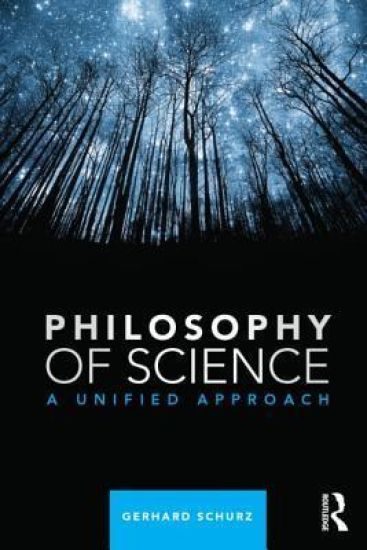
Philosophy of Science

Philosophy of Science

Gerhard Schurz

Routledge
2013
sidottu
Philosophy of Science: A Unified Approach combines a general introduction to philosophy of science with an integrated survey of all its important subfields. As the book’s subtitle suggests, this excellent overview is guided methodologically by "a unified approach" to philosophy of science: behind the diversity of scientific fields one can recognize a methodological unity of the sciences. This unity is worked out in this book, revealing all the while important differences between subject areas. Structurally, this comprehensive book offers a two-part approach, which makes it an excellent introduction for students new to the field and a useful resource for more advanced students. Each chapter is divided into two sections. The first section assumes no foreknowledge of the subject introduced, and the second section builds upon the first by bringing into the conversation more advanced, complementary topics.Definitions, key propositions, examples and figures overview all of the core material. At the end of every chapter there are selected readings and exercises (with solutions at the end of the book). The book also includes a comprehensive bibliography and an index.
Philosophy of Science

Philosophy of Science

Gerhard Schurz

Routledge
2013
nidottu
Philosophy of Science: A Unified Approach combines a general introduction to philosophy of science with an integrated survey of all its important subfields. As the book’s subtitle suggests, this excellent overview is guided methodologically by "a unified approach" to philosophy of science: behind the diversity of scientific fields one can recognize a methodological unity of the sciences. This unity is worked out in this book, revealing all the while important differences between subject areas. Structurally, this comprehensive book offers a two-part approach, which makes it an excellent introduction for students new to the field and a useful resource for more advanced students. Each chapter is divided into two sections. The first section assumes no foreknowledge of the subject introduced, and the second section builds upon the first by bringing into the conversation more advanced, complementary topics.Definitions, key propositions, examples and figures overview all of the core material. At the end of every chapter there are selected readings and exercises (with solutions at the end of the book). The book also includes a comprehensive bibliography and an index.
Philosophy of Education II
A new title from Routledge’s Major Works series, Major Themes in Education, Philosophy of Education II is a five-volume ‘mini library’ of the very best scholarship. It is an essential successor collection to Philosophy of Education (1998) (978-0-415-12944-2), edited by Paul Hurst and Patricia White, and described by the Bulletin of the UK-Japan Education Forum as "indispensable for libraries".Philosophy of Education was the first comprehensive collection of the field’s canonical and cutting-edge research; this new collection takes full account of the numerous important developments that have taken place since its appearance. Moreover, Philosophy of Education II also includes coverage of many new areas and topics outwith the scope of the first collection.With a full index together with a comprehensive introduction, newly written by the learned editor, which places the collected material in its historical and intellectual context, Philosophy of Education II is a crucial work of reference. It is destined to be valued by scholars, students, and researchers as a vital resource.
Philosophy and Science in the Islamic World (RLE Politics of Islam)
The basis of Muslim philosophy and science is the instruction buried in the Quran. At an early date this tradition was enlarged and strengthened by the infiltration into Muslim culture of Greek philosophy and science through the translation of Greek classics by Muslims. The Indian tradition of thought also made its contribution to this intellectual leaven.This book traces the development and interaction of these strands in Muslim thinking. The author is concerned to show both how philosophy and science are related to specifically religious thought, and how they have made distinctive contributions to method and discovery. The impact of secularisation on the Muslim world puts these traditions under considerable strain, and it is interesting to define how far this pressure is a productive and fertile one. The current century has seen a Renaissance of Muslim science and philosophy; this book sets the new achievements clearly against their historical background.First published in 1988.
Philosophy of Sport
This new four-volume collection from Routledge includes the key articles, book chapters, and other essays in the philosophy of sport. It covers different areas of philosophy (e.g. ethics, metaphysics); different enduring topics (e.g. what counts as fair play, whether sport can be defined or not); different time periods (early 'classic' articles and more modern contributions); cross-cultural perspectives (authors from around the world); and a topically diverse subject matter (including the phenomena of sport, games, play, embodiment, and the like). Designed to acquaint new students and more advanced researchers with the best literature available, as well as a synopsis of what has attracted philosophic attention, what is known, and what is still being analysed, the collection will also help readers draw conclusions about what lies ahead in the philosophy of sport. Including a new introduction by the editors and fully indexed, this ‘mini-library’ of the very best and most influential writings on the philosophy of sport is destined to be valued by researchers and students as an essential work of reference.
Philosophy of Personal Identity and Multiple Personality
As witnessed by recent films such as Fight Club and Identity, our culture is obsessed with multiple personality—a phenomenon raising intriguing questions about personal identity. This study offers both a full-fledged philosophical theory of personal identity and a systematic account of multiple personality. Gunnarsson combines the methods of analytic philosophy with close hermeneutic and phenomenological readings of cases from different fields, focusing on psychiatric and psychological treatises, self-help books, biographies, and fiction. He develops an original account of personal identity (the authorial correlate theory) and offers a provocative interpretation of multiple personality: in brief, "multiples" are right about the metaphysics but wrong about the facts.
Philosophy, God and Motion

Philosophy, God and Motion

Simon Oliver

Routledge
2013
nidottu
In the post-Newtonian world motion is assumed to be a simple category which relates to the locomotion of bodies in space, and is usually associated only with physics. This book shows this to be a relatively recent understanding of motion and that prior to the scientific revolution motion was a broader and more mysterious category, applying to moral as well as physical movements.Simon Oliver presents fresh interpretations of key figures in the history of western thought including Plato, Aristotle, Aquinas and Newton, examining the thinkers’ handling of the concept of motion. Through close readings of seminal texts in ancient and medieval cosmology and early modern natural philosophy, the books moves from antique to modern times investigating how motion has been of great significance within theology, philosophy and science. Particularly important is the relation between motion and God, following Aristotle traditional doctrines of God have understood the divine as the ‘unmoved mover’ while post-Holocaust theologians have suggested that in order to be compassionate God must undergo the motion of suffering. The text argues that there may be an authentically theological, as well as a natural scientific understanding of motion.This volume will prove a major contribution to theology, the history of Christian thought and to the growing field of science and religion.
Philosophical Delusion and its Therapy
Philosophical Delusion and its Therapy provides new foundations and methods for the revolutionary project of philosophical therapy pioneered by Ludwig Wittgenstein. The book vindicates this currently much-discussed project by reconstructing the genesis of important philosophical problems: With the help of concepts adapted from cognitive linguistics and cognitive psychology, the book analyses how philosophical reflection is shaped by pictures and metaphors we are not aware of employing and are prone to misapply. Through innovative case-studies on the genesis of classical problems about the mind and perception, and on thinkers including Locke, Berkeley and Ayer, the book demonstrates how such autonomous habits of thought systematically generate unsound intuitions and philosophical delusions, whose clash with reality, or among each other, gives rise to ill-motivated but maddening problems. The book re-examines models of therapeutic philosophy, due to Wittgenstein and J. L. Austin, and develops an approach that may let us overcome philosophical delusions and the problems they engender. In this way, the book explains where and why therapy in called for in philosophy, and develops techniques to carry it out.
Philosophy and Scientific Realism
Originally published in 1963. In an introductory chapter the author argues that philosophy ought to be more than the art of clarifying thought and that it should concern itself with outlining a scientifically plausible world view. Early chapters deal with phenomenalism and the reality of theoretical entities, and with the relation between the physical and biological sciences. Free will, issues of time and space and man’s place in nature are covered in later chapters.
Philosophy of Science and Sociology

Philosophy of Science and Sociology

Edmund Mokrzycki

Routledge
2013
nidottu
Originally published in 1983. This book concentrates on the impact of philosophy of science on sociology and other disciplines. It argues that the impact of the philosophy of science on sociology from the rise of the Vienna Circle until the mid-1980s resulted in a deep-reaching and, in the author’s view, undesirable methodological reorientation in sociology.
Philosophy of Economics

Philosophy of Economics

Julian Reiss

Routledge
2013
sidottu
Philosophy of Economics: A Contemporary Introduction is the first systematic textbook in the philosophy of economics. It introduces the epistemological, metaphysical and ethical problems that arise in economics, and presents detailed discussions of the solutions that have been offered.Throughout, philosophical issues are illustrated by and analysed in the context of concrete cases drawn from contemporary economics, the history of economic ideas, and actual economic events. This demonstrates the relevance of philosophy of economics both for the science of economics and for the economy. This text will provide an excellent introduction to the philosophy of economics for students and interested general readers alike.
Philosophy of Economics

Philosophy of Economics

Julian Reiss

Routledge
2013
nidottu
Philosophy of Economics: A Contemporary Introduction is the first systematic textbook in the philosophy of economics. It introduces the epistemological, metaphysical and ethical problems that arise in economics, and presents detailed discussions of the solutions that have been offered.Throughout, philosophical issues are illustrated by and analysed in the context of concrete cases drawn from contemporary economics, the history of economic ideas, and actual economic events. This demonstrates the relevance of philosophy of economics both for the science of economics and for the economy. This text will provide an excellent introduction to the philosophy of economics for students and interested general readers alike.
Philosophy and the Vision of Language

Philosophy and the Vision of Language

Paul M. Livingston

Routledge
2010
nidottu
Philosophy and the Vision of Language explores the history and enduring significance of the twentieth-century turn to language as a specific object of investigation and resource for philosophical reflection. It traces the implications of the access to language in some of the most prominent projects and results of the historical and contemporary tradition of analytic philosophy, including the projects of Frege, Wittgenstein, Sellars, Quine, Brandom, and Cavell. Additionally, it demonstrates the deep and enduring connections between the analytic tradition’s inquiry into language and the parallel inquiries of phenomenology, critical theory, and deconstruction over the course of the twentieth century. Finally, it documents some of the enduring consequences of philosophy’s inquiry into language for contemporary questions of social and political life. The book provides a clear, accessible and widely inclusive introduction to the relevance of language for analytic and continental philosophy in the twentieth century and is readable by non-specialist audiences. It should contribute to a growing historical sense of the location of the analytic tradition in a broader geography of social, political and critical thought. Furthermore, it contributes to building bridges between this tradition and the neighboring continental ones from which it has all too often been estranged.
Philosophy of Science

Philosophy of Science

Alex Rosenberg

Routledge
2011
sidottu
Any serious student attempting to better understand the nature, methods and justification of science will value Alex Rosenberg’s updated and substantially revised Third Edition of Philosophy of Science: A Contemporary Introduction. Weaving together lucid explanations and clear analyses, the volume is a much-used, thematically oriented introduction to the field.New features of the Third Edition include more coverage of the history of the philosophy of science, more fully developed material on the metaphysics of causal and physical necessity, more background on the contrast between empiricism and rationalism in science, and new material on the structure of theoretical science (with expanded coverage of Newtonian and Darwinian theories and models) and the realism/antirealism controversy. Rosenberg also divides the Third Edition into fifteen chapters, aligning each chapter with a week in a standard semester-long course. Updated Discussion Questions, Glossary, Bibliography and Suggested Readings lists at the end of each chapter will make the Third Edition indispensable, either as a comprehensive stand-alone text or alongside the many wide-ranging collections of articles and book excerpts currently available.Read our interview with Alex Rosenberg, What exactly is philosophy of science – and why does it matter? here: www.routledge.com/u/alexrosenberg
Philosophy of Science

Philosophy of Science

Alex Rosenberg

Routledge
2011
nidottu
Any serious student attempting to better understand the nature, methods and justification of science will value Alex Rosenberg’s updated and substantially revised Third Edition of Philosophy of Science: A Contemporary Introduction. Weaving together lucid explanations and clear analyses, the volume is a much-used, thematically oriented introduction to the field.New features of the Third Edition include more coverage of the history of the philosophy of science, more fully developed material on the metaphysics of causal and physical necessity, more background on the contrast between empiricism and rationalism in science, and new material on the structure of theoretical science (with expanded coverage of Newtonian and Darwinian theories and models) and the realism/antirealism controversy. Rosenberg also divides the Third Edition into fifteen chapters, aligning each chapter with a week in a standard semester-long course. Updated Discussion Questions, Glossary, Bibliography and Suggested Readings lists at the end of each chapter will make the Third Edition indispensable, either as a comprehensive stand-alone text or alongside the many wide-ranging collections of articles and book excerpts currently available.Read our interview with Alex Rosenberg, What exactly is philosophy of science – and why does it matter? here: www.routledge.com/u/alexrosenberg
Philosophical Inquiries into Pregnancy, Childbirth, and Mothering
Philosophical inquiry into pregnancy, childbirth, and mothering is a growing area of interest to academic philosophers. This volume brings together a diverse group of philosophers to speak about topics in this reemerging area of philosophical inquiry, taking up new themes, such as maternal aesthetics, and pursuing old ones in new ways, such as investigating stepmothering as it might inform and ground an ethics of care. The theoretical foci of the book include feminist, existential, ethical, aesthetic, phenomenological, social and political theories. These perspectives are then employed to consider many dimensions of pregnancy, childbirth, and mothering, which are of central importance to human existence, but are only rarely discussed in philosophical cannons. Topics include pregnancy and embodiment, breast-feeding, representations – or the lack thereof – of pregnant and birthing women, adoption, and post-partum motherhood.
Philosophy, Science, and History
Philosophy, Science, and History: A Guide and Reader is a compact overview of the history and philosophy of science that aims to introduce students to the groundwork of the field, and to stimulate innovative research. The general introduction focuses on scientific theory change, assessment, discovery, and pursuit. Part I of the Reader begins with classic texts in the history of logical empiricism, including Reichenbach’s discovery-justification distinction. With careful reference to Kuhn’s analysis of scientific revolutions, the section provides key texts analyzing the relationship of HOPOS to the history of science, including texts by Santayana, Rudwick, and Shapin and Schaffer. Part II provides texts illuminating central debates in the history of science and its philosophy. These include the history of natural philosophy (Descartes, Newton, Leibniz, Kant, Hume, and du Châtelet in a new translation); induction and the logic of discovery (including the Mill-Whewell debate, Duhem, and Hanson); and catastrophism versus uniformitarianism in natural history (Playfair on Hutton and Lyell; de Buffon, Cuvier, and Darwin). The editor’s introductions to each section provide a broader perspective informed by contemporary research in each area, including related topics. Each introduction furnishes proposals, including thematic bibliographies, for innovative research questions and projects in the classroom and in the field.