Kirjojen hintavertailu. Mukana 12 016 292 kirjaa ja 12 kauppaa.

Kirjahaku

Etsi kirjoja tekijän nimen, kirjan nimen tai ISBN:n perusteella.

1000 tulosta hakusanalla Pierre Heber Suffrin

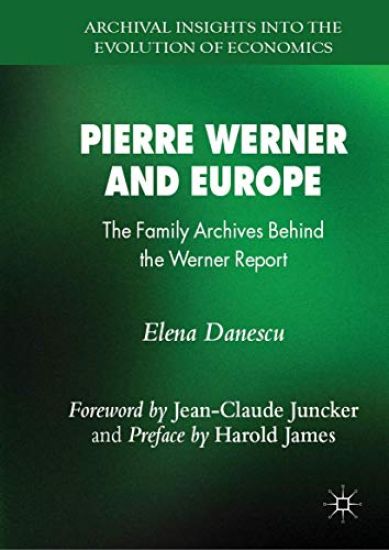
Pierre Werner and Europe

Pierre Werner and Europe

Elena Danescu

Palgrave MacMillan
2020
nidottu
This book- which features a foreword by Jean-Claude Juncker and Preface by Professor Harold James- examines the European vocation and achievements of Pierre Werner (1913–2002), former Prime Minister, Finance Minister and Foreign Minister of Luxembourg, unanimously recognized as one of the architects of Economic and Monetary Union. The author makes extensive use of Pierre Werner’s previously unpublished archives belonging to the Werner family, opened for the first time for research purposes. The book analyses the Werner Report, negotiations within the Werner Committee, the emergence of the Committee’s views on EMU, their political commitment to a European currency, the similarities and differences between their ideas, their personal networks, the influence of the states they represented, their theoretical and methodological input and their contribution to the political consensus.Chapters shed new light on various aspects of the European integration process and also onthe role of Luxembourg and its European policy. In addition, the author has carried out a series of original interviews with Luxembourg and European figures who share their memories and thoughts concerning Pierre Werner, his achievements and his views on the European integration process, and also other topics such as Economic and Monetary Union and Luxembourg‘s European policy. This book will be of interest and value to researchers, EU policy makers and students in the fields of political economy, political science, economic history and history of economic thought.
Pierre-Daniel Huet (1630–1721) and the Skeptics of his Time

Pierre-Daniel Huet (1630–1721) and the Skeptics of his Time

José R. Maia Neto

Springer Nature Switzerland AG
2022
sidottu
This book offers a detailed and scholarly historical and philosophical examination of French scepticism from Descartes to the beginning of the Enlightenment by examining the views of Pierre-Daniel Huet (1630–1721). It shows the crucial role played by Huet in the modification of the early modern sceptical tradition: from a practical perspective closer to ancient scepticism, mostly presented by Montaigne and Charron, to an epistemological and metaphysical perspective strongly influenced by Descartes’s doubt. The book examines and gives original interpretations of the various sceptical (and semi-sceptical) views held in the period and their connections to Huet’s own scepticism. Besides known philosophers such as Descartes, Gassendi, Pascal and Bayle, the book also accesses sceptical views held by secondary figures such as La Mothe Le Vayer and Simon Foucher and others who have not thus far been connected to the sceptical tradition such as Jean-Baptiste du Hamel and Madeleine de Scudéry. The book is useful for scholars in the field of early modern ideas: philosophical, religious and scientific.
Pierre-Daniel Huet (1630–1721) and the Skeptics of his Time

Pierre-Daniel Huet (1630–1721) and the Skeptics of his Time

José R. Maia Neto

Springer Nature Switzerland AG
2023
nidottu
This book offers a detailed and scholarly historical and philosophical examination of French scepticism from Descartes to the beginning of the Enlightenment by examining the views of Pierre-Daniel Huet (1630–1721). It shows the crucial role played by Huet in the modification of the early modern sceptical tradition: from a practical perspective closer to ancient scepticism, mostly presented by Montaigne and Charron, to an epistemological and metaphysical perspective strongly influenced by Descartes’s doubt. The book examines and gives original interpretations of the various sceptical (and semi-sceptical) views held in the period and their connections to Huet’s own scepticism. Besides known philosophers such as Descartes, Gassendi, Pascal and Bayle, the book also accesses sceptical views held by secondary figures such as La Mothe Le Vayer and Simon Foucher and others who have not thus far been connected to the sceptical tradition such as Jean-Baptiste du Hamel and Madeleine de Scudéry. The book is useful for scholars in the field of early modern ideas: philosophical, religious and scientific.
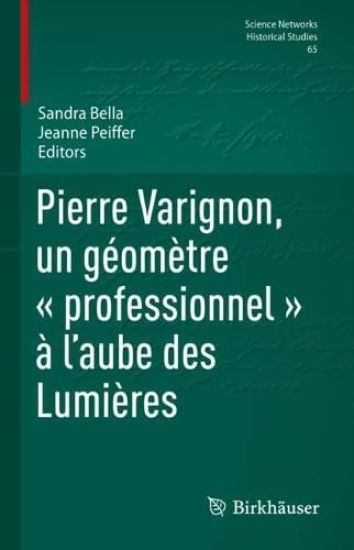
Pierre Varignon, un géomètre « professionnel » à l’aube des Lumières
L’objectif de cet ouvrage, issu d’un colloque et d’une exposition à la bibliothèque Mazarine organisés à l’occasion du tricentenaire du décès de Pierre Varignon (1654-1722), est de retracer la trajectoire de ce mathématicien dans son contexte historique, et de faire le point sur les recherches menées sur lui ces dernières décennies. Même si Varignon ne fait pas partie du panthéon des mathématiciens, c’est un savant « normal », ni génial ni méconnu, et c’est en cela qu’il mérite d’être étudié. Géomètre et mécanicien reconnu par ses contemporains, membre puissant de l’Académie royale des sciences, en contact épistolaire avec Leibniz, Newton ou encore les frères Bernoulli, Varignon fut aussi le premier titulaire de la première chaire de mathématiques du collège Mazarin et professeur au Collège royal. Ses travaux situés à une époque de transition sont marqués par le cartésianisme mais contribuent aussi à l’introduction de l’analyse leibnizienne en France et à la naissance de la mécanique analytique. Cette collection d'essais sera précieuse pour les étudiant(e)s et les chercheur(e)s intéressé(e)s par l'héritage de Varignon et le contexte historique des sciences aux XVIIe et XVIIIe siècles. *** This book originates from a symposium and an exhibition at the Mazarine Library in Paris organized to commemorate the trecentenary of Pierre Varignon's death (1654-1722), and it aims to retrace the trajectory of this notable mathematician within his historical context, as well as to take stock of the research carried out on him in recent decades. A respected geometer and "mechanic" of his time, he was a prominent member of the Paris Académie royale des sciences, and part of an extended international network including Leibniz, Newton and the Bernoullis. He held the first chair of mathematics, established at the Collège Mazarin, and was a professor at the Collège Royal. This collection of essays will be invaluable to students and scholars interested in Varignon’s legacy and the historical context of science in the 17th and 18th centuries.
Pierre Klossowski

Pierre Klossowski

Hervé Castanet

Peter Lang AG, Internationaler Verlag der Wissenschaften
2014
nidottu
This book examines the many facets of the work of Pierre Klossowski (1905–2001). Klossowski first established himself as a writer and was known and admired by peers such as Bataille, Blanchot, Gide, Foucault, Deleuze and Lacan. But in 1972 he gave up writing to devote himself to his ‘mutism’: painting made up of large coloured drawings. In time he became as famous a painter as he had been a writer and theorist. Klossowski now has two separate groups of commentators: those concerned with his writings and those with his painting, with little overlap between the two. Here, this separation is explicitly removed. Klossowski’s entire œuvre revolved around the concept of the gaze. Rarely has the gaze been so radically interpreted – as an active, mobile, evanescent object that breaks down the connections between representation and the visible. How is one to see the invisible divinity? This question plagued Klossowski, and he displaced it onto pornographic rituals. The pantomime of spirits is the scene, fixed in silence, where bodies meet – a knotting of desiring body and dogmatic theology. A creator of simulacra, Klossowski attempted to exorcise the ‘obsessive constraint of the phantasm’ that subjugated him in all these scenes. Translated from the French by Adrian Price in collaboration with Pamela King.
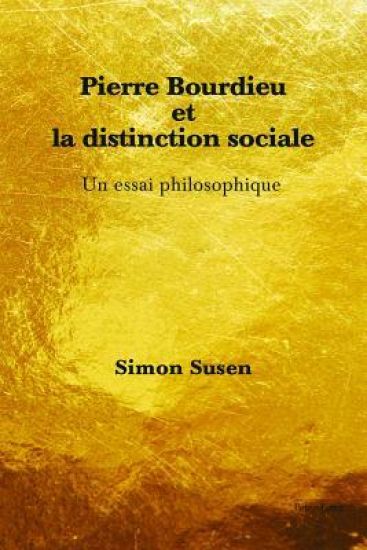
Pierre Bourdieu et la distinction sociale

Pierre Bourdieu et la distinction sociale

Simon Susen

Peter Lang AG, Internationaler Verlag der Wissenschaften
2016
nidottu
L'objet principal de cette reflexion est d'examiner de maniere approfondie la conception bourdieusienne de la " distinction sociale ". A partir d'une analyse detaillee de La distinction. Critique sociale du jugement (1979), cet essai passe au crible les forces et les faiblesses des explications elaborees par Pierre Bourdieu a propos des processus de differenciation symbolique et materielle. L'analyse montre que La distinction contient dix tensions epistemiques significatives, dont l'etude critique permet de comprendre les contradictions fondamentales qui se trouvent au coeur de la conception bourdieusienne de la " distinction sociale ".
Pierre-Alain Dupraz: De aedibus

Pierre-Alain Dupraz: De aedibus

Heinz Wirz

Quart Publishers
2016
nidottu
Buildings by the Geneva architect Pierre-Alain Dupraz always reveal experimental elements, little inventions that are refined to produce an aesthetic overall result. For instance a villa is developed out of a module of prefabricated garage boxes, or a creche has underground rooms aligned around a large interior courtyard.
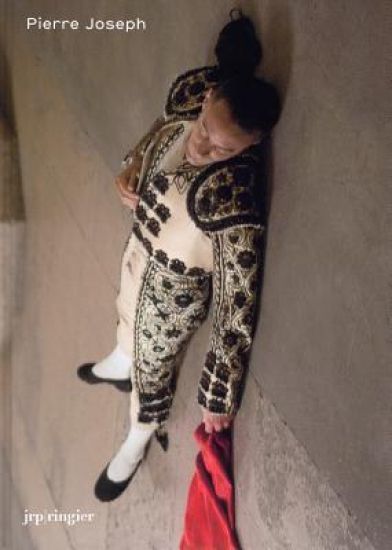
Pierre Joseph

Pierre Joseph

JRP Ringier
2013
sidottu
Alongside Philippe Parreno, Dominique Gonzalez-Foerster and Bernard Joisten, French artist Pierre Joseph was a crucial protagonist in the 1990s turn towards collaborative artmaking, exhibitions as social encounters and digital manipulation of reality. This selective overview includes a long conversation with British artist Liam Gillick, and a focus on Joseph's "Characters to Be Reactivated" series by the art critic and theoretician Nicolas Bourriaud.
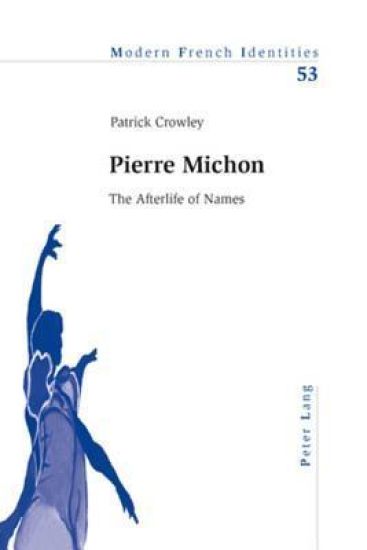
Pierre Michon

Pierre Michon

Patrick Crowley

Verlag Peter Lang
2007
nidottu
Pierre Michon is one of France's most significant contemporary writers. Since the publication in 1984 of his first book, "Vies minuscules," Michon's work has never ceased to evade generic classifications. His work ingests books, lives and thought and probes their complex interrelationship and those moments of convergence that transform an ordinary name into that of an 'Author' or of an 'Artist'. The contents of Michon's work are well documented: they are drawn from canonical novels, chronicles, archives and the biographies of artists' lives and are worked into cross-generic forms that revive names and make us rethink the uncertainty of literature. Less has been written of his engagement with avant-garde thought. The legacy of French avant-garde thinkers of the 1960s and 1970s, in particular the work of Roland Barthes, informs Michon's work. Barthes's notions of the referent, of intertextuality and of authorship, for example, are transposed, reconfigured and sometimes contested within Michon's work. In this way, Barthes's name, the afterlife of his thought, remains encrypted within Michon's prose. This book situates and reads Michon's texts through the complex inscription and transformation of names drawn from the Creuse, literature, art and avant-garde thought. And it is within this matrix that Michon puts in play his own name and its uncertain relation to literature.
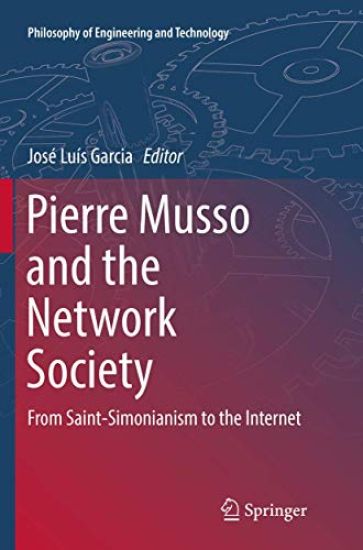
Pierre Musso and the Network Society

Pierre Musso and the Network Society

Springer International Publishing AG
2017
sidottu
This book is devoted to discussion of the views of Pierre Musso and starts with a central chapter written by Musso, entitled Network Ideology: from Saint-Simonianism to the Internet . Pierre Musso is a French philosopher and is one of the most original thinkers in the history of the network society. His thought develops a critique of information and communication technologies through their imaginary and social representations and of the information society, based on the network metaphor.The main question on which Musso has focused his attention is how the network metaphor is one of the most powerful ways of understanding the complex societies in which we live. Showing characteristic attention to detail, and drawing on the history of ideas, political philosophy and sociology, Musso traces the genealogy of the network imaginary, and points out that it did not emerge with the Internet. He shows how its modern roots can be found in Henri de Saint-Simon and his disciples, engineers and entrepreneurs such as Michel de Chevalier, and Barthélemy Prosper Enfantin, who developed channel networks, railroads, and the telegraphic network in France in the nineteenth century. In addition to the central piece written by Musso, the book includes a general introduction and six commentaries from experts on information technologies and networks. It displays a wide range of perspectives from a diverse set of authors in terms of nationalities and universities, as well as disciplinary backgrounds.
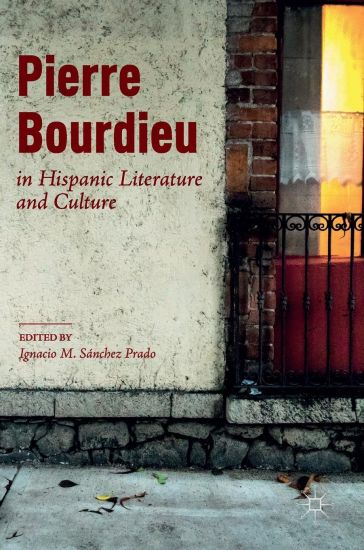
Pierre Bourdieu in Hispanic Literature and Culture

Pierre Bourdieu in Hispanic Literature and Culture

Springer International Publishing AG
2018
sidottu
Pierre Bourdieu in Hispanic Literature and Culture is a collective reflection on the value of French sociologist Pierre Bourdieu’s work for the study of Spanish and Latin American literature and culture. The authors deploy Bourdieu’s concepts in the study of Modernismo, avant-garde Mexico, contemporary Puerto Rican literature, Hispanism, Latin American cultural production, and more. Each essay is also a contribution to the study of the politics and economics of culture in Spain and Latin America. The book, as a whole, is in dialogue with recent methodological and theoretical interventions in cultural sociology and Latin American and Iberian studies.
Pierre Musso and the Network Society

Pierre Musso and the Network Society

Springer International Publishing AG
2018
nidottu
This book is devoted to discussion of the views of Pierre Musso and starts with a central chapter written by Musso, entitled Network Ideology: from Saint-Simonianism to the Internet . Pierre Musso is a French philosopher and is one of the most original thinkers in the history of the network society. His thought develops a critique of information and communication technologies through their imaginary and social representations and of the information society, based on the network metaphor.The main question on which Musso has focused his attention is how the network metaphor is one of the most powerful ways of understanding the complex societies in which we live. Showing characteristic attention to detail, and drawing on the history of ideas, political philosophy and sociology, Musso traces the genealogy of the network imaginary, and points out that it did not emerge with the Internet. He shows how its modern roots can be found in Henri de Saint-Simon and his disciples, engineers and entrepreneurs such as Michel de Chevalier, and Barthélemy Prosper Enfantin, who developed channel networks, railroads, and the telegraphic network in France in the nineteenth century. In addition to the central piece written by Musso, the book includes a general introduction and six commentaries from experts on information technologies and networks. It displays a wide range of perspectives from a diverse set of authors in terms of nationalities and universities, as well as disciplinary backgrounds.
Pierre Werner and Europe

Pierre Werner and Europe

Elena Danescu

Springer International Publishing AG
2019
sidottu
This book- which features a foreword by Jean-Claude Juncker and Preface by Professor Harold James- examines the European vocation and achievements of Pierre Werner (1913–2002), former Prime Minister, Finance Minister and Foreign Minister of Luxembourg, unanimously recognized as one of the architects of Economic and Monetary Union. The author makes extensive use of Pierre Werner’s previously unpublished archives belonging to the Werner family, opened for the first time for research purposes. The book analyses the Werner Report, negotiations within the Werner Committee, the emergence of the Committee’s views on EMU, their political commitment to a European currency, the similarities and differences between their ideas, their personal networks, the influence of the states they represented, their theoretical and methodological input and their contribution to the political consensus.Chapters shed new light on various aspects of the European integration process and also onthe role of Luxembourg and its European policy. In addition, the author has carried out a series of original interviews with Luxembourg and European figures who share their memories and thoughts concerning Pierre Werner, his achievements and his views on the European integration process, and also other topics such as Economic and Monetary Union and Luxembourg‘s European policy. This book will be of interest and value to researchers, EU policy makers and students in the fields of political economy, political science, economic history and history of economic thought.