On a tous d j , au moins une fois dans sa vie, r v d' tre riche ou simplement ind pendant financi rement.J'ai eu moi aussi ce r ve quand j' tais petit. Cette id e ne m'a jamais vraiment quitt , elle a m me fait du chemin dans ma t te au fil des ann es.J'ai fait plein de petits business quand j' tais ado, puis j'ai commenc m'int resser l'immobilier ... Apr s des dizaines, voir des centaines d'heures chercher des informations sur "comment vivre de l'immobilier" sur internet, j'ai mis en place, pour y arriver, une strat gie innovante l' poque .Et puis un jour, j'ai pris mon courage deux mains et je me suis lanc et j'ai r ussi remplacer mon salaire et m me plus par des revenus immobilier Voici mon histoire ... "Si je l'ai fait, tout le monde peut le faire, condition de s'en donner les moyens, il n'y a pas de secrets"
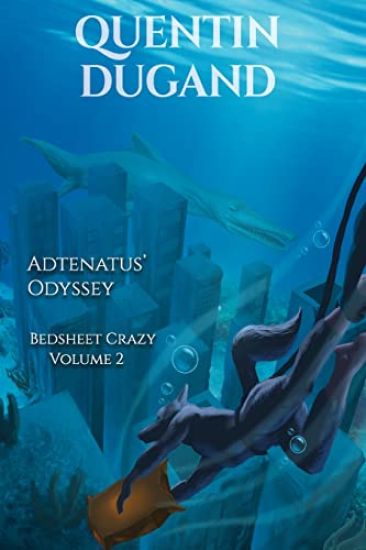
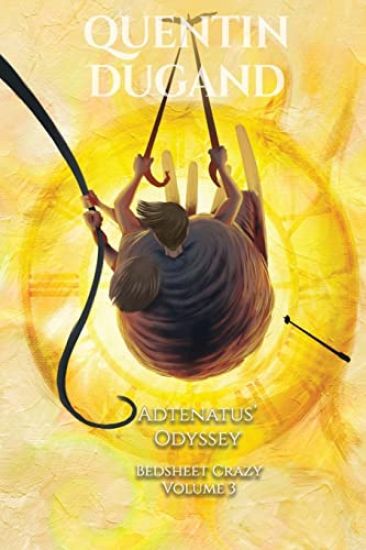
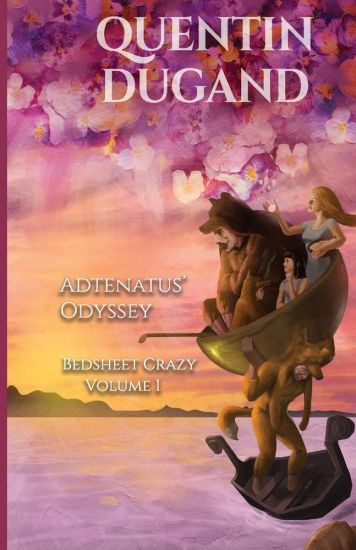
Climaxpa and her two husbands live comfortably in Velgan city, a lush city-state surrounded by water and exclusively ruled by women during the Bronze Age.Even though she has it all, something is amiss in her life, and she can't seem to find happiness. It's springtime and she wishes for everyone to get more out of living, to experience life to the fullest by witnessing it bursting forth in every corner of Velgan island in multiple shapes and forms.Is Adtenatus, her favorite husband, going to be up to the task, rise up to the occasion and finally become, in her eyes, a man?
Climaxpa and her two husbands live comfortably in Velgan city, a lush city-state surrounded by water and exclusively ruled by women during the Bronze Age.Even though she has it all, something is amiss in her life, and she can't seem to find happiness. It's springtime and she wishes for everyone to get more out of living, to experience life to the fullest by witnessing it bursting forth in every corner of Velgan island in multiple shapes and forms.Is Adtenatus, her favorite husband, going to be up to the task, rise up to the occasion and finally become, in her eyes, a man?Author's bio Quentin is a French author who wrote a modern tale that blends great adventures, romance, food and political science. He started his writing journey while working as an English teacher, taking advantage of his background and experience in social science, history, literature and business. His first book is a call to action to create a society that works for the many and fit everyone's feats. It's a call to embolden people to contribute and unlock their inner artist for the benefit of us all. It is also tip of the hat to the yellow-vest protesters, all the underpaid workers who are the backbone of our bountiful lives and who had to take to the streets as they were becoming a minority.
This book proposes a novel position in the debate on scientific realism: Modal Empiricism. Modal empiricism is the view that the aim of science is to provide theories that correctly delimit, in a unified way, the range of experiences that are naturally possible given our position in the world. The view is associated with a pragmatic account of scientific representation and an original notion of situated modalities, together with an inductive epistemology for modalities. It purports to provide a faithful account of scientific practice and of its impressive achievements, and defuses the main motivations for scientific realism. More generally, Modal Empiricism purports to be the precise articulation of a pragmatist stance towards science.This book is of interest to any philosopher involved in the debate on scientific realism, or interested in how to properly understand the content, aim and achievements of science.
This book proposes a novel position in the debate on scientific realism: Modal Empiricism. Modal empiricism is the view that the aim of science is to provide theories that correctly delimit, in a unified way, the range of experiences that are naturally possible given our position in the world. The view is associated with a pragmatic account of scientific representation and an original notion of situated modalities, together with an inductive epistemology for modalities. It purports to provide a faithful account of scientific practice and of its impressive achievements, and defuses the main motivations for scientific realism. More generally, Modal Empiricism purports to be the precise articulation of a pragmatist stance towards science.This book is of interest to any philosopher involved in the debate on scientific realism, or interested in how to properly understand the content, aim and achievements of science.
This book makes an original contribution to credential sociology by analysing how high school certificates become and remain valuable in a context of mass high school participation (i.e. credentialism). Building on a detailed analysis of the International Baccalaureate (IB) Diploma, a senior secondary school certificate offered in over 150 countries, Quentin Maire argues that the advent of new private credentials can be understood as a phenomenon of credential stratification in a context of intensified academic competition.Using original data on high school credentials in Australia and internationally, the author makes a strong case for certificates to be studied relationally, by locating them in the credentialing structures in which they are inserted. He systematically applies the comparative method to explain the role of the curriculum, family resources, school segregation and higher education selection in creating a credential hierarchy. His robust combination of theoretical construction and detailed empirical work allows him to offer new insights into social inequality in education systems, credential theory and the IB Diploma.
This book makes an original contribution to credential sociology by analysing how high school certificates become and remain valuable in a context of mass high school participation (i.e. credentialism). Building on a detailed analysis of the International Baccalaureate (IB) Diploma, a senior secondary school certificate offered in over 150 countries, Quentin Maire argues that the advent of new private credentials can be understood as a phenomenon of credential stratification in a context of intensified academic competition.Using original data on high school credentials in Australia and internationally, the author makes a strong case for certificates to be studied relationally, by locating them in the credentialing structures in which they are inserted. He systematically applies the comparative method to explain the role of the curriculum, family resources, school segregation and higher education selection in creating a credential hierarchy. His robust combination of theoretical construction and detailed empirical work allows him to offer new insights into social inequality in education systems, credential theory and the IB Diploma.
This highly accessible textbook teaches programming from first principles. In common with many programming courses, it uses Python as the introductory programming language before going on to use Java as the vehicle for more advanced programming concepts. The first part, which teaches Python, covers fundamental programming concepts, such as data types and control structures and functions. It introduces more complex data types such as lists and dictionaries and also deals with file handling. It introduces object-oriented concepts and ends with a case study bringing together all the topics of the first semester. The second part uses Java to teach advanced concepts and centres around object-oriented programming, teaching key object-oriented concepts such as inheritance and polymorphism. The semester again ends with an advanced case study bringing together all the topics of the second semester. Topics and features: Assumes no prior knowledge, and makes the transition from Python to Java a smooth processFeatures numerous exercises and also an illustrative case study for each language Examines procedural and object-oriented methodologies, as well as design principles Covers such advanced topics as interfaces and lambda expressions, exceptions and Collections Includes a chapter on graphics programming in Python using Tkinter Introduces the latest Java technology for graphical interfaces, JavaFXExplains design concepts using UML notation Offering a gentle introduction to the field and assuming no prerequisite background, Programming in Two Semesters is the ideal companion to undergraduate modules in software development or programming. In addition, it will serve as a strong primer for professionals looking to strengthen their knowledge of programming with these languages.
This highly accessible textbook teaches programming from first principles. In common with many programming courses, it uses Python as the introductory programming language before going on to use Java as the vehicle for more advanced programming concepts. The first part, which teaches Python, covers fundamental programming concepts, such as data types and control structures and functions. It introduces more complex data types such as lists and dictionaries and also deals with file handling. It introduces object-oriented concepts and ends with a case study bringing together all the topics of the first semester. The second part uses Java to teach advanced concepts and centres around object-oriented programming, teaching key object-oriented concepts such as inheritance and polymorphism. The semester again ends with an advanced case study bringing together all the topics of the second semester. Topics and features: Assumes no prior knowledge, and makes the transition from Python to Java a smooth processFeatures numerous exercises and also an illustrative case study for each language Examines procedural and object-oriented methodologies, as well as design principles Covers such advanced topics as interfaces and lambda expressions, exceptions and Collections Includes a chapter on graphics programming in Python using Tkinter Introduces the latest Java technology for graphical interfaces, JavaFXExplains design concepts using UML notation Offering a gentle introduction to the field and assuming no prerequisite background, Programming in Two Semesters is the ideal companion to undergraduate modules in software development or programming. In addition, it will serve as a strong primer for professionals looking to strengthen their knowledge of programming with these languages.
This introductory textbook covers all the mathematical concepts necessary for a computing degree, limiting coverage only to the material needed for the fundamentals of computing rather than delving into the higher mathematical concepts. Key features include: Gears content toward students who are less confident in mathematicsProvides exercises, with solutions, at the end of each chapterTeaches topics using everyday languageIncludes numerous worked examples in every chapterUses familiar scenarios to introduce mathematical conceptsDiscusses the relevance of each chapter topic to the world of computing Core topics covered include: Set and groupsMatricesRelations and functionsLogic and proofsCombinatoricsProbabilityGraph theory The book is written for students embarking on an undergraduate or foundation degree course in computer science (or related discipline) and aims to provide the basic skills and knowledge of discrete mathematics required for such a course. Whereas many textbooks tend to teach this subject in a way that is more suitable for mathematicians, this text specifically targets first-year students on computing courses and aims to teach only the basic material that they will need for their computing degree. Dr Quentin Charatan is a former Principal Lecturer and now visiting lecturer at the University of East London, UK. Dr Aaron Kans is the Head of the Computer Science and Digital Technologies Department in the School of Architecture, Computing & Engineering at the same institution.
In 1583 the Italian botanist and physician Andrea Cesalpino (1524–1603) published De Plantis Libri XVI, made of 16 books (libri), considered to be the first treatise where botany is treated independently from medicine. In so doing, he broke with a long tradition inherited in Western science from Antiquity and perpetuated during the Middle Age through the early Renaissance. De Plantis lays the foundations of scientific systematics through a new focus on plant morphology and natural similarities and became a milestone in the history of Western botany. It is a precious testimony to the evolution of botanical and physiological knowledge in the Middle Ages and the Renaissance and illustrates the role of Aristotelian philosophy in 16th-century knowledge. The volume includes an introductory essay about Cesalpino's philosophy and botany, a critical edition of the Latin text, a translation, a commentary, and indexes. It should interest scholars in Renaissance studies, historians, and philosophers of science and medicine, as well as botanists and plant scientists curious about the history of plant sciences.
This book probes the materiality of Improvement in early 19th century rural Massachusetts. Improvement was a metaphor for human intervention in the dramatic changes taking place to the English speaking world in the 18th and 19th centuries as part of a transition to industrial capitalism. The meaning of Improvement vacillated between ideas of economic profit and human betterment, but in practice, Improvement relied on a broad assemblage of material things and spaces for coherence and enaction. Utilizing archaeological data from the home of a wealthy farmer in rural Western Massachusetts, as well as an analysis of early Republican agricultural publications, this book shows how Improvement’s twin meanings of profit and betterment unfolded unevenly across early 19th century New England. The Improvement movement in Massachusetts emerged at a time of great social instability, and served to ameliorate growing tensions between urban and rural socioeconomic life through a rationalization of space. Alongside this rationalization, Improvement also served to reshape rural landscapes in keeping with the social and economic processes of a modernizing global capitalism. But the contradictions inherent in such processes spurred and buttressed wealth inequality, ecological distress, and social dislocation.
This book probes the materiality of Improvement in early 19th century rural Massachusetts. Improvement was a metaphor for human intervention in the dramatic changes taking place to the English speaking world in the 18th and 19th centuries as part of a transition to industrial capitalism. The meaning of Improvement vacillated between ideas of economic profit and human betterment, but in practice, Improvement relied on a broad assemblage of material things and spaces for coherence and enaction. Utilizing archaeological data from the home of a wealthy farmer in rural Western Massachusetts, as well as an analysis of early Republican agricultural publications, this book shows how Improvement’s twin meanings of profit and betterment unfolded unevenly across early 19th century New England. The Improvement movement in Massachusetts emerged at a time of great social instability, and served to ameliorate growing tensions between urban and rural socioeconomic life through a rationalization of space. Alongside this rationalization, Improvement also served to reshape rural landscapes in keeping with the social and economic processes of a modernizing global capitalism. But the contradictions inherent in such processes spurred and buttressed wealth inequality, ecological distress, and social dislocation.
This easy-to-follow textbook teaches Java programming from first principles, as well as covering design and testing methodologies. The text is divided into two parts. Each part supports a one-semester module, the first part addressing fundamental programming concepts, and the second part building on this foundation, teaching the skills required to develop more advanced applications.This fully updated and greatly enhanced fourth edition covers the key developments introduced in Java 8, including material on JavaFX, lambda expressions and the Stream API.Topics and features: begins by introducing fundamental programming concepts such as declaration of variables, control structures, methods and arrays; goes on to cover the fundamental object-oriented concepts of classes and objects, inheritance and polymorphism; uses JavaFX throughout for constructing event-driven graphical interfaces; includes advanced topics such as interfaces and lambda expressions, generics, collection classes and exceptions; explains file-handling techniques, packages, multi-threaded programs, socket programming, remote database access and processing collections using streams; includes self-test questions and programming exercises at the end of each chapter, as well as two illuminating case studies; provides additional resources at its associated website (simply go to springer.com and search for "Java in Two Semesters"), including a guide on how to install and use the NetBeans™ Java IDE.Offering a gentle introduction to the field, assuming no prior knowledge of the subject, Java in Two Semesters is the ideal companion to undergraduate modules in software development or programming.