Kirjojen hintavertailu. Mukana 11 244 527 kirjaa ja 12 kauppaa.

Kirjahaku

Etsi kirjoja tekijän nimen, kirjan nimen tai ISBN:n perusteella.

892 tulosta hakusanalla Reggie Dabbs

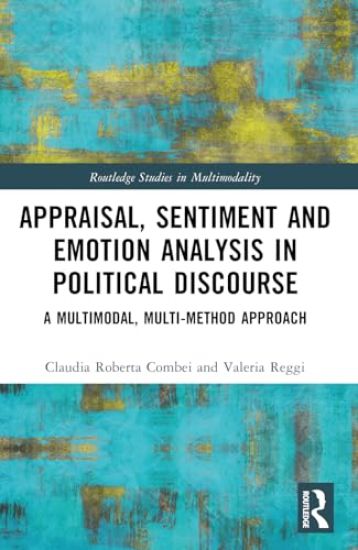
Appraisal, Sentiment and Emotion Analysis in Political Discourse

Appraisal, Sentiment and Emotion Analysis in Political Discourse

Claudia Roberta Combei; Valeria Reggi

TAYLOR FRANCIS LTD
2025
nidottu
This book adopts a multi-method multimodal approach to the study of online political communication, applying it to case studies from the United Kingdom, France, and Italy towards offering a portrait of the rapid ideological shifts in contemporary Western democracies.The volume introduces an integrated framework combining Sentiment and Emotion Analysis, rooted in lexical semantics, and the qualitative dimensions of Appraisal Theory, applying it to large corpora of online political communication from the United Kingdom, France, and Italy. Combei and Reggi highlight their combined potential in analysing the multimodal resources in such discourses and in turn revealing fresh insights into layers of subtext and the ways in which parties and movements frame their political programmes and values. The authors also take into account culture- and language-specific variables across the three countries in shaping such discourses. The volume makes the case for an integrated methodological framework that can be uniquely applied to better understand the multimodal communicative landscape of divisiveness in today’s rapidly shifting political climate and other forms of online communication more broadly.This book will be of interest to students and scholars in digital communication, political communication, multimodality, and qualitative and quantitative discourse analysis, especially those interested in corpus-assisted approaches.
The AiBST Story

The AiBST Story

Stewart Masimirembwa; Reggies Wenyika; Collen Masimirembwa

Urban Press
2022
pokkari
IN 2008, COLLEN MASIMIREMBWA RETURNED TO HIS NATIVE LAND OF ZIMBABWE That fact in and of itself may not be remarkable, but the story you will read in this book is truly remarkable. Collen returned home to found a biomedical research and training institute that since then has changed the way not only Africa looks at genetics and drug development, but also the way the world looks at and studies them. In The AiBST Story: Celebrating Twenty Years of Health Research & Innovation, you will hear from the African Institute of Biomedical and Scientific Technology's founder along with a cadre of scientists, professors, and researchers who will share their perspective and describe their role in the AiBST story. It will be clear, however, that their contributions would not have been possible without the vision, courage, and determination of one man: Collen Masimirembwa.
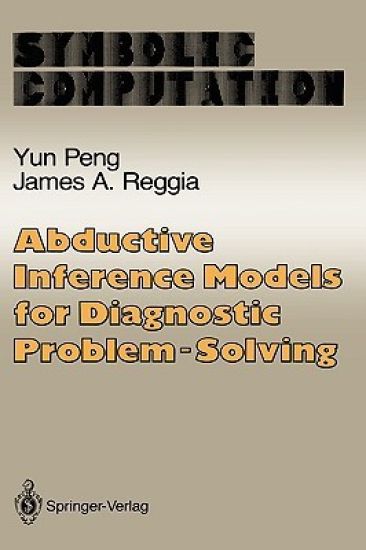
Abductive Inference Models for Diagnostic Problem-Solving

Abductive Inference Models for Diagnostic Problem-Solving

Yun Peng; James A. Reggia

Springer-Verlag New York Inc.
1990
sidottu
Making a diagnosis when something goes wrong with a natural or m- made system can be difficult. In many fields, such as medicine or electr- ics, a long training period and apprenticeship are required to become a skilled diagnostician. During this time a novice diagnostician is asked to assimilate a large amount of knowledge about the class of systems to be diagnosed. In contrast, the novice is not really taught how to reason with this knowledge in arriving at a conclusion or a diagnosis, except perhaps implicitly through ease examples. This would seem to indicate that many of the essential aspects of diagnostic reasoning are a type of intuiti- based, common sense reasoning. More precisely, diagnostic reasoning can be classified as a type of inf- ence known as abductive reasoning or abduction. Abduction is defined to be a process of generating a plausible explanation for a given set of obs- vations or facts. Although mentioned in Aristotle's work, the study of f- mal aspects of abduction did not really start until about a century ago.
Abductive Inference Models for Diagnostic Problem-Solving

Abductive Inference Models for Diagnostic Problem-Solving

Yun Peng; James A. Reggia

Springer-Verlag New York Inc.
2012
nidottu
Making a diagnosis when something goes wrong with a natural or m- made system can be difficult. In many fields, such as medicine or electr- ics, a long training period and apprenticeship are required to become a skilled diagnostician. During this time a novice diagnostician is asked to assimilate a large amount of knowledge about the class of systems to be diagnosed. In contrast, the novice is not really taught how to reason with this knowledge in arriving at a conclusion or a diagnosis, except perhaps implicitly through ease examples. This would seem to indicate that many of the essential aspects of diagnostic reasoning are a type of intuiti- based, common sense reasoning. More precisely, diagnostic reasoning can be classified as a type of inf- ence known as abductive reasoning or abduction. Abduction is defined to be a process of generating a plausible explanation for a given set of obs- vations or facts. Although mentioned in Aristotle's work, the study of f- mal aspects of abduction did not really start until about a century ago.
Global Governance and the UN

Global Governance and the UN

Thomas G. Weiss; Ramesh Thakur; John Gerard Ruggie

Indiana University Press
2010
pokkari
In the 21st century, the world is faced with threats of global scale that cannot be confronted without collective action. Although global government as such does not exist, formal and informal institutions, practices, and initiatives—together forming "global governance"—bring a greater measure of predictability, stability, and order to trans-border issues than might be expected. Yet, there are significant gaps between many current global problems and available solutions. Thomas G. Weiss and Ramesh Thakur analyze the UN's role in addressing such knowledge, normative, policy, institutional, and compliance lapses. The UN's relationship to these five global governance gaps is explored through case studies of some of the most burning problems of our age, including terrorism, nuclear proliferation, humanitarian crises, development aid, climate change, human rights, and HIV/AIDS.
A Guide for the Religious Instruction of Jewish Youth

A Guide for the Religious Instruction of Jewish Youth

M. H. Picciotto; Isaac Samuele Reggio

Createspace Independent Publishing Platform
2016
nidottu
A Guide for the Religious Instruction of Jewish Youth is a classic Jewish studies text by Isaac Samuele Reggio and M. H. Picciotto. IN the exercise of the sacred mission entrusted to you by Providence--that of educating our youth to piety and religion--it must have frequently occurred to you, to wish that such an instruction could be imparted, not in the shape of dogmas demanding to be admitted without investigation, but as doctrines addressed to the intellect by proper demonstrations, and finding their way to the heart by stimulating its noblest feelings. The little book that I present to you is intended to satisfy, at least in part, that wish. You will not find in it a complete treatise on Jewish Theology, or a systematic catechism, but only the essential elements, which may serve to the future elaboration of both. Jewish philosophy includes all philosophy carried out by Jews, or in relation to the religion of Judaism. Until modern Haskalah (Jewish Enlightenment) and Jewish emancipation, Jewish philosophy was preoccupied with attempts to reconcile coherent new ideas into the tradition of Rabbinic Judaism, thus organizing emergent ideas that are not necessarily Jewish into a uniquely Jewish scholastic framework and world-view. With their acceptance into modern society, Jews with secular educations embraced or developed entirely new philosophies to meet the demands of the world in which they now found themselves. Medieval re-discovery of ancient Greek philosophy among the Geonim of 10th century Babylonian academies brought rationalist philosophy into Biblical-Talmudic Judaism. The philosophy was generally in competition with Kabbalah. Both schools would become part of classic Rabbinic literature, though the decline of scholastic rationalism coincided with historical events which drew Jews to the Kabbalistic approach. For Ashkenazi Jews, emancipation and encounter with secular thought from the 18th century onwards altered how philosophy was viewed. Ashkenazi and Sephardi communities had later more ambivalent interaction with secular culture than in Western Europe. In the varied responses to modernity, Jewish philosophical ideas were developed across the range of emerging religious movements. These developments could be seen as either continuations of or breaks from the canon of Rabbinic philosophy of the Middle Ages, as well as the other historical dialectic aspects of Jewish thought, and resulted in diverse contemporary Jewish attitudes to philosophical methods.
Voices of Supporters

Voices of Supporters

Veronika Koller; Natalia Borza; Massimiliano Demata; Laura Filardo-Llamas; Anna W. Gustafsson; Susanne Kopf; Marlene Miglbauer; Valeria Reggi; Ljiljana Šaric; Charlotta Seiler Brylla; Maria Stopfner

John Benjamins Publishing Co
2023
sidottu
This book addresses an under-researched area within populism studies: the discourse of supporters of populist parties. Taking the 2019 European elections as their case study, the authors analyse how supporters in eleven different countries construct identities and voting motivations on social media. The individual chapters comprise a range of methods to investigate data from different social media platforms, defining populism as a political strategy and/or practice, realised in discourse, that is based on a dichotomy between “the people”, who are unified by their will, and an out-group whose actions are not in the interest of the people, with a leader safeguarding the interests of the people against the out-group. The book identifies what motivates people to vote for populist parties, what role national identities and values play in those motivations, and how the social media postings of populist parties are recontextualised in supporters’ comments to serve as a voting motivation.