

Kirjahaku
Etsi kirjoja tekijän nimen, kirjan nimen tai ISBN:n perusteella.
1000 tulosta hakusanalla Rob Pierce

Een boek over lofzangen, aanbidding en proclamatie van Gods voorziening. De Levensbron die altijd stroomt en altijd geeft. Mijn uitdaging is om altijd te blijven drinken van het levend water. Dit is de rust, de verademing, de vreugde voor jouw hart, de bevrijding van de last. Voor aanbiddingsleiders, zangeres/zangeressen, muzikanten, voor iedereen die God liefheeft en wil groeien in aanbidding

Todd Haynes's films are intricate and purposeful, combining the intellectual impact of art cinema with the emotional accessibility of popular genres. They are also underpinned by a serious commitment to feminism and queer theory. From his 1985 student film about Arthur Rimbaud to his shapeshifting portrait of Bob Dylan in I'm Not There (2007) and the riveting HBO miniseries Mildred Pierce (2011), Haynes has made films whose complex weave of stories and characters reveals dark, painful intensities. His taste for narrative experimentation and pastiche is haunted by anguish. Rob White's highly readable book, which includes a major new interview with Haynes, is the first comprehensive study of the director's work. Special attention is paid to the fascination with music culture (from the Carpenters to glam rock) and to the rich pattern of allusions to, or affinity with, predecessor filmmakers (Fassbinder, Ophuls, Sirk, and many more). But White's chief concern is the persistence of a queer impulse to explore social coercion and the possibility that there may be some way of escaping its cruelty.
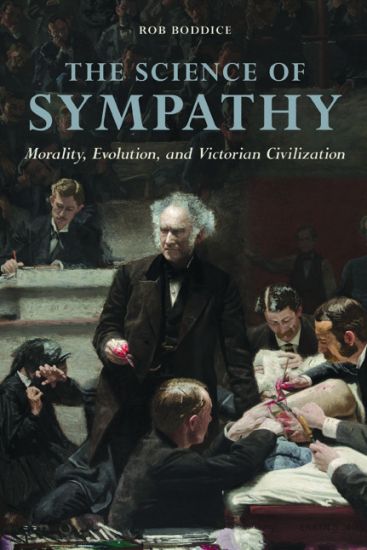
In his Descent of Man, Charles Darwin placed sympathy at the crux of morality in a civilized human society. His idea buttressed the belief that white, upper-class, educated men deserved their sense of superiority by virtue of good breeding. It also implied that societal progress could be steered by envisioning a new blueprint for sympathy that redefined moral actions carried out in sympathy's name. Rob Boddice joins a daring intellectual history of sympathy to a portrait of how the first Darwinists defined and employed it. As Boddice shows, their interpretations of Darwin's ideas sparked a cacophonous discourse intent on displacing previous notions of sympathy. Scientific and medical progress demanded that "cruel" practices like vivisection and compulsory vaccination be seen as moral for their ultimate goal of alleviating suffering. Some even saw the so-called unfit--natural targets of sympathy--as a danger to society and encouraged procreation by the "fit" alone. Right or wrong, these early Darwinists formed a moral economy that acted on a new system of ethics, reconceptualized obligations, and executed new duties. Boddice persuasively argues that the bizarre, even dangerous formulations of sympathy they invented influence society and civilization in the present day.
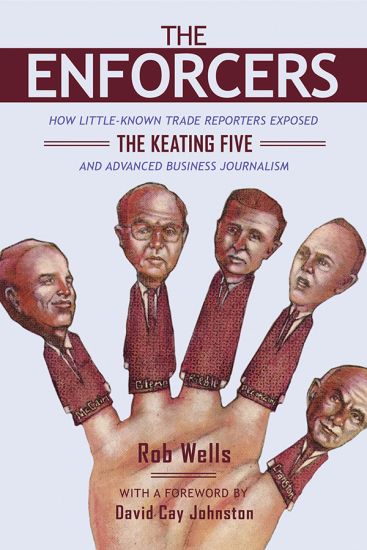
In the 1980s, real estate developer and banker Charles H. Keating executed one of the largest savings and loans frauds in United States history. Keating had long used the courts to muzzle critical reporting of his business dealings, but aggressive reporting by a small trade paper called the National Thrift News helped bring down Keating and offered an inspiring example of business journalism that speaks truth to power. Rob Wells tells the story through the work of Stan Strachan, a veteran financial journalist who uncovered Keating's misdeeds and links to a group of US senators—the Keating Five—who bullied regulators on his behalf. Editorial decisions at the National Thrift News angered advertisers and readers, but the newsroom sold ownership on the idea of investigative reporting as a commercial opportunity. Examining the National Thrift News's approach, Wells calls for a new era of business reporting that can—and must—embrace its potential as a watchdog safeguarding the interests of the public.
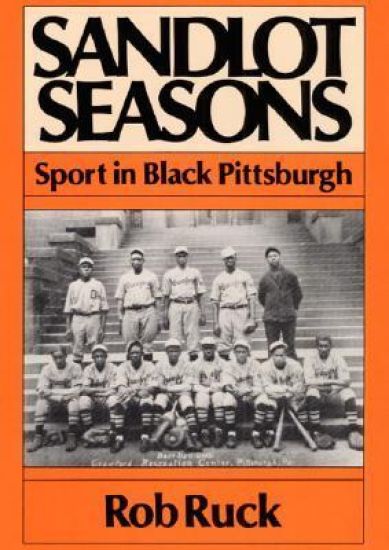

The Dutch scholar Rob Kroes argues that American culture is "modular," continually fragmenting, disassembling, and reassembling itself--and in the process creating something new. In a series of topical essays that show why he is one of Europe's leading authorities on American culture, Kroes probes trends in American advertising, the image of the Vietnam war in American films, the implications of American vernacular culture as represented in rap music, and other topics.
At the dawn of the twenty-first century, all of us consider ourselves to be citizens of something-–but of what? Nation-states? Regions? Ethnic groups? Corporations? An accomplished set of meditations by one of Europe's leading Americanists, Them and Us is a rich comparative study of European and American cultural traditions and their influence on conceptions of community. In contrast with the ethnic and nationalist allegiances that historically have splintered Europe, Rob Kroes identifies a complex of cultural practices that have mitigated against ethnically rooted divisions in the United States. He argues that the American approach–-articulated by a national rhetoric emphasizing openness rather than closure, diversity rather than uniformity--has much to offer a Europe where the nationalist and ethnic conflicts that spawned two world wars continue to sow terror and destruction. Kroes discusses European and American attitudes toward the welfare state, the human rights tradition in the United States, and the role of regionalism in shaping conceptions of national identity. He also considers new, transnational forms of cultural membership that are emerging to take the place of nation-based citizenship. He contends that the frame of reference Europeans now use to make sense of their collective situation draws on ingredients provided by the worldwide dissemination of American mass culture. He investigates the way this emerging world culture, under American auspices, affects the way people in their local and national settings structure their sense of the past and conceive of their citizenship. Imagining a new set of cultural relationships that could serve as the basis for global citizenship, Them and Us is an insightful consideration of the types of solidarity that might weave humankind together into a meaningful community.

Todd Haynes's films are intricate and purposeful, combining the intellectual impact of art cinema with the emotional accessibility of popular genres. They are also underpinned by a serious commitment to feminism and queer theory. From his 1985 student film about Arthur Rimbaud to his shapeshifting portrait of Bob Dylan in I'm Not There (2007) and the riveting HBO miniseries Mildred Pierce (2011), Haynes has made films whose complex weave of stories and characters reveals dark, painful intensities. His taste for narrative experimentation and pastiche is haunted by anguish. Rob White's highly readable book, which includes a major new interview with Haynes, is the first comprehensive study of the director's work. Special attention is paid to the fascination with music culture (from the Carpenters to glam rock) and to the rich pattern of allusions to, or affinity with, predecessor filmmakers (Fassbinder, Ophuls, Sirk, and many more). But White's chief concern is the persistence of a queer impulse to explore social coercion and the possibility that there may be some way of escaping its cruelty.
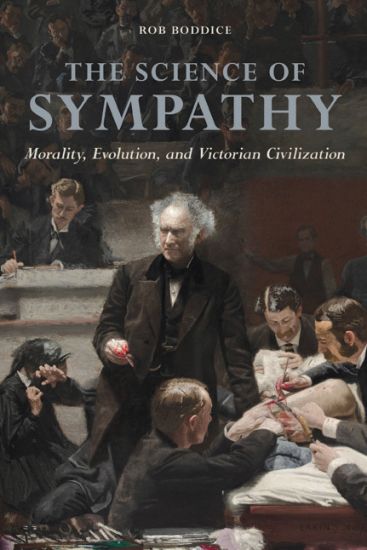
In his Descent of Man, Charles Darwin placed sympathy at the crux of morality in a civilized human society. His idea buttressed the belief that white, upper-class, educated men deserved their sense of superiority by virtue of good breeding. It also implied that societal progress could be steered by envisioning a new blueprint for sympathy that redefined moral actions carried out in sympathy's name. Rob Boddice joins a daring intellectual history of sympathy to a portrait of how the first Darwinists defined and employed it. As Boddice shows, their interpretations of Darwin's ideas sparked a cacophonous discourse intent on displacing previous notions of sympathy. Scientific and medical progress demanded that "cruel" practices like vivisection and compulsory vaccination be seen as moral for their ultimate goal of alleviating suffering. Some even saw the so-called unfit--natural targets of sympathy--as a danger to society and encouraged procreation by the "fit" alone. Right or wrong, these early Darwinists formed a moral economy that acted on a new system of ethics, reconceptualized obligations, and executed new duties. Boddice persuasively argues that the bizarre, even dangerous formulations of sympathy they invented influence society and civilization in the present day.

In the 1980s, real estate developer and banker Charles H. Keating executed one of the largest savings and loans frauds in United States history. Keating had long used the courts to muzzle critical reporting of his business dealings, but aggressive reporting by a small trade paper called the National Thrift News helped bring down Keating and offered an inspiring example of business journalism that speaks truth to power. Rob Wells tells the story through the work of Stan Strachan, a veteran financial journalist who uncovered Keating's misdeeds and links to a group of US senators—the Keating Five—who bullied regulators on his behalf. Editorial decisions at the National Thrift News angered advertisers and readers, but the newsroom sold ownership on the idea of investigative reporting as a commercial opportunity. Examining the National Thrift News's approach, Wells calls for a new era of business reporting that can—and must—embrace its potential as a watchdog safeguarding the interests of the public.
The hard-won pleasures of putting heart over brains, conviction over caution, and madness over market share"The music business is not a meritocracy: it is a crapshoot taking place in a septic tank balanced on the prow of the Titanic, a venal snake pit where innovation, creativity, and honest business practices are actively discouraged." Rob Miller arrived in Chicago wanting to escape the music industry. In short order, he co-founded a trailblazing record label revered for its artist-first approach and punk take on country, roots, and so much else. Miller's gonzo memoir follows a music fan's odyssey through a singular account of Bloodshot Records, the Chicago scene, and thirty years as part of a community sustaining independent artists and businesses. Hilarious and hundred-proof, The Hours Are Long, But the Pay Is Low delivers a warm-hearted yet clear-eyed account of loving and living music on the edge, in the trenches, and without apologies.

In Deep-Rooted Things, Rob Doggett examines Yeats's shifting relationship with the warring discourses of British cultural imperialism and Irish nationalism during Ireland's transition from colony to partially independent nation. By focusing on key historical events that Yeats witnessed and on the nationalist movements he both embraced and resisted, Doggett identifies the core features of Yeats's aesthetic program through new readings of central poems and plays in the Yeats canon. Doggett presents Yeatsian nationalism as a fluid category, a series of masks that Yeats adopted, rejected, and re-created throughout his life. He casts Yeats's continual artistic reinvention—his privileging of contradiction over resolution—as repeated attempts to provide in art some foundations for national unity. He reveals Yeats's deep and often conflicted response to issues of identity, history, and nationhood—issues always central to discourses of colonization, colonial resistance, and postcolonialism. Because Yeats's writings are so intimately linked with the development of Ireland as a nation, Deep-Rooted Things will place Yeats—both a canonical "British" high modernist and an ambivalent Irish nationalist—at the center of debates concerning the relationship between modernist studies and postcolonial theory. Deep-Rooted Things is organized around two historical periods—the first decade of the twentieth century, when Yeats was involved in the creation and promotion of the Irish National Theatre Society; and the period from 1919 to 1928, when Yeats the artist and senator struggled to reinvent himself as a cultural nationalist against the backdrop of the Anglo-Irish War, the Irish Civil War, and the consolidation of the Irish Free State. A rich and rewarding reading of Yeats that places the poetry and plays in a new context, Deep-Rooted Things will interest students of literary criticism and Irish studies.
Accountability, Social Responsibility and Sustainability: Accounting for Society and the Environment
Rob Gray; Carol Adams; Dave Owen
Pearson Education Limited
2014
pokkari

Numeracy tests are increasingly a part of the recruitment process, but taking numeracy tests is something most of us dread, let alone practise. Brilliant Numeracy Tests will give you all the practise you need. You’ll gain experience with realistic practice questions and answers, become familiar with all the common tests, both general and organization-specific, and feel comfortable with a range of difficulty levels. Written by an experienced psychologist who has designed and administered numeracy tests, you’ll find a variety of effective strategies, tactics and tips to achieve peak performance. Companion website: www.pearson-books.com/numeracyandverbaltests

'Confidence' combines the best methods from cognitive behavioural therapy, sports psychology, neuro-linguistic programming, positive psychology and much more. Dr Rob Yeung, psychologist and coach, shows how to challenge your fears, build your confidence and achieve your goals in life.

The Conversation of Journalism
Rob Anderson; Robert Dardenne; George Killenberg
Praeger Publishers Inc
1994
sidottu
Draws on media's past strengths to define a more responsive role for journalism's future. This work covers many current trends: minority voices, providing interactive community forums, reconciling informational and entertainment functions, understanding bias and creating "public opinion".
The Conversation of Journalism
Rob Anderson; Robert Dardenne; George Killenberg
Praeger Publishers Inc
1996
nidottu
Arguing in the first book-length exploration of a conversational and dialogic model for journalism that accurately reporting the news is a surprisingly limiting if not disabling mission, the authors draw optimistically on past strengths of the media, especially print journalism, to reform and redefine a more ecumenical, constructive, participative, and democratically responsive role for journalism's institutional future. The book's scope is wide, and it includes many current trends: minority voices, contextualizing the news, providing interactive community forums, reconciling informational and entertainment functions, creating public opinion, and understanding the nature of bias.

Bruce Springsteen's career has been covered many times over, yet many of the complexities and apparent contradictions of his music remain unresolved. Rob Kirkpatrick provides a comprehensive and coherent look at the work of this thoroughly complex and persistently captivating artist. After a brief biographical treatment, Kirkpatrick considers all of Springsteen's significant albums in chronological order. These include Born to Run, which was voted the most popular album of all time in a recently published Zagat survey; Born in the U.S.A., which sold more than 20 million copies; and The Rising, regarded by many as the most poignant artistic reaction to 9/11. In addition to a probing musical analysis, the book offers a guide to Springsteen's lyrical themes and motifs, allowing readers insight into the complicated nature of the artist's underlying concerns, influences, and ideas. Rounding out the volume is a consideration of The Boss's legacy as a songwriter and musician, as well as appendices including a bibliography and a complete discography. The Words and Music of Bruce Springsteen provides a comprehensive and coherent look at the work of a thoroughly complex and persistently captivating artist. Springsteen enjoys a popularity that has transcended generations. His 1975 album Born to Run was voted the most popular album of all time in a recently published Zagat survey; his 1984 album Born in the U.S.A. spawned seven Top Ten singles while selling more than 20 million copies; and his 2002 album The Rising was regarded by many critics as the most poignant artistic reaction to 9/11. Springsteen, now in his 50s, has evolved from an over-hyped version of the next Bob Dylan, to the future of rock and roll in the mid-1970s, to a pop culture icon in Reagan America, to a 21st-century populist voice. His career has been covered many times over, yet many of the complexities and apparent contradictions of his music remain unresolved. These include his hard-rock influenced musical background; his movement from themes of rebellion and isolation in his early work to those of a more populist complexion later on; and his contribution in the 1980s to a conservative patriotism—despite his albums' close association with the music and ideas of Woody Guthrie. After a brief biographical treatment, Kirkpatrick considers all of Springsteen's significant albums in chronological order. In addition to this probing musical analysis, he offers a guide to Springsteen's lyrical themes and motifs, allowing readers a coherent insight into the complicated nature of the artist's underlying concerns, influences, and ideas. Rounding out the volume is a consideration of The Boss's legacy as a songwriter and musician, as well as appendices including a bibliography and a complete discography. In sum, The Words and Music of Bruce Springsteen provides a comprehensive and coherent look, previously unavailable in a single volume, at the work of a thoroughly complex and persistently captivating artist.
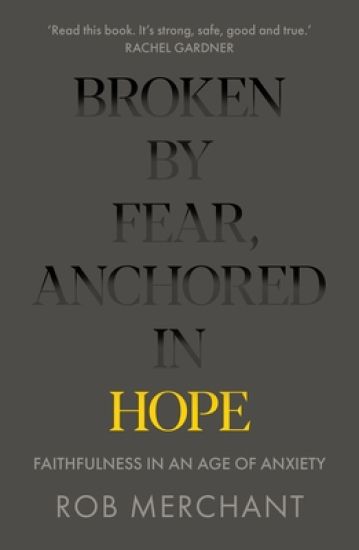
'Has the power to plant seeds of hope in your heart that when the storms come, it's possible not to be afraid.' Rachel Gardner 'Disarmingly honest, powerfully disruptive and reassuringly scriptural. A rare and precious gift.' Krish Kandiah One in four of us will experience mental health problems but true resilience is ours for the taking. When shame, fear and despair threaten to fill us, it can be all too easy to resort to self-medicating through consuming, working, or other distractions. Rob Merchant has tried them all and discovered they don't deliver. Drawing on his own experience, Rob shows how healing starts when we acknowledge and accept our vulnerability. Knowing our place before God and surrendering wholly to Christ, we can discover forgiveness and always find hope.