Kirjojen hintavertailu. Mukana 11 342 296 kirjaa ja 12 kauppaa.

Kirjahaku

Etsi kirjoja tekijän nimen, kirjan nimen tai ISBN:n perusteella.

1000 tulosta hakusanalla Robert Cornforth

The Complete Works of Robert Browning, Volume XVI

The Complete Works of Robert Browning, Volume XVI

Robert Browning

Ohio University Press
1999
sidottu
In seventeen volumes, copublished with Baylor University, this acclaimed series features annotated texts of all of Robert Browning's known writing. The series encompasses autobiography as well as influences bearing on Browning's life and career and aspects of Victorian thought and culture. Robert Browning wrote Parleyings with Certain People of Importance in Their Day in his seventy-third year. The work is a capstone to the poet's long career, encompassing autobiography as well as influences bearing on the poet's life and career and on Victorian thought and culture in general. One of Browning's most complex works, Parleyings is also a work essential to understanding his genius and career as a whole. The Ohio/Baylor Browning edition offers keys to the complexity and interest of Parleyings through a definitive, emended text, full annotations for allusions both explicit and implicit in the text, and variant readings for the manuscript and all editions revised by Browning during his lifetime. In form and structure, Parleyings is a series of seven poems written in Browning's own voice and addressed to figures influential in his development. The series is framed by a prologue and an epilogue, the whole amounting to some 3,500 lines. The poems are a formal contrast and a pendant to the great series of linked dramatic monologues in The Ring and the Book. They demonstrate the zest for innovation possessed by the master of the dramatic monologue in his ripe maturity. Interested readers as well as students and scholars of Browning will find a rich field of poetry and a critical mass of resources in Volume XVI of the Ohio/Baylor Browning edition. As always in this acclaimed series, a complete record of textual variants is provided, as well as extensive explanatory notes.
Robert Lowell's Shifting Colors

Robert Lowell's Shifting Colors

William Edward Doreski

Ohio University Press
1999
sidottu
In the two decades that have passed since Robert Lowell’s death, Robert Lowell’s Shifting Colors is the first critical survey of the poet's aesthetic efforts to make personal vision and public exhortation cohere and thus combine poetic genres that have been historically discrete. Rather than consider Lowell primarily as either a religious, political, or autobiographical poet, William Doreski proposes that Lowell’s primary poetic impulse was to shape differing voices into a single entity in which public and private concerns cohere. This makes him an essential poet for our era, in which the political almost universally seems to have become the personal.
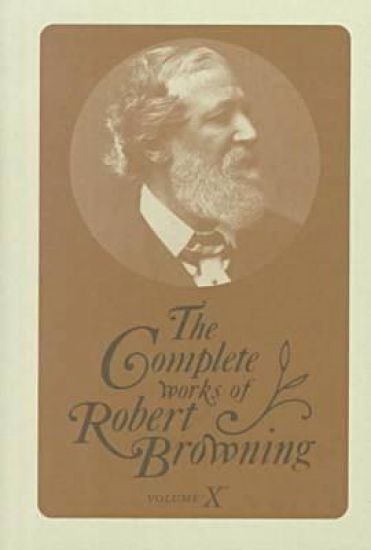
The Complete Works of Robert Browning, Volume X

The Complete Works of Robert Browning, Volume X

Robert Browning

Ohio University Press
1999
sidottu
In seventeen volumes, copublished with Baylor University, this acclaimed series features annotated texts of all of Robert Browning's known writing. The series encompasses autobiography as well as influences bearing on Browning's life and career and aspects of Victorian thought and culture. The Complete Works of Robert Browning, Volume X contains critical editions of Balaustion's Adventure: Including a Transcript from Euripides and Prince Hohenstiel-Schwangau, Saviour of Society. Both published in 1871, these two long poems take up a pair of subjects that held enduring fascination for Robert and Elizabeth Barrett Browning: classical Greek literature and the career of Napoleon III, Emperor of France. Balaustion's Adventure, which the poet characterized as merely a "May-month amusement," was surprisingly successful with the reading public that paid more attention to Browning after the triumph of The Ring and the Book in 1868–69. His first poem since the publication of that masterpiece, Balaustion's Adventure creates a charming and brave narrator who recalls in vivid detail a performance of Euripides' play Alcestis. Browning began a poem on Louis Napoleon in 1860, but not until after the fall of the Second Empire in 1870 did he attempt a full-scale portrait of the French emperor. As an exercise in self-justification, Prince Hohenstiel-Schwangau falls into a familiar sub-genre of Browning's dramatic monologues. The most intriguing aspect of the poem lies in its biographical importance: the character and career of Napoleon III was a topic of sustained, sharp disagreement between Robert and Elizabeth Browning. As always in this acclaimed series, a complete record of textual variants is provided, as well as extensive explanatory notes.
The Complete Works of Robert Browning, Volume XII

The Complete Works of Robert Browning, Volume XII

Robert Browning

Ohio University Press
2001
sidottu
In seventeen volumes, copublished with Baylor University, this acclaimed series features annotated texts of all of Robert Browning's known writing. The series encompasses autobiography as well as influences bearing on Browning's life and career and aspects of Victorian thought and culture. A single work, the complex Aristophanes' Apology (1875), comprises the twelfth volume of The Complete Works of Robert Browning. Second in Browning's series of long narrative poems based on classical Greek materials, Aristophanes' Apology begins as a further adventure of Browning's young Greek heroine, Balaustion (previously encountered in Balaustion's Adventure, in Volume X of the present edition). In a confrontation with Aristophanes, Balaustion defends her (and Browning's) favorite tragedian, Euripides, whom Aristophanes had repeatedly satirized. Aristophanes offers an ingenious, vigorous explanation of his motives and values, but Browning ensures that Balaustion claims the higher moral and artistic ground for Euripides. To demonstrate his greatness, she reads Euripides' play Herakles aloud, in Browning's own translation. Browning's understanding of this play and its author, like his view of Greek drama overall, is both idiosyncratic and strongly held. He energetically takes up artistic and philosophical issues ancient and modern through his dramatized speaker. Many interpreters have noted that the charges against Euripides are parallel to Victorian critics' complaints about Browning's own works, and that the poet's justification of Euripides constitutes a vehement defense of his art. As always in this acclaimed series, a complete record of textual variants is provided, as well as extensive explanatory notes.
The Complete Works of Robert Browning, Volume XIV

The Complete Works of Robert Browning, Volume XIV

Robert Browning

Ohio University Press
2003
sidottu
In seventeen volumes, copublished with Baylor University, this acclaimed series features annotated texts of all of Robert Browning's known writing. The series encompasses autobiography as well as influences bearing on Browning's life and career and aspects of Victorian thought and culture. Volume XIV of The Complete Works of Robert Browning records a transition in the poet's career. With The Agamemnon of Aeschylus (1877), Browning ended his experiments with classical sources, creating his "transcript" — not quite a translation — of the Greek original and providing an intriguing explanation for his approach. La Saisiaz, the deeply personal expression of Browning's shock at the sudden death of a dear friend, was published in 1878 with The Two Poets of Croisic, an extended ironic meditation on literary fame. Browning's collection of six poems under the title Dramatic Idyls (1879) marks the poet's return to the dramatic forms he perfected in Men and Women and Dramatis Personae, and a revival of his interest in the psychology of motives. As always in this acclaimed series, a complete record of textual variants is provided, as well as extensive explanatory notes.
The Complete Works of Robert Browning, Volume XV

The Complete Works of Robert Browning, Volume XV

Robert Browning

Ohio University Press
2007
sidottu
In seventeen volumes, copublished with Baylor University, this acclaimed series features annotated texts of all of Robert Browning's known writing. The series encompasses autobiography as well as influences bearing on Browning's life and career and aspects of Victorian thought and culture. In the 1880s, the aging Browning showed once again the remarkable versatility of his lyric and narrative talents. Ranging across eras and cultures, the books here reveal his late thoughts about history, myth, legend, faith, love, and desire. He had never been more popular, and the founding of the Browning Society in 1881 expanded both his audience and his sense of his place in English letters. The first title in Volume XV is Dramatic Idylls, Second Series (1880). Taking his subjects from classical history, colonial India, Arabian legend, medieval sorcery, Jewish folk tales, and Greek myth, Browning startles the reader with the rapidity of his thought and the inventiveness of his art. In Jocoseria (1883) Browning's subjects range across time and space from Hebraic legend to the England of the Romantics. Such variety helped attract new readers: Jocoseria was immediately successful, and a second edition was printed in the same year as the first. Although Browning's next volume, Ferishtah's Fancies (1884), was so popular that three editions were printed in less than two years, this artful string of anecdotes and lyrics has attracted little favorable criticism. The materials—Persian legends and Arabic backgrounds—chimed with the wildly popular Orientalism of FitzGerald's Rubáiyát, Whistler's Peacock Room, and Alma-Tadema's paintings. But the thought was pure Browning in his most optimistic vein, and not at all in tune with the growing pessimism of the day. As always in this series of critical editions, a complete record of textual variants is provided, as well as extensive explanatory notes.
The Complete Works of Robert Browning, Volume XI

The Complete Works of Robert Browning, Volume XI

Robert Browning

Ohio University Press
2008
sidottu
In seventeen volumes, copublished with Baylor University, this acclaimed series features annotated texts of all of Robert Browning's known writing. The series encompasses autobiography as well as influences bearing on Browning's life and career and aspects of Victorian thought and culture. Volume XI of The Complete Works of Robert Browning contains two strikingly disparate long poems from the 1870s, Fifine at the Fair and Red Cotton Night-Cap Country. In Fifine at the Fair, Browning creates an idiosyncratic version of the Don Juan figure, a distinctly post-Romantic and intellectual Don Juan who derives little from any literary predecessor. The legendary character is realized in a modern French setting, the village of Pornic, a favorite vacation spot for Browning. The poem is a sustained exercise in self-justification and casuistry, with Don Juan persuading himself that he can reconcile his love of his wife with his carnal love for a gipsy girl. Though Red Cotton Night-Cap Country is similarly concerned with a struggle between spirit and flesh, the poem is entirely based in contemporary events. Using newspaper accounts and legal documents, Browning tells the strange and shocking tale of a rich and devout Frenchman who throws himself from the roof of his chateau, convinced that heaven will deliver him from death. Upon the question of his sanity hinges the disposition of his considerable estate, and the poet traces the claims and counterclaims to their settlement in court only a few months before he wrote the poem. As always in this series of critical editions, a complete record of textual variants is provided, as well as extensive explanatory notes.
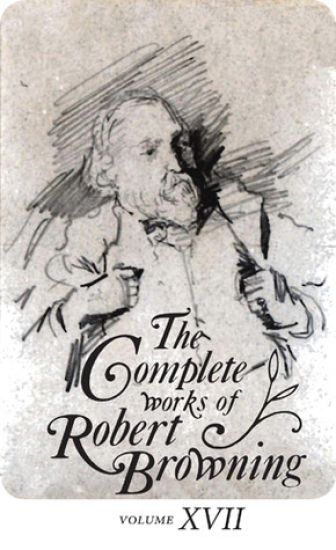
The Complete Works of Robert Browning, Volume XVII

The Complete Works of Robert Browning, Volume XVII

Robert Browning

Ohio University Press
2012
sidottu
In seventeen volumes, copublished with Baylor University, this acclaimed series features annotated texts of all of Robert Browning's known writing. The series encompasses autobiography as well as influences bearing on Browning's life and career and aspects of Victorian thought and culture. With this seventeenth and final volume, The Complete Works of Robert Browning concludes the major phase of a great scholarly project: the accurate preservation and transmission of the poet's works for future generations of readers. Volume XVII begins with Browning's last collection of poems, Asolando: Fancies and Facts, published on the day of the poet's death, 12 December 1889. Wonderful in its diversity and intensity, Asolando contains lyrics of startling emotion, autobiographical narratives, and a few of the dramatic monologues for which Browning had become famed. Also in this final volume are ninety-nine fugitive pieces, either unpublished or uncollected during the poet's lifetime. Ranging from experimental poems of Browning's youth to Greek translations to joking couplets and witty ephemera, these works illustrate the endless variety of the poet's talent. Finally, Volume XVII includes "Thomas Wentworth, Earl of Strafford," a biographical essay that Browning coauthored with John Forster in 1836. The historical research done for this work formed a basis for Strafford, a play Browning completed the following year. Comprehensive explanatory notes for the works in this volume are provided, as is a title index to all seventeen volumes of The Complete Works.
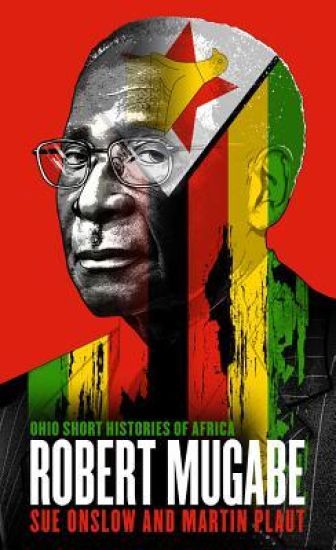
Robert Mugabe

Robert Mugabe

Sue Onslow; Martin Plaut

Ohio University Press
2018
pokkari
Zimbabwe's President Robert Mugabe sharply divides opinion and embodies the contradictions of his country's history and political culture. As a symbol of African liberation and a stalwart opponent of white rule, he was respected and revered by many. This heroic status contrasted sharply, in the eyes of his rivals and victims, with repeated cycles of gross human rights violations. Mugabe presided over the destruction of a vibrant society, capital flight, and mass emigration precipitated by the policies of his government, resulting in his demonic image in Western media. This timely biography addresses the coup, led by some of Mugabe's closest associates, that forced his resignation after thirty-seven years in power. Sue Onslow and Martin Plaut explain Mugabe's formative experiences as a child and young man; his role as an admired Afro-nationalist leader in the struggle against white settler rule; and his evolution into a political manipulator and survivalist. They also address the emergence of political opposition to his leadership and the uneasy period of coalition government. Ultimately, they reveal the complexity of the man who stamped his personality on Zimbabwe's first four decades of independence.
Robert Steinberg Collected Papers

Robert Steinberg Collected Papers

Robert Steinberg

AMERICAN MATHEMATICAL SOCIETY
1997
sidottu
A collection of papers by Robert Steinberg. It contains his published papers on group theory, including those on 'special representations' (now called Steinberg representations), tensor products of representations, finite reflection groups, regular elements of algebraic groups, Galois cohomology, and universal extensions.
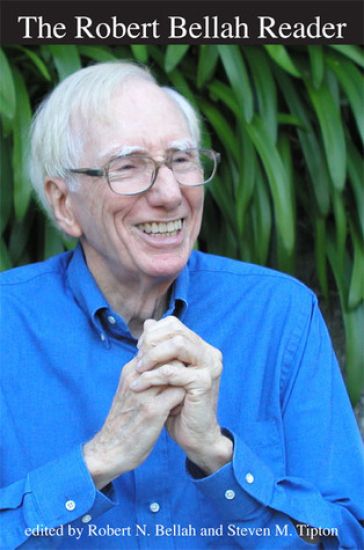
The Robert Bellah Reader

The Robert Bellah Reader

Robert N. Bellah

Duke University Press
2006
sidottu
Perhaps best known for his coauthored bestselling books Habits of the Heart and The Good Society, Robert N. Bellah is a truly visionary leader in the social study of religion. For more than four decades, he has examined the role of religion in modern and premodern societies, attempting to discern how religious meaning is formed and how it shapes ethical and political practices. The Robert Bellah Reader brings together twenty-eight of Bellah’s seminal essays. While the essays span a period of more than forty years, nearly half of them were written in the past decade, many in the past few years.The Reader is organized around four central concerns. It seeks to place modernity in theoretical and historical perspective, drawing from major figures in social science, historical and contemporary, from Aristotle and Rousseau through Durkheim and Weber to Habermas and Mary Douglas. It takes the United States to be in some respects the type-case of modernity and in others the most atypical of modern societies, analyzing its common faith in individual freedom and democratic self-government, and its persistent paradoxes of inequality, exclusion, and empire. The Reader is also concerned to test the axiomatic modern assumption that rational cognition and moral evaluation, fact and value, are absolutely divided, arguing instead that they overlap and interact much more than conventional wisdom in the university today usually admits. Finally, it criticizes modernity’s affirmation that faith and knowledge stand even more utterly at odds, arguing instead that their overlap and interaction, obvious in every premodern society, animate the modern world as well.Through such critical and constructive inquiry this Reader probes many of our deepest social and cultural quandaries, quandaries that put modernity itself, with all its immense achievements, at mortal risk. Through the practical self-understanding such inquiry spurs, Bellah shows how we may share responsibility for the world we have made and seek to heal it.
The Robert Bellah Reader

The Robert Bellah Reader

Robert N. Bellah

Duke University Press
2006
pokkari
Perhaps best known for his coauthored bestselling books Habits of the Heart and The Good Society, Robert N. Bellah is a truly visionary leader in the social study of religion. For more than four decades, he has examined the role of religion in modern and premodern societies, attempting to discern how religious meaning is formed and how it shapes ethical and political practices. The Robert Bellah Reader brings together twenty-eight of Bellah’s seminal essays. While the essays span a period of more than forty years, nearly half of them were written in the past decade, many in the past few years.The Reader is organized around four central concerns. It seeks to place modernity in theoretical and historical perspective, drawing from major figures in social science, historical and contemporary, from Aristotle and Rousseau through Durkheim and Weber to Habermas and Mary Douglas. It takes the United States to be in some respects the type-case of modernity and in others the most atypical of modern societies, analyzing its common faith in individual freedom and democratic self-government, and its persistent paradoxes of inequality, exclusion, and empire. The Reader is also concerned to test the axiomatic modern assumption that rational cognition and moral evaluation, fact and value, are absolutely divided, arguing instead that they overlap and interact much more than conventional wisdom in the university today usually admits. Finally, it criticizes modernity’s affirmation that faith and knowledge stand even more utterly at odds, arguing instead that their overlap and interaction, obvious in every premodern society, animate the modern world as well.Through such critical and constructive inquiry this Reader probes many of our deepest social and cultural quandaries, quandaries that put modernity itself, with all its immense achievements, at mortal risk. Through the practical self-understanding such inquiry spurs, Bellah shows how we may share responsibility for the world we have made and seek to heal it.
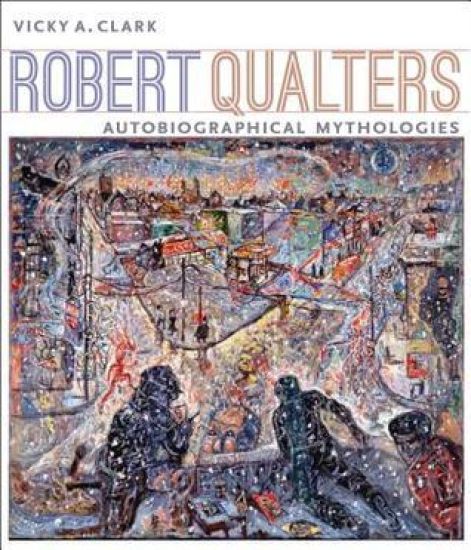
Robert Qualters

Robert Qualters

Vicky A. Clark

University of Pittsburgh Press
2014
nidottu
Teeming with convulsive energy, raw brush strokes and Fauvist colours, the paintings of Robert Qualters reflect the multifaceted and kinetic spirit of the artist himself. In these pages, the art historian Vicky A. Clark presents the first in-depth study of the art and life of this iconic Pittsburgh artist. Complemented by over eighty colour images, Clark follows Qualters’s development from early childhood sketches through his recent autobiographical work. As she reveals, Qualters is truly a quotidian raconteur, who infuses allegory, narrative and memory into his paintings of urban landscapes, neighbourhoods, lunch counters and amusement parks. Here, we witness coming of age and sexuality, economic hardship, working-class identities, death and rebirth, and many other themes, both personal and universal.As Clark shows, Qualters’s oeuvre is the culmination of a lifelong artistic journey, recalling a host of influences from Japanese prints to Matisse, Bruegel and Rembrandt. Throughout his career, and despite the popularity of his contemporaries, many of whom adopted abstract painting, Qualters has maintained a distinctly representational style, keeping a close link to his audience through the power of visual storytelling.
Robert's Rules Volume 3

Robert's Rules Volume 3

J.F. Riordan

Beaufort Books
2020
nidottu
As the new Chairman of the Town Board, Fiona Campbell finds that life has become a series of petty squabbles, dull meetings, and papers everywhere, all complicated by her guardianship of the as yet unidentified screaming goat. In desperation, she hires an unknown newcomer, the compulsively orderly Oliver Robert, to run her office and keep her organized.Roger's fame as an idiosyncratic yoga practitioner continues to spread, and he and Elisabeth are looking for a new location to accommodate the growing crowds at their tiny coffee shop. Ferry Captain and poet Pali has an offer to leave the Island, and wonders whether it is time to introduce his son, Ben, to the larger world. Meanwhile, the Fire Chief is threatening to quit, and Fiona finds herself faced with an Island controversy and an unwanted set of new responsibilities.As Pete Landry prepares to leave for one of his regular journeys, Fiona begins to suspect that his life may be more than it seems. His secrecy raises doubts in her mind about whether he can be trusted, and their breakup plunges her into grief. The reliable Jim, always nearby, is all too ready to offer comfort.Robert's Rules is Book Three in the award-winning North of the Tension Line series, set on a remote island in the Great Lakes. Called a modern-day Jane Austen, author J.F. Riordan creates wry, engaging tales and vivid characters that celebrate the well-lived life of the ordinary man and woman.
Robert Browning's ""Asolando

Robert Browning's ""Asolando

Richard S. Kennedy

University of Missouri Press
1993
sidottu
Asolando, Robert Browning's final volume of poetry, was, when first published in 1889 - on the day of his death, deemed as ""charming"" by reviewers. Richard Kennedy asserts that ""Asolando"" was a fitting cap to this great poet's career. In this text, Kennedy fuses biography and critical commentary to provide a account of this poet's last years and his last volume of poems. Kennedy describes how Browning experienced a creative resurgence during the final years of his life, a period influenced by his association with the Amerian widow Katharine Bronson. After an introductory overview of those productive years, Kennedy provides critical commentary - sometimes analytical, and often judgmental - on each of the poems, indicating how they are representative of Browning's ideas and practices. Chapters are devoted to Browning's personal poems, his love poems, and those on religion, philosophy, and art. A selection of the poems from this text is reprinted in the appendix, and photographs, sketches, and reproductions of artworks complement the text throughout, offering insight into the last years of this poet's life. This book is aimed at readers who love poetry as well as at experts in Romantic and Victorian literature.
Robert Duncan and the Pragmatist Sublime

Robert Duncan and the Pragmatist Sublime

James Maynard

University of New Mexico Press
2018
sidottu
This study examines the theoretical underpinnings of Robert Duncan’s poetry and poetics. The author’s overriding concern is Duncan’s understanding of excess in relation to poetry and the philosophies of Alfred North Whitehead, William James, and John Dewey.
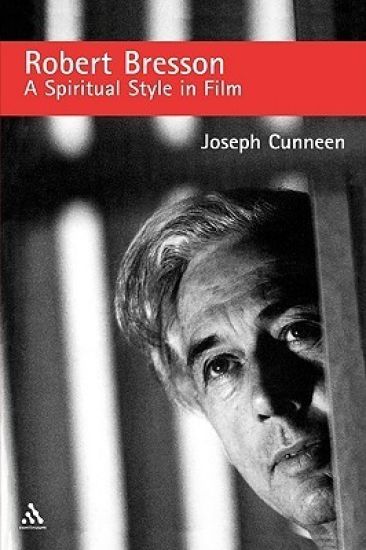
Robert Bresson

Robert Bresson

Joseph Cunneen

Continuum International Publishing Group Ltd.
2004
nidottu
Although Bresson is widely regarded as one of the greatest directors of the 20th century, his films are rarely shown in the English-speaking world. This book introduces his movies to a broader audience and assesses 13 of his most significant films in the context of detailed plot summaires, vivid character descriptions and settings.
Robert Nozick

Robert Nozick

Bader Ralf M.; Meadowcroft John

Continuum Publishing Corporation
2010
sidottu
Volume 11 of the "Conservative and Libertarian Thinkers" series focuses on Robert Nozick and his work on libertarianism. In 1974, Robert Nozick's book "Anarchy, State, and Utopia" moved libertarianism from a relatively neglected subset of political philosophy to the center of the discipline, as one of the most cogent critiques of social democracy and egalitarian liberalism. Nozick developed a rights-based account of libertarianism to show that a minimal state can legitimately arise, that nothing more than a minimal state is justified, and that the minimal state is not only morally right, but can also be an inspiring 'meta-utopia'. This volume presents Nozick's contributions to political philosophy in the context of his work in analytical philosophy. It also provides a biography of Nozick and considers the initial reception and long-term influence of his work. "Major Conservative and Libertarian Thinkers" provides comprehensive accounts of the works of seminal conservative thinkers from a variety of periods, disciplines, and traditions - the first series of its kind. Even the selection of thinkers adds another aspect to conservative thinking, including not only theorists but also writers and practitioners. The series comprises twenty volumes, each including an intellectual biography, historical context, critical exposition of the thinker's work, reception and influence, contemporary relevance, bibliography including references to electronic resources, and an index.
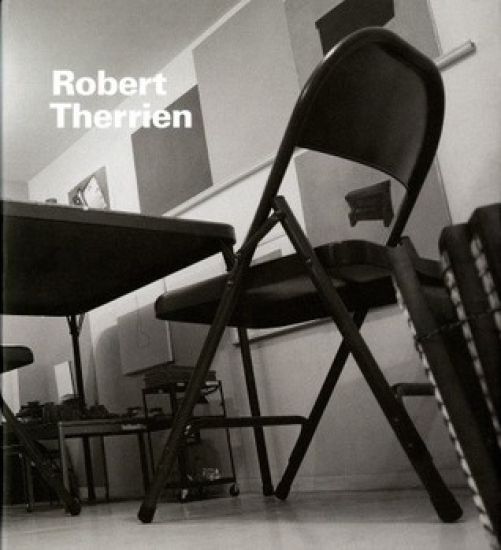
Robert Therrien

Robert Therrien

Norman Bryson; Margit Rowell

Rizzoli International Publications
2008
sidottu
Robert Therrien takes ordinary objects and makes them unfamiliar, removing functionality to reveal metaphoric associations in them. Such works include his series of monumental tables and chairs, giant-sized stacks of pots, plates and bowls, and fifteen-foot fake beards hanging on their stands, among other works. Expertly photographed, with an insightful interview by art historian and theorist Norman Bryson, this is the first major book to examine Therrien’s unique body of work. Planned to coincide with the exhibition of Therrien’s sculptures in May 2008 at Gagosian Gallery in New York City, this volume is a must-have for anyone interested in contemporary art including sculpture, painting, drawing, and photography.