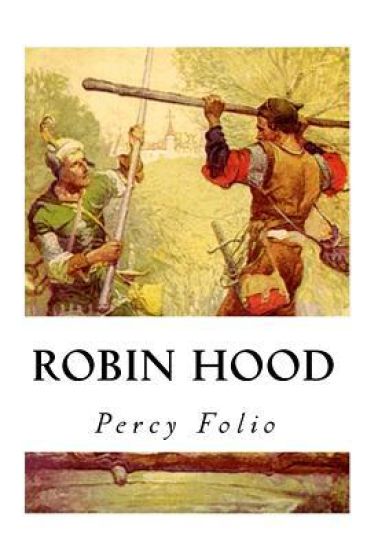
The first clear reference to "rhymes of Robin Hood" is from c1377, the late-14th-century poem Piers Plowman, but the earliest surviving copies of the narrative ballads that tell his story date to the second half of 15th century (i.e. the 1400s), or the first decade of the 16th century (1500s). In these early accounts, Robin Hood's partisanship of the lower classes, his Marianism and associated special regard for women, his outstanding skill as an archer, his anti-clericalism, and his particular animosity towards the Sheriff of Nottingham are already clear. ENGLAND during the twelfth, thirteenth, and fourteenth centuries was slowly taught the value of firm administrative government. In Saxon England, the keeping of the peace and the maintenance of justice had been left largely to private and family enterprise and to local and trading communities. In Norman England, the royal authority was asserted throughout the kingdom, though as yet the king had to depend in large measure upon the co-operation of his barons and the help of the burghers to supply the lack of a standing army and an adequate police. Under the Plantagenets, the older chivalry was slowly breaking up, and a new, wealthy burgher and trading community was rapidly gaining influence in the land; whilst the clergy, corrupted by excess of wealth and power, had strained, almost to breaking, the controlling force of religion. It was therefore natural that in these latter days a class of men should arise to avail themselves of the unique opportunities of the time
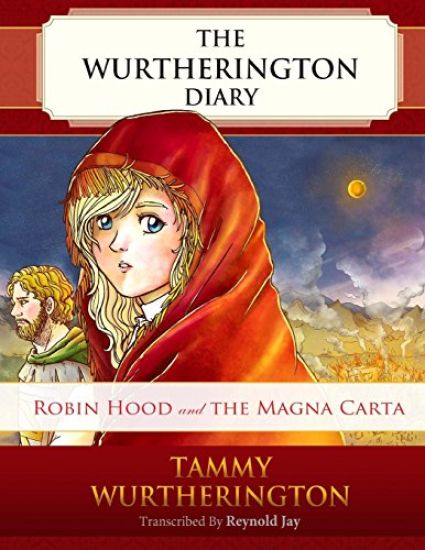
Full color restored edition. This is the eighth book in the illustrated historical series, The Wurtherington Diary. Tammy is in good company with Alfred the mouse, Zeke the orphaned opossum, Cedric, the mischievous mongoose, and Polly, the goodhearted bird. As with all the Wurtherington Diary books, this one abounds in developing worthwhile feelings for its young readers. Things like honesty, compassion, and respect for others abound on very page. Tammy discovers that her new mission to nudge the space-time continuum is to see that the Magna Carta is written and sealed by King John in the year 1215. She discovers that she must see that a series of events during 1212-1215 all fall into place. Tammy soon discovers that her work is much like a chess game that involves real Kings and Queens.Tammy and her little critters disguise themselves as gypsy minstrels and soon find themselves hobnobbing in far-a-way castles with royalty like William, the Lion King of Scotland, Queen Ermengarde, Prince Llywelyn, and Joan (daughter of King John) and the evil King John. She gets caught up in the war of the barons in which Baron Robert Fitzwalter (later to become known as the legendary Robin Hood) and Eustace de Vesci refuse to allow King John to hold their families hostage. Castles are destroyed and banishment by King John send our Barons to France and Scotland to escape certain death. Pope Innocent the III casts an interdict upon King John. Tammy must visit the Pope in Rome in order to see that the details of the interdict include pardons for the barons. The scheming King John hatches a plan in which he convinces Pope Innocent III that he must raise a mercenary army to march in a Holy Crusade. The barons discover that the armies will be used against the barons and declare him a traitor to his own people. Before the tale is all told, Tammy will participate in battles at Northampton and Bedford where the barons begin to lose the war even though they portend to be, "The Army of God and the Holy Church". All appears to be lost. The Magna Carta seems a distant hope amid a world gone mad with corruption and power. This historical tale will amaze readers, both young and old. Will Tammy and her little friends save the day and see that the Magna Carta somehow becomes a reality? To this day the Magna Carta is considered to be the most important document in the history of the world. Virtually all free countries turn to this document to set up their governments. Few understand the events that led to it and this may well stand as the clearest accounting of the history of the founding of the Magna Carta. Parents and educators will turn to this for their own reference and then see that their children enjoy this enchanting tale on a journey through the Dark Ages.
Sketch Edition. View the art during the restoration process. This is the eighth book in the illustrated historical series, The Wurtherington Diary. Tammy is in good company with Alfred the mouse, Zeke the orphaned opossum, Cedric, the mischievous mongoose, and Polly, the goodhearted bird. As with all the Wurtherington Diary books, this one abounds in developing worthwhile feelings for its young readers. Things like honesty, compassion, and respect for others abound on very page. Tammy discovers that her new mission to nudge the space-time continuum is to see that the Magna Carta is written and sealed by King John in the year 1215. She discovers that she must see that a series of events during 1212-1215 all fall into place. Tammy soon discovers that her work is much like a chess game that involves real Kings and Queens.Tammy and her little critters disguise themselves as gypsy minstrels and soon find themselves hobnobbing in far-a-way castles with royalty like William, the Lion King of Scotland, Queen Ermengarde, Prince Llywelyn, and Joan (daughter of King John) and the evil King John. She gets caught up in the war of the barons in which Baron Robert Fitzwalter (later to become known as the legendary Robin Hood) and Eustace de Vesci refuse to allow King John to hold their families hostage. Castles are destroyed and banishment by King John send our Barons to France and Scotland to escape certain death. Pope Innocent the III casts an interdict upon King John. Tammy must visit the Pope in Rome in order to see that the details of the interdict include pardons for the barons. The scheming King John hatches a plan in which he convinces Pope Innocent III that he must raise a mercenary army to march in a Holy Crusade. The barons discover that the armies will be used against the barons and declare him a traitor to his own people. Before the tale is all told, Tammy will participate in battles at Northampton and Bedford where the barons begin to lose the war even though they portend to be, "The Army of God and the Holy Church". All appears to be lost. The Magna Carta seems a distant hope amid a world gone mad with corruption and power. This historical tale will amaze readers, both young and old. Will Tammy and her little friends save the day and see that the Magna Carta somehow becomes a reality? To this day the Magna Carta is considered to be the most important document in the history of the world. Virtually all free countries turn to this document to set up their governments. Few understand the events that led to it and this may well stand as the clearest accounting of the history of the founding of the Magna Carta. Parents and educators will turn to this for their own reference and then see that their children enjoy this enchanting tale on a journey through the Dark Ages.
This is the PARCHMENT EDITION. View the art as it appeared when it was discovered. This is the eighth book in the illustrated historical series, The Wurtherington Diary. Tammy is in good company with Alfred the mouse, Zeke the orphaned opossum, Cedric, the mischievous mongoose, and Polly, the goodhearted bird. As with all the Wurtherington Diary books, this one abounds in developing worthwhile feelings for its young readers. Things like honesty, compassion, and respect for others abound on very page. Tammy discovers that her new mission to nudge the space-time continuum is to see that the Magna Carta is written and sealed by King John in the year 1215. She discovers that she must see that a series of events during 1212-1215 all fall into place. Tammy soon discovers that her work is much like a chess game that involves real Kings and Queens.Tammy and her little critters disguise themselves as gypsy minstrels and soon find themselves hobnobbing in far-a-way castles with royalty like William, the Lion King of Scotland, Queen Ermengarde, Prince Llywelyn, and Joan (daughter of King John) and the evil King John. She gets caught up in the war of the barons in which Baron Robert Fitzwalter (later to become known as the legendary Robin Hood) and Eustace de Vesci refuse to allow King John to hold their families hostage. Castles are destroyed and banishment by King John send our Barons to France and Scotland to escape certain death. Pope Innocent the III casts an interdict upon King John. Tammy must visit the Pope in Rome in order to see that the details of the interdict include pardons for the barons. The scheming King John hatches a plan in which he convinces Pope Innocent III that he must raise a mercenary army to march in a Holy Crusade. The barons discover that the armies will be used against the barons and declare him a traitor to his own people. Before the tale is all told, Tammy will participate in battles at Northampton and Bedford where the barons begin to lose the war even though they portend to be, "The Army of God and the Holy Church". All appears to be lost. The Magna Carta seems a distant hope amid a world gone mad with corruption and power. This historical tale will amaze readers, both young and old. Will Tammy and her little friends save the day and see that the Magna Carta somehow becomes a reality? To this day the Magna Carta is considered to be the most important document in the history of the world. Virtually all free countries turn to this document to set up their governments. Few understand the events that led to it and this may well stand as the clearest accounting of the history of the founding of the Magna Carta. Parents and educators will turn to this for their own reference and then see that their children enjoy this enchanting tale on a journey through the Dark Ages.
Frances Eliza Hodgson Burnett (24 November 1849 - 29 October 1924) was an English-American novelist and playwright. She is best known for the three children's novels Little Lord Fauntleroy (published in 1885-1886), A Little Princess (1905), and The Secret Garden (1911). Frances Eliza Hodgson was born in Cheetham, England. After her father died in 1852, the family fell on straitened circumstances and in 1865 immigrated to the United States, settling near Knoxville, Tennessee. There Frances began writing to help earn money for the family, publishing stories in magazines from the age of 19. In 1870, her mother died, and in 1872 Frances married Swan Burnett, who became a medical doctor. The Burnetts lived for two years in Paris, where their two sons were born, before returning to the United States to live in Washington, D.C., Burnett then began to write novels, the first of which (That Lass o' Lowrie's), was published to good reviews. Little Lord Fauntleroy was published in 1886 and made her a popular writer of children's fiction, although her romantic adult novels written in the 1890s were also popular. She wrote and helped to produce stage versions of Little Lord Fauntleroy and A Little Princess. Burnett enjoyed socializing and lived a lavish lifestyle. Beginning in the 1880s, she began to travel to England frequently and in the 1890s bought a home there where she wrote The Secret Garden. Her oldest son, Lionel, died of tuberculosis in 1890, which caused a relapse of the depression she had struggled with for much of her life. She divorced Swan Burnett in 1898, married Stephen Townsend in 1900, and divorced him in 1902. A few years later she settled in Nassau County, Long Island, where she died in 1924 and is buried in Roslyn Cemetery. In 1936 a memorial sculpture by Bessie Potter Vonnoh was erected in her honour in Central Park's Conservatory Garden. The statue depicts her two famous Secret Garden characters, Mary and Dickon. Childhood in Manchester Frances Eliza Hodgson was born in 1849 at 141 York Street in the Cheetham Hill township of the Borough of Manchester, England. She was the third of five children of Edwin Hodgson, an ironmonger from Doncaster in Yorkshire, and his wife Eliza Boond, from a well-to-do Manchester family. Hodgson owned a business in Deansgate, selling quality ironmongery and brass goods. The family lived comfortably, employing a maid and a nurse-maid.Frances was the middle of the five Hodgson children, with two older brothers and two younger sisters. In 1852 the family moved to a more spacious home with greater access to outdoor space.Barely a year later, with his wife pregnant for a fifth time, Hodgson died of a stroke, leaving the family without income. Frances was cared for by her grandmother while her mother took over running the family business. From her grandmother, who bought her books, Frances learned to love reading, in particular her first book The Flower Book which had coloured illustrations and poems. Because of their reduced income, Eliza had to give up their house and moved with her children to Seedley Grove, near Pendleton; there they lived with relatives in a home that included a large enclosed garden, in which Frances enjoyed playing. For a year Frances went to a small school run by two women, where she first saw a book about fairies. When her mother moved the family to Salford, Frances mourned the lack of flowers and gardens. Their home was located in Islington Square, adjacent to an area with severe overcrowding and poverty, that "defied description", as described by Friedrich Engels who lived in Manchester at the time....
Las haza as de Robin Hood se narran en una serie de baladas que fueron transmiti ndose de forma oral, durante siglos y siglos. La balada es el g nero medieval de la literatura inglesa equi-valente a los romances de nuestra literatura. En ellas se conta-ban las distintas aventuras de un h roe. Las baladas son an nimas y fueron concebidas para ser can-tadas o recitadas por los juglares. Por eso, debido a la transmi-si n oral y a la intervenci n de numerosos juglares, las baladas presentan diversas versiones sobre un mismo hecho. En el caso de Robin Hood, sus haza as se narran en m s de treinta baladas. stas fueron recogidas en un verdadero poema pico: The gest of Robin Hood. La obra, impresa alrededor del a o 1500, agrupa los distintos episodios sobre la vida del h roe. A lo largo del tiempo, las andanzas de Robin Hood han ins¬pirado obras literarias como es el caso de Ivanhoe (I8I9), de Walter Scott. Asimismo, la vida del h roe de Shervvood ha sido llevada al cine. Robin Hood ha sido protagonista de numerosas pel culas, algunas de ellas de dibujos animados. A este personaje tambi n se le conoce en Espa a con el nombre de Robin de los Bosques.
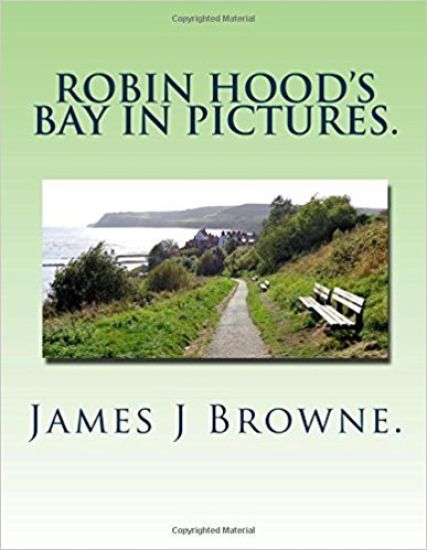
By the way, no local calls Robin Hood's Bay by its full name and usually it is referred to as "The Bay", or just "Baytown". Discover something of its rich history through this collection of contemporary photographs. In the eleventh century the neighbouring hamlet of Raw and the village of Fylingthorpe, in Fylingdales, had been settled by Danes and Norwegians. Following the Norman Conquest, in 1069, a great deal of land in the North of England, including Fylingdales, was laid waste. Tancred the Fleming received Fylingdales from William the Conqueror and later sold it to the Abbot of Whitby. However, by about 1500 a settlement, "Robin Hoode Baye", had grown up on the coast. The village was described by Leland in 1536 as - "A fischer tounlet of 20 bootes with Dok or Bosom of a mile yn length." Leland, by the way, has often been described as "the father of English local history and bibliography". Louis I, Count of Flanders, in the period 1324-1346 corresponded with King Edward III and complained that Flemish fishermen, together with their boats and catches, were being taken by force to Robin Hood's Bay. Looking south towards Ravenscar from above the sea wall. After the Dissolution of the Monasteries in 1540, Whitby Abbey and its lands became the property of King Henry VIII. It was during Henry's reign that King Street and the King's Beck came into being. In the 16th century Whitby was a less significant port than Robin Hood's Bay. "The Bay" was described by a tiny picture of tall houses and an anchor on old North Sea charts published by Waghenaer in 1586. During the late 18th century smuggling was a way of life on the Yorkshire coast and the Bay was a very much a smuggler's haunt. The town was, and still is, practically a labyrinth of tiny streets and there are believed to be many underground passageways linking the cottages.
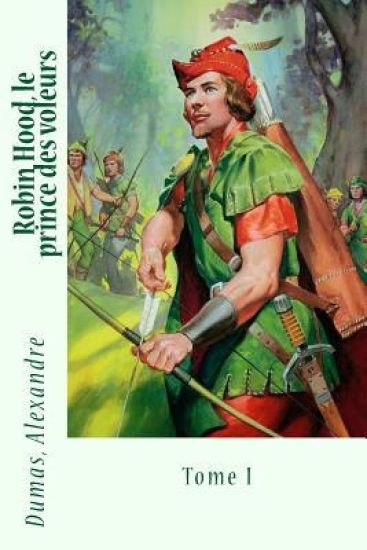
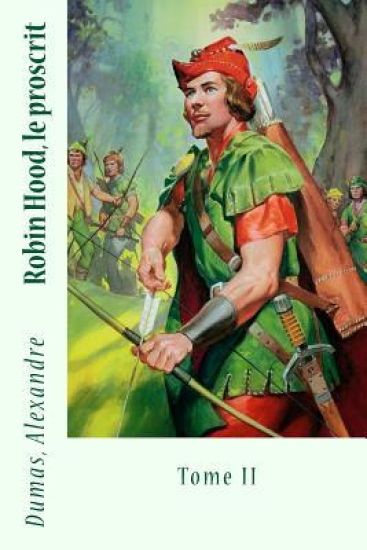
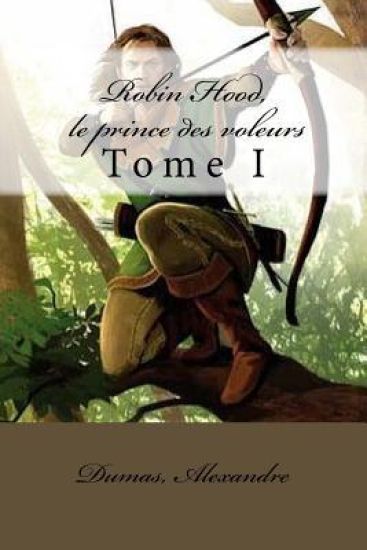
Vous connaissez tous Robin des Bois, dont l'histoire est assez proche de celle d'Ivanho crit par Walter Scott une cinquantaine d'ann e auparavavant. Alors, en avant pour l'aventure historique...
Vous connaissez tous Robin des Bois, dont l'histoire est assez proche de celle d'Ivanho crit par Walter Scott une cinquantaine d'ann e auparavavant. Alors, en avant pour l'aventure historique...
L'air tait froid; les arbres, sur lesquels commen ait poindre la faible verdure de mars, frissonnaient au souffle des derni res bises de l'hiver, et un sombre brouillard s' panchait sur la contr e mesure que les rayonnements du soleil cou- chant s' teignaient dans les nuages empourpr s de l'horizon. Bient t le ciel devint obscur, et des rafales passant sur la for t pr sag rent une nuit orageuse.