

Kirjahaku
Etsi kirjoja tekijän nimen, kirjan nimen tai ISBN:n perusteella.
1000 tulosta hakusanalla Rodney Simpson


Originally published in 1996. Although the history of commercial-power nuclear reactors is well known, the story of the government reactors that produce weapons-grade plutonium and tritium has been shrouded in secrecy. Supplying the Nuclear Arsenal looks at the origin and development of these production reactors, Rodney Carlisle and Joan Zenzen describe a fifty-year government effort no less complex, expensive, and technologically demanding than the Polaris or Apollo programs—yet one about which most Americans know virtually nothing. Carlisle and Zenzen describe the evolution of the early reactors, the atomic weapons establishment that surrounded them, and the sometimes bitter struggles between business and political constituencies for their share of "nuclear pork." They show how, since the 1980s, aging production reactors have increased the risk of radioactive contamination of the atmosphere and water table. And they describe how the Department of Energy mounted a massive effort to find the right design for a new generation of reactors, only to abandon that effort with the end of the Cold War. Today, all American production reactors remain closed.Due to short half-life, the nation's supply of tritium, crucial to modern weapons, is rapidly dwindling. As countries like Iraq and North Korea threaten to join the nuclear club, the authors contend, the United States needs to revitalize tritium production capacity in order to maintain a viable nuclear deterrent. Meanwhile, as slowly decaying artifacts of the Cold War, the closed production reactors at Hanford, Washington, and Savannah River, South Carolina, loom ominously over the landscape.

Colorfast Part 2 The Meter is Irregular, Volume 5 Colorfast - Part 2 - The Meter is Irregular, Volume 5, is the fifth installment of a multivolume collection of hundreds of poems, from bestselling author Rodney Charles. Each volume follows the evolution of the author who hopes to leave a poetic legacy for his children dealing with self-identity, self-honesty, grief, death, spiritual progress and loving. Within these pages, he chronicles his own unique discoveries and imaginations in the hope of leaving a few life-lessons-learned for his family - his muse. Rodney Charles is the author of Parenting Teenage Werewolves, Liberating Teenage Werewolves, The Inner Life of Turtles, The Land of Love, Art & Genius, Miracles of the Saints, Lighter Than Air, Publish It Now, Book Marketing Basics, and the best-selling Every Day a Miracle Happens. My dearest consort tells meshe is misunderstood, unappreciated by kith and kin--all the world. Your voice is pretty, like a morning bird, but the patient stars hear each litigant, bearing witness to all sides. Mute with wisdom, starssay nothing, and every plaintiff, washed in the awe of starlight, confesses nothing whatsoeverof injustice.

The Meter is Irregular, Volume 3 - Inner Life of Turtles
Rodney N Charles
1st World Publishing
2015
pokkari


The Land of Love, Art and Genius Master Artists of India
Rodney N Charles; Durgesh Nandini Badhwar
1st World Publishing
2011
sidottu

The Meter Is Irregular - Parenting Teenage Werewolves
Rodney Charles
1st World Publishing
2013
pokkari

The Meter Is Irregular, Volume 2 - Unleashing Teenage Werewolves
Rodney Charles; Roddy Roddy
1st World Publishing
2014
pokkari



Book Marketing Basics - The New Model For Promoting Your Book
Rodney N. Charles; 1stworld Publishing
1st World Publishing
2007
nidottu

Book Marketing Basics; The New Model for Promoting Your Book
Rodney Charles
1st World Publishing
2007
sidottu

Henry C. Carey and American Economic Development
Rodney J. Morrison
American Philosophical Society Press
1986
pokkari


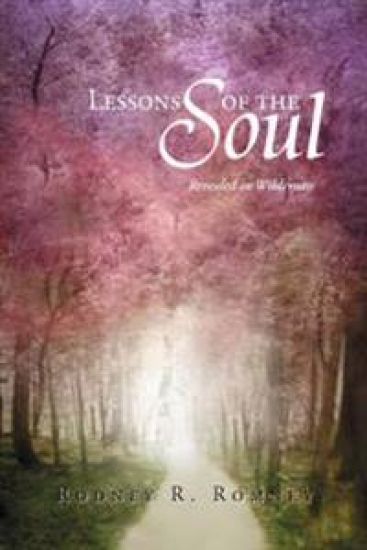
BOOK PROPOSAL FOR "WILDERNESS OF THE SOUL Rodney R. Romney WILDERNESS OF THE SOUL is a book about personal spiritual growth. It begins with the premise that life is a love story designed by a loving God, who calls each of us to be a part of that story. The book makes a frank and eclectic examination of a Wilderness God, a Deity that no religious system has been able to define or control. Rather than viewing God as a capricious prankster or bully, who toys with our lives just to test us, the book sees God as a mysterious presence who cannot be controlled or denied, but who loves everything unconditionally. The book advances the life of Jesus as an example of the wilderness life, one who became alienated from his own religious tradition, because it imposed too many restrictions and excluded too many people. By entering fully into the wilderness of his own soul, Jesus found a path that brought him into the mystery of an all-inclusive and all-loving God. The major portion of the book details ten stages (or marks) of spiritual growth for the one who seeks to explore the authentic or God-realized life. The initial stage is exile, which we all experience when we first enter this earth experience, and the final stage is graduation (or death). We go through these ten stages of growth and learning in order to learn the highest lesson of all: how to make our lives an expression of unconditional love to God and to the world. The book concludes by asking the question, "Whose Side Is God On?" with particular reference to the complex and troubled situation of our world today as it hovers on the brink of war. WHAT IS UNIQUE ABOUT THIS BOOK? This book offers the analogy of wilderness as a teacher that seeks to lead us toward spiritual fulfillment. It will have special appeal to a growing audience of people who are learning to honor the earth, to those who see truth in all spiritual and religious traditions, and to those who are searching for the transforming presence of the divine in their human experience. The book includes practical suggestions by offering spiritual exercises for each stage of growth. These exercises are presented without theological strictures or bias, thus making an appeal to an interfaith audience. The book also includes service and social justice as an inseparable outgrowth of spiritual practice. Social action is not viewed as separate from spirituality, but rather is presented as essential to its completion. The book also offers occasional glimpses into the life of the author. Most people do not want to hear only moral invectives when it comes to the inner life. They want to know something about the life of the person who is writing. Therefore, I occasionally include aspects of my own struggle in the various stages of spiritual growth. WHO IS THE PROSPECTIVE AUDIENCE FOR THIS BOOK? Church growth analysts often overlook the fact that the fastest growing religious group in this country is not fundamentalism or liberalism, nor what might be classified as "new age." The new and rapidly expanding group can best be described as the de-churched, or to use John Shelby Spong's term, "Believers in Exile." These are people who have discovered that institutional religion as they have known it does not meet their needs, because they can no longer accept the religious presuppositions of their past. Yet their spiritual hunger remains strong, and they search for ways to nourish their own hunger. It is to this huge, often recognized, group that WILDERNESS OF THE SOUL will make its appeal. It is a book that addresses the universal spiritual hunger that every person has, yet it does not impose strict theological dogmas or religious dictums. Its premise is that the human soul is the greatest wilderness of all, a wilderness that waits to be explored, and it offers suggestions and ways by which that exploration can be conducted. Spirituality is a comparatively new word in the English language that speaks of a growin

BOOK PROPOSAL FOR "WILDERNESS OF THE SOUL Rodney R. Romney WILDERNESS OF THE SOUL is a book about personal spiritual growth. It begins with the premise that life is a love story designed by a loving God, who calls each of us to be a part of that story. The book makes a frank and eclectic examination of a Wilderness God, a Deity that no religious system has been able to define or control. Rather than viewing God as a capricious prankster or bully, who toys with our lives just to test us, the book sees God as a mysterious presence who cannot be controlled or denied, but who loves everything unconditionally. The book advances the life of Jesus as an example of the wilderness life, one who became alienated from his own religious tradition, because it imposed too many restrictions and excluded too many people. By entering fully into the wilderness of his own soul, Jesus found a path that brought him into the mystery of an all-inclusive and all-loving God. The major portion of the book details ten stages (or marks) of spiritual growth for the one who seeks to explore the authentic or God-realized life. The initial stage is exile, which we all experience when we first enter this earth experience, and the final stage is graduation (or death). We go through these ten stages of growth and learning in order to learn the highest lesson of all: how to make our lives an expression of unconditional love to God and to the world. The book concludes by asking the question, "Whose Side Is God On?" with particular reference to the complex and troubled situation of our world today as it hovers on the brink of war. WHAT IS UNIQUE ABOUT THIS BOOK? This book offers the analogy of wilderness as a teacher that seeks to lead us toward spiritual fulfillment. It will have special appeal to a growing audience of people who are learning to honor the earth, to those who see truth in all spiritual and religious traditions, and to those who are searching for the transforming presence of the divine in their human experience. The book includes practical suggestions by offering spiritual exercises for each stage of growth. These exercises are presented without theological strictures or bias, thus making an appeal to an interfaith audience. The book also includes service and social justice as an inseparable outgrowth of spiritual practice. Social action is not viewed as separate from spirituality, but rather is presented as essential to its completion. The book also offers occasional glimpses into the life of the author. Most people do not want to hear only moral invectives when it comes to the inner life. They want to know something about the life of the person who is writing. Therefore, I occasionally include aspects of my own struggle in the various stages of spiritual growth. WHO IS THE PROSPECTIVE AUDIENCE FOR THIS BOOK? Church growth analysts often overlook the fact that the fastest growing religious group in this country is not fundamentalism or liberalism, nor what might be classified as "new age." The new and rapidly expanding group can best be described as the de-churched, or to use John Shelby Spong's term, "Believers in Exile." These are people who have discovered that institutional religion as they have known it does not meet their needs, because they can no longer accept the religious presuppositions of their past. Yet their spiritual hunger remains strong, and they search for ways to nourish their own hunger. It is to this huge, often recognized, group that WILDERNESS OF THE SOUL will make its appeal. It is a book that addresses the universal spiritual hunger that every person has, yet it does not impose strict theological dogmas or religious dictums. Its premise is that the human soul is the greatest wilderness of all, a wilderness that waits to be explored, and it offers suggestions and ways by which that exploration can be conducted. Spirituality is a comparatively new word in the English language that speaks of a growin

