Kirjahaku
Etsi kirjoja tekijän nimen, kirjan nimen tai ISBN:n perusteella.
1000 tulosta hakusanalla Roger Rule
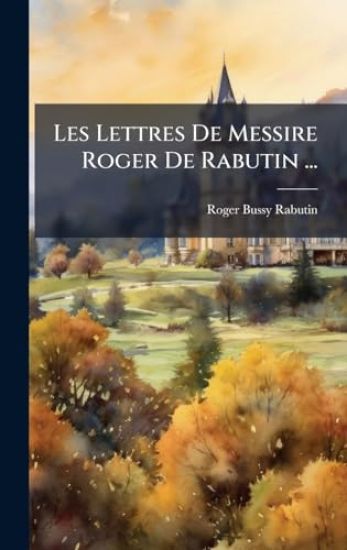
Les Lettres De Messire Roger De Rabutin ...
Hutson Street Press
2025
sidottu

Les Lettres De Messire Roger De Rabutin ...
Hutson Street Press
2025
pokkari

Les Lettres De Messire Roger De Rabutin ...
Hutson Street Press
2025
sidottu
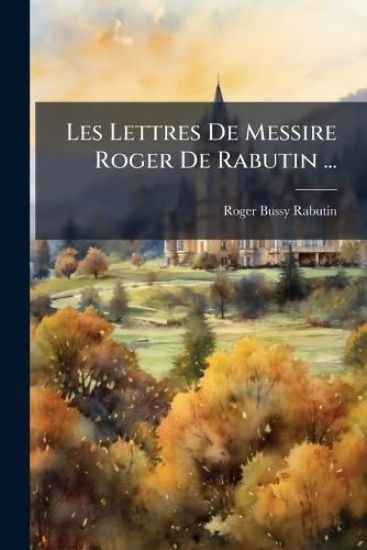
Les Lettres De Messire Roger De Rabutin ...
Hutson Street Press
2025
pokkari
Les Lettres De Messire Roger De Rabutin ...
Hutson Street Press
2025
sidottu
Les Lettres De Messire Roger De Rabutin ...
Hutson Street Press
2025
pokkari
Life of Roger Williams
Hutson Street Press
2025
pokkari
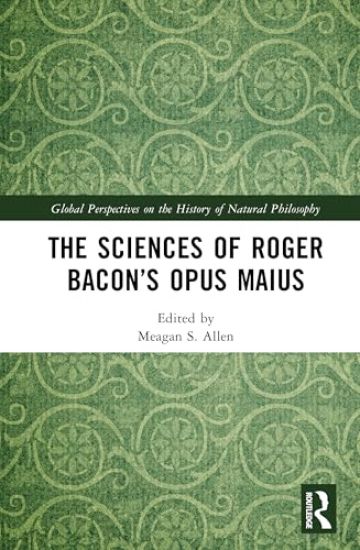
The Sciences of Roger Bacon’s Opus Maius
TAYLOR FRANCIS LTD
2025
sidottu
Through an examination of the Opus maius, Roger Bacon’s great scientific work of 1267, this book offers insight into Bacon’s understanding of the role of science in society and the study and practice of science in the later Middle Ages.Written at the request of Pope Clement IV (d. 1268), the Opus maius contains English Franciscan and polymath Roger Bacon’s plans for educational and ecclesiastical reform through the study of arts and sciences, which Bacon saw as having been neglected in the curricula of the major European universities. In writing the Opus maius, Bacon wanted to demonstrate that not only were the sciences a solid foundation for learning theology, but they could also improve society and help mankind attain salvation. This volume contains nine essays on the sciences Bacon thought were most important in this scheme, including optics, mathematics, astronomy, alchemy, medicine, and experimental science. Each provides a focused examination of the individual sciences, demonstrating how Bacon understood and practiced them, as well as how he envisioned they would fit together into his larger program of scientific reform.This thought-provoking collection will be a valuable resource to historians of science, medicine, and philosophy, as well as those in medieval and premodern studies.
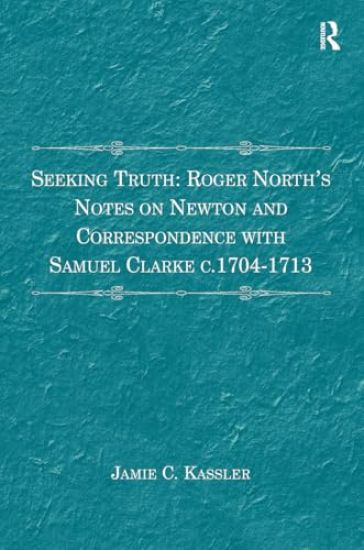
Seeking Truth: Roger North's Notes on Newton and Correspondence with Samuel Clarke c.1704-1713
Jamie C. Kassler
TAYLOR FRANCIS LTD
2024
nidottu
In the early 1690s Roger North was preparing to remove from London to Rougham, Norfolk, where he planned to continue his search for truth, which for him meant knowledge of nature, including human nature. But this search was interrupted by three events. First, between c.1704 and the early part of 1706, he read Newton’s book on rational (quantitative) mechanics and, afterwards, his book on optics in Clarke’s Latin translation. Second, towards the latter part of 1706, he and Clarke, a Norfolk clergyman, corresponded about matters relating to Newton’s two books, after which Clarke removed to London and the correspondence ceased. Third, in 1712 North received a letter from Clarke, requesting him to read and respond to his new publication on the philosophy of the Godhead. As Kassler details, each of these events presented a number of challenges to North’s values, as well as the way of philosophising he had learned as a student and practitioner of the common law. Because he never made public his responses to the challenges, her book also includes editions of North's notes on reading Newton’s books, as well as what now remains of the 1706 and later correspondence with Clarke. In addition, she presents analyses of some of North’s ’second thoughts’ about the issues raised in the notes and 1706 correspondence and, from an examination of Clarke’s main writings, provides a context for understanding the correspondence relating to the 1712 book.
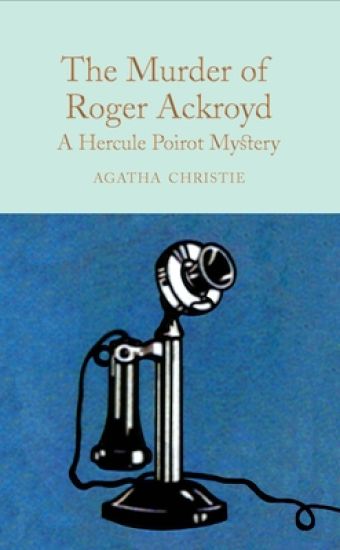
The Murder of Roger Ackroyd: A Hercule Poirot Mystery
Agatha Christie
MacMillan Collector's Library
2023
sidottu
Designed to appeal to the book lover, the Macmillan Collector's Library is a series of beautifully bound pocket-sized gift editions of much loved classic titles. Bound in real cloth, printed on high quality paper, and featuring ribbon markers and gilt edges, Macmillan Collector's Library are books to love and treasure. This edition features an introduction by Barry Forshaw.The only person who can unravel the terrible events in The Murder of Roger Ackroyd is Hercule Poirot. He sets about, in his usual meticulous and eccentric way, to uncover the truth. In an English village, a young widow, Mrs Ferrars is found dead; she has taken her own life. Roger Ackroyd confides to his friend, Dr James Shepherd, who is the narrator of the book, that he was planning to marry Mrs Ferrars. But before her death he discovered that she had a dark secret; she killed her own husband and now someone is blackmailing her. Then, just as Ackroyd is about to find out the identity of the blackmailer, he's murdered.
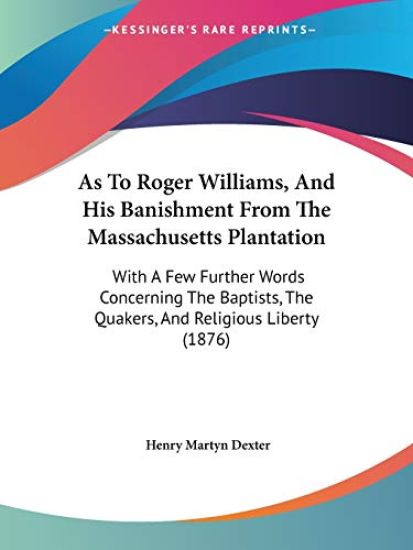
As to Roger Williams, and His Banishment from the Massachusetts Plantation
Henry Martyn Dexter
Kessinger Pub
2009
pokkari
Lives Of Roger Williams, Timothy Dwight, And Count Pulaski (1845)
William Gammell; William Buell Sprague
KESSINGER PUBLISHING, LLC
2009
pokkari