Kirjojen hintavertailu. Mukana 12 016 292 kirjaa ja 12 kauppaa.

Kirjahaku

Etsi kirjoja tekijän nimen, kirjan nimen tai ISBN:n perusteella.

1000 tulosta hakusanalla Rohan Candappa

Roman Social History
This Sourcebook contains a comprehensive collection of sources on the topic of the social history of the Roman world during the late Republic and the first two centuries AD.Designed to form the basis for courses in Roman social history, this excellent resource covers original translations from sources such as inscriptions, papyri, and legal texts. Topics include:social inequality and class games, gladiators and attitudes to violence the role of slaves in Roman society economy and taxation the Roman legal system the Roman family and gender roles.Including extensive explanatory notes, maps and bibliographies, this Sourcebook is the ideal resource for all students and teachers embarking on a course in Roman social history.
Roman Britain

Roman Britain

Stanley Ireland

Routledge
2008
sidottu
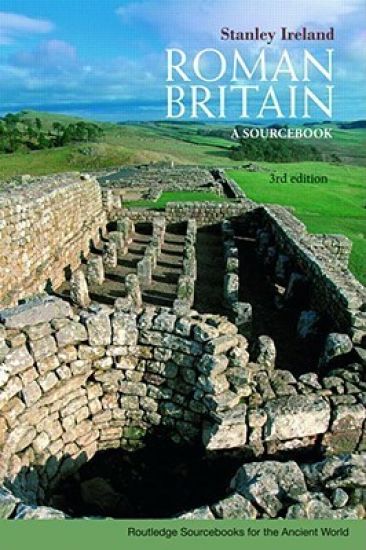
Roman Britain: A Sourcebook has established itself as the only comprehensive collection of source material on the subject. It incorporates literary, numismatic and epigraphic evidence for the history of Britain under Roman rule, as well as translations of major literary sources. This new edition includes not only recently discovered material, but also the texts of Caesar’s commentaries on his expeditions to Britain in 55 and 54 BC, as well as relevant sections of Tacitus’ biography of his father-in-law, former governor of Britain. The inclusion of these pivotal texts, which provide the most detailed account of the Romans campaigns in Britain, significantly underlies the volume’s usefulness to all students of Roman Britain. Though most of the material is arranged chronologically, there are also thematic sections on geography, religion and social and economic activity. Each section is prefaced by an introductory note, and the inclusion of illustrations and maps enhances the attractiveness of this updated collection as a teaching tool and a work of reference.
Roman Britain

Roman Britain

Stanley Ireland

Routledge
2008
nidottu
Roman Britain: A Sourcebook has established itself as the only comprehensive collection of source material on the subject. It incorporates literary, numismatic and epigraphic evidence for the history of Britain under Roman rule, as well as translations of major literary sources. This new edition includes not only recently discovered material, but also the texts of Caesar’s commentaries on his expeditions to Britain in 55 and 54 BC, as well as relevant sections of Tacitus’ biography of his father-in-law, former governor of Britain. The inclusion of these pivotal texts, which provide the most detailed account of the Romans campaigns in Britain, significantly underlies the volume’s usefulness to all students of Roman Britain. Though most of the material is arranged chronologically, there are also thematic sections on geography, religion and social and economic activity. Each section is prefaced by an introductory note, and the inclusion of illustrations and maps enhances the attractiveness of this updated collection as a teaching tool and a work of reference.
Roman Berytus

Roman Berytus

Linda Jones Hall

Routledge
2008
nidottu
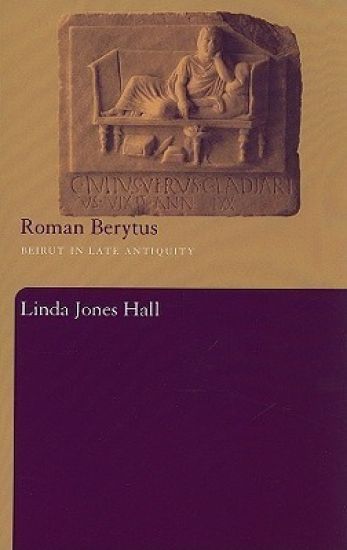
Examining the numerous primary sources, including inscriptions, religions, histories, literary references, legal codes, and archaeological reports, Linda Jones Hall presents a composite history of late antique Berytus - from its founding as a Roman colony in the time of Augustus, to its development into a center of legal study under Justinian.The book examines all aspects of life in the city, including geographical setting, economic base, built environment, political structures, religious transitions from paganism to Christianity, and the self-identity of the inhabitants in terms of ethnicity and occupation.This volume provides:* the first detailed investigation of late antique Phoenicia* a look at religious affiliations are traced among pagans, Jews, and Christians* a study of the bishops and the churches.The full texts of numerous narratives are presented to reveal the aspirations of the law students, the professors, and their fellow citizens such as the artisans. The study also explores the cultural implications of the city's Greek, Roman and then Syro-Phoenician heritage.
Roman Civilization

Roman Civilization

C.K. Ogden

Routledge
1997
sidottu
Originally published between 1920-70,The History of Civilization was a landmark in early twentieth century publishing. It was published at a formative time within the social sciences, and during a period of decisive historical discovery. The aim of the general editor, C.K. Ogden, was to summarize the most up to date findings and theories of historians, anthropologists, archaeologists and sociologists. This reprinted material is available as a set or in the following groupings:* Prehistory and Historical EthnographySet of 12: 0-415-15611-4* Greek CivilizationSet of 7: 0-415-15612-2* Roman CivilizationSet of 6: 0-415-15613-0* Eastern CivilizationsSet of 10: 0-415-15614-9* Judaeo-Christian CivilizationSet of 4: 0-415-15615-7* European CivilizationSet of 11: 0-415-15616-5
Roman Archaeology for Historians

Roman Archaeology for Historians

Ray Laurence

Routledge
2012
sidottu
Roman Archaeology for Historians provides students of Roman history with a guide to the contribution of archaeology to the study of their subject. It discusses the issues with the use of material and textual evidence to explain the Roman past, and the importance of viewing this evidence in context. It also surveys the different approaches to the archaeological material of the period and examines key themes that have shaped Roman archaeology. At the heart of the book lies the question of how archaeological material can be interpreted and its relevance for the study of ancient history. It includes discussion of the study of landscape change, urban topography, the economy, the nature of cities, new approaches to skeletal evidence and artefacts in museums. Along the way, readers gain access to new findings and key sites - many of which have not been discussed in English before and many, for which, access may only be gained from technical reports.Roman Archaeology for Historians provides an accessible guide to the development of archaeology as a discipline and how the use of archaeological evidence of the Roman world can enrich the study of ancient history, while at the same time encouraging the integration of material evidence into the study of the period’s history. This work is a key resource for students of ancient history, and for those studying the archaeology of the Roman period.
Roman Archaeology for Historians

Roman Archaeology for Historians

Ray Laurence

Routledge
2012
nidottu
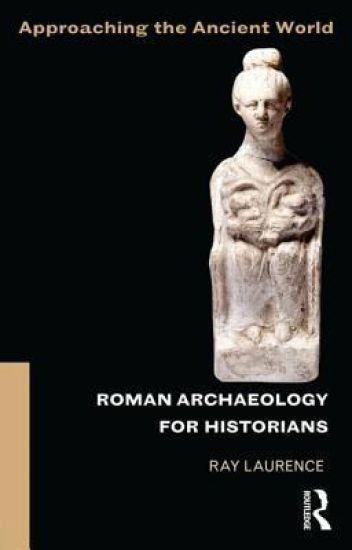
Roman Archaeology for Historians provides students of Roman history with a guide to the contribution of archaeology to the study of their subject. It discusses the issues with the use of material and textual evidence to explain the Roman past, and the importance of viewing this evidence in context. It also surveys the different approaches to the archaeological material of the period and examines key themes that have shaped Roman archaeology. At the heart of the book lies the question of how archaeological material can be interpreted and its relevance for the study of ancient history. It includes discussion of the study of landscape change, urban topography, the economy, the nature of cities, new approaches to skeletal evidence and artefacts in museums. Along the way, readers gain access to new findings and key sites - many of which have not been discussed in English before and many, for which, access may only be gained from technical reports.Roman Archaeology for Historians provides an accessible guide to the development of archaeology as a discipline and how the use of archaeological evidence of the Roman world can enrich the study of ancient history, while at the same time encouraging the integration of material evidence into the study of the period’s history. This work is a key resource for students of ancient history, and for those studying the archaeology of the Roman period.
Roman Imperial Identities in the Early Christian Era
Through the close study of texts, Roman Imperial Identities in the Early Christian Era examines the overlapping emphases and themes of two cosmopolitan and multiethnic cultural identities emerging in the early centuries CE – a trans-empire alliance of the Elite and the "Christians." Exploring the cultural representations of these social identities, Judith Perkins shows that they converge around an array of shared themes: violence, the body, prisons, courts, and time. Locating Christian representations within their historical context and in dialogue with other contemporary representations, it asks why do Christian representations share certain emphases? To what do they respond, and to whom might they appeal? For example, does the increasing Christian emphasis on a fully material human resurrection in the early centuries, respond to the evolution of a harsher and more status based judicial system? Judith Perkins argues that Christians were so successful in suppressing their social identity as inhabitants of the Roman Empire, that historical documents and testimony have been sequestered as "Christian" rather than recognized as evidence for the social dynamics enacted during the period, Her discussion offers a stimulating survey of interest to students of ancient narrative, cultural studies and gender.
Roman Urbanism
The contributors to this volume provide an accessible and jargon-free insight into the notion of the Roman city; what shaped it, and how it both structured and reflected Roman society. Roman Urbanism challenges the established economic model for the Roman city and instead offers original and diverse approaches for examining Roman urbanization, bringing the Roman city into the nineties. Roman Urbanism is a lively and informative volume, particularly valuable in an age dominated by urban development.
Roman Edessa

Roman Edessa

Steven K. Ross

Routledge
2011
nidottu
Roman Edessa offers a comprehensive and erudite analysis of the ancient city of Edessa (modern day Urfa, Turkey), which constituted a remarkable amalgam of the East and the West. Among the areas explored are:the cultural life and antecedents of EdessaEdessene religionthe extent of the Hellenization at Edessa before the advent of Christianitythe myth of an exchange of letters between a King Abgar and Jesus.
Roman London

Roman London

Dominic Perring

Routledge
2011
nidottu
This book draws extensively on the results of the latest work to present a challenging new account of the rise and fall of one of the principal towns of the Roman empire.
Roman Villas

Roman Villas

J.T. Smith

Routledge
2011
nidottu
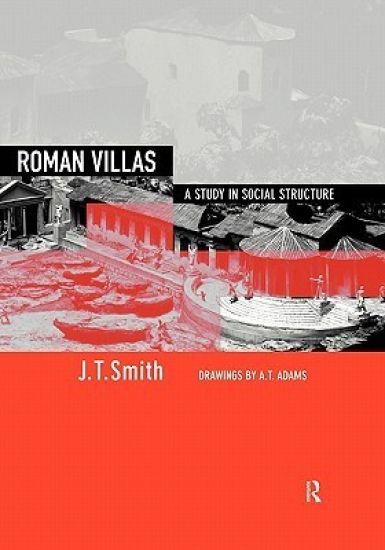
Roman Villas explores the social structures of the Roman world by analysing the plans of buildings of all sizes from slightly Romanized farms to palaces. The ways in which the rooms are grouped together; how they intercommunicate; and the ways in which individual rooms and the house are approached, reveal various social patterns, which question traditional ideas about the Roman family and household. J. T. Smith argues that virtually all houses were occupied by groups of varying composition, challenging the received wisdom that they were single family houses whose size reflected only the owner's wealth and number of servants.Roman Villas provides a meticulously documented and scholarly examination of the relationship between the living quarters of the Roman and their social and economic development which introduces a new area in Roman studies and a corpus of material for further analysis. The inclusion of almost 500 ground plans, drawn to a uniform scale, allows the reader to compare the similarities and differences between house structure as well as effectively illustrating the arguments.
Roman Jakobson
Although Roman Jakobson (1886–1982) styled himself a ‘Russian philologist’, that epithet covers only a fraction of his disciplinary breadth and international impact. In a long and prolific career, he wrote about theoretical and applied linguistics, phonology, prosody, poetics, semiotics, translation theory, psycholinguistics, language universals, literary history and criticism, and historical and descriptive linguistics, especially Slavic. His robust voice and distinctive ideas attracted attention not only from language scholars, but also from literary critics, anthropologists, historians of culture, and even from neurologists.As serious work on Jakobson’s thinking and influence continues to flourish, this long-awaited new title in Routledge’s Critical Assessments of Leading Linguists series brings together the best analysis of—and commentary on—the work of one of the twentieth century’s most versatile and influential language scholars. Criticism of Jakobson is as diverse as the work itself and this four-volume set collects the most provocative and insightful reflections on Jakobson’s writings. It encompasses many points of view, reflecting Jakobson’s wide scope as a scholar and the startling fact that he was displaced repeatedly—and under threatening circumstances—from Moscow to Prague to the United States.Roman Jakobson is fully indexed and includes a comprehensive introduction, newly written by the editor. It is an essential work of reference and is destined to be valued by scholars and students as a vital one-stop research and pedagogic resource.
Roman Urban Street Networks

Roman Urban Street Networks

Alan Kaiser

Routledge
2013
nidottu
The streets of Roman cities have received surprisingly little attention until recently. Traditionally the main interest archaeologists and classicists had in streets was in tracing the origins and development of the orthogonal layout used in Roman colonial cities. Roman Urban Street Networks is the first volume to sift through the ancient literature to determine how authors used the Latin vocabulary for streets, and determine what that tells us about how the Romans perceived their streets. Author Alan Kaiser offers a methodology for describing the role of a street within the broader urban transportation network in such a way that one can compare both individual streets and street networks from one site to another. This work is more than simply an exploration of Roman urban streets, however. It addresses one of the central problems in current scholarship on Roman urbanism: Kaiser suggests that streets provided the organizing principle for ancient Roman cities, offering an exciting new way of describing and comparing Roman street networks. This book will certainly lead to an expanded discussion of approaches to and understandings of Roman streetscapes and urbanism.
Roman Spain (Routledge Revivals)

Roman Spain (Routledge Revivals)

Leonard Curchin

Routledge
2014
sidottu
The rugged, parched landscape and fierce inhabitants of the Iberian Peninsula resisted Rome’s best generals for two centuries. Roman Spain tells the story of this conquest, making use of the latest archaeological evidence to explore the social, religious, political and economic implications of the transition from a tribal community accustomed to grisly human sacrifices to a civilised, Latin-speaking provincial society.From the fabled kingdom of Tartesos to the triumph of Christianity, Professor Curchin traces the evolution of Hispano-Roman cults, the integration of Spain into the Roman economy, cultural ‘resistance’ to Romanisation, and surveys the chief cities of the Roman administration as well as conditions in the countryside. Special emphasis is placed on social relationships: soldier and civilian, the emperor and the provincials, patrons and clients, the upper and lower classes, women and the family.
Roman Spain (Routledge Revivals)

Roman Spain (Routledge Revivals)

Leonard Curchin

Routledge
2015
nidottu
The rugged, parched landscape and fierce inhabitants of the Iberian Peninsula resisted Rome’s best generals for two centuries. Roman Spain tells the story of this conquest, making use of the latest archaeological evidence to explore the social, religious, political and economic implications of the transition from a tribal community accustomed to grisly human sacrifices to a civilised, Latin-speaking provincial society.From the fabled kingdom of Tartesos to the triumph of Christianity, Professor Curchin traces the evolution of Hispano-Roman cults, the integration of Spain into the Roman economy, cultural ‘resistance’ to Romanisation, and surveys the chief cities of the Roman administration as well as conditions in the countryside. Special emphasis is placed on social relationships: soldier and civilian, the emperor and the provincials, patrons and clients, the upper and lower classes, women and the family.
Roman Gaul (Routledge Revivals)

Roman Gaul (Routledge Revivals)

John Drinkwater

Routledge
2013
sidottu
Roman Gaul, first published in 1983, makes use of a wealth of archaeological discoveries and modern methods of interpretation to give an account of the Roman presence in Gaul, from the time of Caesar’s conquests until the Crisis of the third century. Professor Drinkwater emphasises the changes caused in the Three Gauls and Germany by the impact of Romanisation – urbanisation, agriculture, trade and education – and points out the often curious ways in which Roman influences survive in these areas to the present day. Particular attention is paid to the evolution of the landowning class, as well as its relationship with the artisans and traders found in townships and cities. An assessment of the strength of Romano-Gallic society and its economy in the tumultuous third century AD concludes this lively and provocative coverage of an intriguing subject. Roman Gaul will be of interest to all students of the Roman legacy.
Roman Gaul (Routledge Revivals)

Roman Gaul (Routledge Revivals)

John Drinkwater

Routledge
2015
nidottu
Roman Gaul, first published in 1983, makes use of a wealth of archaeological discoveries and modern methods of interpretation to give an account of the Roman presence in Gaul, from the time of Caesar’s conquests until the Crisis of the third century. Professor Drinkwater emphasises the changes caused in the Three Gauls and Germany by the impact of Romanisation – urbanisation, agriculture, trade and education – and points out the often curious ways in which Roman influences survive in these areas to the present day. Particular attention is paid to the evolution of the landowning class, as well as its relationship with the artisans and traders found in townships and cities. An assessment of the strength of Romano-Gallic society and its economy in the tumultuous third century AD concludes this lively and provocative coverage of an intriguing subject. Roman Gaul will be of interest to all students of the Roman legacy.
Roman Theories of Translation

Roman Theories of Translation

Siobhán McElduff

Routledge
2013
sidottu
For all that Cicero is often seen as the father of translation theory, his and other Roman comments on translation are often divorced from the complicated environments that produced them. The first book-length study in English of its kind, Roman Theories of Translation: Surpassing the Source explores translation as it occurred in Rome and presents a complete, culturally integrated discourse on its theories from 240 BCE to the 2nd Century CE. Author Siobhán McElduff analyzes Roman methods of translation, connects specific events and controversies in the Roman Empire to larger cultural discussions about translation, and delves into the histories of various Roman translators, examining how their circumstances influenced their experience of translation.This book illustrates that as a translating culture, a culture reckoning with the consequences of building its own literature upon that of a conquered nation, and one with an enormous impact upon the West, Rome's translators and their theories of translation deserve to be treated and discussed as a complex and sophisticated phenomenon. Roman Theories of Translation enables Roman writers on translation to take their rightful place in the history of translation and translation theory.