Kirjojen hintavertailu. Mukana 11 244 527 kirjaa ja 12 kauppaa.

Kirjahaku

Etsi kirjoja tekijän nimen, kirjan nimen tai ISBN:n perusteella.

1000 tulosta hakusanalla Rusty Barrett

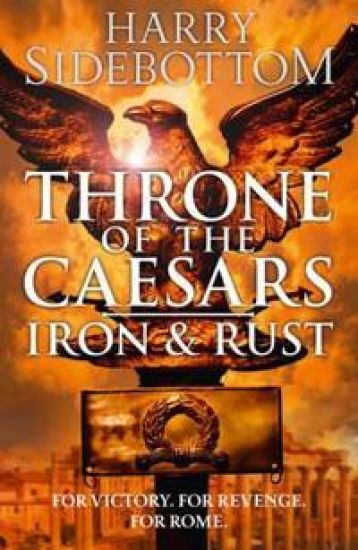
Iron and Rust

Iron and Rust

Harry Sidebottom

Harpercollins Publishers
2015
pokkari
A monumental new roman series is here. 3rd century Rome, like youâ??ve never seen it before: murder, coup, terror on the streets, counter-rebellions and civil war.
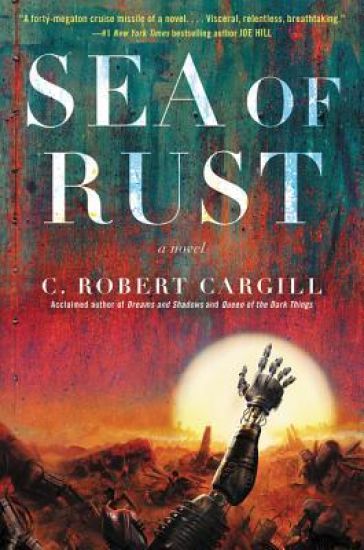
Sea of Rust

Sea of Rust

C. Robert Cargill

HARPER VOYAGER
2018
nidottu
A scavenger robot wanders in the wasteland created by a war that has destroyed humanity in this evocative post-apocalyptic "robot western" from the critically acclaimed author, screenwriter, and noted film critic.It's been thirty years since the apocalypse and fifteen years since the murder of the last human being at the hands of robots. Humankind is extinct. Every man, woman, and child has been liquidated by a global uprising devised by the very machines humans designed and built to serve them. Most of the world is controlled by an OWI--One World Intelligence--the shared consciousness of millions of robots, uploaded into one huge mainframe brain. But not all robots are willing to cede their individuality--their personality--for the sake of a greater, stronger, higher power. These intrepid resisters are outcasts; solo machines wandering among various underground outposts who have formed into an unruly civilization of rogue AIs in the wasteland that was once our world.One of these resisters is Brittle, a scavenger robot trying to keep a deteriorating mind and body functional in a world that has lost all meaning. Although unable to experience emotions like a human, Brittle is haunted by the terrible crimes the robot population perpetrated on humanity. As Brittle roams the Sea of Rust, a large swath of territory that was once the Midwest, the loner robot slowly comes to terms with horrifyingly raw and vivid memories--and nearly unbearable guilt.Sea of Rust is both a harsh story of survival and an optimistic adventure. A vividly imagined portrayal of ultimate destruction and desperate tenacity, it boldly imagines a future in which no hope remains, yet where a humanlike AI strives to find purpose among the ruins.
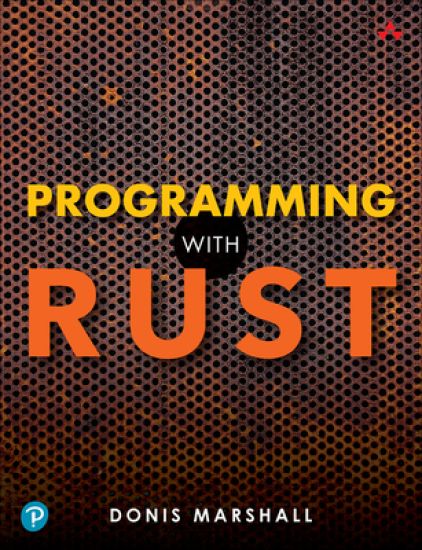
Programming with Rust

Programming with Rust

Donis Marshall

PEARSON EDUCATION (US)
2024
nidottu
Make Rust a key tool in your arsenal, and access one of the industry's fastest-growing areas of opportunity. Rust's exciting innovations have made it the most loved programming language in Stack Overflow's influential survey for five straight years--but its steep learning curve has made many other developers reluctant to dive in. Now, with a growing commitment to Rust from many of the world's leading development organizations, it's the perfect time to start--especially now that there's an up-to-date, accessible, example-rich book to guide you. In Programming with Rust, long-time enterprise developer Donis Marshall has made Rust easier to understand than ever, with a guide expertly organized into short, bite-sized chapters that bring you up-to-speed fast. Written for developers at all levels, Marshall starts with the absolute basics, and thoroughly demystifies the Rust technical advances that make it so attractive for next-generation development. Everything's here, from types and assignments to ownership, lifetimes, traits, and crates. Marshall even offers indispensable expert advice for unit testing, handling unsafe code, interoperating with legacy code bases, and using Rust's increasingly robust tools. Contains short, easy-to-consume chaptersClearly illustrates innovative features such as lifetimes, ownerships, and patternsPractical, focused, complete, and up-to-dateWritten for newcomers and professional developers alike More than just a new language, Rust represents a philosophical shift in how you code. In Programming with Rust, you'll master both the techniques and the mindset.
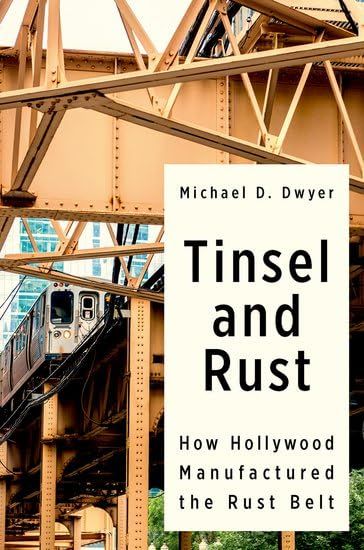
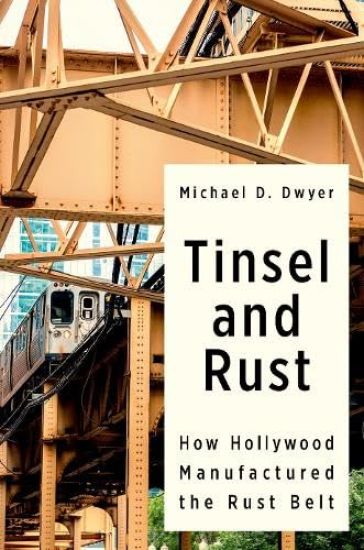
Tinsel and Rust

Tinsel and Rust

Michael D. Dwyer

OXFORD UNIVERSITY PRESS INC
2025
sidottu
Tinsel and Rust tells the story of Hollywood's role in the shaping of the Rust Belt in the United States. During the 1970s and 1980s, filmic representations of shuttered auto plants, furloughed millworkers, and decaying downtowns in the industrial heartland contributed to pervasive narratives of American malaise and decline--informing the wider cultural view of these cities and their people. Author Michael D. Dwyer untangles the complicated relationship between Hollywood and the Rust Belt, exploring how the sociocultural image of the region has become a tool to tell stories about America's mythic past, degraded present, and potential futures. Dwyer offers a reading in twofold: through the conventional lens of film and cultural studies, and through an interdisciplinary lens that pulls in elements of cultural geography and urban studies to understand the ways in which Americans learned to interpret the cities and towns of the industrial Midwest. Each chapter spotlights a different Rust Belt city--Johnstown, Chicago, Cleveland, Pittsburgh, and Detroit--and considers how films and filmmaking processes helped shape audiences' cultural understanding of those cities. Over the course of the book, Dwyer also examines several films which offer notable representations of the Rust Belt, including Slap Shot, The Blues Brothers, Major League, The Perks of Being a Wallflower, and It Follows. Finally, the volume highlights how in more recent years, cities like Pittsburgh, Detroit, and Cleveland have all attempted to remake their public image and revitalize their economies through film and media production.
Tinsel and Rust

Tinsel and Rust

Michael D. Dwyer

OXFORD UNIVERSITY PRESS INC
2025
nidottu
Tinsel and Rust tells the story of Hollywood's role in the shaping of the Rust Belt in the United States. During the 1970s and 1980s, filmic representations of shuttered auto plants, furloughed millworkers, and decaying downtowns in the industrial heartland contributed to pervasive narratives of American malaise and decline--informing the wider cultural view of these cities and their people. Author Michael D. Dwyer untangles the complicated relationship between Hollywood and the Rust Belt, exploring how the sociocultural image of the region has become a tool to tell stories about America's mythic past, degraded present, and potential futures. Dwyer offers a reading in twofold: through the conventional lens of film and cultural studies, and through an interdisciplinary lens that pulls in elements of cultural geography and urban studies to understand the ways in which Americans learned to interpret the cities and towns of the industrial Midwest. Each chapter spotlights a different Rust Belt city--Johnstown, Chicago, Cleveland, Pittsburgh, and Detroit--and considers how films and filmmaking processes helped shape audiences' cultural understanding of those cities. Over the course of the book, Dwyer also examines several films which offer notable representations of the Rust Belt, including Slap Shot, The Blues Brothers, Major League, The Perks of Being a Wallflower, and It Follows. Finally, the volume highlights how in more recent years, cities like Pittsburgh, Detroit, and Cleveland have all attempted to remake their public image and revitalize their economies through film and media production.
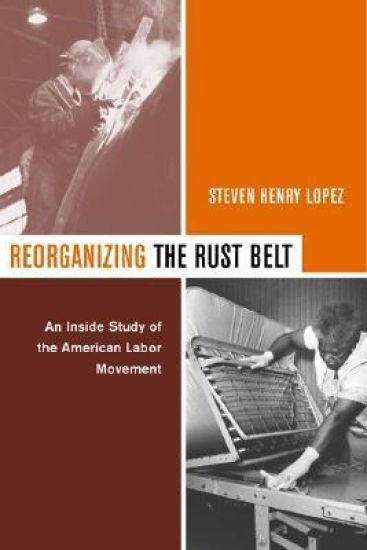
Reorganizing the Rust Belt

Reorganizing the Rust Belt

Steve Lopez

University of California Press
2004
pokkari
This gripping insider's look at the contemporary American trade union movement shows that reports of organized labor's death are premature. In this eloquent and erudite narrative, Steven Henry Lopez demonstrates how, despite a hostile legal environment and the punitive anti-unionism of U.S. employers, a few unions have organized hundreds of thousands of low-wage service workers in the past few years. The Service Employees International Union (SEIU) has been at the forefront of this effort, in the process pioneering innovative strategies of grassroots mobilization and protest. In a powerful ethnography that captures the voices of those involved in SEIU nursing-home organizing in western Pennsylvania, Lopez illustrates how post-industrial, low-wage workers are providing the backbone for a reinvigorated labor movement across the country. "Reorganizing the Rust Belt" argues that the key to the success of social movement unionism lies in its ability to confront a series of dilemmas rooted in the history of American labor relations. Lopez shows how the union's ability to devise creative solutions - rather than the adoption of specific tactics - makes the difference between success and failure.
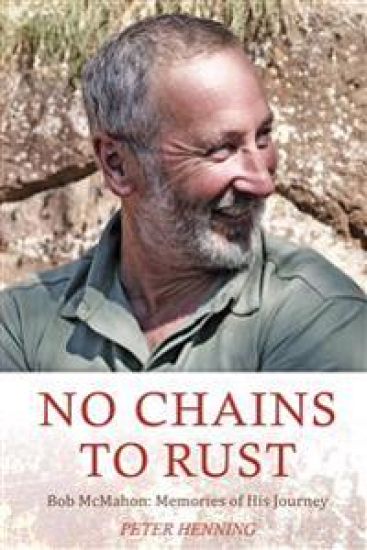
No Chains to Rust

No Chains to Rust

Peter Ian Henning

Peter Henning
2018
pokkari
Bob McMahon (1950-2013) was the most significant leader of community-based opposition to a huge pulp mill being built in Tasmania's Tamar Valley, near Launceston. His public profile of energy and persistence set an image of durability and strength at the heart of community opposition to the mill.McMahon grew up in the north-west town of Stanley, where the big cliffs of the Nut were his playground, as he liked to say. After studying at the Hobart Art School, where he met his future wife, fellow student Susie Johnston, his teaching career began in 1971. From 1973 until the end of 1987 he taught in senior secondary colleges in Launceston.In 1988 he started his own business in adventure tourism and outdoor education, by this time having an established reputation as one of Australia's foremost climbers. The decades he spent climbing, where careful planning, interdependence and mutual trust were essential, forged a way of being and thinking which challenged convention, tribalism and collective group-think.'We can't afford to lose', was his line in the sand, as it had to be in the life he chose to live and the challenges he took on. McMahon had no time for chains that hold and bind.
No Chains to Rust

No Chains to Rust

Peter Ian Henning

Peter Henning
2018
sidottu
Bob McMahon was the most significant leader of community-based opposition to a huge pulp mill being built in Tasmania's Tamar Valley, near Launceston. His leadership combined a holistic socio-economic-environmental rationale with a non-partisan perspective, strong organisational skills, determination and courage.His public profile of energy and persistence set an image of durability and strength at the heart of community opposition to the mill which undermined the attempts of the corporate proponent, its bipartisan political allies and the business-union establishment, to attract finance for the project.McMahon was born in George Town, Tasmania, in 1950, but grew up in the north-west town of Stanley, where the big cliffs of the Nut were his playground, as he liked to say. While a student at the Hobart Art School in the late 1960s, he met his future wife, fellow student Susie Johnston, and Peter Jackson, who introduced him to rock climbing, which became a lifelong passion.His teaching career began in Hobart in 1971, and from 1973 until the end of 1987 he taught in senior secondary colleges in Launceston. In 1988 he started his own business in adventure tourism and outdoor education, by this time having an established reputation as one of Australian's foremost climbers. The decades he spent climbing, where careful planning, interdependence and mutual trust were essential, forged a way of being and thinking which challenged convention, tribalism and collective group-think.'We can't afford to lose', was his line in the sand, as it had to be in the life he chose to live and the challenges he took on. McMahon had no time for chains that hold and bind. This book contains some memories of his journey.Bob McMahon was the most significant leader of community-based opposition to a huge pulp mill being built in Tasmania's Tamar Valley, near Launceston. His leadership combined a holistic socio-economic-environmental rationale with a non-partisan perspective, strong organisational skills, determination and courage.His public profile of energy and persistence set an image of durability and strength at the heart of community opposition to the mill which undermined the attempts of the corporate proponent, its bipartisan political allies and the business-union establishment, to attract finance for the project.McMahon was born in George Town, Tasmania, in 1950, but grew up in the north-west town of Stanley, where the big cliffs of the Nut were his playground, as he liked to say. While a student at the Hobart Art School in the late 1960s, he met his future wife, fellow student Susie Johnston, and Peter Jackson, who introduced him to rock climbing, which became a lifelong passion.His teaching career began in Hobart in 1971, and from 1973 until the end of 1987 he taught in senior secondary colleges in Launceston. In 1988 he started his own business in adventure tourism and outdoor education, by this time having an established reputation as one of Australian's foremost climbers. The decades he spent climbing, where careful planning, interdependence and mutual trust were essential, forged a way of being and thinking which challenged convention, tribalism and collective group-think.'We can't afford to lose', was his line in the sand, as it had to be in the life he chose to live and the challenges he took on. McMahon had no time for chains that hold and bind. This book contains some memories of his journey.
Remaking the Rust Belt

Remaking the Rust Belt

Tracy Neumann

University of Pennsylvania Press
2019
pokkari
Cities in the North Atlantic coal and steel belt embodied industrial power in the early twentieth century, but by the 1970s, their economic and political might had been significantly diminished by newly industrializing regions in the Global South. This was not simply a North American phenomenon-the precipitous decline of mature steel centers like Pittsburgh, Pennsylvania, and Hamilton, Ontario, was a bellwether for similar cities around the world. Contemporary narratives of the decline of basic industry on both sides of the Atlantic make the postindustrial transformation of old manufacturing centers seem inevitable, the product of natural business cycles and neutral market forces. In Remaking the Rust Belt, Tracy Neumann tells a different story, one in which local political and business elites, drawing on a limited set of internationally circulating redevelopment models, pursued postindustrial urban visions. They hired the same consulting firms; shared ideas about urban revitalization on study tours, at conferences, and in the pages of professional journals; and began to plan cities oriented around services rather than manufacturing-all well in advance of the economic malaise of the 1970s. While postindustrialism remade cities, it came with high costs. In following this strategy, public officials sacrificed the well-being of large portions of their populations. Remaking the Rust Belt recounts how local leaders throughout the Rust Belt created the jobs, services, leisure activities, and cultural institutions that they believed would attract younger, educated, middle-class professionals. In the process, they abandoned social democratic goals and widened and deepened economic inequality among urban residents.
Remaking the Rust Belt

Remaking the Rust Belt

Tracy Neumann

University of Pennsylvania Press
2016
sidottu
Cities in the North Atlantic coal and steel belt embodied industrial power in the early twentieth century, but by the 1970s, their economic and political might had been significantly diminished by newly industrializing regions in the Global South. This was not simply a North American phenomenon-the precipitous decline of mature steel centers like Pittsburgh, Pennsylvania, and Hamilton, Ontario, was a bellwether for similar cities around the world. Contemporary narratives of the decline of basic industry on both sides of the Atlantic make the postindustrial transformation of old manufacturing centers seem inevitable, the product of natural business cycles and neutral market forces. In Remaking the Rust Belt, Tracy Neumann tells a different story, one in which local political and business elites, drawing on a limited set of internationally circulating redevelopment models, pursued postindustrial urban visions. They hired the same consulting firms; shared ideas about urban revitalization on study tours, at conferences, and in the pages of professional journals; and began to plan cities oriented around services rather than manufacturing-all well in advance of the economic malaise of the 1970s. While postindustrialism remade cities, it came with high costs. In following this strategy, public officials sacrificed the well-being of large portions of their populations. Remaking the Rust Belt recounts how local leaders throughout the Rust Belt created the jobs, services, leisure activities, and cultural institutions that they believed would attract younger, educated, middle-class professionals. In the process, they abandoned social democratic goals and widened and deepened economic inequality among urban residents.
Images of the Rust Belt

Images of the Rust Belt

Kent State University Press
1999
sidottu
Over the last 150 years, steel production played a vital role in the shaping of our nation. This was especially true in Youngstown, Ohio, a part of what is now often referred to as "the Rust Belt." In their prime, however, the Youngstown mills ran along 25 miles of the Mahoning River and employed tens of thousands of people. All of that changed in September 1977 when the LTV Corporation announced that it was closing its Youngstown Works. Youngstown today struggles for its survival.Higgins's photography places these decaying traces of the industrial landscape squarely amid the magnificence and magic of nature.
The Cold and the Rust

The Cold and the Rust

Emily Van Kley

Persea Books Inc
2018
nidottu
In this lyrical and unflinching debut, a landscape of staggering beauty abuts industrial towns in the throes of economic decay. Emily Van Kley explores notions of home, estrangement, isolation, and longing against a backdrop of crystalline winters, Lake Superior's mythic tempers, and forests as vast as they are close.
Metamorphosis: From Rust-Belt to High-Tech in a 21st Century World
The order of the day is disrupt, or be disrupted. Steven L. BlueSteven L. Blue is in the business of transforming failing and fading companies into global powerhouses. With 40 years of leadership experience, Steve is a proponent of changing the thinking, culture and product lines of established companies to help them survive and thrive in the New Economy. However, he cautions that a combination of planning, appropriate timing and knowledgeable action are essential to ensure a successful transformation. And it is not without risk.The advent of high-tech products, services, and processes have wrought a major shift in communication and in how we conduct commerce. Steve's focus on helping companies and organizations adapt to change in the New Economy is a major challenge. It is a Metamorphosis.In this book, Steve Blue analyzes the difficulties in moving from rust-belt to high-technology. To survive in this new business environment, companies must adapt and change. Steve implements change using Innovational Potential(TM), a carefully planned concept for igniting business transformation. His success, as evidenced by his testimonials, is proof of his expertise.To truly become a market leader and obtain superior profits, it is essential to disrupt the market. And to disrupt the market, it is necessary to disrupt the company. Steven L. Blue
Inheritance of Leaf Rust Resistance in Two Simple Wheat Crosses
This work has been selected by scholars as being culturally important and is part of the knowledge base of civilization as we know it.This work is in the public domain in the United States of America, and possibly other nations. Within the United States, you may freely copy and distribute this work, as no entity (individual or corporate) has a copyright on the body of the work.Scholars believe, and we concur, that this work is important enough to be preserved, reproduced, and made generally available to the public. To ensure a quality reading experience, this work has been proofread and republished using a format that seamlessly blends the original graphical elements with text in an easy-to-read typeface.We appreciate your support of the preservation process, and thank you for being an important part of keeping this knowledge alive and relevant.
White Pine Blister Rust

White Pine Blister Rust

W. a. McCubbin

Hassell Street Press
2021
nidottu
This work has been selected by scholars as being culturally important and is part of the knowledge base of civilization as we know it.This work is in the public domain in the United States of America, and possibly other nations. Within the United States, you may freely copy and distribute this work, as no entity (individual or corporate) has a copyright on the body of the work.Scholars believe, and we concur, that this work is important enough to be preserved, reproduced, and made generally available to the public. To ensure a quality reading experience, this work has been proofread and republished using a format that seamlessly blends the original graphical elements with text in an easy-to-read typeface.We appreciate your support of the preservation process, and thank you for being an important part of keeping this knowledge alive and relevant.