Kirjojen hintavertailu. Mukana 11 911 628 kirjaa ja 12 kauppaa.

Kirjahaku

Etsi kirjoja tekijän nimen, kirjan nimen tai ISBN:n perusteella.

1000 tulosta hakusanalla S. Englander

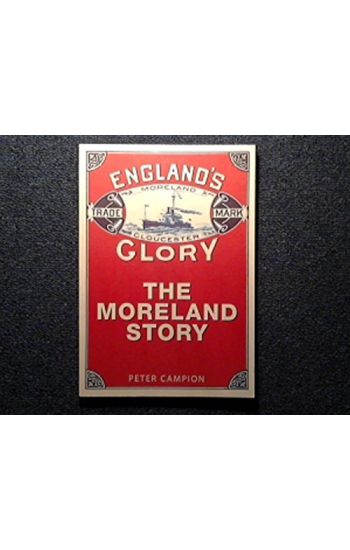
England's Glory

England's Glory

Peter Campion

The History Press Ltd
2005
nidottu
Founded in the late 1860s by SJ Moreland, a Stroud Timber merchant, the company of Moreland's began manufacture of England's Glory matches in Gloucester's Bristol Road. For almost 120 years they remained there, producing matches for consumption at home and abroad. They grew rapidly to become one of Britain's largest manufacturers of matches - equal to Swan Vesta and Bryant & May. Bought by Swedish Match, the factory closed down and is now used as a warehouse and distribution centre.
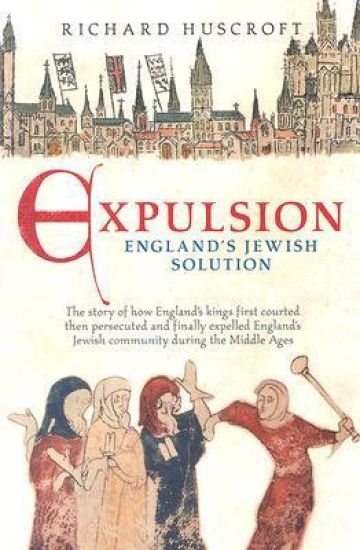
Expulsion: England's Jewish Solution

Expulsion: England's Jewish Solution

Richard Huscroft

The History Press Ltd
2006
nidottu
There were never more than a few thousand Jews in medieval England, but they were envied, hated and misunderstood because of their wealth and beliefs. In an age when expressions of religious conviction could be intense, fanatical and violent, the Jews were easy targets and vulnerable scapegoats. After just over 200 years, the Jewish communities of England were forcibly removed on the orders of Edward I, England becoming the first country to expel a Jewish minority from its borders. The Jews remained excluded for over 350 years, England was not unique in its approach to 'the Jewish problem', but it was different in the permanence of the solution it found.
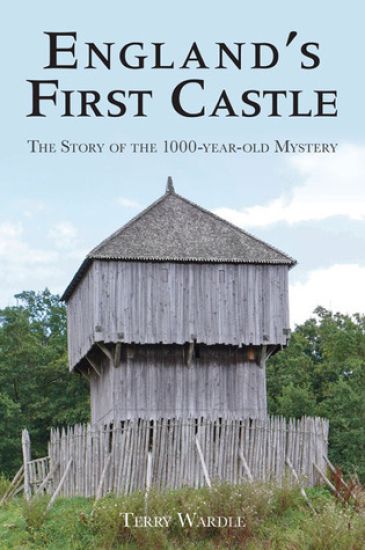
England's First Castle

England's First Castle

Terry Wardle

The History Press Ltd
2009
nidottu
In early September 1051, the Anglo-Saxon Chronicle recorded that 'the French had built a castle', the first Norman castle in England. Yet for centuries the circumstances behind the construction of this castle and its actual location have remained a mystery until now. In the first ever account of this subject, Terry Wardle looks at the history behind the building of the castle and the man who built it, the Norman soldier Osbern. The book looks at the troubled history of eleventh-century England, with the growing threat from Scandinavian raiders and the civil conflict within England between the monarchy and powerful Anglo-Saxon families, and traces the events which allowed a relatively unknown Norman soldier to snatch his place in history with the building of the first Norman castle in England, fifteen years before the Norman Conquest in 1066.
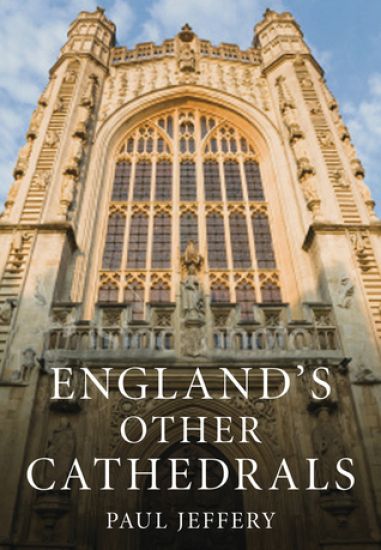
England's Other Cathedrals

England's Other Cathedrals

Paul Jeffery

The History Press Ltd
2012
sidottu
England’s great cathedrals are widely considered to be the country’s finest and most beautiful possessions. Few people realise, however, that in addition to these famous buildings there are many others that share, or once shared, some of that greatness. These ‘other cathedrals’ have very varied origins. There were cathedrals established in Anglo-Saxon times that subsequently lost that status. Further cathedrals founded after the Norman Conquest also later ceased. Henry VIII had plans to elevate many great monastic churches to cathedral status, but most were unfulfilled. From the nineteenth century onwards, many new cathedrals have been created, both by the Church of England and by other Churches. Altogether eight groups are discussed, containing in total well over a hundred buildings. Most are fine, and many are or were in their size and magnificence fully comparable with the great cathedrals themselves. Some today stand complete and glorious. Others are now mutilated or in ruin. Some have been completely destroyed, but even these may stir us by their lost glories. Paul Jeffery explores the often fascinating episodes of history that lie behind these groups of magnificent and frequently forgotten buildings. The spotlight is then turned on each one, revealing many architectural and historical treasures.
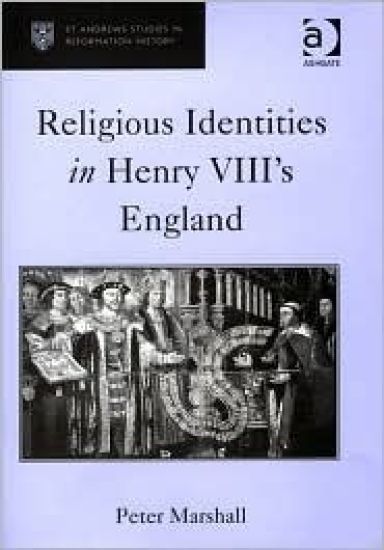
Religious Identities in Henry VIII's England

Religious Identities in Henry VIII's England

Peter Marshall

Ashgate Publishing Limited
2005
sidottu
Henry VIII's decision to declare himself supreme head of the church in England, and thereby set himself in opposition to the authority of the papacy, had momentous consequences for the country and his subjects. At a stroke people were forced to reconsider assumptions about their identity and loyalties, in rapidly shifting political and theological circumstances. Whilst many studies have investigated Catholic and Protestant identities during the reigns of Elizabeth and Mary, much less is understood about the processes of religious identity-formation during Henry's reign.
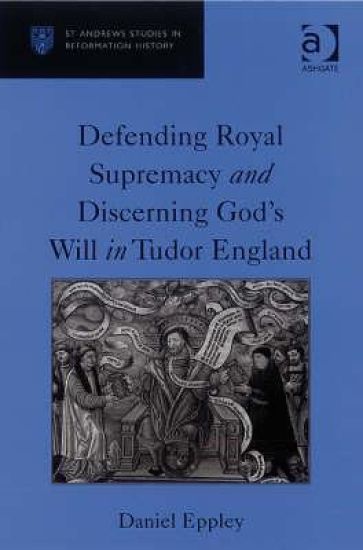
Defending Royal Supremacy and Discerning God's Will in Tudor England
Early modern governments constantly faced the challenge of reconciling their own authority with the will of God. Most acknowledged that an individual's first loyalty must be to God's law, but were understandably reluctant to allow this as an excuse to challenge their own powers where interpretations differed. As such, contemporaries gave much thought to how this potentially destabilising situation could be reconciled, preserving secular authority without compromising conscience. In this book, the particular relationship between the Tudor supremacy over the Church and the hermeneutics of discerning God's will is highlighted and explored. This topic is addressed by considering defences of the Henrician and Elizabethan royal supremacies over the English church, with particular reference to the thoughts and writings of Christopher St. German, and Richard Hooker. Both of these men were in broad agreement that it was the responsibility of English Christians to subordinate their subjective understandings of God's will to the interpretation of God's will propounded by the church authorities. St. German originally put forward the proposition that king in parliament, as the voice of the community of Christians in England, was authorized to definitively pronounce regarding God's will; and that obedience to the crown was in all circumstances commensurate with obedience to God's will. Salvation, as envisioned by St. German and Hooker, was thus not dependent upon adherence to a single true faith. Rather it was conditional upon a sincere effort to try to discern the true faith using the means that God had made available to the individual, particularly the collective wisdom of one's church speaking through its representatives. In tackling this fascinating dichotomy at the heart of early modern government, this study emphasizes an aspect of the defence of royal supremacy that has not heretofore been sufficiently appreciated by modern scholars, and invites consideration of how this aspect of hermeneutics is relevant to wider discussions relating to the nature of secular and divine authority.
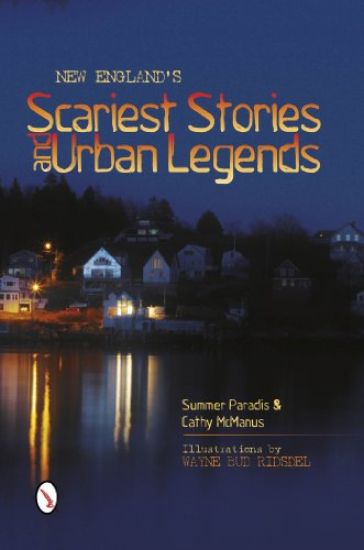
New England’s Scariest Stories and  Urban Legends

New England’s Scariest Stories and Urban Legends

Summer Paradis; Cathy McManus

Schiffer Publishing Ltd
2014
nidottu
Journey through New England’s darkest places and read 22 of its scariest stories and urban legends. Explore mysterious cryptids like the Dover Demon, Pigman, the Sea Serpent of Gloucester, the Dublin Lake Monster, and the Derry Fairy. Meet Champ, the legendary lake monster of Lake Champlain, and a fisherman who found himself thirty feet from the beast. See the grave of Midnight Mary and the Desert of Maine, and judge for yourself if their curses are real. Try to walk with the Leather Man and wonder why he chooses to walk alone. Visit The House of the Seven Gables and The Shunned House, both famous in literature, and learn of ghosts that still linger there. Cross Emily’s Bridge in Vermont, creep over the alleged vampire Mercy Brown’s grave in Rhode Island, and more. New England promises to scare you!
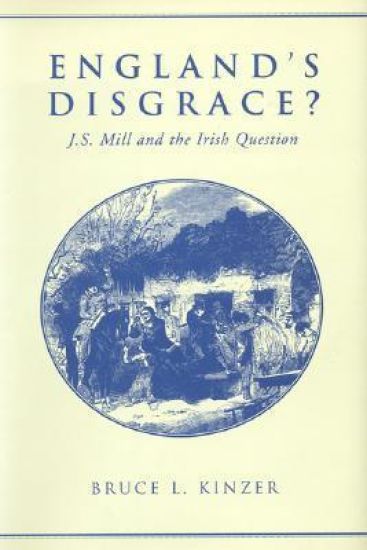
England's Disgrace

England's Disgrace

Bruce L. Kinzer

University of Toronto Press
2001
sidottu
Bruce L. Kinzer provides the first comprehensive investigation of J.S. Mill's multifaceted engagement with the Irish question. Mill, the pre-eminent thinker of his generation, sought to come to terms with the fundamental issues inherent in British-Irish politics. The Irish famine, the question of land reform, the controversy over higher education, and the various dimensions of the Fenian challenge, hallmark the landscape of Mill's more than forty years of writing on the Irish question. Kinzer's discussion of these episodes pays close attention to the ebb and flow of the issues as they touched upon the English political consciousness. Many of the factors shaping Mill's handling of the Irish question are reflective of a changing English political environment, one in which he sought to create for himself an influential place as radical critic and purposeful agent. This study argues that Mill's perspective on the Irish question, his trenchant assaults on English parochialism notwithstanding, had a decidedly Anglocentric tilt. The condition of Ireland mattered to him mainly for what it said about the condition of England.
Early Modern Nationalism and Milton's England
Although the poet John Milton was a politically active citizen and polemicist during the English Revolution, little has been written on Milton's concept of nationalism. The first book to examine major aspects of Milton's nationalism in its full complexity and diversity, Early Modern Nationalism and Milton's England features fifteen essays by leading international scholars who illuminate the significance of the nation as a powerful imaginative construct in his writings. Informed by a range of critical methods, the essays examine the diverse - sometimes conflicting - and strained expressions of nationhood and national identity in Milton's writings, to address the literary, ethnic, and civic dimensions of his nationalism. These essays enrich our understanding of the imaginative achievements, religious polemics, and political tensions of Milton's poetry and prose, as well as the impact of his writings in the later seventeenth and early eighteenth centuries. Early Modern Nationalism and Milton's England also illuminates the formation of early-modern nationalism, as well as the complexities of seventeenth-century English politics and religion.
Incest and Agency in Elizabeth's England

Incest and Agency in Elizabeth's England

Maureen Quilligan

University of Pennsylvania Press
2005
pokkari
Maureen Quilligan explores the remarkable presence in the Renaissance of what she calls "incest schemes" in the books of a small number of influential women who claimed an active female authority by writing in high canonical genres and who, even more transgressively for the time, sought publication in print. It is no accident for Quilligan that the first printed work of Elizabeth I was a translation done at age eleven of a poem by Marguerite de Navarre, in which the notion of "holy" incest is the prevailing trope. Nor is it coincidental that Mary Wroth, author of the first sonnet cycle and prose romance by a woman printed in English, described in these an endogamous, if not legally incestuous, illegitimate relationship with her first cousin. Sir Philip Sidney and his sister, the Countess of Pembroke, translated the psalms together, and after his death she finished his work by revising it for publication; the two were the subject of rumors of incest. Isabella Whitney cast one of her most important long poems as a fictive legacy to her brother, arguably because such a relationship resonated with the power of endogamous female agency. Elizabeth Carey's closet drama about Mariam, the wife of Herod, spends important energy on the tie between sister and brother. Quilligan also reads male-authored meditations on the relationship between incest and female agency and sees a far different Cordelia, Britomart, and Eve from what traditional scholarship has heretofore envisioned. Incest and Agency in Elizabeth's England makes a signal contribution to the conversation about female agency in the early modern period. While contemporary anthropological theory deeply informs her understanding of why some Renaissance women writers wrote as they did, Quilligan offers an important corrective to modern theorizing that is grounded in the historical texts themselves.
The England's Dreaming Tapes

The England's Dreaming Tapes

Jon Savage

University of Minnesota Press
2010
nidottu
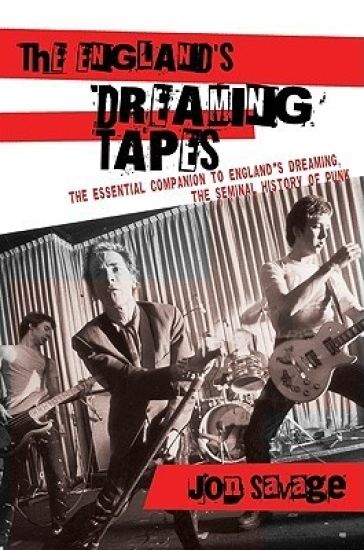
Jon Savage's 1991 book, England's Dreaming: Anarchy, Sex Pistols, Punk Rock, and Beyond, was hailed by the New York Times Book Review as "the definitive history of the English punk movement." Widely imitated but never equaled, it remains that rare work of music history that appeals to music fans, critics, and scholars alike. In researching England's Dreaming, Savage conducted hundreds of hours of interviews of which only a fraction made it into the finished book. Now, in The England's Dreaming Tapes, Savage makes available for the first time the full, uncut, sensational story behind the cultural moment that was punk.Here is the story of a generation that changed the world in just a few months in 1976, as told by the scene's major figures: all four original Sex Pistols as well as Joe Strummer, Chrissie Hynde, Jordan, Siouxsie Sioux, Viv Albertine, Adam Ant, Lee Black Childers, Howard Devoto, Pete Shelley, Syl Sylvain, Debbie Wilson, Tony Wilson, Jah Wobble, and many others. Together, they offer a sweeping history of the late 1960s and the 1970s-not just the era's music, but also its radical politics, social issues, fashion, and culture.An invaluable source of information about a movement that has become obscured by myth, these vivid, unvarnished interviews were conducted when punk was only a decade old. In many cases, this was the first time that the subjects had talked about the period. The interviews describe the founding of the Sex Pistols; 430 King's Road, site of the legendary boutique Sex, which helped establish the punk aesthetic; punk rock New York; the cultural landscapes of London and its suburbs; the writers who covered punk; and the Manchester music scene centered around Factory Records.With The England's Dreaming Tapes, Savage gives us the first and final word on the music, fashion, and attitude that defined this influential and incendiary era.
England's Secular Scripture

England's Secular Scripture

Jo Carruthers

Continuum Publishing Corporation
2011
nidottu
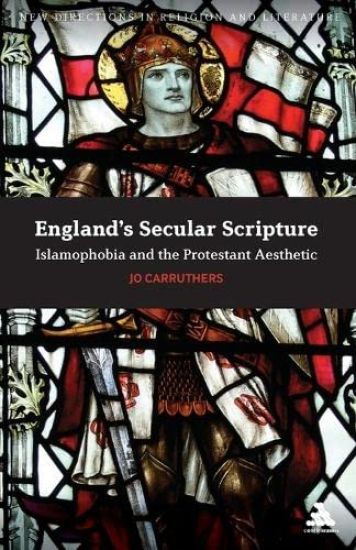
By outlining Protestantism and Englishness in early-modern literature to the present-day, this study reveals how other religious identities can be alienated in British society. "England's Secular Scripture" seeks to trace English Islamophobia to its roots in England's Protestant past, and more specifically to its aesthetic and literary rooting in Protestant values. Carruthers argues that English antagonism towards Islam lies in part in the formation of English identities in early modern Reformation Protestantism. The book traces the transposing, and secularizing, of Reformation doctrines into a 'Protestant aesthetic'; of simplicity, individualism, and rationalism in the literature of Spenser and Milton. Wordsworth, Hardy, Eliot and Orwell, among others, perpetuate this aesthetic, one that continues to shape English mythologies up to the present day. Carruthers sheds light on contemporary Islamophobia, helping us to understand that Englishness is not merely a secular identity (combating what is seen as an irrational fundamentalist identity), but one informed, paradoxically, by Protestant logic and history. This series aims to showcase new work at the forefront of religion and literature through short studies written by leading and rising scholars in the field. Books will pursue a variety of theoretical approaches as they engage with writing from different religious and literary traditions. Collectively, the series will offer a timely critical intervention to the interdisciplinary crossover between religion and literature, speaking to wider contemporary interests and mapping out new directions for the field in the early twenty-first century.
England's Secular Scripture

England's Secular Scripture

Jo Carruthers

Continuum Publishing Corporation
2011
sidottu
By outlining Protestantism and Englishness in early-modern literature to the present-day, this study reveals how other religious identities can be alienated in British society. "England's Secular Scripture" seeks to trace English Islamophobia to its roots in England's Protestant past, and more specifically to its aesthetic and literary rooting in Protestant values. Carruthers argues that English antagonism towards Islam lies in part in the formation of English identities in early modern Reformation Protestantism. The book traces the transposing, and secularizing, of Reformation doctrines into a 'Protestant aesthetic'; of simplicity, individualism, and rationalism in the literature of Spenser and Milton. Wordsworth, Hardy, Eliot and Orwell, among others, perpetuate this aesthetic, one that continues to shape English mythologies up to the present day. Carruthers sheds light on contemporary Islamophobia, helping us to understand that Englishness is not merely a secular identity (combating what is seen as an irrational fundamentalist identity), but one informed, paradoxically, by Protestant logic and history. This series aims to showcase new work at the forefront of religion and literature through short studies written by leading and rising scholars in the field. Books will pursue a variety of theoretical approaches as they engage with writing from different religious and literary traditions. Collectively, the series will offer a timely critical intervention to the interdisciplinary crossover between religion and literature, speaking to wider contemporary interests and mapping out new directions for the field in the early twenty-first century.