Kirjojen hintavertailu. Mukana 11 244 527 kirjaa ja 12 kauppaa.

Kirjahaku

Etsi kirjoja tekijän nimen, kirjan nimen tai ISBN:n perusteella.

1000 tulosta hakusanalla Seth a. Graham

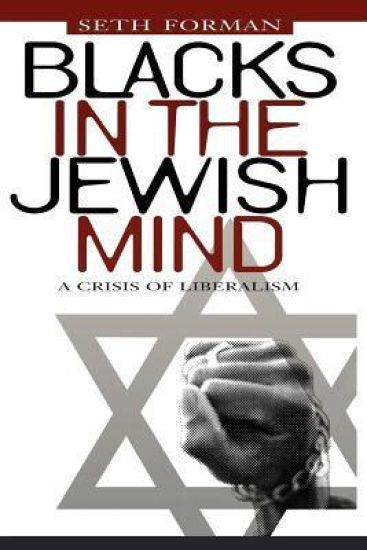
Blacks in the Jewish Mind

Blacks in the Jewish Mind

Seth Forman

New York University Press
2000
pokkari
Since the 1960s the relationship between Blacks and Jews has been a contentious one. While others have attempted to explain or repair the break-up of the Jewish alliance on civil rights, Seth Forman here sets out to determine what Jewish thinking on the subject of Black Americans reveals about Jewish identity in the U.S. Why did American Jews get involved in Black causes in the first place? What did they have to gain from it? And what does that tell us about American Jews? In an extremely provocative analysis, Forman argues that the commitment of American Jews to liberalism, and their historic definition of themselves as victims, has caused them to behave in ways that were defined as good for Blacks, but which in essence were contrary to Jewish interests. They have not been able to dissociate their needs--religious, spiritual, communal, political--from those of African Americans, and have therefore acted in ways which have threatened their own cultural vitality. Avoiding the focus on Black victimization and white racism that often infuses work on Blacks and Jews, Forman emphasizes the complexities inherent in one distinct white ethnic group's involvement in America's racial dilemma.
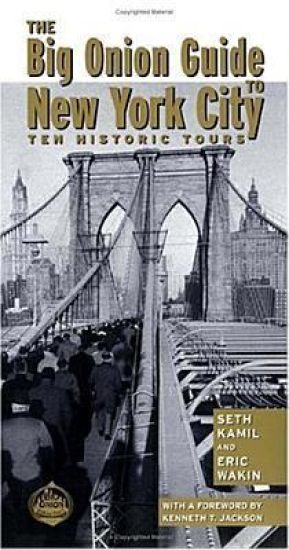
The Big Onion Guide to New York City

The Big Onion Guide to New York City

Seth I. Kamil; Eric Wakin; Kenneth Jackson

New York University Press
2002
pokkari
A guide to a variety of witty, informative walking tours in New York City Whether you're a tourist or a native New Yorker, you will appreciate this witty, informative walking guide to New York City, as authors Seth Kamil and Eric Wakin peel back the layers of New York's most popular neighborhoods. Here in one volume are their award-winning tours. In their "Immigrant New York" tour you can take a walk on the Bowery, the most infamous street in the city and learn how the city's finest roadway became America's "Skid Row." In "Before Stonewall" you'll discover the many facets of gay and lesbian history and trace the development of Greenwich Village as a cultural mecca. From SoHo to the Upper West Side; from Harlem to Brooklyn there's something in The Big Onion Guide for everyone. The authors show how it was nothing new when Mayor Giuliani was unable to ban sales by immigrant mobile food vendors. The Guide takes us to the place where the Dutch tried to ban street side sales by Scottish peddlers 350 years ago, and where the great Fiorello La Guardia banned most of the pushcart salesmen at midcentury. But Kamil and Wakin are not nostalgists or preservationists. Instead, their historical tours connect today's city with the snapshots of yesterday, blending social and cultural history with the evolution of different ethnic and cultural communities. The Big Onion Guide includes ten walking tours, plus a 5-borough driving tour, peppered with informative sidebars, illustrations, and photos from the collection at the New-York Historical Society. Visit the Big Onion Guide to New York City site at www.nyupress.org/bigonion
The Big Onion Guide to Brooklyn

The Big Onion Guide to Brooklyn

Seth I. Kamil; Eric Wakin; Kevin Baker

New York University Press
2005
pokkari
The Big Onion Guide to Brooklyn is an entertaining and informative walking guide to the historic people and places of Brooklyn. Ten fascinating, fact-filled walks are featured, inviting the reader to take an intimate tour through Brooklyn's important historic sites, neighborhoods, cultural institutions, and shops. From the iconic brownstones of Brooklyn Heights to the famous piers on Coney Island, this book covers all of Brooklyn's notable terrain, plus many of the not-so-well known treasures of New York's much beloved borough. Beautifully illustrated with over fifty photographs and complete with maps and easy-to-follow directions, all peppered with informative side-bars and fascinating tales of Brooklyn lore. Over two-and-a-half million New Yorkers call historic and vibrant Brooklyn home and thousands more are drawn to this borough every day. Whether you're new in town or a native New Yorker exploring Brooklyn for the day, this exceptional walking guide to the historic people and places of Brooklyn is essential reading. The Big Onion Guide to Brooklyn offers you a chance to explore: Downtown Brooklyn and Brooklyn Heights: Take a walk through the oldest urban section of Brooklyn with more than 600 Antebellum homes. Coney Island: Frolic in Brooklyn's playground, the great "Sodom by the Sea."Prospect Park: Stroll over intricate bridges, past the boathouse, sculptures and monuments of Brooklyn's emerald jewel.Williamsburg: Explore this ever-changing neighborhood that is Italian, Latino, Hassidic, and Hipster all at once.Park Slope: Discover one of the best loved residential neighborhoods in Brooklyn, the "ninteenth-century suburb on the subway."Green-Wood Cemetery: Learn about famous Brooklynites buried within this historic garden cemetery.
Guided by the Spirits

Guided by the Spirits

Seth Allard

CRC Press Inc
2018
sidottu
Guided by the Spirits is a case study of youth suicide in the Sault Sainte Marie Tribe of Chippewa Indians. Written by a member of the tribal community, this study focuses on qualitative methods, indigenous experience, and collaborative approaches to explore the social and historical significance of youth suicide in an Ojibwa community. Guided by the Spirits combines traditional methods of analysis, extracts of interviews and field notes, and creative ethnographic writing to present the relationships between culture, history, identity, agency, and youth suicide. This book is a must read for lay readers, policy makers, and researchers who seek a window into contemporary Native American life as well as a critical interpretation of youth suicide in indigenous societies.
The Deadly Politics of Giving

The Deadly Politics of Giving

Seth Mallios

The University of Alabama Press
2006
nidottu
With a focus on indigenous cultural systems and agency theory, this volume analyzes Contact Period relations between North American Middle Atlantic Algonquian Indians and the Spanish Jesuits at Ajacan (1570-72) and English settlers at Roanoke Island (1584-90) and Jamestown Island (1607-12). It is an anthropological and ethnohistorical study of how European violations of Algonquian gift-exchange systems led to intercultural strife during the late 1500s and early 1600s, destroying Ajacan and Roanoke, and nearly destroying Jamestown.
BAX 2020

BAX 2020

Seth Abramson; Jesse Damiani

Wesleyan University Press
2021
nidottu
from Okazaki Fragments by Kanika Agrawal These proceedings in nature These proceedings in cold biology These proceedings in chemical society These proceedings in physical communication We refer to the concentration of residues We observe that one sediments faster than the other We presume as fact that most of what we do is in growing incomplete short chains We further support the conclusion We indicate direction also by another method We are grateful to Drs. BAX 2020, guest-edited by Joyelle McSweeney and Carmen Maria Machado, is the sixth edition of the critically acclaimed anthology series compiling an exciting mix of fiction, poetry, non-fiction, and genre-defying work. Featuring a diverse roster of new and established authors - including Anne Boyer, Alice Notley, and Raquel Salas Rivera - BAX 2020 presents an expansive view of high-energy writing.
Here, George Washington Was Born

Here, George Washington Was Born

Seth C. Bruggeman

University of Georgia Press
2008
pokkari
In Here, George Washington Was Born, Seth C. Bruggeman examines the history of commemoration in the United States by focusing on the George Washington Birthplace National Monument in Virginia's Northern Neck, where contests of public memory have unfolded with particular vigor for nearly eighty years.Washington left the birthplace with his family at a young age and rarely returned. The house burned in 1779 and would likely have passed from memory but for George Washington Parke Custis, who erected a stone marker on the site in 1815, creating the first birthplace monument in America. Both Virginia and the U.S. War Department later commemorated the site, but neither matched the work of a Virginia ladies association that in 1923 resolved to build a replica of the home. The National Park Service permitted construction of the "replica house" until a shocking archeological discovery sparked protracted battles between the two organizations over the building's appearance, purpose, and claims to historical authenticity.Bruggeman sifts through years of correspondence, superintendent logs, and other park records to reconstruct delicate negotiations of power among a host of often unexpected claimants on Washington's memory. By paying close attention to costumes, furnishings, and other material culture, he reveals the centrality of race and gender in the construction of Washington's public memory and reminds us that national parks have not always welcomed all Americans. What's more, Bruggeman offers the story of Washington's birthplace as a cautionary tale about the perils and possibilities of public history by asking why we care about famous birthplaces at all.
Indigenous Struggle at the Heart of Brazil

Indigenous Struggle at the Heart of Brazil

Seth Garfield

Duke University Press
2001
sidottu
Indigenous Struggle at the Heart of Brazil examines the dynamic interplay between the Brazilian government and the Xavante Indians of central Brazil in the context of twentieth-century western frontier expansion and the state’s indigenous policy. Offering a window onto Brazilian developmental policy in Amazonia and the subsequent process of indigenous political mobilization, Seth Garfield bridges historical and anthropological approaches to reconsider state formation and ethnic identity in twentieth-century Brazil.Garfield explains how state officials, eager to promote capital accumulation, social harmony, and national security on the western front, sought to delimit indigenous reserves and assimilate native peoples. Yet he also shows that state efforts to celebrate Indians as primordial Brazilians and nationalist icons simultaneously served to underscore and redefine ethnic difference. Garfield explores how various other social actors-elites, missionaries, military officials, intellectuals, international critics, and the Indians themselves-strove to remold this multifaceted project. Paying particular attention to the Xavante’s methods of engaging state power after experience with exile, territorial loss, and violence in the “white” world, Garfield describes how they emerged under military rule not as the patriotic Brazilians heralded by state propagandists but as a highly politicized ethnic group clamoring for its constitutional land rights and social entitlements. Indigenous Struggle at the Heart of Brazil will interest not only historians and anthropologists but also those studying nationbuilding, Brazil, Latin America, comparative frontiers, race, and ethnicity.
Indigenous Struggle at the Heart of Brazil

Indigenous Struggle at the Heart of Brazil

Seth Garfield

Duke University Press
2001
pokkari
Indigenous Struggle at the Heart of Brazil examines the dynamic interplay between the Brazilian government and the Xavante Indians of central Brazil in the context of twentieth-century western frontier expansion and the state’s indigenous policy. Offering a window onto Brazilian developmental policy in Amazonia and the subsequent process of indigenous political mobilization, Seth Garfield bridges historical and anthropological approaches to reconsider state formation and ethnic identity in twentieth-century Brazil.Garfield explains how state officials, eager to promote capital accumulation, social harmony, and national security on the western front, sought to delimit indigenous reserves and assimilate native peoples. Yet he also shows that state efforts to celebrate Indians as primordial Brazilians and nationalist icons simultaneously served to underscore and redefine ethnic difference. Garfield explores how various other social actors-elites, missionaries, military officials, intellectuals, international critics, and the Indians themselves-strove to remold this multifaceted project. Paying particular attention to the Xavante’s methods of engaging state power after experience with exile, territorial loss, and violence in the “white” world, Garfield describes how they emerged under military rule not as the patriotic Brazilians heralded by state propagandists but as a highly politicized ethnic group clamoring for its constitutional land rights and social entitlements. Indigenous Struggle at the Heart of Brazil will interest not only historians and anthropologists but also those studying nationbuilding, Brazil, Latin America, comparative frontiers, race, and ethnicity.
America's Miracle Man in Vietnam

America's Miracle Man in Vietnam

Seth Jacobs

Duke University Press
2005
sidottu
America’s Miracle Man in Vietnam rethinks the motivations behind one of the most ruinous foreign-policy decisions of the postwar era: America’s commitment to preserve an independent South Vietnam under the premiership of Ngo Dinh Diem. The so-called Diem experiment is usually ascribed to U.S. anticommunism and an absence of other candidates for South Vietnam’s highest office. Challenging those explanations, Seth Jacobs utilizes religion and race as categories of analysis to argue that the alliance with Diem cannot be understood apart from America’s mid-century religious revival and policymakers’ perceptions of Asians. Jacobs contends that Diem’s Catholicism and the extent to which he violated American notions of “Oriental” passivity and moral laxity made him a more attractive ally to Washington than many non-Christian South Vietnamese with greater administrative experience and popular support. A diplomatic and cultural history, America’s Miracle Man in Vietnam draws on government archives, presidential libraries, private papers, novels, newspapers, magazines, movies, and television and radio broadcasts. Jacobs shows in detail how, in the 1950s, U.S. policymakers conceived of Cold War anticommunism as a crusade in which Americans needed to combine with fellow Judeo-Christians against an adversary dangerous as much for its atheism as for its military might. He describes how racist assumptions that Asians were culturally unready for democratic self-government predisposed Americans to excuse Diem’s dictatorship as necessary in “the Orient.” By focusing attention on the role of American religious and racial ideologies, Jacobs makes a crucial contribution to our understanding of the disastrous commitment of the United States to “sink or swim with Ngo Dinh Diem.”
America's Miracle Man in Vietnam

America's Miracle Man in Vietnam

Seth Jacobs

Duke University Press
2005
pokkari
America’s Miracle Man in Vietnam rethinks the motivations behind one of the most ruinous foreign-policy decisions of the postwar era: America’s commitment to preserve an independent South Vietnam under the premiership of Ngo Dinh Diem. The so-called Diem experiment is usually ascribed to U.S. anticommunism and an absence of other candidates for South Vietnam’s highest office. Challenging those explanations, Seth Jacobs utilizes religion and race as categories of analysis to argue that the alliance with Diem cannot be understood apart from America’s mid-century religious revival and policymakers’ perceptions of Asians. Jacobs contends that Diem’s Catholicism and the extent to which he violated American notions of “Oriental” passivity and moral laxity made him a more attractive ally to Washington than many non-Christian South Vietnamese with greater administrative experience and popular support. A diplomatic and cultural history, America’s Miracle Man in Vietnam draws on government archives, presidential libraries, private papers, novels, newspapers, magazines, movies, and television and radio broadcasts. Jacobs shows in detail how, in the 1950s, U.S. policymakers conceived of Cold War anticommunism as a crusade in which Americans needed to combine with fellow Judeo-Christians against an adversary dangerous as much for its atheism as for its military might. He describes how racist assumptions that Asians were culturally unready for democratic self-government predisposed Americans to excuse Diem’s dictatorship as necessary in “the Orient.” By focusing attention on the role of American religious and racial ideologies, Jacobs makes a crucial contribution to our understanding of the disastrous commitment of the United States to “sink or swim with Ngo Dinh Diem.”
In Search of the Amazon

In Search of the Amazon

Seth Garfield

Duke University Press
2013
sidottu
Chronicling the dramatic history of the Brazilian Amazon during the Second World War, Seth Garfield provides fresh perspectives on contemporary environmental debates. His multifaceted analysis explains how the Amazon became the object of geopolitical rivalries, state planning, media coverage, popular fascination, and social conflict. In need of rubber, a vital war material, the United States spent millions of dollars to revive the Amazon's rubber trade. In the name of development and national security, Brazilian officials implemented public programs to engineer the hinterland's transformation. Migrants from Brazil's drought-stricken Northeast flocked to the Amazon in search of work. In defense of traditional ways of life, longtime Amazon residents sought to temper outside intervention. Garfield's environmental history offers an integrated analysis of the struggles among distinct social groups over resources and power in the Amazon, as well as the repercussions of those wartime conflicts in the decades to come.
In Search of the Amazon

In Search of the Amazon

Seth Garfield

Duke University Press
2013
pokkari
Chronicling the dramatic history of the Brazilian Amazon during the Second World War, Seth Garfield provides fresh perspectives on contemporary environmental debates. His multifaceted analysis explains how the Amazon became the object of geopolitical rivalries, state planning, media coverage, popular fascination, and social conflict. In need of rubber, a vital war material, the United States spent millions of dollars to revive the Amazon's rubber trade. In the name of development and national security, Brazilian officials implemented public programs to engineer the hinterland's transformation. Migrants from Brazil's drought-stricken Northeast flocked to the Amazon in search of work. In defense of traditional ways of life, longtime Amazon residents sought to temper outside intervention. Garfield's environmental history offers an integrated analysis of the struggles among distinct social groups over resources and power in the Amazon, as well as the repercussions of those wartime conflicts in the decades to come.
The Dysfunctional Workplace

The Dysfunctional Workplace

Seth Allcorn; Howard F. Stein

University of Missouri Press
2016
sidottu
This book explores an aspect of organizational life that is at times difficult to acknowledge and often painful to recall. Stories invite reflection and the development of greater understanding of organizational dynamics. This fresh scholarship provides a theoretical framework for discussion.Throughout this book, Allcorn and Steinutilize a psychoanalytically informed perspective to help readers understand why a leader, colleague, or friend behaves in ways that are destructive to others and the organization and provide a basis for organizations to survive and thrive in a dysfunctional workplace.
In the Blink of an Ear

In the Blink of an Ear

Seth Kim-Cohen

Continuum International Publishing Group Ltd.
2009
nidottu
"Eyes in Ears: Art in Music / Music in Art since 1948" traces the interactions and mutual influences of art and music over the past sixty years. It presents a narrative of late-Modern/Postmodern artistic practice, connecting familiar events, figures and works to less-familiar precedents and antecedents from within their own fields and from across the aisle. What do Pierre Schaeffer's initial experiments in musique concrete, John Cage's first proposal for a 'silent' piece ("Silent Prayer"), and what many music historians consider to be the first rock and roll song: the Orioles' "It's Too Soon to Know" all have in common? A year of pivotal importance - 1948. "Eyes in Ears: Art in Music / Music in Art since 1948" traces the interactions and mutual influences of art and music over the past sixty years. It presents a narrative of late-Modern/Postmodern artistic practice, connecting familiar events, figures and works to less-familiar precedents and antecedents from within their own fields and from across the aisle. Surprisingly, there is no extant book which covers the confluence of the art and music world. "Eyes in Ears" will both document the ways in which music and the gallery arts have infiltrated each others' domains and will theorize the implications of these incursions. Finally, based on the interactions of art and music over the past sixty years, the book will provide an account of the birth of sound art as a distinct practice.
Securing Tyrants or Fostering Reform?

Securing Tyrants or Fostering Reform?

Seth G Jones; Olga Oliker; Peter Chalk; Christine Fair; Rollie Lal

RAND
2006
pokkari
This study examines the results of U.S. assistance to the internal security forces of four repressive states: El Salvador, Uzbekistan, Afghanistan, and Pakistan. Efforts to improve the security, human rights, and accountability of security forces appear more likely to succeed in states transitioning from repressive to democratic systems. In addition, several factors are critical for success: the duration of assistance, viability of the justice system, and support and buy-in from the local government (including key ministries).
Counterinsurgency in Afghanistan
This study explores the nature of the insurgency in Afghanistan, the key challenges and successes of the campaign, and the capabilities necessary to wage effective counterinsurgency operations. It argues that successful counterinsurgency requires effective indigenous security forces, especially police; a viable and legitimate local government; and the suppression of external support for insurgents.An examination of the U.S.-led campaign in Afghanistan illustrates that successful counterinsurgency requires effective indigenous security forces, especially police; a viable local government; and the suppression of external support for insurgents.
How Terrorist Groups End

How Terrorist Groups End

Seth G. Jones; Martin C. Libicki

RAND
2008
pokkari
All terrorist groups eventually end. But how? Most modern groups have ended because they joined the political process or local police and intelligence agencies arrested or killed key members. This has significant implications for dealing with al Qa'ida and suggests fundamentally rethinking post-9/11 U.S. counterterrorism strategy: Policing and intelligence, not military force, should form the backbone of U.S. efforts against al Qa'ida.All terrorist groups end. But how do they end? Most groups since 1968 have ended because they joined the political process or are defeated by police and intelligence services. This has significant implications for countering al Qa'ida.
Counterinsurgency in Pakistan

Counterinsurgency in Pakistan

Seth G. Jones; C. Christine Fair

RAND
2010
pokkari
Since 2001, Pakistan has undertaken a number of operations against militant groups, including al Qa'ida, that directly affect U.S. national security. Despite some successes, militant groups continue to present a significant threat to Pakistan, the United States, and a range of other countries. Pakistan will not be able to deal with the militant threat over the long run unless it does a more effective job of addressing the root causes of the crisis and makes security of the civilian population, rather than destroying the enemy, its top counter insurgency priority. In addition, Pakistan needs to abandon militancy as a tool of its foreign and domestic policy; it sends a confusing message internally and has a large potential to backfire.