Kirjojen hintavertailu. Mukana 12 390 323 kirjaa ja 12 kauppaa.

Kirjahaku

Etsi kirjoja tekijän nimen, kirjan nimen tai ISBN:n perusteella.

1000 tulosta hakusanalla Ted Jackson

Engineering Economy: Applying Theory to Practice

Engineering Economy: Applying Theory to Practice

Ted Eschenbach

Oxford University Press, USA
2010
sidottu
Now in its third edition, Ted G. Eschenbach's Engineering Economy: Applying Theory to Practice continues to solidify its reputation as one of the most innovative, authoritative, and reliable texts in Engineering Economics. It provides the tools and concepts--including cost estimating, sensitivity analysis, probability, and multiple objectives--that are necessary to successfully apply engineering economy in industry practice outside of the classroom. Designed to emphasize the strengths of traditional factors and of spreadsheet coverage, Engineering Economy: Applying Theory to Practice, Third Edition, is an ideal text for undergraduate and beginning graduate-level Engineering Economy courses.
Reconstructing the Cold War

Reconstructing the Cold War

Ted Hopf

Oxford University Press Inc
2012
sidottu
General answers are hard to imagine for the many puzzling questions that are raised by Soviet relations with the world in the early years of the Cold War. Why was Moscow more frightened by the Marshall Plan than the Truman Doctrine? Why would the Soviet Union abandon its closest socialist ally, Yugoslavia, just when the Cold War was getting under way? How could Khrushchev's de-Stalinized domestic and foreign policies at first cause a warming of relations with China, and then lead to the loss of its most important strategic ally? What can explain Stalin's failure to ally with the leaders of the decolonizing world against imperialism and Khrushchev's enthusiastic embrace of these leaders as anti-imperialist at a time of the first detente of the Cold War? It would seem that only idiosyncratic explanations could be offered for these seemingly incoherent policy outcomes. Or, at best, they could be explained by the personalities of Stalin and Khrushchev as leaders. The latter, although plausible, is incorrect. In fact, the most Stalinist of Soviet leaders, the secret police chief and sociopath, Lavrentii Beria, was the most enthusiastic proponent of a de-Stalinized foreign and domestic policies after Stalin's death in March 1953. Ted Hopf argues, instead, that it was Soviet identity that explains these anomalies. During Stalin's rule, a discourse of danger prevailed in Soviet society, where any deviations from the idealized version of the New Soviet Man, were understood as threatening the very survival of the Soviet project itself. But the discourse of danger did not go unchallenged. Even under the rule of Stalin, Soviet society understood a socialist Soviet Union as a more secure, diverse, and socially democratic place. This discourse of difference, with its broader conception of what the socialist project meant, and who could contribute to it, was empowered after Stalin's death, first by Beria, then by Malenkov, and then by Khrushchev, and the rest of the post-Stalin Soviet leadership. This discourse of difference allowed for the de-Stalinization of Eastern Europe, with the consequent revolts in Poland and Hungary, a rapprochement with Tito's Yugoslavia, and an initial warming of relations with China. But it also sowed the seeds of the split with China, as the latter moved in the very Stalinist direction at home just rejected by Moscow. And, contrary to conventional and scholarly wisdom, a moderation of authoritarianism at home, a product of the discourse of difference, did not lead to a moderation of Soviet foreign policy abroad. Instead, it led to the opening of an entirely new, and bloody, front in the decolonizing world. In sum, this book argues for paying attention to how societies understand themselves, even in the most repressive of regimes. Who knows, their ideas about national identity, might come to power sometime, as was the case in Iran in 1979, and throughout the Arab world today.
The Life of David Lack

The Life of David Lack

Ted Anderson

Oxford University Press Inc
2013
sidottu
Most people who have taken a biology course in the past 50 years are familiar with the work of David Lack, but few remember his name. Almost all general biology texts produced during that period have a figure showing the beak size differences among the finches of the Galapagos Islands from Lack's 1947 classic, Darwin's Finches. Lack's pioneering conclusions in Darwin's Finches mark the beginning of a new scientific discipline, evolutionary ecology. Tim Birkhead, in his acclaimed book, The Wisdom of Birds, calls Lack the 'hero of modern ornithology.' Who was this influential, yet relatively unknown man? The Life of David Lack, Father of Evolutionary Ecology provides an answer to that question based on Ted Anderson's personal interviews with colleagues, family members and former students as well as material in the extensive Lack Archive at Oxford University.
America's Snake

America's Snake

Ted Levin

University of Chicago Press
2016
sidottu
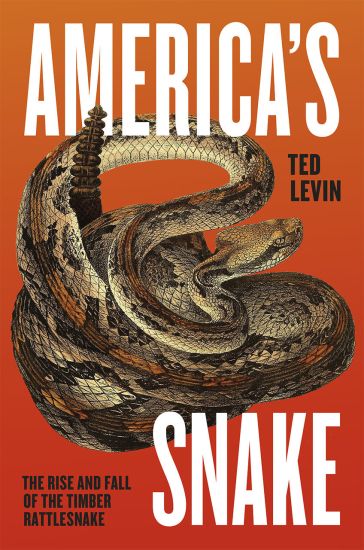
There’s no sound quite like it, or as viscerally terrifying: the ominous rattle of the timber rattlesnake. It’s a chilling shorthand for imminent danger, and a reminder of the countless ways that nature can suddenly snuff us out. Yet most of us have never seen a timber rattler. Though they’re found in thirty-one states, and near many major cities, in contemporary America timber rattlesnakes are creatures mostly of imagination and innate fear. Ted Levin aims to change that with America’s Snake, a portrait of the timber rattlesnake, its place in America’s pantheon of creatures and in our own frontier history—and of the heroic efforts to protect it against habitat loss, climate change, and the human tendency to kill what we fear. Taking us from labs where the secrets of the snake’s evolutionary history are being unlocked to far-flung habitats whose locations are fiercely protected by biologists and dedicated amateur herpetologists alike, Levin paints a picture of a fascinating creature: peaceable, social, long-lived, and, despite our phobias, not inclined to bite. The timber rattler emerges here as emblematic of America and also, unfortunately, of the complicated, painful struggles involved in protecting and preserving the natural world. A wonderful mix of natural history, travel writing, and exemplary journalism, America’s Snake is loaded with remarkable characters—none more so than the snake at its heart: frightening, perhaps; endangered, certainly; and unquestionably unforgettable.
Campaigning for Hearts and Minds

Campaigning for Hearts and Minds

Ted Brader

University of Chicago Press
2006
nidottu
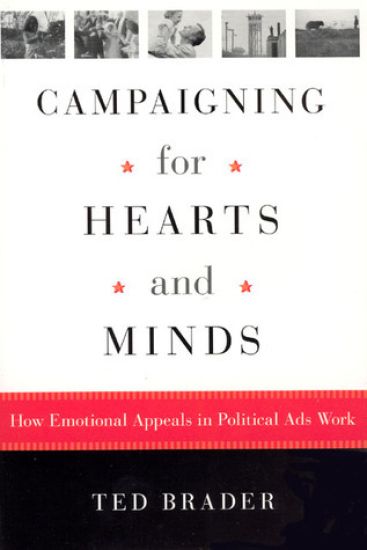
It is common knowledge that televised political ads are meant to appeal to voters' emotions, yet little is known about how or if these tactics actually work. Ted Brader's innovative book is the first scientific study to examine the effects that these emotional appeals in political advertising have on voter decision-making. At the heart of this book are ingenious experiments, conducted by Brader during an election, with truly eye-opening results that upset conventional wisdom. They show, for example, that simply changing the music or imagery of ads while retaining the same text provokes completely different responses. He reveals that politically informed citizens are more easily manipulated by emotional appeals than less-involved citizens and that positive "enthusiasm ads" are in fact more polarizing than negative "fear ads." Black-and-white video images are ten times more likely to signal an appeal to fear or anger than one to enthusiasm or pride, and the emotional appeal triumphs over the logical appeal in nearly three-quarters of all political ads. Brader backs up these surprising findings with an unprecedented survey of emotional appeals in contemporary political campaigns. Politicians do set out to campaign for the hearts and minds of voters, and, for better or for worse, it is primarily through hearts that minds are won. "Campaigning for Hearts and Minds" will be indispensable for anyone wishing to understand how American politics is influenced by advertising today.
The Great Latke-hamantash Debate

The Great Latke-hamantash Debate

Ted Cohen

University of Chicago Press
2006
nidottu
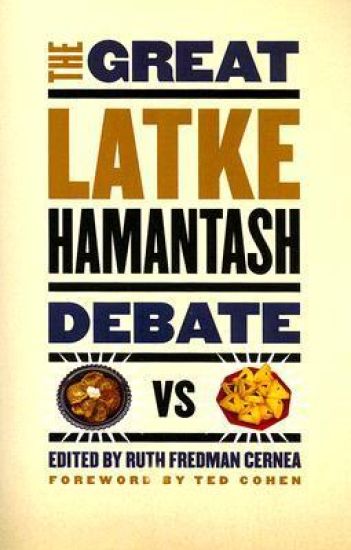
Creation versus evolution. Nature versus nurture. Free will versus determinism. Every November at the University of Chicago, the best minds in the world consider the question that ranks with these as one of the most enduring of human history: latke or hamantash? This great latke-hamantash debate, occurring every year for the past six decades, brings Nobel laureates, university presidents, and notable scholars together to debate whether the potato pancake or the triangular Purim pastry is in fact the worthier food. What began as an informal gathering is now an institution that has been replicated on campuses nationwide. Highly absurd yet deeply serious, the annual debate is anopportunity for both ethnic celebration and academic farce. In poetry, essays, jokes, and revisionist histories, members of elite American academies attack the latke-versus-hamantash question with intellectual panache and an unerring sense of humor, if not chutzpah. The Great Latke-Hamantash Debate is the first collection of the best of these performances, from Martha Nussbaum's paean to both foods—in the style of Hecuba's Lament—to Nobel laureate Leon Lederman's proclamation on the union of the celebrated dyad. The latke and the hamantash are here revealed as playing a critical role in everything from Chinese history to the Renaissance, the works of Jane Austen to constitutional law. Philosopher and humorist Ted Cohen supplies a wry foreword, while anthropologist Ruth Fredman Cernea provides historical and social context as well as an overview of the Jewish holidays, latke and hamantash recipes, and a glossary of Yiddish and Hebrew terms, making the book accessible even to the uninitiated. The University of Chicago may have split the atom in 1942, but it's still working on the equally significant issue of the latke versus the hamantash. “As if we didn’t have enough on our plates, here’s something new to argue about. . . . To have to pick between sweet and savory, round and triangular, latke and hamantash. How to choose? . . . Thank goodness one of our great universities—Chicago, no less—is on the case. For more than 60 years, it has staged an annual latke-hamantash debate. . . . So, is this book funny? Of course it’s funny, even laugh-out-loud funny. It’s Mickey Katz in academic drag, Borscht Belt with a PhD.”—David Kaufmann, Forward
Jokes

Jokes

Ted Cohen

University of Chicago Press
2001
nidottu
A book of jokes and a book about them. Ted Cohen loves a good laugh, but as a philosopher, he is also interested in how jokes work, why they work and when they don't. The delight at the end of a joke is the result of a complex set of conditions and processes, and Cohen takes us through these conditions in a philosophical exploration of humour. He considers questions of audience, selection of joke topics, the ethnic character of jokes and their morality, all with plenty of examples that should make the reader either chuckle or wince.
Immersion – A Writer`s Guide to Going Deep

Immersion – A Writer`s Guide to Going Deep

Ted Conover

University of Chicago Press
2016
nidottu
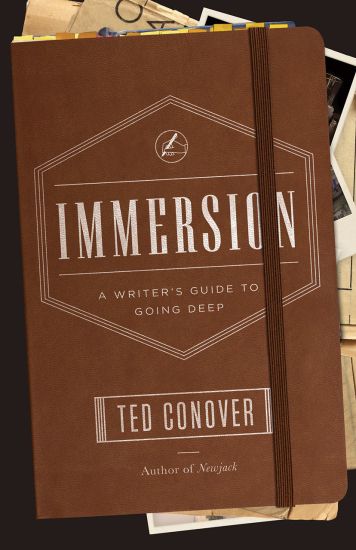
Over three and a half decades, Ted Conover has ridden the rails with hoboes, crossed the border with Mexican immigrants, guarded prisoners in Sing Sing, and inspected meat for the USDA. His books and articles chronicling these experiences, including the award-winning Newjack: Guarding Sing Sing, have made him one of the premier practitioners of immersion reporting. In immersion reporting a literary cousin to ethnography, travel writing, and memoir the writer fully steps into a new world or culture, participating in its trials, rites, and rituals as a member of the group. The end results of these firsthand experiences are familiar to us from bestsellers such as Nickel and Dimed and Behind the Beautiful Forevers. But in a world of wary strangers, where does one begin? Conover distills decades of knowledge into an accessible resource aimed at writers of all levels. He covers how to "get into" a community, how to conduct oneself once inside, and how to shape and structure the stories that emerge. Conover is also forthright about the ethics and consequences of immersion reporting, preparing writers for the surprises that often surface when their piece becomes public. Throughout, Conover shares anecdotes from his own experiences as well as from other well-known writers in this genre, including Alex Kotlowitz, Anne Fadiman, and Sebastian Junger. It's a deep-in-the-trenches book that all aspiring immersion writers should have in hand as they take that first leap into another world.
Planet of Microbes – The Perils and Potential of Earth`s Essential Life Forms
We live in a time of unprecedented scientific knowledge about the origins of life on Earth. But if we want to grasp the big picture, we have to start small very small. That's because the real heroes of the story of life on Earth are microbes, the tiny living organisms we cannot see with the naked eye. Microbes were Earth's first lifeforms, early anaerobic inhabitants that created the air we breathe. Today they live, invisible and seemingly invincible, in every corner of the planet, from Yellowstone's scalding hot springs to Antarctic mountaintops to inside our very bodies more than a hundred trillion of them. Don't be alarmed though: many microbes are allies in achieving our to say nothing of our planet's health. In Planet of Microbes, Ted Anton takes readers through the most recent discoveries about microbes, revealing their unexpected potential to reshape the future of the planet. For years, we knew little about these invisible invaders, considering them as little more than our enemies in our fight against infectious disease. But the more we learn about microbes, the more it's become clear that our very lives depend on them. They may also hold the answers to some of science's most pressing problems, including how to combat a warming planet, clean up the environment, and help the body fight off a wide variety of diseases. Anton has spent years interviewing and working with the determined scientists who hope to harness the work of microbes, and he breaks down the science while also sharing incredible behind-the-scenes stories of the research taking place everywhere from microbreweries to Mars. The world's tiniest organisms were here more than three billion years before us. We live in their world, and Planet of Microbes at last gives these unsung heroes the recognition they deserve.
Serious Larks

Serious Larks

Ted Cohen

University of Chicago Press
2018
sidottu
Ted Cohen was an original and captivating essayist known for his inquisitive intelligence, wit, charm, and a deeply humane feel for life. For Cohen, writing was a way of discovering, and also celebrating, the depth and complexity of things overlooked by most professional philosophers and aestheticians—but not by most people. Whether writing about the rules of baseball, of driving, or of Kant’s Third Critique; about Hitchcock, ceramics, or jokes, Cohen proved that if you study the world with a bemused but honest attentiveness, you can find something to philosophize about more or less anywhere. This collection, edited and introduced by philosopher Daniel Herwitz, brings together some of Cohen’s best work to capture the unique style that made Cohen one of the most beloved philosophers of his generation. Among the perceptive, engaging, and laugh-out-loud funny reflections on movies, sports, art, language, and life included here are Cohen’s classic papers on metaphor and his Pushcart Prize–winning essay on baseball, as well as memoir, fiction, and even poetry. Full of free-spirited inventiveness, these Serious Larks would be equally at home outside Thoreau’s cabin on the waters of Walden Pond as they are here, proving that intelligence, sensitivity, and good humor can be found in philosophical writing after all.
Serious Larks

Serious Larks

Ted Cohen

University of Chicago Press
2018
nidottu
Ted Cohen was an original and captivating essayist known for his inquisitive intelligence, wit, charm, and a deeply humane feel for life. For Cohen, writing was a way of discovering, and also celebrating, the depth and complexity of things overlooked by most professional philosophers and aestheticians—but not by most people. Whether writing about the rules of baseball, of driving, or of Kant’s Third Critique; about Hitchcock, ceramics, or jokes, Cohen proved that if you study the world with a bemused but honest attentiveness, you can find something to philosophize about more or less anywhere. This collection, edited and introduced by philosopher Daniel Herwitz, brings together some of Cohen’s best work to capture the unique style that made Cohen one of the most beloved philosophers of his generation. Among the perceptive, engaging, and laugh-out-loud funny reflections on movies, sports, art, language, and life included here are Cohen’s classic papers on metaphor and his Pushcart Prize–winning essay on baseball, as well as memoir, fiction, and even poetry. Full of free-spirited inventiveness, these Serious Larks would be equally at home outside Thoreau’s cabin on the waters of Walden Pond as they are here, proving that intelligence, sensitivity, and good humor can be found in philosophical writing after all.
Distant Horizons

Distant Horizons

Ted Underwood

University of Chicago Press
2019
pokkari
Just as a traveler crossing a continent won't sense the curvature of the earth, one lifetime of reading can't grasp the largest patterns organizing literary history. This is the guiding premise behind Distant Horizons, which uses the scope of data newly available to us through digital libraries to tackle previously elusive questions about literature. Ted Underwood shows how digital archives and statistical tools, rather than reducing words to numbers (as is often feared), can deepen our understanding of issues that have always been central to humanistic inquiry. Without denying the usefulness of time-honored approaches like close reading, narratology, or genre studies, Underwood argues that we also need to read the larger arcs of literary change that have remained hidden from us by their sheer scale. Using both close and distant reading to trace the differentiation of genres, transformation of gender roles, and surprising persistence of aesthetic judgment, Underwood shows how digital methods can bring into focus the larger landscape of literary history and add to the beauty and complexity we value in literature.
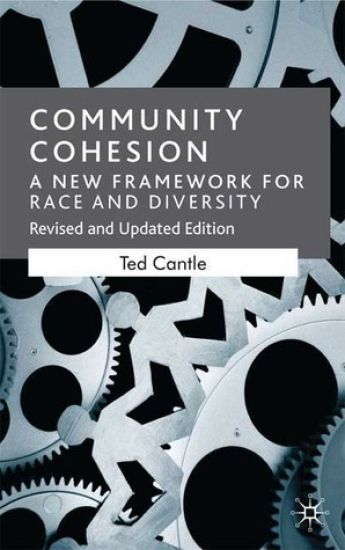
Community Cohesion

Community Cohesion

Ted Cantle

Palgrave Macmillan
2005
nidottu
In this timely study, the author examines the historical approach to race and diversity and suggests that equality strategies have been a vital, but limited, means of addressing discrimination and community tensions. Community Cohesion, it argues, offers a new framework to break down the barriers between different communities and understand the more fundamental causes of racism and the 'fear of difference'. Concepts of multiculturalism, identity and citizenship are also reviewed and the developing practice of community cohesion is described.
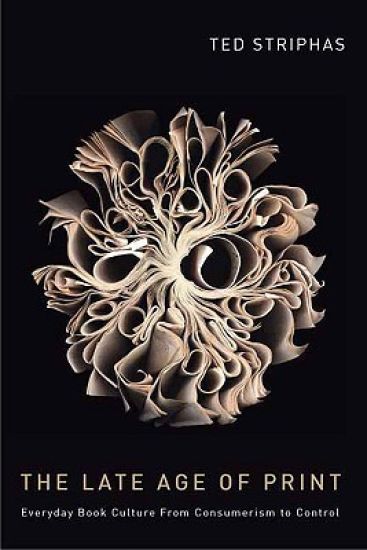
The Late Age of Print

The Late Age of Print

Ted Striphas

Columbia University Press
2009
sidottu
Ted Striphas argues that, although the production and propagation of books have undoubtedly entered a new phase, printed works are still very much a part of our everyday lives. With examples from trade journals, news media, films, advertisements, and a host of other commercial and scholarly materials, Striphas tells a story of modern publishing that proves, even in a rapidly digitizing world, books are anything but dead. From the rise of retail superstores to Oprah's phenomenal reach, Striphas tracks the methods through which the book industry has adapted (or has failed to adapt) to rapid changes in twentieth-century print culture. Barnes & Noble, Borders, and Amazon.com have established new routes of traffic in and around books, and pop sensations like Harry Potter and the Oprah Book Club have inspired the kind of brand loyalty that could only make advertisers swoon. At the same time, advances in digital technology have presented the book industry with extraordinary threats and unique opportunities. Striphas's provocative analysis offers a counternarrative to those who either triumphantly declare the end of printed books or deeply mourn their passing. With wit and brilliant insight, he isolates the invisible processes through which books have come to mediate our social interactions and influence our habits of consumption, integrating themselves into our routines and intellects like never before.
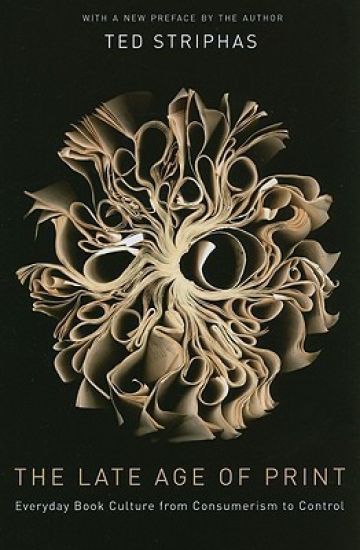
The Late Age of Print

The Late Age of Print

Ted Striphas

Columbia University Press
2011
pokkari
Ted Striphas argues that, although the production and propagation of books have undoubtedly entered a new phase, printed works are still very much a part of our everyday lives. With examples from trade journals, news media, films, advertisements, and a host of other commercial and scholarly materials, Striphas tells a story of modern publishing that proves, even in a rapidly digitizing world, books are anything but dead. From the rise of retail superstores to Oprah's phenomenal reach, Striphas tracks the methods through which the book industry has adapted (or has failed to adapt) to rapid changes in twentieth-century print culture. Barnes & Noble, Borders, and Amazon.com have established new routes of traffic in and around books, and pop sensations like Harry Potter and the Oprah Book Club have inspired the kind of brand loyalty that could only make advertisers swoon. At the same time, advances in digital technology have presented the book industry with extraordinary threats and unique opportunities. Striphas's provocative analysis offers a counternarrative to those who either triumphantly declare the end of printed books or deeply mourn their passing. With wit and brilliant insight, he isolates the invisible processes through which books have come to mediate our social interactions and influence our habits of consumption, integrating themselves into our routines and intellects like never before.
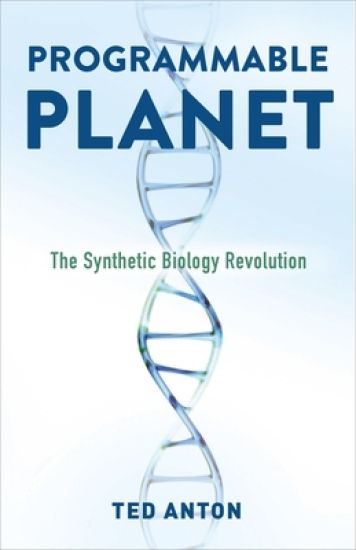
Programmable Planet

Programmable Planet

Ted Anton

Columbia University Press
2023
sidottu
Honorable Mention, 2024 Richard Frisbie Award for Adult Nonfiction, Society of Midland AuthorsA new science is reengineering the fabric of life. Synthetic biology offers bold new ways of manufacturing medicines, clothing, foods, fragrances, and fuels, often using microbe fermentation, much like brewing beer. The technology can help confront climate change, break down industrial pollutants, and fight novel viruses. Today, researchers are manipulating life forms and automating evolution to create vegetarian “meat,” renewable construction materials, and cancer treatments. In the process, they are changing our concept of what life science can achieve. Is this a new industrial and information revolution—or dangerous tinkering that could unleash unintended consequences?Programmable Planet is a grand tour through the world of synthetic biology, telling the stories of the colorful visionaries whose ideas are shaping discoveries. Ted Anton explores the field from its beginning in fighting malaria in Africa to the COVID vaccines and beyond. Covering medical and agricultural triumphs and blunders, he examines successes in energy production, plant gene editing, and chemical manufacturing, as well as the most controversial attempts at human gene enhancement. This book reports from the front lines of research, showing policy makers’ struggle to stay abreast of the technologies they aim to regulate. Even-handed, lively, and informative, Programmable Planet gives a glimpse of the promise and problems of a new biology-based industry.
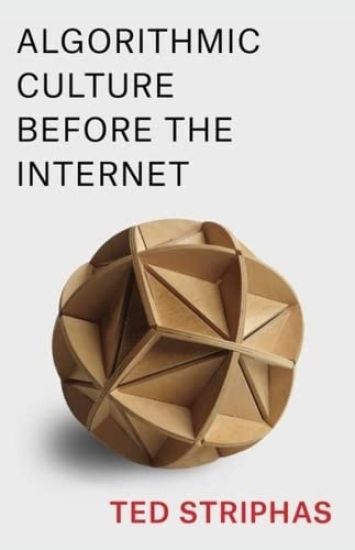
Algorithmic Culture Before the Internet

Algorithmic Culture Before the Internet

Ted Striphas

Columbia University Press
2023
sidottu
Honorable Mention, 2024 Ángel David Nieves Book Award, American Studies Association, Digital Humanities CaucusToday, algorithms exercise outsize influence on cultural decision-making, shaping and even reshaping the concept of culture. How were automated, computational processes empowered to perform this work? What forces prompted the emergence of algorithmic culture?Algorithmic Culture Before the Internet is a history of how culture and computation came to be entangled. From Cambridge, England, to Cambridge, Massachusetts, by way of medieval Baghdad, this book pinpoints the critical junctures at which algorithmic culture began to coalesce in language long before it materialized in the technological wizardry of Silicon Valley. Revising and extending the methodology of “keywords,” Ted Striphas examines changing concepts and definitions of culture, including the development of the field of cultural studies, and stresses the importance of language in the history of technology.Offering historical and interdisciplinary perspective on the relationship of culture and computation, this book provides urgently needed context for the algorithmic injustices that beset the world today.
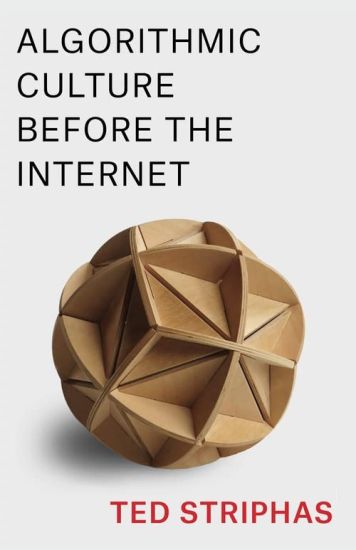
Algorithmic Culture Before the Internet

Algorithmic Culture Before the Internet

Ted Striphas

Columbia University Press
2023
pokkari
Honorable Mention, 2024 Ángel David Nieves Book Award, American Studies Association, Digital Humanities CaucusToday, algorithms exercise outsize influence on cultural decision-making, shaping and even reshaping the concept of culture. How were automated, computational processes empowered to perform this work? What forces prompted the emergence of algorithmic culture?Algorithmic Culture Before the Internet is a history of how culture and computation came to be entangled. From Cambridge, England, to Cambridge, Massachusetts, by way of medieval Baghdad, this book pinpoints the critical junctures at which algorithmic culture began to coalesce in language long before it materialized in the technological wizardry of Silicon Valley. Revising and extending the methodology of “keywords,” Ted Striphas examines changing concepts and definitions of culture, including the development of the field of cultural studies, and stresses the importance of language in the history of technology.Offering historical and interdisciplinary perspective on the relationship of culture and computation, this book provides urgently needed context for the algorithmic injustices that beset the world today.