Kirjahaku
Etsi kirjoja tekijän nimen, kirjan nimen tai ISBN:n perusteella.
1000 tulosta hakusanalla Vector Hasting

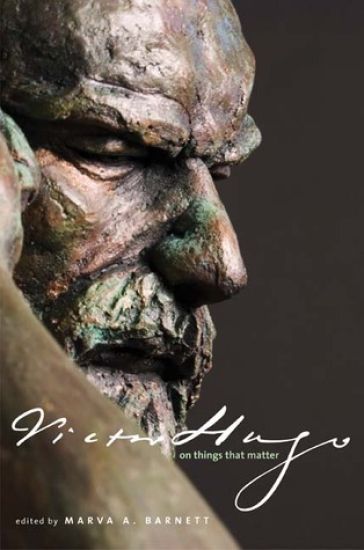
Victor Hugo on Things That Matter
Yale University Press
2009
pokkari
Victor Hugo on Things That Matter gives English speakers the social, historical, cultural, and biographical context that is essential for enjoying the writing and art of this genius of nineteenth-century France. The book’s topical organization lets readers investigate Hugo’s ideas about private and personal concerns—love, children, grief, nature, God—as well as public and politically important issues—liberty and democracy, tyranny, social justice, humanity, peace, and war. Unlike other Hugo anthologies, Victor Hugo on Things That Matter offers introductions and notes in English and includes twenty-five of Hugo’s watercolors and drawings. Readers will find key Hugo texts in the original French, along with the following supplemental information in English: an overview of Hugo’s importance and his private and public personas;introductions to each chapter;historical and cultural explanatory notes;a time line of Hugo’s life and work;suggestions for further reading.Marva Barnett is professor at the University of Virginia, where she also serves as director of the Teaching Resource Center.
Product information not available.
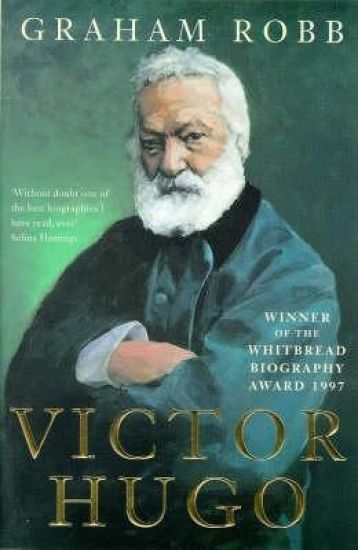
Victor Hugo was the most important writer of the nineteenth century in France: leader of the Romantic movement, Revolutionary playwright, poet, epic novelist, author of the last universally accessible masterpieces in the European tradition, among them Les Misérables and The Hunchback of Notre Dame. He was also a radical political thinker and eventual exile from France, a gifted painter and architect, and a visionary who conversed with Virgil, Shakespeare, and Jesus Christ – in short, a tantalizing personality who dominated and maddened his contemporaries. Graham Robb has written an extraordinary biography that does full justice to the drama of his subject’s life – a life that Robb calls ‘the most lucid case of madness in literature’. By grasping the giant in his entirety and in his many disguises, Robb, bestselling author of The Discovery of France, rewards us with a panorama of French and European society from the Revolution to the dawn of the twentieth century. Victor Hugo won the Whitbread Award for Biography and the Royal Society of Literature award.
Vectors in 2 or 3 Dimensions provides an introduction to vectors from their very basics. The author has approached the subject from a geometrical standpoint and although applications to mechanics will be pointed out and techniques from linear algebra employed, it is the geometric view which is emphasised throughout.Properties of vectors are initially introduced before moving on to vector algebra and transformation geometry. Vector calculus as a means of studying curves and surfaces in 3 dimensions and the concept of isometry are introduced later, providing a stepping stone to more advanced theories.
Vectors and Tensors in Engineering and Physics develops the calculus of tensor fields and uses this mathematics to model the physical world. This new edition includes expanded derivations and solutions, and new applications. The book provides equations for predicting: the rotations of gyroscopes and other axisymmetric solids, derived from Euler's equations for the motion of rigid bodies; the temperature decays in quenched forgings, derived from the heat equation; the deformed shapes of twisted rods and bent beams, derived from the Navier equations of elasticity; the flow fields in cylindrical pipes, derived from the Navier-Stokes equations of fluid mechanics; the trajectories of celestial objects, derived from both Newton's and Einstein's theories of gravitation; the electromagnetic fields of stationary and moving charged particles, derived from Maxwell's equations; the stress in the skin when it is stretched, derived from the mechanics of curved membranes; the effects of motion and gravitation upon the times of clocks, derived from the special and general theories of relativity. The book also features over 100 illustrations, complete solutions to over 400 examples and problems, Cartesian components, general components, and components-free notations, lists of notations used by other authors, boxes to highlight key equations, historical notes, and an extensive bibliography.

Victor Frankenstein, the Monster and the Shadows of Technology
Robert D. Romanyshyn
Routledge
2019
sidottu
In Victor Frankenstein, the Monster and the Shadows of Technology: The Frankenstein Prophecies, Romanyshyn asks eight questions that uncover how Mary Shelley’s classic work Frankenstein haunts our world. Providing a uniquely interdisciplinary assessment, Romanyshyn combines Jungian theory, literary criticism and mythology to explore answers to the query at the heart of this book: who is the monster?In the first six questions, Romanyshyn explores how Victor’s story and the Monster’s tale linger today as the dark side of Frankenstein’s quest to create a new species that would bless him as its creator. Victor and the Monster are present in the guises of climate crises, the genocides of our "god wars," the swelling worldwide population of refugees, the loss of place in digital space, the Western obsession with eternal youth and the eclipse of the biological body in genetic and computer technologies that are redefining what it means to be human. In the book’s final two questions, Romanyshyn uncovers some seeds of hope in Mary Shelley’s work and explores how the Monster’s tale reframes her story as a love story. This important book will be essential reading for academics and students of Jungian and post-Jungian theory, literature, philosophy and psychology, psychotherapists in practice and in training, and for all who are concerned with the political, social and cultural crises we face today.

Victor Frankenstein, the Monster and the Shadows of Technology
Robert D. Romanyshyn
Routledge
2019
nidottu
In Victor Frankenstein, the Monster and the Shadows of Technology: The Frankenstein Prophecies, Romanyshyn asks eight questions that uncover how Mary Shelley’s classic work Frankenstein haunts our world. Providing a uniquely interdisciplinary assessment, Romanyshyn combines Jungian theory, literary criticism and mythology to explore answers to the query at the heart of this book: who is the monster?In the first six questions, Romanyshyn explores how Victor’s story and the Monster’s tale linger today as the dark side of Frankenstein’s quest to create a new species that would bless him as its creator. Victor and the Monster are present in the guises of climate crises, the genocides of our "god wars," the swelling worldwide population of refugees, the loss of place in digital space, the Western obsession with eternal youth and the eclipse of the biological body in genetic and computer technologies that are redefining what it means to be human. In the book’s final two questions, Romanyshyn uncovers some seeds of hope in Mary Shelley’s work and explores how the Monster’s tale reframes her story as a love story. This important book will be essential reading for academics and students of Jungian and post-Jungian theory, literature, philosophy and psychology, psychotherapists in practice and in training, and for all who are concerned with the political, social and cultural crises we face today.
Victor Hugo, Jean-Paul Sartre, and the Liability of Liberty

Victor Hugo was the most important writer of the nineteenth century in France: leader of the Romantic movement; revolutionary playwright; poet; epic novelist; author of the last universally accessible masterpieces in the European tradition, among them Les Mis rables and The Hunchback of Notre Dame. He was also a radical political thinker and eventual exile from France; a gifted painter and architect; a visionary who conversed with Virgil, Shakespeare, and Jesus Christ; in short, a tantalizing personality who dominated and maddened his contemporaries.
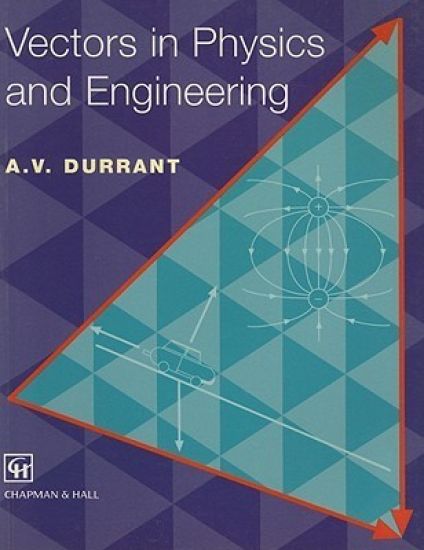
This text is an introduction to the use of vectors in a wide range of undergraduate disciplines. It is written specifically to match the level of experience and mathematical qualifications of students entering undergraduate and Higher National programmes and it assumes only a minimum of mathematical background on the part of the reader. Basic mathematics underlying the use of vectors is covered, and the text goes from fundamental concepts up to the level of first-year examination questions in engineering and physics. The material treated includes electromagnetic waves, alternating current, rotating fields, mechanisms, simple harmonic motion and vibrating systems. There are examples and exercises and the book contains many clear diagrams to complement the text. The provision of examples allows the student to become proficient in problem solving and the application of the material to a range of applications from science and engineering demonstrates the versatility of vector algebra as an analytical tool.
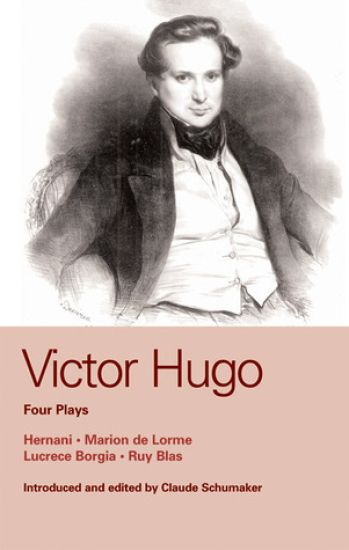
Four previously untranslated plays for the World Classics series Here are four characteristic and hugely important dramas by one of the most famous and influential European writers of the last two hundred years, translated into English for the first time, and in highly playable versions. An essential collection for students of both French and Drama
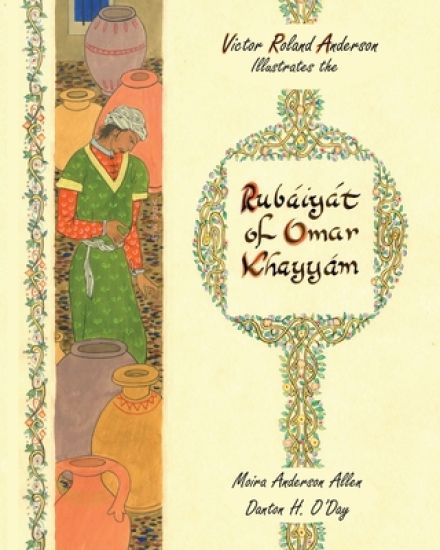
Victor Roland Anderson Illustrates the Rubaiyat of Omar Khayyam
Danton O'Day; Moira Allen
Blurb
2019
pokkari
A true artistic talent, the American artist Victor Roland Anderson illustrated verses of Edward FitzGerald's Rubaiyat of Omar Khayyam. His poetic interpretations were originally done on parchment around 1936. Now, for the first time, they are presented in this softcover book by Moira Anderson Allen, the granddaughter of Victor, and Danton O'Day, a researcher of Rubaiyat artists. After a short introduction to the artist and how the book came to be, Victor Anderson's beautifully designed pages are presented in their full glory. This is a visually appealing book that is a pleasure to read. It is perfect as a gift for anyone who loves poetry especially those who love the Rubaiyat, one of the worlds most famous collections of verse.
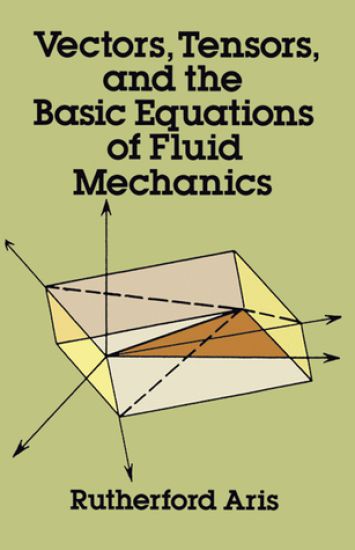
Vectors, Tensors and the Basic Equations of Fluid Mechanics
Rutherford Aris
Dover Publications Inc.
2000
nidottu
This introductory text is geared toward engineers, physicists, and applied mathematicians at the advanced undergraduate and graduate levels. It applies the mathematics of Cartesian and general tensors to physical field theories and demonstrates them chiefly in terms of the theory of fluid mechanics. Numerous exercises appear throughout the text. 1962 edition.

Victor Horta (1861–1947) is well known as the creator of Art Nouveau architecture. Following the design of the Hôtel Tassel, Brussels, in 1893, Horta produced more than 40 buildings during the following decade. This new book discusses the many influences on his designs, and his legacy. Detailed descriptions of 19 projects, including Edicule Lambeaux, Hôtel Autrique, Hôtel Max Hallet and the Brugmann Hospital, are illustrated with Horta’s original drawings and specially commissioned photographs by award-winning architectural photographer Alastair Carew-Cox. Included in this book are extensive photographs of Hôtel Solvay, one of Horta’s most important works; access to photographers had been denied for 20 years, but special access was granted to Alastair Carew-Cox in the summer of 2016 in recognition of his and Professor David Dernie’s significant contribution to the study of Horta. Victor Horta: The Architect of Art Nouveau has been prepared in close collaboration with the Horta Museum, Brussels, ensuring that it is both accurate and up to date. It will appeal to anyone interested in Art Nouveau, one of the great aesthetic movements of the early 20th century. Its richly ornamental style of fluid lines based on natural forms expressed a desire to abandon the historical styles of the 19th century and to develop a language that was beautifully crafted and thoroughly contemporary, laying the foundations for the development of modernism in architecture and interior design.
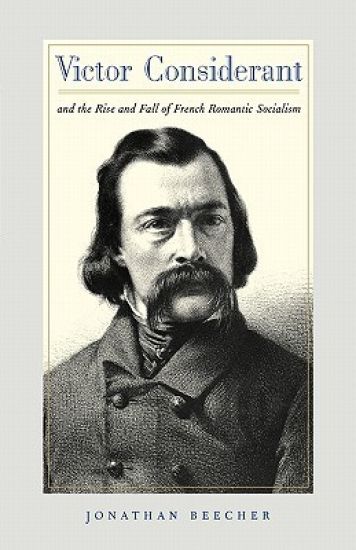
Victor Considerant and the Rise and Fall of French Romantic Socialism
Jonathan Beecher
University of California Press
2001
sidottu
Jonathan F. Beecher's accomplished study is both a lively life story of one of the most engaging figures among the French romantic intellectuals of the 1840s and a compelling chronicle of early French socialism. Victor Considerant (1808-1893), a follower of the great utopian thinker Charles Fourier, played an important role in the creation of a Fourierist movement and the development of socialist journalism. In the process of conveying a rich understanding of Considerant's life, Beecher traces the rise and fall of French romantic socialism and demonstrates how the utopian visions of thinkers such as Charles Fourier came to inspire a whole generation of young radicals and reformers not only in France but also in Dostoevky's Russia and in the America of Horace Greeley and Margaret Fuller. He paints a vivid portrait of a particularly important period of European intellectual history and gives his readers insight into the experience of a generation of thinkers and political activists. This comprehensive history will become the definitive work on Victor Considerant, and - along with Beecher's classic study of Fourier - a major contribution to the history of French socialism in the nineteenth century.

Vectors in Three-Dimensional Space
Chisholm J. S. R. Chisholm
Cambridge University Press
1978
sidottu
This book deals with vector algebra and analysis and with their application to three-dimensional geometry and the analysis of fields in three dimensions.
This book deals with vector algebra and analysis and with their application to three-dimensional geometry and the analysis of fields in three dimensions. While many treatments of the application of vectors have approached the fundamentals of the subject intuitively, assuming some prior knowledge of Euclidean and Cartesian geometry, Professor Chrisholm here bases the subject on the axioms of linear space algebra, which are fundamental to many branches of mathematics. While developing the properties of vectors from axioms, however, he continually emphasizes the geometrical interpretation of vector algebra in order to build up intuitive relations between the algebraic equations and geometrical concepts. Throughout, examples are used to illustrate the theory being developed; several sets of problems are incorporate in each chapter, and outline answers to many of these are given. Written primarily for undergraduate mathematicians in the early part of their courses, this lucidly written book will also appeal to mathematical physicists and to mathematically inclined engineers.