Kirjojen hintavertailu. Mukana 12 579 853 kirjaa ja 12 kauppaa.

Kirjahaku

Etsi kirjoja tekijän nimen, kirjan nimen tai ISBN:n perusteella.

1000 tulosta hakusanalla Vladimir Simosko
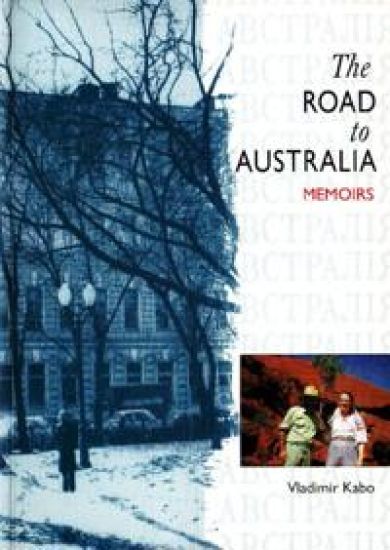
The Road to Australia

The Road to Australia

Vladimir Kabo

Aboriginal Studies Press
1998
nidottu
Drawing on a 30-year-old passion for studying Australia's Indigenous people, this memoir records the author's life and work in Australia against the background of Soviet politics and academia since the revolution.
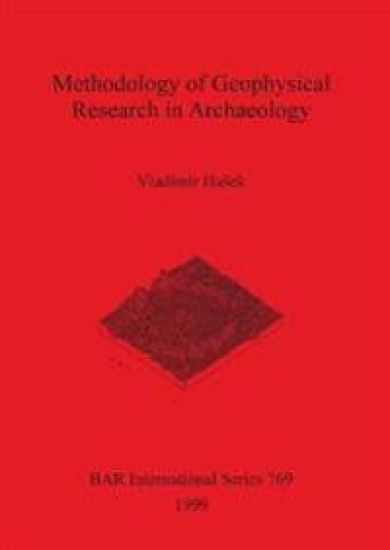
Methodology of Geophysical Research in Archaeology
This book, about the application of selected geophysical methods, their processing and interpretation on PC in archaeological prospection, sums up, generalises and comprehensively evaluates results achieved by authorities active in this field across a time-span greater than twenty years. Particular evidence is taken from archaeological localities in the Czech Republic.
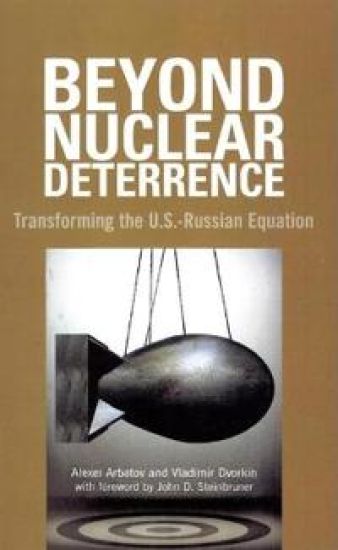
Beyond Nuclear Deterrence

Beyond Nuclear Deterrence

Vladimir Dvorkin

Carnegie Endowment for International Peace
2006
nidottu
For nearly fifty years, including the decade and a half since the end of the Cold War, deterrence has remained the central nuclear arms control policy between the United States, Russia, and other principal nuclear powers. The question today is: Has the concept of deterrence outlived its usefulness? In Beyond Nuclear Deterrence, two of Russia's top nonproliferation and international security experts, Alexei Arbatov and Vladimir Dvorkin, critically assess the history of deterrence as it emerged between the Soviet Union and the U.S. and evolved through the Cold War to include an expanding nuclear club. The authors argue that while deterrence as a concept has always been paradoxical, it is poorly equipped to handle today's most significant nuclear challenges: proliferation and terrorism. Nuclear arms control must move beyond the deadlock of deterrence. The U.S. and Russia need to take the first bilateral steps to remove mutual nuclear deterrence as the foundation of their strategic relationship and implement changes that can be exported internationally.
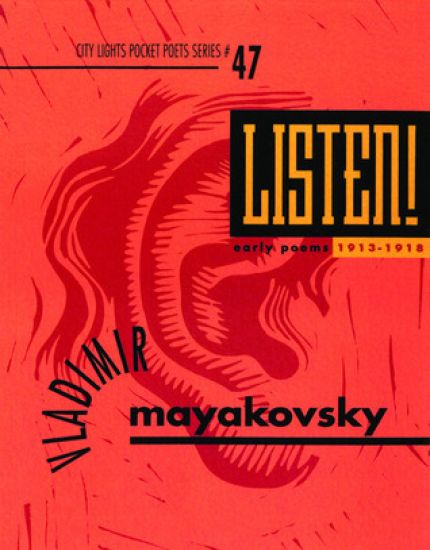
Listen! Early Poems

Listen! Early Poems

Vladimir Mayakovsky

City Lights Books
1997
pokkari
"what a poetand the clear water is thickwith bloody blows on its head.I embraced a cloudBut when I soaredit rained."—Frank O’Hara, “Mayakovsky” (1954)Mayakovsky's is one of the most compelling voices in twentieth-century Russian poetry. Born in 1893, he joined the Futurist movement in 1912 and soon established himself as one of Russia's major poets. In 1917, he rallied to the Russian Revolution and remained the indisputable leader of its artistic avant-garde until his suicide in 1930.Many of the poems in this book are translated for the first time into English. Accompanying the poems are rare drawings and lithographs by Mayakovsky and his circle, found in private collections of futurist books.
The Russian Intelligentsia

The Russian Intelligentsia

Vladimir C. Nahirny

Transaction Publishers
1982
sidottu
Vladimir C. Nahirny's brilliant study of major issues in Russian social and intellectual history synthesizes historical and sociological perspectives in an analysis of the nineteenth century Russian intelligentsia. He clarifies the concept of the intelligentsia itself, analyzes findings bearing on the social origins of different generations of intelligentsia, and enlarges understanding of conditions that facilitated the emergence of ideological groups among them. The Russian Intelligentsia develops a conceptually focused view of this distinct social group, arguing that the Russian intelligentsia can best be understood on the basis of orientation to ideas rather than on social or occupational position.Rather than simply providing an intellectual history or biographical sketches of major figures, Nahirny illuminates these concepts through data, creating an immersive context unlike other discussions of these groups. This book was, and will be, of interest to those interested in the problematic and contradictory social-political roles of intellectuals during this time.
All Music Guide to Soul

All Music Guide to Soul

Vladimir Bogdanov

Backbeat Books
2003
pokkari
This comprehensive guide is a must-have for the legions of fans of the beloved and perennially popular music known as soul and rhythm & blues. The latest in the definitive All Music Guide series, the All Music Guide to Soul offers entertaining and informative reviews that lead readers to the best recordings by their favorite artists and help them find new music to explore. Informative biographies, essays, and "music maps" trace R&B's growth from its roots in blues and gospel and its flowering in Memphis and Motown, to its many branches today. Complete discographies note bootlegs, important out-of-print albums, and import-only releases.
Reversible Crystal Plasticity

Reversible Crystal Plasticity

Vladimir Boyko; Ruvin Garber; Arnold Kossevich
American Institute of Physics
1997
sidottu
Market: Research scientists and students in materials science, physical metallurgy, and solid state physics. This detailed monograph presents the theory of reversible plasticity as a new direction of development in crystal physics. It features a unique integration of traditional concepts and new studies of high- temperature superconductors, plus in-depth analyses of various related phenomena. Among the topics discussed are elastic twinning (discovered by Dr. Garber), thermoelastic martensite transformation, superelasticity, shape memory effects, the domain structure of ferroelastics, and elastic aftereffect. Partial Contents: 1. Transformation of Dislocations. Dislocation Description of a Phase Transformation Front. 2. Dislocation Theory of Elastic Twinning. Twinning of Crystals: Principal Definitions. 3. Statics and Dynamics of Elastic Twinning. Discovery of Elastic Twinning. Verification of the Validity of the Static Theory in a Description of the Macroscopic Behavior of an Elastic Twin. 4. Thermoelastic Martensitic Transformation. Martensitic Transformation: a Diffusionless Process of Rebuilding the Crystal Lattice. 5. Superelasticity and the Shape Memory Effect. Main Characteristics of Superelasticity and Shape Memory Effects. 6. Reversible Plasticity of Ferroelastics. Ferroelastics: Main Definitions. 7. Investigation of Reversible Plasticity of Crystals by the Acoustic Emission Method. Emission of Sound by Moving Dislocations andTheir Pileups. Methods Used in Experimental Investigations of the Acoustic Emission Generated by a SingleTwin. Acoustic Emission Associated with Elastic Twinning. 8. Influence of Reversible Plasticity of Superconductors on Their Physical Properties. Reversible Changes in the Parameters of Traditional Superconductors under the Action of Elastic Stresses. Influence of Magnetic Fields on Reversible Changes in the Parameters
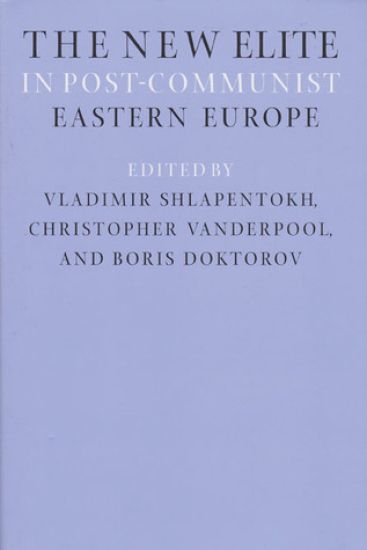
The New Elite in Post-Communist Eastern Europe

The New Elite in Post-Communist Eastern Europe

Vladimir Shlapentokh

Texas A M University Press
1999
sidottu
With the collapse of the Soviet Union, a radical metamorphosis took place in Eastern Europe as major power structures were replaced by new systems of power and authority. With new power systems came new types of dominant elites. The New Elite in Post-Communist Eastern Europe identifies those elites who have gained control of the political, economic, cultural, and scientific institutions of the new state systems and examines the nature of power in the post-Communist world and the relationships between the old and new elite. This study of the new elite in Eastern Europe developed from a 1994 conference on the subject, attended by scholars, sociologists, representatives from major national and international government organizations, European state leaders, and those considered members of the new elite. Twenty-six of those participants have now contributed their experiences and their definitions of the new elite to this book, edited by Vladimir Shlapentokh, Christopher Vanderpool, and Boris Doktorov, resulting in a global intellectual effort to define the political and social processes of post-Communist society. The New Elite in Post-Communist Eastern Europe contains analysis from members of nearly every post-Soviet republic. Many contributors conducted direct sociological research on their respective issues, which along with polls and other data sources, developed a strong empirical base for the work. In addition to an introduction by Shlapentokh and Vanderpool, chapters appear under four main sections: "Post-Communist Elites: An Overview"; "Elites in Post-Soviet Republics"; "The Regional Elite in Russia"; and "Types of the Elite." Eastern Europe is a hotbed of unrest, revolution, and change. Understanding those who are in power is vital to understanding the countries in that region and their potential impact on global politics, economy, and society. The New Elite in Post-Communist Eastern Europe offers that understanding.
Geochemistry and the Biosphere

Geochemistry and the Biosphere

Vladimir I. Vernadsky

Synergetic Press Inc.,U.S.
2007
nidottu
Vernadsky(1863-1945) is the highly venerated father of several geo-based disciplines, including geochemistry, biogeochemistry and radio geology. He wrote the first scientific theory about the "biosphere," the life zone of the Earth and in the process laid the groundwork for planetary thinking. A recognised catalyst, this premier scientific work addresses in detail humanity's impact on the living systems of the planet. GEOCHEMISTRY AND THE BIOSPHERE contains his groundbreaking work on the biosphere and the no sphere, as well as his seminal work on geochemistry. Vernadsky maintains that the biosphere is a thin strata, a separate "geological envelope," inhabited by living matter, the force of which exerts changes in its physical, chemical and mechanical properties. Moreover, this envelope is permeated by cosmic energy, which works even greater changes. Thus the biosphere, the stage on which changes are played out, will evolve over time. According to Vernadsky, from the biosphere a noösphere - a biosphere influenced by the activity of the human mind - will ultimately emerge. Vernadsky writes, "Mankind's power is connected not with its matter but with its brain, its thoughts and its works, guided by its mind. In the geological history of the biosphere, a great future is opened to Man if he realises it and does not direct his mind and work to self-destruction."
The Crisis of Western Philosophy

The Crisis of Western Philosophy

Vladimir Solovyov

STEINERBOOKS, INC
1996
nidottu
This is the seminal work in which Solovyov developed his religious philosophy. In it he undertakes a critique of positivism by which he understands the entire philosophy of western rationalism which he sees as setting up a conflict between reason and faith, and reason and nature. In the modern period he finds abundant evidence for reason's war against nature in western philosophy from Descartes to Hegel. "Positivism", the leading philosophy in his time, Solovyov also finds repungant. In its place, he proposes his great theme of total unity.
The 4D Spiral Spacetimes Toryx & Helyx - Prime Elements of the Multiverse
This book describes abstract and applied mathematics of the unique properties of 4D spiral spacetimes called toryx and helyx. There is a good reason for studying the mathematics of these two spacetimes. Their unique properties provide them with a capability to be the prime elements of nature. In that capacity their potential role in nature would be comparable with a role of the DNA double helyces discovered by James Watson and Francis Crick in 1953. The DNA double helyces contain genetic codes defining the properties of both organic entities and living organisms, whereas both toryx and helyx contain generic codes defining the properties of matter and radiation entities of the Universe. Also similar are the locations of these codes. The genetic codes of DNA are located inside of cells of all organic entities and living organisms, whereas the generic codes of toryces and helyces reside inside of all elementary matter and radiation particles, the building blocks of the Universe.