Kirjojen hintavertailu. Mukana 12 083 983 kirjaa ja 12 kauppaa.

Kirjahaku

Etsi kirjoja tekijän nimen, kirjan nimen tai ISBN:n perusteella.

1000 tulosta hakusanalla W. Weldon Champneys

Of Human Bondage by W. Somerset Maugham, Fiction, Literary, Classics
She opened the door of a room on the floor below and took the child over to a bed in which a woman was lying. It was his mother. She stretched out her arms, and the child nestled by her side. He did not ask why he had been awakened. The woman kissed his eyes, and with thin, small hands felt the warm body through his white flannel nightgown. She pressed the child closer to herself. "Are you sleepy, darling?" she said. Her voice was so weak that it seemed to come already from a great distance. The child did not answer, but smiled comfortably. He was very happy in the large, warm bed, with those soft arms about him. He tried to make himself smaller still as he cuddled up against his mother, and he kissed her sleepily. In a moment he closed his eyes and was fast asleep. The doctor came forwards and stood by the bedside. "Oh, don't take him away yet," she moaned.
Moon and Sixpence by W. Somerset Maugham, Fiction, Classics
Yet now few will be found to deny his greatness. I do not speak of that greatness which is achieved by the fortunate politician or the successful soldier; that is a quality which belongs to the place he occupies rather than to the man; and a change of circumstances reduces it to very discreet proportions. The Prime Minister out of office is seen, too often, to have been but a pompous rhetorician, and the General without an army is but the tame hero of a market town. The greatness of Charles Strickland was authentic. It may be that you do not like his art, but at all events you can hardly refuse it the tribute of your interest. He disturbs and arrests. The time has passed when he was an object of ridicule, and it is no longer a mark of eccentricity to defend or of perversity to extol him. His faults are accepted as the necessary complement to his merits. It is still possible to discuss his place in art, and the adulation of his admirers is perhaps no less capricious than the disparagement of his detractors; but one thing can never be doubtful, and that is that he had genius. . . .
W.E.B. Du Bois: Black Reconstruction (LOA #350)

W.E.B. Du Bois: Black Reconstruction (LOA #350)

W.E.B. Du Bois; Eric Foner; Henry Louis Gates

The Library of America
2021
sidottu
A collector's edition of the landmark study that changed our understanding of the Civil War's aftermath and the legacy of racism in America Upon publication in 1935, W.E.B. Du Bois's Black Reconstruction offered a revelatory new assessment of Reconstruction--and of American democracy itself. One of the towering African American thinkers and activists of the twentieth century, Du Bois brought all his intellectual powers to bear on America's post-Civil War era of political reorganization, a time when African American progress was met with a white supremacist backlash and ultimately yielded to the consolidation of the unjust social order underpinning Jim Crow. Black Reconstruction is a pioneering, exemplary work of revisionist scholarship that, in the wake of censorship toward Du Bois's characterization of Reconstruction by the Encyclopaedia Britannica, was written to debunk influential historians whose racist ideas and emphases had disfigured the historical record. The chief witness in Reconstruction, the emancipated slave himself, writes Du Bois, has been almost barred from court. His written Reconstruction record has been largely destroyed and nearly always neglected. In setting the record straight Du Bois produced what Eric Foner has called an indispensable book, a magisterial work of detached scholarship that is also imbued with passionate outrage. Here presented in a handsome hardcover edition, with an illuminating editor's introduction and an authoritative text, Black Reconstruction is joined, for the first time in a single volume with important writings that trace his thinking throughout his career about Reconstruction and its centrality in understanding American democracy.
W.E.B. Du Bois and the Sociological Imagination
Introducing and presenting thirty core texts from the sociological writings of W. E. B. Du Bois, Robert Wortham's unique reader highlights Du Bois as a multifaceted researcher and thinker who, by attempting to approach African American social life from every angle, became a pioneer in American sociology. As this astute reader demonstrates, in addition to his profound contributions to our understanding of racial inequality in the United States, Du Bois made momentous advances in the areas of research methods, social problems, community studies, population studies, the sociology of religion, and crime and deviance. When sociology appeared to be heading toward a deductive methodology, Du Bois presented a strong argument for inductive methods, advocating for the use of a more interdisciplinary approach. Eventually, combining sociological perspectives with those of history and anthropology, he developed his landmark approach: methodological triangulation.In this long-overdue volume, Wortham showcases the enormous influence of Du Bois's wide-ranging sociological imagination. Organized into four major parts--""The Scientific Study of Society and Social Problems,"" ""Social Structure and Social Processes,"" ""Dimensions of Inequality,"" and ""Social Dynamics""--the reader concludes with a complete biography of Du Bois' early sociological works.
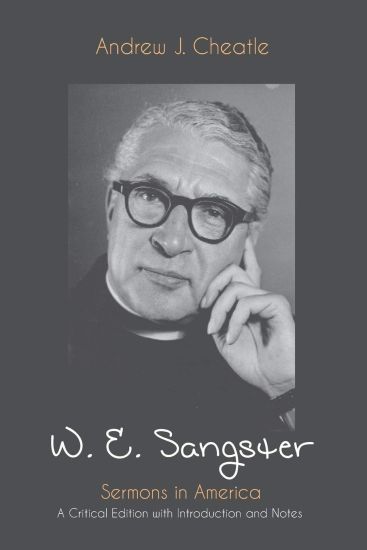
W. E. Sangster

W. E. Sangster

Andrew J Cheatle

Wipf Stock Publishers
2018
pokkari
Listened to by huge congregations in Britain, and perhaps the most recognizable British Methodist voice in the mid-twentieth century, W. E. Sangster was, in anyone's estimation, a giant of Methodism. ""A preacher without peer in the world,"" ""a prince of preachers,"" are just two of the labels attached to this preacher/theologian of the Methodist tradition. This volume captures the preaching of Sangster in his prime, on the occasion of the 1956 World Methodist Conference in Junaluska, North Carolina. Cheatle's research brings into the public domain ten sermons, nine previously unpublished in this form, delivered by Sangster at that great gathering of World Methodism. These sermons, being transcripts from recordings, picked up Sangster ""in the raw,"" at his most powerful, engaging with his listeners. This book is a resource, therefore, that aids students of homiletics and pastors in encountering a master at work, without the editorial polish of his extant sermons. The sermons on aspects of Christian holiness would be Sangster's first and last sequential series on the subject, placing before the reader some of his most mature thought on holiness and its application in daily life. ""In an age when we have lost confidence in the captivating power of the proclaimed word, Dr. Cheatle's excellent critical edition of Sangster's sermons not only offers helpful insights into the thoughts of one of the greatest preachers of the twentieth century on a variety of central themes, but also a clarion call to the church to once again attend to the compelling power of the gospel and its proclamation. Dr. Cheatle has done a great service to academy and church alike."" --Tom Greggs, Marischal Chair of Divinity, University of Aberdeen ""W. E. Sangster: Sermons in America places the reader in the pew to listen to the voice of one of the preeminent preachers of the twentieth century. This volume of transcriptions of ten previously unpublished sermons on holy living preached by Sangster at the 1956 World Methodist Conference at Lake Junaluska, North Carolina, reveals Sangster as a preacher with much to teach twenty-first century preachers. . . . Contemporary preachers, take and read "" --Alyce M. McKenzie, Director, The Perkins Center for Preaching Excellence ""In an age when the preached word does not hold the position it once did in the church's exegetical and homiletic ministry, Dr. Cheatle's careful transcription and analysis of these sermons of Sangster, recorded in the USA, provide an invaluable tool to explore one of the great Christian preachers in a period when the sermon was already losing its domination of Christian apologetic. A useful contribution to the study of preaching and especially in the Holiness tradition."" --David Hart, Methodist Minister Andrew J. Cheatle is Senior Lecturer in Theology and Pastoral Theology at Liverpool Hope University. He also serves as a University Pastor. His previous writings on Sangster include W. E. Sangster: Herald of Holiness (2010) and W. E. Sangster: Heir of John Wesley? (2013). Before becoming an academic he held pastorates in Copenhagen, Denmark, and Manchester, England.
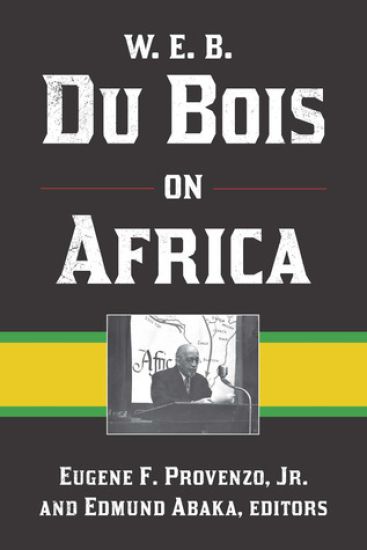
W. E. B. Du Bois on Africa

W. E. B. Du Bois on Africa

Left Coast Press Inc
2012
sidottu
W. E. B. Du Bois is arguably the most important Black intellectual of the twentieth century and among the most important intellectual figures in modern African social thought. One of the founders of Pan-Africanism and a key figure in the postwar African liberation movement, he was champion of Africa and its people throughout his life. Despite this fact, his work on Africa has been underemphasized in scholarly writing about him. This book brings together for the first time Du Bois’s writings on Africa from the beginning of the twentieth century to his death in the early 1960s. Including over 50 magazine and journal articles, poems and book chapters, the works included in this volume clearly show not only Du Bois’s genius as a writer, but his profound understanding of how the quest for racial equality involved all of the people of African origin who suffered under colonial rule in Africa and in the Black disapora. The editors include a historical introduction, headnotes and a bibliography of Du Bois’s work on Africa.
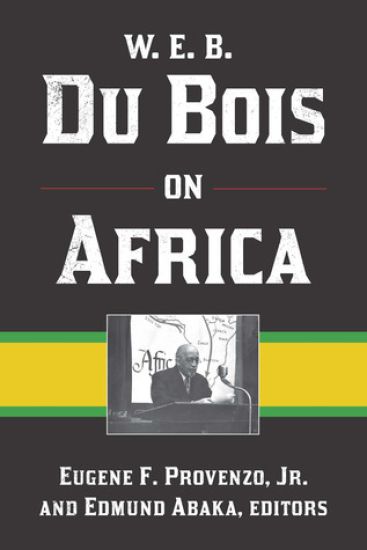
W. E. B. Du Bois on Africa

W. E. B. Du Bois on Africa

Left Coast Press Inc
2012
nidottu
W. E. B. Du Bois is arguably the most important Black intellectual of the twentieth century and among the most important intellectual figures in modern African social thought. One of the founders of Pan-Africanism and a key figure in the postwar African liberation movement, he was champion of Africa and its people throughout his life. Despite this fact, his work on Africa has been underemphasized in scholarly writing about him. This book brings together for the first time Du Bois’s writings on Africa from the beginning of the twentieth century to his death in the early 1960s. Including over 50 magazine and journal articles, poems and book chapters, the works included in this volume clearly show not only Du Bois’s genius as a writer, but his profound understanding of how the quest for racial equality involved all of the people of African origin who suffered under colonial rule in Africa and in the Black disapora. The editors include a historical introduction, headnotes and a bibliography of Du Bois’s work on Africa.
The Autobiography of W. E. B. Du Bois

The Autobiography of W. E. B. Du Bois

W E B Du Bois

Berkshire Publishing Group
2022
sidottu
This edition of The Autobiography of W. E. B. Du Bois is the first to be arranged and dedicated in accordance with Du Bois's manuscript notes. It begins with these words: "I was born by a golden river and in the shadow of two great hills, five years after the Emancipation Proclamation which began the freeing of American Negro Slaves." Du Bois was born in the town where Berkshire Publishing Group is located. His autobiography tells the story of a little boy, the only Black boy in his school, who became the first African American PhD at Harvard, an educator, editor, and activist, and a writer of expressive, lyrical, and accessible prose. In this book, he explains why he chose to become a communist. While the communism he praised did not turn out to offer the utopia so many hoped for, the problems he identified are still with us. His reasoning will resonant with modern readers who share his frustration with the continued inequities in our society.The Autobiography is a fascinating and often horrifying look at the experience of a Black man in America. Literary critic Irving Howe called it "a classic of American narrative, . . . packed with information and opinion about the early years of Negro protest." But, like many, he found the later chapters, in which Du Bois reflects the official Communist views of the times, to read "as if they came from the very heart of a mimeograph machine." But these chapters, too, are part of US history. The short essay on Communism is especially worth reading it speaks to issues on our minds today, and puts Du Bois's communism in context. His reasoning, and emotion, will resonant with modern readers who share his frustration with the continued inequities in our society. While the Communism he praised did not turn out to offer the utopia so many hoped for, the problems he identified are still with us.And now that the chapters about his early life are in their proper place, we hope readers will note the personal and revelatory tone of the chapter "My Character." Along with an analysis of his own character, not always favorable, he discusses his sexual experience, including early ignorance, being raped as a young man by an unhappy landlady, and never convincing his wife that sexual relations were "the most beautiful of human experiences."Berkshire Publishing Group was founded in Great Barrington, the small western Massachusetts town where Du Bois was born and educated. He wrote eloquently about the town and its people, and he is remembered today as the most influential graduate of the town's schools. Berkshire is known for its focus on international issues, especially world history. We were thrilled when we learned that Du Bois had wanted to create an Encyclopedia Africana since we have specialized in similar projects. Equally relevant was hearing from Thomas Bender, a leading scholar of transnational history, that Du Bois's Harvard dissertation on the Atlantic slave trade was one of the first publications that could truly be called transnational history.
The Autobiography of W. E. B. Du Bois: Great Barrington Edition

The Autobiography of W. E. B. Du Bois: Great Barrington Edition

W. E. B. Du Bois

Berkshire Publishing Group LLC
2022
nidottu
This edition of The Autobiography of W. E. B. Du Bois is the first to be arranged and dedicated in accordance with Du Bois's manuscript notes. It begins with these words: "I was born by a golden river and in the shadow of two great hills, five years after the Emancipation Proclamation which began the freeing of American Negro Slaves." Du Bois was born in the town where Berkshire Publishing Group is located. His autobiography tells the story of a little boy, the only Black boy in his school, who became the first African American PhD at Harvard, an educator, editor, and activist, and a writer of expressive, lyrical, and accessible prose. In this book, he explains why he chose to become a communist. While the communism he praised did not turn out to offer the utopia so many hoped for, the problems he identified are still with us. His reasoning will resonant with modern readers who share his frustration with the continued inequities in our society.The Autobiography is a fascinating and often horrifying look at the experience of a Black man in America. Literary critic Irving Howe called it "a classic of American narrative, . . . packed with information and opinion about the early years of Negro protest." But, like many, he found the later chapters, in which Du Bois reflects the official Communist views of the times, to read "as if they came from the very heart of a mimeograph machine." But these chapters, too, are part of US history. The short essay on Communism is especially worth reading it speaks to issues on our minds today, and puts Du Bois's communism in context. His reasoning, and emotion, will resonant with modern readers who share his frustration with the continued inequities in our society. While the Communism he praised did not turn out to offer the utopia so many hoped for, the problems he identified are still with us.And now that the chapters about his early life are in their proper place, we hope readers will note the personal and revelatory tone of the chapter "My Character." Along with an analysis of his own character, not always favorable, he discusses his sexual experience, including early ignorance, being raped as a young man by an unhappy landlady, and never convincing his wife that sexual relations were "the most beautiful of human experiences."Berkshire Publishing Group was founded in Great Barrington, the small western Massachusetts town where Du Bois was born and educated. He wrote eloquently about the town and its people, and he is remembered today as the most influential graduate of the town's schools. Berkshire is known for its focus on international issues, especially world history. We were thrilled when we learned that Du Bois had wanted to create an Encyclopedia Africana since we have specialized in similar projects. Equally relevant was hearing from Thomas Bender, a leading scholar of transnational history, that Du Bois's Harvard dissertation on the Atlantic slave trade was one of the first publications that could truly be called transnational history.
W. E. B. Du Bois's Data Portraits

W. E. B. Du Bois's Data Portraits

The W.E.B. Du Bois Center at the University of Massachusetts Amherst

Princeton Architectural Press
2018
sidottu
"As visually arresting as it is informative."—The Boston Globe "Du Bois's bold colors and geometric shapes were decades ahead of modernist graphic design in America."—Fast Company's Co.Design W.E.B. Du Bois's Data Portraits is the first complete publication of W.E.B. Du Bois's groundbreaking charts, graphs, and maps presented at the 1900 Paris Exposition. Famed sociologist, writer, and Black rights activist W.E.B. Du Bois fundamentally changed the representation of Black Americans with his exhibition of data visualizations at the 1900 Paris Exposition. Beautiful in design and powerful in content, these data portraits make visible a wide spectrum of African American culture, from advances in education to the lingering effects of slavery. They convey a literal and figurative representation of what he famously referred to as "the color line," collected here in full color for the first time. A landmark collection for social history, graphic design, and data science. • Data display, visualizations, and infographics far ahead of their time • Colorful graphs and charts are mesmerizing pieces of art in their own right • A valuable companion to W.E. B. Du Bois's The Souls of Black Folk • Includes contributions from Aldon Morris, Silas Munro, and Mabel O. Wilson W.E.B. Du Bois's Data Portraits is an informative and provocative history, data, and graphic design book that continues to resonate with audiences today.
The Essential W. P. Kinsella

The Essential W. P. Kinsella

W. P. Kinsella

Tachyon Publications
2015
nidottu
This career retrospective celebrates the 80th birthday of baseball's greatest scribe, W. P. Kinsella (Shoeless Joe), as well as the 25th anniversary of Field of Dreams, the film that he inspired. In addition to his classic baseball tales, W. P. Kinsella is also a critically-acclaimed short fiction writer. His satiric wit has been celebrated with numerous honors, including the Order of British Columbia. Here are his notorious First Nation narratives of indigenous Canadians, and a literary homage to J. D. Salinger. Alongside the "real" story of the 1951 Giants and the afterlife of Roberto Clemente, are the legends of a pirated radio station and a hockey game rigged by tribal magic. Eclectic, dark, and comedic by turns, The Essential W. P. Kinsella is a living tribute to an extraordinary raconteur.
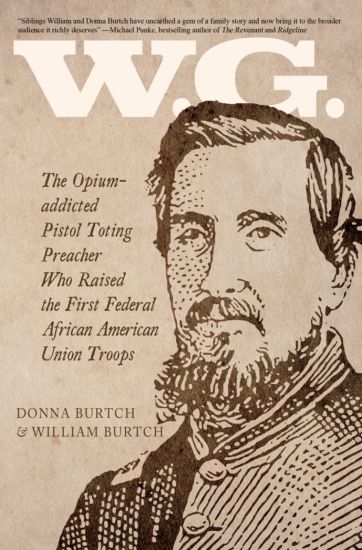
W.G.

W.G.

William Burtch; Donna Burtch

Sunbury Press, Inc.
2022
pokkari
William Gould "W.G." Raymond was a staunch abolitionist and Union officer. A preacher. Under Lincoln's authority, he raised hundreds of Black Union soldiers on the wild streets of D.C., eager to fight for their freedom. Many would go on to battle in perhaps the most important victory of Black troops in the Civil War. The War Department did not support the fledgling 1st District of Columbia Colored Volunteers (later the 1st U.S.C.T.). W.G. was forced to pay for troop provisions and training out of his own pocket, never to be repaid. His challenges were just beginning.
Ancestry and Kindred of W.P. Zuber, Texas Veteran
ANCESTRY AND KINDRED of W. P. Zuber Excerpt Tracing my ancestry, I give precedence to the female lines; that, when I reach any male ancestor, I may adhere to the male line so far as it points toward myself: and I mention my female ancestors by their maiden names. I, William Physick Zuber, was born in Twiggs County, Georgia; July 6, 1820. My parents were Abraham Zuber jr. and Mary Ann Mann. My mother, Mary Ann Mann, was born in Edgefield District, South Carolina; September 18, 1793. Her parents were Thomas Mann and Ann Deshazo. My maternal grand-mother, Ann Deshazo, was born in North Carolina; about the year 1765. Her parents were Robert Deshazo and Mollie Trevelian. My mother's maternal grand-mother, Mollie Trevelian, was born in Virginia, about the year 1732. One of her parents, I know not which, was born in Scotland, the other in Ireland. When yet young, they migrated from their respective native countries to Virginia, where they married. Later, they moved, with their daughter Mollie and other children, to North Carolina: and there Mollie married Robert Deshazo. AN EPISODE Mollie Trevelian Deshazo had an elder brother, John Trevelian; who, as a volunteer in the Virginia Militia, participated in the campaign against Fort Du Quesne, in 1755; fought in the battle of Monongahela, - remembered as General Braddock's Defeat, - July 8th, of that year. In that battle, he was captured by the French: and thence he was conducted, a prisoner, to Canada. How long he was held as a prisoner, I am not informed: but he was finally set at liberty, - pennyless in a strange country, among a people whose language he did not understand. There were only two ways by which he could return home. One was through a wilderness, which was infested by savages, who would surely kill him if he attempted to traverse it alone: and he could not learn of any body of adventurers whom he could accompany on such a trip. The other way was to go by sea: but he had not money with which to pay his passage; and he could obtain employment only for short terms between intervals, and at low wages. But he worked when he could obtain employment at any price; hoping, by rigid economy, to save money enough to pay his way home. Finally, after an absence of four or five years, he made the trip home; whether by land or by sea, I am not informed. He owned a good home, which was well furnished for that period; which his friends had not disposed of, though they believed that he had been killed in the battle in which he was captured. He first thought that he would marry and live on his homestead: but a change of conditions determined him to do otherwise. He sold his possessions in Virginia; and went to North Carolina, whither his parents had... ------------------------------------------------------------------------------------------------------------------------------------------ Windham Press is committed to bringing the lost cultural heritage of ages past into the 21st century through high-quality reproductions of original, classic printed works at affordable prices. This book has been carefully crafted to utilize the original images of antique books rather than error-prone OCR text. This also preserves the work of the original typesetters of these classics, unknown craftsmen who laid out the text, often by hand, of each and every page you will read. Their subtle art involving judgment and interaction with the text is in many ways superior and more human than the mechanical methods utilized today, and gave each book a unique, hand-crafted feel in its text that connected the reader organically to the art of bindery and book-making. We think these benefits are worth the occasional imperfection resulting from the age of these books at the time of scanning, and their vintage feel provides a connection to the past that goes beyond the mere words of the text.