

Kirjahaku
Etsi kirjoja tekijän nimen, kirjan nimen tai ISBN:n perusteella.
1000 tulosta hakusanalla W.D. Snodgrass
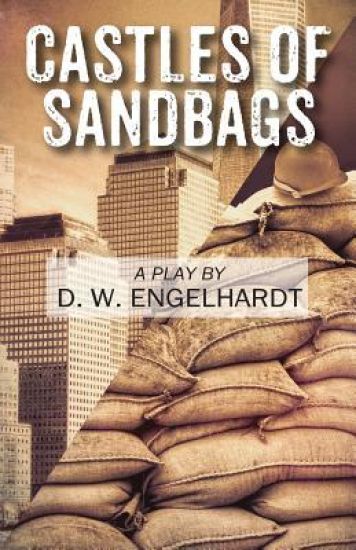
During the Korean War, John Ediford, a young U.S. Army officer, must fully trust his men and his own decision making ability, often in life and death situations. In doing so, Lieutenant Ediford faces the challenge of confronting both his past and also his uncertain future back home. The playwright's father was a veteran of both World War II and the Korean War. Mr. Engelhardt's father often recounted battlefield stories of those times. This play is based upon the critical circumstances detailed in some of those accounts. This story also details a soldier's return home and the problems he encounters with family and friends.

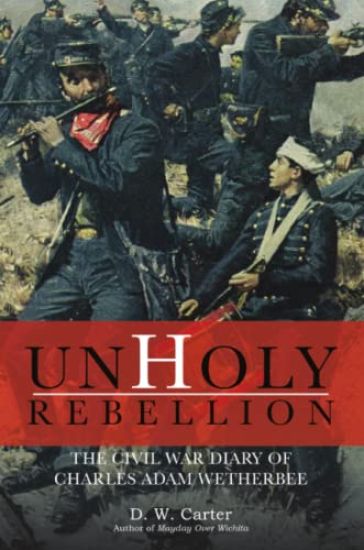
"I left three years ago to do my part in putting down this unholy rebellion." By 1861, Charles Adam Wetherbee had officially traded his comfortable life as a college student for one that included drafty Sibley tents, long marches in weather and wilderness of all kinds, and bloodshed. A Union infantryman with the Thirty-Fourth Illinois Volunteer Regiment, he survived the battles of Shiloh, Stones River, Liberty Gap, Atlanta, and others. One hundred years later, long after Wetherbee had died, a tattered and faded diary was found at a home in Lawrence, Kansas. The homeowner opened its pages and was astonished to discover that Wetherbee had penned every detail of his daily life during the Civil War. Wetherbee's diary presents a realistic view of what a soldier's life entailed, as the reader is thrust into the firsthand drama of the Civil War as it was endured by enlisted participants. Get a true sense of what the Civil War was like from someone who was there to witness an Unholy Rebellion.
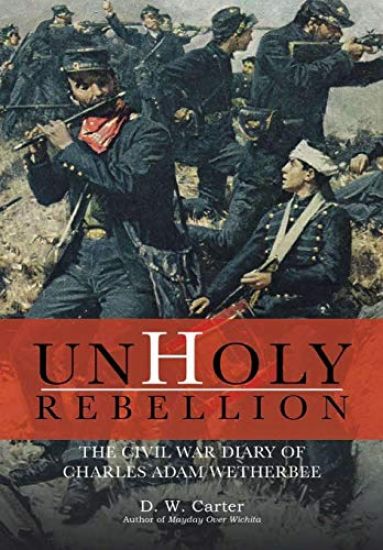
"I left three years ago to do my part in putting down this unholy rebellion." By 1861, Charles Adam Wetherbee had officially traded his comfortable life as a college student for one that included drafty Sibley tents, long marches in weather and wilderness of all kinds, and bloodshed. A Union infantryman with the Thirty-Fourth Illinois Volunteer Regiment, he survived the battles of Shiloh, Stones River, Liberty Gap, Atlanta, and others. One hundred years later, long after Wetherbee had died, a tattered and faded diary was found at a home in Lawrence, Kansas. The homeowner opened its pages and was astonished to discover that Wetherbee had penned every detail of his daily life during the Civil War. Wetherbee's diary presents a realistic view of what a soldier's life entailed, as the reader is thrust into the firsthand drama of the Civil War as it was endured by enlisted participants. Get a true sense of what the Civil War was like from someone who was there to witness an Unholy Rebellion.


Negotiation is a ubiquitous part of social life. Some even say that social order itself is a negotiated phenomenon. Yet the study of negotiation as an actual discourse activity, occurring between people who have substantial interests and tasks in the real social world, is in its infancy. This is the more surprising because plea bargaining, as a specific form of negotiation, has recently been the center of an enormous amount of research attention. Much of the concern has been directed to basic ques tions of justice, such as how fair the process is, whether it is unduly coercive, and whether it accurately separates the guilty from the innocent. A study such as mine does not try to answer these sorts of questions. I believe that we are not in a position to answer them until we approach plea bargaining on its own complex terms. Previous studies that have attempted to provide a general picture of the process as a way to assess its degree of justness have neglected the specific skills by which prac titioners bargain and negotiate, the particular procedures through which various surface features such as character assessment are accomplished, and concrete ways in which justice is administered and, simultaneously, caseloads are managed.









Major Travis hat in der Enklave der Naado ein dreieckiges Amulett erhalten, welches von der geheimnissenvollen Rasse "Der Aller Ersten" stammt. Hierdurch werden Tore in ein Parallel-Universen ge ffnet. Der erste besuchte Planet ist feindlich eingestellt. Doch er verbirgt ein Geheimnis. Die Termar 1 nimmt den gestrandeten Gildoren Barenseigs auf, der als direkter Nachfahre der Evakuierungs-Flotte von Admiral Tarin angesehen werden kann. Neue Freunde werden gefunden, aber auch verloren geglaubte Gebiete kehren zur ck. Als dann noch der Gro -Duplikator der Produktions-Werft 5 von den Worgass infiltriert wird, muss der Major mit seinem Team eingreifen. Eine alte Kampf-Basis auf Tarid erwacht zu neuem Leben
Die eiligst zusammengerufene Krisensitzung, in der Leitstelle des neuen Imperiums von Tarid und Natrid, soll einen Plan ausarbeiten, um die gefl chteten Worgass zu ergreifen. Die bisher als zerst rt geltende Atlantis-Basis hatte den Fremden Zuflucht gew hrt. Doch ein empfangener Notruf der Atlantis-Basis wies auf eine Infiltration durch Fremdwesen vor langer Zeit hin. Der von den Worgass installierte KI-Manipulator entzog dem gewaltigen Hypertronic-Gehirn den Zugriff auf viele wichtige Funktionen. Major Travis und sein Team versuchen Heran um Hilfe zu bitten. Der Unsterbliche informierte die F hrungsebene der EWK ber die verlustreiche Schlacht der Natrader im Sol-System. Durch ihn wurde offenbart, dass die Klon-Schwester von Noel, als Kommandantin eine vergleichbare Hypertronic-KI-Basis auf Tarid befehligt. Ein Einsatzteam unter F hrung von Major Travis versucht in letzter Sekunde die Zerst rung durch fremde M chte zu verhindern und die gigantische Atlantis-Basis f r Menschheit zu retten.