Kirjojen hintavertailu. Mukana 12 083 983 kirjaa ja 12 kauppaa.

Kirjahaku

Etsi kirjoja tekijän nimen, kirjan nimen tai ISBN:n perusteella.

1000 tulosta hakusanalla Wendy Howles

Emblems of Eloquence

Emblems of Eloquence

Wendy Heller

University of California Press
2004
sidottu
Opera developed during a time when the position of women--their rights and freedoms, their virtues and vices, and even the most basic substance of their sexuality--was constantly debated. Many of these controversies manifested themselves in the representation of the historical and mythological women whose voices were heard on the Venetian operatic stage. Drawing upon a complex web of early modern sources and ancient texts, this engaging study is the first comprehensive treatment of women, gender, and sexuality in seventeenth-century opera. Wendy Heller explores the operatic manifestations of female chastity, power, transvestism, androgyny, and desire, showing how the emerging genre was shaped by and infused with the Republic's taste for the erotic and its ambivalent attitudes toward women and sexuality. Heller begins by examining contemporary Venetian writings about gender and sexuality that influenced the development of female vocality in opera. The Venetian reception and transformation of ancient texts--by Ovid, Virgil, Tacitus, and Diodorus Siculus--form the background for her penetrating analyses of the musical and dramatic representation of five extraordinary women as presented in operas by Claudio Monteverdi, Francesco Cavalli, and their successors in Venice: Dido, queen of Carthage (Cavalli); Octavia, wife of Nero (Monteverdi); the nymph Callisto (Cavalli); Queen Semiramis of Assyria (Pietro Andrea Ziani); and Messalina, wife of Claudius (Carlo Pallavicino).
Possessors and Possessed

Possessors and Possessed

Wendy Shaw

University of California Press
2003
sidottu
"Possessors and Possessed" analyzes how and why museums - characteristically Western institutions - emerged in the late-nineteenth-century Ottoman Empire. Shaw argues that, rather than directly emulating post-Enlightenment museums of Western Europe, Ottoman elites produced categories of collection and modes of display appropriate to framing a new identity for the empire in the modern era. In contrast to late-nineteenth-century Euro-American museums, which utilized organizational schema based on positivist notions of progress to organize exhibits of fine arts, Ottoman museums featured military spoils and antiquities long before they turned to the 'Islamic' collections with which they might have been more readily associated. The development of these various modes of collection reflected shifting moments in Ottoman identity production. Shaw shows how Ottoman museums were able to use collection and exhibition as devices with which to weave counter-colonial narratives of identity for the Ottoman Empire. Impressive for both the scope and the depth of its research, "Possessors and Possessed" lays the groundwork for future inquiries into the development of museums outside of the Euro-American milieu.
Building a Better Race

Building a Better Race

Wendy Kline

University of California Press
2005
pokkari
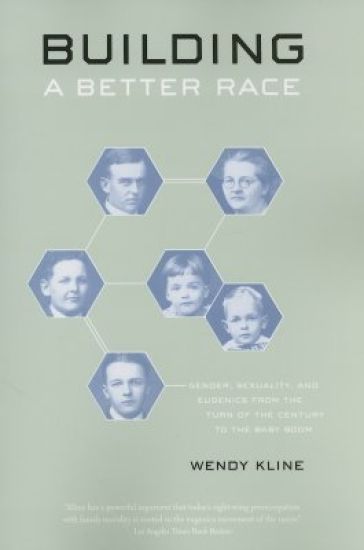
Wendy Kline's lucid cultural history of eugenics in America emphasizes the movement's central, continuing interaction with popular notions of gender and morality. Kline shows how eugenics could seem a viable solution to problems of moral disorder and sexuality, especially female sexuality, during the first half of the twentieth century. Its appeal to social conscience and shared desires to strengthen the family and civilization sparked widespread public as well as scientific interest. Kline traces this growing public interest by looking at a variety of sources, including the astonishing "morality masque" that climaxed the 1915 Panama Pacific International Exposition; the nationwide correspondence of the influential Human Betterment Foundation in Pasadena, California; the medical and patient records of a "model" state institution that sterilized thousands of allegedly feebleminded women in California between 1900 and 1960; the surprising political and popular support for sterilization that survived initial interest in, and then disassociation from, Nazi eugenics policies; and a widely publicized court case in 1936 involving the sterilization of a wealthy young woman deemed unworthy by her mother of having children. Kline's engaging account reflects the shift from "negative eugenics" (preventing procreation of the "unfit") to "positive eugenics," which encouraged procreation of the "fit," and it reveals that the "golden age" of eugenics actually occurred long after most historians claim the movement had vanished. The middle-class "passion for parenthood" in the '50s had its roots, she finds, in the positive eugenics campaign of the '30s and '40s. Many issues that originated in the eugenics movement remain controversial today, such as the use of IQ testing, the medical ethics of sterilization, the moral and legal implications of cloning and genetic screening, and even the debate on family values
Lives in Transit

Lives in Transit

Wendy A. Vogt

University of California Press
2018
sidottu
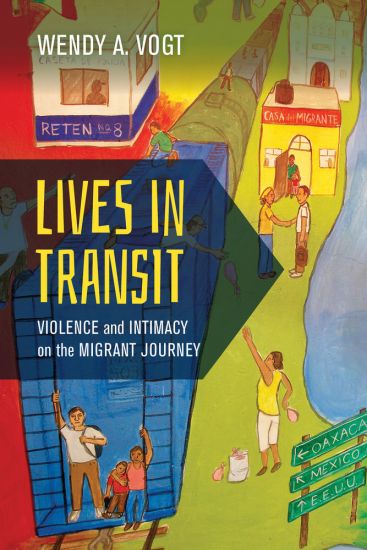
Lives in Transit chronicles the dangerous journeys of Central American migrants in transit through Mexico. Drawing on fieldwork in humanitarian aid shelters and other key sites, Wendy A. Vogt examines the multiple forms of violence that migrants experience as their bodies, labor, and lives become implicated in global and local economies that profit from their mobility as racialized and gendered others. She also reveals new forms of intimacy, solidarity, and activism that have emerged along transit routes over the past decade. Through the stories of migrants, shelter workers, and local residents, Vogt encourages us to reimagine transit as a site of both violence and precarity as well as social struggle and resistance.
Lives in Transit

Lives in Transit

Wendy A. Vogt

University of California Press
2018
pokkari
Lives in Transit chronicles the dangerous journeys of Central American migrants in transit through Mexico. Drawing on fieldwork in humanitarian aid shelters and other key sites, Wendy A. Vogt examines the multiple forms of violence that migrants experience as their bodies, labor, and lives become implicated in global and local economies that profit from their mobility as racialized and gendered others. She also reveals new forms of intimacy, solidarity, and activism that have emerged along transit routes over the past decade. Through the stories of migrants, shelter workers, and local residents, Vogt encourages us to reimagine transit as a site of both violence and precarity as well as social struggle and resistance.
The Plantation Ideal

The Plantation Ideal

Wendy Wolford

University of California Press
2025
sidottu
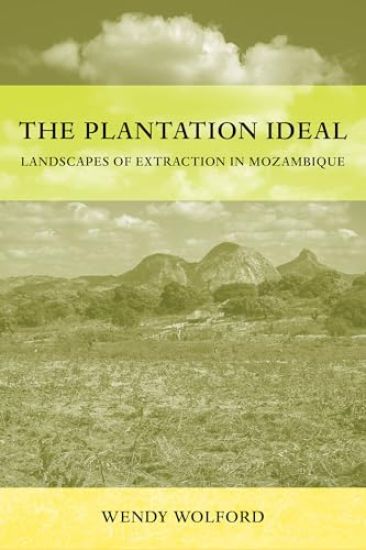
Despite never having delivered sustained economic or social benefits, plantations have been the privileged tool of extraction and development in Mozambique for more than one hundred years. Drawing on extensive archival and qualitative contemporary research, The Plantation Ideal explores ProSavana, the 2009 trilateral megaproject between Brazil, Japan, and Mozambique, which was intended to reorganize rural land and labor for the benefit of large-scale commodity production. Offering new insights into plantation economies, histories, and landscapes, Wendy Wolford tells the story of how the largely failed pursuit of a plantation ideal has shaped agricultural science, government rule, life on the land, and community development in Mozambique from the harshest years of Portuguese colonization to the present.
The Plantation Ideal

The Plantation Ideal

Wendy Wolford

University of California Press
2025
pokkari
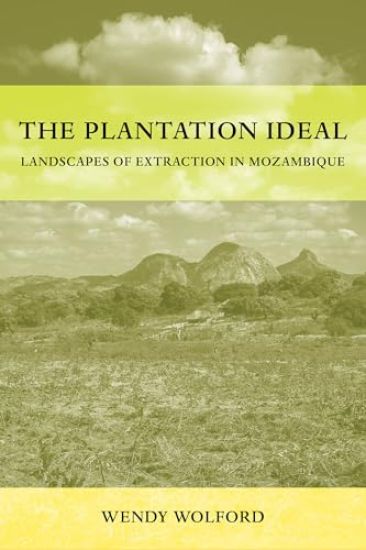
Despite never having delivered sustained economic or social benefits, plantations have been the privileged tool of extraction and development in Mozambique for more than one hundred years. Drawing on extensive archival and qualitative contemporary research, The Plantation Ideal explores ProSavana, the 2009 trilateral megaproject between Brazil, Japan, and Mozambique, which was intended to reorganize rural land and labor for the benefit of large-scale commodity production. Offering new insights into plantation economies, histories, and landscapes, Wendy Wolford tells the story of how the largely failed pursuit of a plantation ideal has shaped agricultural science, government rule, life on the land, and community development in Mozambique from the harshest years of Portuguese colonization to the present.
African-American Children at Church

African-American Children at Church

Wendy L. Haight

Cambridge University Press
2001
pokkari
African-American Children at Church explores African-American socialization beliefs and practices, based on findings of a unique, four-year long study in a Baptist church in Salt Lake City, Utah. By combining the ethnographic approaches of anthropology with the detailed naturalistic observations of developmental psychology, Dr Haight provides a rich description of actual socialization practices along with an interpretation of what those patterns mean to the participants themselves. Based on extensive interviews with successful African-American adults involved with children, this book begins with the exploration of adults’ beliefs about socialization issues focusing on the role of religion in the development of resilience. Drawing from naturalistic observations of adult-child interaction, the book then describes actual socialization contexts and practices that help to nurture competencies in African-American children. The text focuses on Sunday School and includes narrative practices and patterns of adult-child conflict and play.
Purpose and Cause in Pauline Exegesis

Purpose and Cause in Pauline Exegesis

Wendy Dabourne

Cambridge University Press
2005
pokkari
Three factors prompt this re-examination of the underlying questions that shape mainstream exegesis of Paul's letters. Hermeneutical studies have destabilized assumptions about the nature of meaning in texts; the letters are usually characterized as pastoral but explicated as expressions of Paul's thought; and the impact of E. P. Sanders' work on Paul has sharpened exegetical problems in Romans 1.16-4.25. The outcome is a two-step method of exegesis that considers a letter first in the light of the author's purpose in creating it and second as evidence for the patterns of thought from which it sprang. The passage appears as pastoral preaching, helping the Romans to deal with the implications of the fact that the God of Israel is now accepting believing Gentiles on the same basis as believing Jews. Justification by grace through faith emerges as the theological understanding of God's action in Christ that grounds pastoral speech.
Staging Domesticity

Staging Domesticity

Wendy Wall

Cambridge University Press
2006
pokkari
What role does food and cooking play in how people imagine themselves and their communities? In this book Wendy Wall argues that representations of housework in the early modern period helped to forge crucial conceptions of national identity. Rich with a detailed account of household practices in the period, Staging Domesticity reads plays on the London stage in the light of the first printed cookbooks in England. Working from original historical sources on wetnursing, laundering, sewing, medical care and butchery, Wall shows that domesticity was represented as deeply familiar but also enticingly alien. Wall analyses a wide range of the repertoire, including some now little-known plays, as well as key works in the period by Shakespeare and others. Wall concludes that, rather than dramatizations of only court-based and aristocratic domestic life, literature of the period drew on work from the more common household.
Piers Plowman and the New Anticlericalism

Piers Plowman and the New Anticlericalism

Wendy Scase

Cambridge University Press
2007
pokkari
The medieval English poem Piers Plowman is noted for its attacks on the clergy. The later fourteenth century, when the poem was written, is often thought of as an anticlerical age. This book is an extended investigation of the anticlericalism of the poem. Dr Scase challenges the usual assumption that long-established anticlerical traditions continued unchanged in the conflicts of this period. She describes and analyses important but little-known medieval polemics and satires (many of them only available in manuscript), tracing the emergence of a distinctive 'new anticlericalism' which entailed nothing less than the making of a new anticlerical literature. With the writing of Piers Plowman, she argues, this literary challenge was accepted. Always referring closely to the contemporary controversies, and with constant attention to the detail of the text, she reveals the significance of the poem's anticlericalism. Informative and rigorously argued, this book is intended to convince literary critics and historians alike.
Sociolinguistic Variation in Seventeenth-Century France

Sociolinguistic Variation in Seventeenth-Century France

Wendy Ayres-Bennett

Cambridge University Press
2010
pokkari
This book provides a systematic study of sociolinguistic variation in seventeenth-century France. Drawing on a range of case studies, Wendy Ayres-Bennett makes available data about linguistic variation in this period, showing the wealth and variety of language usage at a time that is considered to be the most 'standardising' in the history of French. Variation is analysed in terms of the speaker's 'pre-verbal constitution' - such as gender, age and socio-economic status - or by the medium, register or genre used. As well as examining linguistic variation itself, the book also considers the fundamental methodological issues that are central to all socio-historical linguistic accounts and, more importantly, addresses the question of what the appropriate sources are for linguists taking a socio-historical approach. In each chapter, the case studies present a range of phonological, morphological, syntactic and lexical issues, which pose different methodological questions for sociolinguists and historical linguists alike.
Rider Haggard and the Fiction of Empire

Rider Haggard and the Fiction of Empire

Wendy Roberta Katz

Cambridge University Press
2010
pokkari
While Rider Haggard's stories have been popular with several generations of readers, this was the first study to examine the place of Empire in his writing and to draw out its related political and literary implications. Dr Katz argues that the romance adventure carried an ideological burden for Haggard and that he was one of a number of imperial-minded writers - among them R. L. Stevenson, Andrew Lang, W. E. Henley and Kipling - who shared a similar world-view and certain literary traits. The book includes a biographical sketch focusing on Haggard's experiences in the Transvaal in the later 1870s and early 1880s, and his association with South Africa throughout his life; a description of the imperial background, with particular attention paid to the imperial emphasis on leadership and heroism; an analysis of romance as a literary genre; and a detailed study of Haggard's work with reference to that of other imperial writers. This book will be of value to specialists in literature, imperial history and politics, as well as to readers of Haggard.
Inventing the Enemy

Inventing the Enemy

Wendy Z. Goldman

Cambridge University Press
2011
pokkari
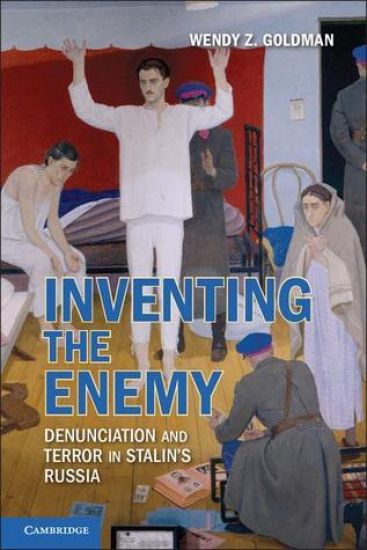
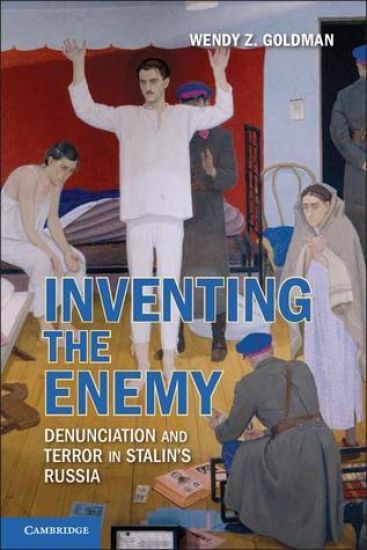
Inventing the Enemy uses stories of personal relationships to explore the behaviour of ordinary people during Stalin's terror. Communist Party leaders strongly encouraged ordinary citizens and party members to 'unmask the hidden enemy' and people responded by flooding the secret police and local authorities with accusations. By 1937, every workplace was convulsed by hyper-vigilance, intense suspicion and the hunt for hidden enemies. Spouses, co-workers, friends and relatives disavowed and denounced each other. People confronted hideous dilemmas. Forced to lie to protect loved ones, they struggled to reconcile political imperatives and personal loyalties. Workplaces were turned into snake pits. The strategies that people used to protect themselves - naming names, pre-emptive denunciations, and shifting blame - all helped to spread the terror. Inventing the Enemy, a history of the terror in five Moscow factories, explores personal relationships and individual behaviour within a pervasive political culture of 'enemy hunting'.
Inventing the Enemy

Inventing the Enemy

Wendy Z. Goldman

Cambridge University Press
2011
sidottu
Inventing the Enemy uses stories of personal relationships to explore the behaviour of ordinary people during Stalin's terror. Communist Party leaders strongly encouraged ordinary citizens and party members to 'unmask the hidden enemy' and people responded by flooding the secret police and local authorities with accusations. By 1937, every workplace was convulsed by hyper-vigilance, intense suspicion and the hunt for hidden enemies. Spouses, co-workers, friends and relatives disavowed and denounced each other. People confronted hideous dilemmas. Forced to lie to protect loved ones, they struggled to reconcile political imperatives and personal loyalties. Workplaces were turned into snake pits. The strategies that people used to protect themselves - naming names, pre-emptive denunciations, and shifting blame - all helped to spread the terror. Inventing the Enemy, a history of the terror in five Moscow factories, explores personal relationships and individual behaviour within a pervasive political culture of 'enemy hunting'.
Women, the State and Revolution

Women, the State and Revolution

Wendy Z. Goldman

Cambridge University Press
1993
sidottu
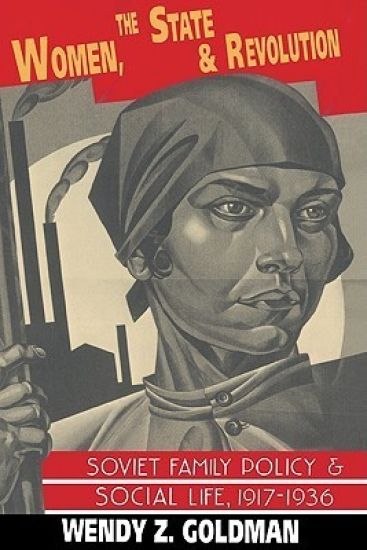
When the Bolsheviks came to power in 1917, they believed that under socialism the family would 'wither away.' They envisioned a society in which communal dining halls, daycare centres, and public laundries would replace the unpaid labour of women in the home. Yet by 1936 legislation designed to liberate women from their legal and economic dependence had given way to increasingly conservative solutions aimed at strengthening traditional family ties and women's reproductive role. This book explains the reversal, focusing on how women, peasants, and orphans responded to Bolshevik attempts to remake the family, and how their opinions and experiences in turn were used by the state to meet its own needs.
Women, the State and Revolution

Women, the State and Revolution

Wendy Z. Goldman

Cambridge University Press
1993
pokkari
When the Bolsheviks came to power in 1917, they believed that under socialism the family would ‘wither away.’ They envisioned a society in which communal dining halls, daycare centres, and public laundries would replace the unpaid labour of women in the home. Yet by 1936 legislation designed to liberate women from their legal and economic dependence had given way to increasingly conservative solutions aimed at strengthening traditional family ties and women’s reproductive role. This book explains the reversal, focusing on how women, peasants, and orphans responded to Bolshevik attempts to remake the family, and how their opinions and experiences in turn were used by the state to meet its own needs.
Sign Language and Linguistic Universals

Sign Language and Linguistic Universals

Wendy Sandler; Diane Lillo-Martin

Cambridge University Press
2006
sidottu
Sign languages are of great interest to linguists, because while they are the product of the same brain, their physical transmission differs greatly from that of spoken languages. In this pioneering and original study, Wendy Sandler and Diane Lillo-Martin compare sign languages with spoken languages, in order to seek the universal properties they share. Drawing on general linguistic theory, they describe and analyze sign language structure, showing linguistic universals in the phonology, morphology, and syntax of sign language, while also revealing non-universal aspects of its structure that must be attributed to its physical transmission system. No prior background in sign language linguistics is assumed, and numerous pictures are provided to make descriptions of signs and facial expressions accessible to readers. Engaging and informative, Sign Language and Linguistic Universals will be invaluable to linguists, psychologists, and all those interested in sign languages, linguistic theory and the universal properties of human languages.
The Transformation of the Workers' Party in Brazil, 1989–2009
Drawing on historical institutionalism and strategic frameworks, this book analyzes the evolution of the Workers' Party between 1989, the year of Lula's first presidential bid, and 2009, when his second presidential term entered its final stretch. The book's primary purpose is to understand why and how the once-radical Partido dos Trabalhadores (PT) moderated the programmatic positions it endorsed and adopted other aspects of a more catch-all electoral strategy, thereby increasing its electoral appeal. At the same time, the book seeks to shed light on why some of the PT's distinctive normative commitments and organizational practices have endured in the face of adaptations aimed at expanding the party's vote share. The conclusion asks whether, in the face of these changes and continuities, the PT can still be considered a mass organized party of the left.
Purpose and Cause in Pauline Exegesis

Purpose and Cause in Pauline Exegesis

Wendy Dabourne

Cambridge University Press
1999
sidottu
Three factors prompt this re-examination of the underlying questions that shape mainstream exegesis of Paul's letters. Hermeneutical studies have destabilized assumptions about the nature of meaning in texts; the letters are usually characterized as pastoral but explicated as expressions of Paul's thought; and the impact of E. P. Sanders' work on Paul has sharpened exegetical problems in Romans 1.16-4.25. The outcome is a two-step method of exegesis that considers a letter first in the light of the author's purpose in creating it and second as evidence for the patterns of thought from which it sprang. The passage appears as pastoral preaching, helping the Romans to deal with the implications of the fact that the God of Israel is now accepting believing Gentiles on the same basis as believing Jews. Justification by grace through faith emerges as the theological understanding of God's action in Christ that grounds pastoral speech.