Kirjojen hintavertailu. Mukana 11 342 296 kirjaa ja 12 kauppaa.

Kirjahaku

Etsi kirjoja tekijän nimen, kirjan nimen tai ISBN:n perusteella.

1000 tulosta hakusanalla William Butler

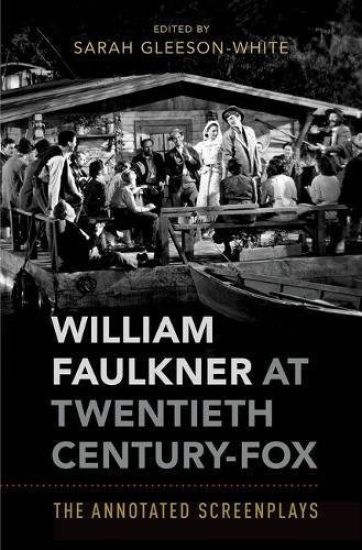
William Faulkner at Twentieth Century-Fox

William Faulkner at Twentieth Century-Fox

Sarah Gleeson-White

Oxford University Press Inc
2017
sidottu
William Faulkner at Twentieth Century-Fox: The Annotated Screenplays presents for the first time and in one volume the five screenplays Faulkner wrote while under contract to Twentieth Century-Fox in the mid 1930s and a sixth he wrote in 1952. An informative introduction describes Faulkners screenwriting practices, such as adaptation and collaboration, and contextualizes these within a broader genealogy of Hollywood screenwriting and within one of the most important moments in the history of American cinema. Each of the six screenplays appears in full with scholarly annotations, and brief prefatory essays elucidate their evolution over various drafts and with various co-writers.
William James

William James

Philip Davis

Oxford University Press
2022
sidottu
Discusses the life and work of William James, a founder of the study of psychology. William James (1842-1910) was elder brother to the novelist Henry James and a founder of the study of psychology. But he was also a thinker who sought to work across conventional boundaries, and did not believe in separate disciplines or over-professionalized ways of thinking. James was above all interested in those moments when thoughts suddenly come into being, 'hot' and 'alive'. William James is for anyone who has experienced the personal need for such thinking and feels the excitement of ideas. It concerns the personal experience of reading James, involving extensive quotation from his work in relation to Philip Davis' own inner life and the lives of other readers of James--a thinker who is defiantly convinced of the fundamental validity of the inner life in the making of the Real. This book is about William James's life-writing, writing for the sake of existence, that puts together a mix of literature, psychology, philosophy, and biography in the search for purpose and human flourishing, in place of formal religion. It includes James' interest in his brother's novels and in Shakespearean drama, as well as Thomas Hardy's pessimistic challenge to James. Davis is a reader of literature who feels that readers of novels and poems also need the help of psychology and philosophy, to get the thinking out, to make it into a working part of a life. His book is for readers, especially readers of literature, seeking to create, like William James, a literary way of thinking outside the realm of literature.
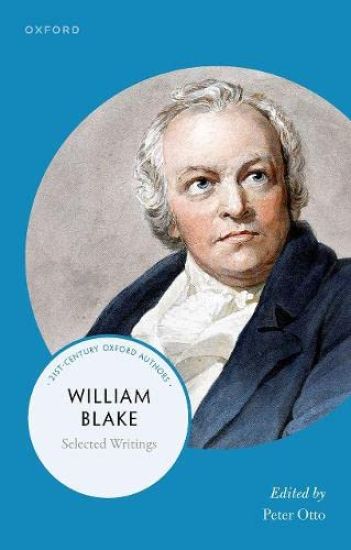
William Blake

William Blake

Oxford University Press
2022
nidottu
This volume in the 21st Century Oxford Authors series offers students and readers a comprehensive selection of the work of William Blake (1757-1827). Accompanied by full scholarly apparatus, this authoritative edition enables students to explore Blake's poetry, illuminated poetry, and prose alongside selections from his letters, manuscripts, notebook, advertising pamphlets, marginalia, and works he printed in conventional letterpress. The edition arranges Blake's works in chronological order, according to the date when they were first printed or, in the case of unpublished works, the years in which they were composed. With the help of editorial headnotes and annotations, this arrangement brings to the foreground Blake's material and intellectual labours as a poet, painter, prophet, and non-academic philosopher; the networks of acquaintances, friends, patrons, and enemies who helped support or provoke this work; and the tumultuous historical events he responded to, which included the beginning of modern feminism, the agricultural and industrial revolutions, the American and French Revolutions, William Pitt's so-called 'Reign of Terror' in Britain, an attempted revolution in Ireland (1798), a successful slave rebellion in Haiti (1791-1804), and the French revolutionary and Napoleonic wars. Some editions attempt to sanitize Blake, by hiding from view the most startling elements of his thought; but in this edition Blake's sexual, political, religious, and poetic heterodoxy comes into full view. At the same time, this edition foregrounds the dynamics of Blake's composite art, with equal weight given to its verbal and visual dimensions; makes visible the chief lines of force that structure his oeuvre; and highlights his developing thought on sapphism, sodomy, the body, relations between the sexes, the roots of violence, and the politics of imagination. This is a Blake whose dialogue with his own time anticipates much later developments, including modern depth psychologies; analyses of the social and psychological dynamics of war and peace; interest in the body, sexuality, and gender; and experiments in the relation between actual and virtual realities—a Blake who is provocative, unsettling, exhilarating, and somehow our contemporary. Explanatory notes and commentary are included, to enhance the study, understanding, and enjoyment of these works, and the edition includes an Introduction to the life and works of Blake, and a Chronology.
William Morris: Selected Writings

William Morris: Selected Writings

Ingrid Hanson

Oxford University Press
2024
sidottu
This newly selected edition of William Morris's works brings together poetry and prose, lectures, articles, and letters from his life, ordered chronologically, with an introduction highlighting his pressing and prescient writing on matters of the natural and built environment, human and non-human relations, internationalism, migration, and social justice, as well as the wide range of his literary and artistic concerns. Expert textual notes draw attention to the interconnectedness of Morris's writing and its rich literary, historical, and political contexts and sources: this is work that reaches back to tales of personal, dynastic, and political passion in medieval Europe or the craftsmanship of ancient Persia as deftly as it lambasts Victorian work practices and living conditions in Britain or sets out to correct misconceptions about the nature of social revolution; it creates visions of a just, equal, and beautiful future from re-told or imagined pasts. This selection includes lyric, epic, and narrative poetry and a range of prose writings that tell stories, conjure worlds, rouse their readers to action, and urge them to care for the earth, its inhabitants, its beauty, and its histories. It demonstrates the continuing power of Morris's writings to speak to the present with as lively, particular, and provocative a voice as it spoke to its own time.
William Mathias Anthems

William Mathias Anthems

Oxford University Press
2014
muu
for SATB accompanied and unaccompanied This anthology of nine anthems by William Mathias (1934-1992) celebrates the eightieth anniversary of the composer's birth. Ideal for church and concert choirs, it includes a variety of sacred works from throughout Mathias's career, each demonstrating an aspect of his unique compositional voice-from the lively 'Alleluya Psallat' to the peaceful 'As truly as God is our Father'. Alongside more established anthems, the collection reintroduces a number of lesser-known works into the choral repertoire, making it a must for all admirers of Mathias's choral music.
William Walton: A Catalogue

William Walton: A Catalogue

Stewart R. Craggs

Oxford University Press
2015
nidottu
This revised, updated, and expanded edition of the definitive catalogue of works by Sir William Walton (1902-83) follows the completion of the William Walton Edition. A comprehensive source of musical and documentary information relevant to Walton's life and work, the catalogue features full details of composition dates, instrumentation, first performance, publication, the location of autograph manuscripts, critical comment, and significant recordings, as well as previously undiscovered pieces. Appended are a helpful bibliography for further reading and indexes including for works, authors of texts, first lines, and dedicatees.
William Walton: A Catalogue

William Walton: A Catalogue

Stewart R. Craggs

Oxford University Press
2014
muu
This final volume in the complete William Walton Edition is a comprehensive listing of the composer's works, compiled by Stewart Craggs, consultant for the Edition. It gives dates and details for composition, first performance and publication of every work, as well as bibliography and recordings.
William Shakespeare: A Compact Documentary Life

William Shakespeare: A Compact Documentary Life

S. Schoenbaum

Oxford University Press Inc
1987
nidottu
Covering 400 years of Shakespeare scholarship, Schoenbaum's now classic William Shakespeare: A Documentary Life received high acclaim from critics and scholars. The New York Review of Books called it "a masterpiece," and the Guardian labeled it "our best life of Shakespeare." Making the resources of the world's greatest Shakespeare collections more accessible to all readers, this updated "Compact Life" contains a refined and amplified version of the original text and fifty of the original documents reproduced in smaller format. Schoenbaum has incorporated new material into his narrative, including an eyewitness account, in harrowing detail, of a murder believed to have occurred in New Place, the house that Shakespeare bought in Stratford in 1597. He also provides a new postscript which includes newly-compiled information from recent research on Shakespeare.
William Franklin

William Franklin

Sheila L. Skemp

Oxford University Press Inc
1990
sidottu
This is an unusual and fascinating biography of William Franklin, Benjamin Franklin's illegitimate son, who, with the onset of Independence, became a visible spokesman for the Loyalist cause. This biography sheds light on imperial issues and personalities in the Revolution period and explores with great understanding the complicated relationships between William Franklin and his father.
William Dorsey's Philadelphia and Ours

William Dorsey's Philadelphia and Ours

Roger Lane

Oxford University Press Inc
1991
sidottu
In the fifty years after the Civil War, Philadelphia was the archetypical city for American blacks. Not only did it have the largest black population in actual numbers, but it was also the preferred destination in the North for blacks migrating from the South after the Civil War. The focus of the book is the scrapbooks and other material collected by William Henry Dorsey, black Philadelphia's first historian. Lane uses this collection to present a brilliant portrait of America's most important black community in a time of transition - the two generations following the Civil War - when blacks began fleeing the South for a new life under emancipation.
William Faulkner and Southern History

William Faulkner and Southern History

Joel Williamson

Oxford University Press Inc
1996
nidottu
William Faulkner more than any other writer is intimately associated with the South about which he wrote. This book reveals the man and his family and the ways in which southern culture and his own life were wound around one another in his greatest works.
William Randolph Hearst: The Early Years, 1863-1910

William Randolph Hearst: The Early Years, 1863-1910

Ben Procter

Oxford University Press Inc
1998
sidottu
William Randolph Hearst was one of the most colourful and important figures of turn-of-the-century America, a man who changed the face of American journalism and whose influence extends to the present day. Now, in Original Edition, Ben Procter gives us the most authoritative account of Hearst's extraordinary career in newspapers and politics. Born to great wealth -- his father was a partial owner of four fabulously rich mines -- Hearst began his career in his early twenties by revitalizing a rundown newspaper, the San Franciso Examiner. Hearst took what had been a relatively sedate form of communicating information and essentially created the modern tabloid, complete with outrageous headlines, human interest stories, star columnists, comic strips, wide photo coverage, and crusading zeal. His papers fairly bristled with life. By 1910 he had built a newspaper empire -- eight papers and two magazines read by nearly three million people. Hearst did much to create "yellow journalism" -- with the emphasis on sensationalism and the lowering of journalistic standards. But Procter shows that Hearst's papers were also challenging and innovative and powerful: They exposed corruption, advocated progressive reforms, strongly supported recent immigrants, became a force in the Democratic Party, and helped ignite the Spanish-American War. Procter vividly depicts Hearst's own political career from his 1902 election to Congress to his presidential campaign in 1904 and his bitter defeats in New York's Mayoral and Gubernatorial races. Written with a broad narrative sweep and based on previously unavailable letters and manuscripts, William Randoph Hearst illuminates the character and era of the man whose life inspired Citizen Kane and left an indelible mark on American journalism.
William Faulkner's Absalom, Absalom!

William Faulkner's Absalom, Absalom!

Oxford University Press Inc
2003
nidottu
Absalom, Absalom! has long been seen as one of William Faulkner's supreme creations, as well as one of the leading American novels of the twentieth century. In this collection Fred Hobson has brought together eight of the most stimulating essays on Absalom, essays written over a thirty-year span which approach the novel both formally and historically. Here are critical responses by Cleanth Brooks, John Irwin, Thadious Davis, and Eric Sundquist, as well as four essays published in the last decade. The casebook concludes with Faulkner's own remarks on the novel, delivered in a discussion with students at the University of Virginia. What emerges from all the selections is a rich and suggestive treatment of a work which Faulkner himself called "the best novel yet written by an American" and a less biased critic has called "the greatest American novel of the century... joining Moby-Dick and Huckleberry Finn at the pinnacle of American fiction."
William Wordsworth's The Prelude

William Wordsworth's The Prelude

Oxford University Press Inc
2006
sidottu
William Wordsworth's long poem The Prelude is a fascinating work-as autobiography, the fruit of many attempts at understanding the formative period of Wordsworth's life; as a fragment of historical evidence from the revolutionary and post-revolutionary years; as an unstable literary text, which mutated through at least five discernable versions from 1799-1839; and as a poem offering the pleasures of blank verse in a variety and to an intensity unmatched in English non-dramatic poetry. In this collection, leading Wordsworth scholar Stephen Gill, gathers together thirteen influential essays on The Prelude. The volume as a whole is a useful and inspiring companion for students and general readers of Wordsworth's greatest, but most demanding poem.
William Wordsworth's The Prelude

William Wordsworth's The Prelude

Oxford University Press Inc
2006
nidottu
William Wordsworth's long poem The Prelude is a fascinating work-as autobiography, the fruit of many attempts at understanding the formative period of Wordsworth's life; as a fragment of historical evidence from the revolutionary and post-revolutionary years; as an unstable literary text, which mutated through at least five discernable versions from 1799-1839; and as a poem offering the pleasures of blank verse in a variety and to an intensity unmatched in English non-dramatic poetry. In this collection, leading Wordsworth scholar Stephen Gill, gathers together thirteen influential essays on The Prelude. The volume as a whole is a useful and inspiring companion for students and general readers of Wordsworth's greatest, but most demanding poem.
William Faulkner

William Faulkner

Carolyn Porter

Oxford University Press Inc
2008
sidottu
In this newest volume in Oxford's Lives and Legacies series, Carolyn Porter, a leading authority on William Faulkner, offers an insightful account of Faulkner's life and work, with special focus on the breathtaking twelve-year period when he wrote some of the finest novels in American literature. Porter ranges from Faulkner's childhood in Mississippi to his abortive career as a poet, his sojourn in New Orleans (where he met a sympathetic Sherwood Anderson and wrote his first novel Soldier's Pay), his short but strategically important stay in Paris, his "rescue" by Malcolm Crowley in the late 1940s, and his winning of the Nobel Prize. But the heart of the book illuminates the formal leap in Faulkner's creative vision beginning with The Sound and the Fury in 1929, which sold poorly but signaled the arrival of a major new literary talent. Indeed, from 1929 through 1942, he would produce, against formidable odds--physical, spiritual, and financial--some of the greatest fictional works of the twentieth century, including As I Lay Dying, Sanctuary, Light in August, Absalom, Absalom! and Go Down, Moses. Porter shows how, during this remarkably sustained burst of creativity, Faulkner pursued an often feverish process of increasingly ambitious narrative experimentation, coupled with an equally ambitious thematic expansion, as he moved from a close-up study of the white nuclear family, both lower and upper class, to an epic vision of southern, American, and ultimately Western culture. Porter illuminates the importance of Faulkner's legacy not only for American literature, but also for world literature, and reveals how Faulkner lives on so powerfully, both in the works of his literary heirs and in the lives of readers today.
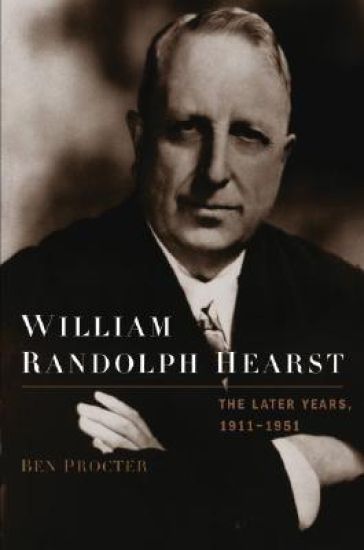
William Randolph Hearst: The Later Years 1911-1951

William Randolph Hearst: The Later Years 1911-1951

Ben Procter

Oxford University Press Inc
2007
sidottu
William Randolph Hearst was a figure of Shakespearean proportions, a man of huge ambition, inflexible will, and inexhaustible energy. He revolutionized the newspaper industry in America, becoming the most powerful media mogul the world had ever seen, and in the process earned himself the title of "most hated man in America" on four different occasions. Now in the second volume of this sweeping biography, Ben Procter gives readers a vivid portrait of the final 40 years of Hearst's life. Drawing on previously unavailable letters and manuscripts, and quoting generously from Hearst's own editorials, Procter covers all aspects of Hearst's career: his journalistic innovations, his impassioned patriotism, his fierce belief in "Government by Newspaper," his frustrated political aspirations, profligate spending and voracious art collecting, the building of his castle at San Simeon, and his tumultuous Hollywood years. The book offers new insight into Hearst's bitter and highly public quarrels with Al Smith (who referred to Hearst papers as "Mudgutter Gazettes") and FDR (whose New Deal Hearst dubbed the "Raw Deal"); his 30-year affair with the actress Marion Davies (and her own affairs with others); his political evolution from a progressive trust-buster and "America first" isolationist to an increasingly conservative and at times hysterical anti-communist. Procter also explores Hearst's ill-considered meeting with Hitler, his attempts to suppress "Citizen Kane," and his relationships with Joseph Kennedy, Charles Lindbergh, Louis B. Meyer, and many other major figures of his time. As Life magazine noted, Hearst newspapers were a "one-man fireworks display"--sensational, controversial, informative, and always entertaining. In Ben Procter's fascinating biography, Hearst shines forth in all his eccentric and egocentric glory.
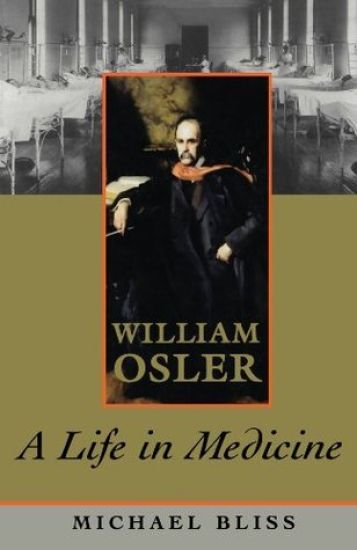
William Osler

William Osler

Michael Bliss

Oxford University Press Inc
2007
nidottu
William Osler was born in a parsonage in backwoods Canada on July 12, 1849. In a life lasting seventy years, he practiced, taught, and wrote about medicine at Canada's McGill University, America's Johns Hopkins University, and finally as Regius Professor at Oxford. At the time of his death in England in 1919, many considered him to be the greatest doctor in the world. Osler, who was a brilliant, innovative teacher and a scholar of the natural history of disease, revolutionised the art of practicing medicine at the bedside of his patients. He was idolised by two generations of medical students and practitioners for whom he came to personify the ideal doctor. But much more than a physician, Osler was a supremely intelligent humanist. In both his writings and his personal life, and through the prism of the tragedy of the Great War, he embodied the art of living. It was perhaps his legendary compassion that elevated his healing talents to an art form and attracted to his private practice students, colleagues, poets (Walt Whitman for example) politicians, royalty, and nameless ordinary people with extraordinary conditions. William Osler's life lucidly illuminates the times in which he lived. Indeed, this is a book not only about the evolution of modern medicine, the training of doctors, holism in medical thought, and the doctor-patient relationship, but also about humanism, Victorianism, the Great War, and much else. Meticulously researched, drawing on many new sources and offering new interpretations, William Osler: A Life in Medicine brings to life both a fascinating man and the formative age of twentieth-century medicine. It is a classic biography of a classic life, both authoritative and highly readable.
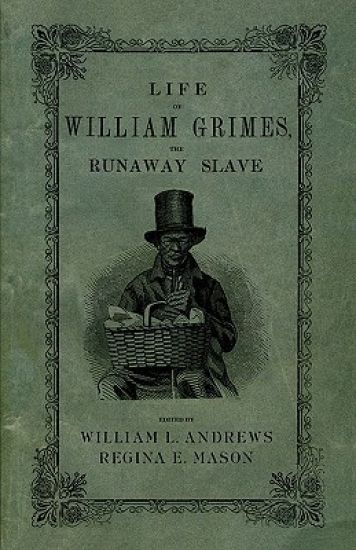
Life of William Grimes, the Runaway Slave

Life of William Grimes, the Runaway Slave

William L Andrews; Regina E Mason

Oxford University Press Inc
2008
nidottu
Life of William Grimes, the Runaway Slave is the first fugitive slave narrative in American history. When it appeared in New York in 1825, it was the longest African American autobiography published up to that time. Because Grimes wrote and published his narrative on his own, without deference to white editors, publishers, or sponsors, his Life has an immediacy, candor, and no-holds-barred realism unparalleled in antebellum slave narratives. The famous fugitives of the 1840s and 1850s, even Douglass, Brown, and Harriet Jacobs, all wrote in accordance with an antislavery script that circumscribed their freedom to speak out about what they had experienced as slaves in the South and as quasi-free men and women in the North. William Grimes, however, wrote before this formulaic script had been composed. Life appeared years before the advent of any organized national American antislavery movement, before David Walker's Appeal (1829), before the first African American newspaper, before William Lloyd Garrison had publicly acknowledged himself an abolitionist, before Frederick Douglass could read the word "abolitionist." Beholden to no one and unschooled in antislavery propaganda, Grimes's Life represents a truly unfiltered and personally authentic account of both southern slavery and the severely compromised "freedom" of the northern states in antebellum America. This edition of Life of William Grimes represents an historic partnership between a prominent scholar of the African American slave narrative and a genealogist who is also direct descendant of Grimes himself. Regina Mason, the great-great-great-granddaughter of William Grimes, combines her extensive historical research into her family and the text of her ancestor with William L. Andrews's scholarship on the origins and development of African American autobiography. The result is an authoritative, copiously annotated text that features pages from an original Grimes family Bible, transcriptions of the 1824 correspondence that set the terms for the author's self-purchase in Connecticut (nine years after his escape from Savannah, Georgia), and many other striking images that invoke the life and times of William Grimes.