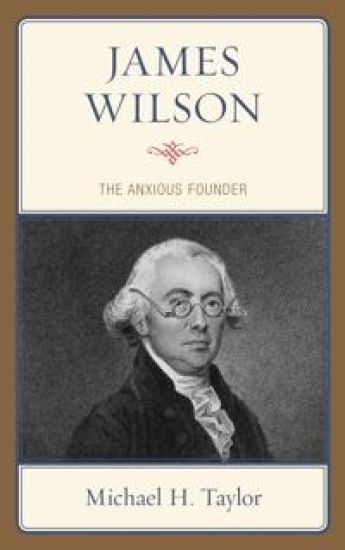
James Wilson’s life began as an Atlantic World success story, with mounting intellectual, political, and legal triumphs, but ended as a Greek tragedy. Each achievement brought greater anxiety about his place in the revolutionary world. James Wilson's life story is a testament to the success that tens of thousands of Scottish immigrants achieved after their trans-Atlantic voyage, but it also reminds us that not all had a happy ending. This book provides a more nuanced and complete picture of James Wilson’s contributions in American history. His contributions were far greater than just the attention paid to his legal lectures. His is a very human story of a Scottish immigrant who experienced success and acclaim for his activities on behalf of the American people during his public service, but in his personal affairs, and particularly financial life, he suffered the great heights and deep lows worthy of a Greek tragedy. James Wilson's life is an entry point into the events of the latter half of the 18th century and the impact of the Scottish Enlightenment on American society, discourse, and government.
James Wilson’s life began as an Atlantic World success story, with mounting intellectual, political, and legal triumphs, but ended as a Greek tragedy. Each achievement brought greater anxiety about his place in the revolutionary world. James Wilson's life story is a testament to the success that tens of thousands of Scottish immigrants achieved after their trans-Atlantic voyage, but it also reminds us that not all had a happy ending. This book provides a more nuanced and complete picture of James Wilson’s contributions in American history. His contributions were far greater than just the attention paid to his legal lectures. His is a very human story of a Scottish immigrant who experienced success and acclaim for his activities on behalf of the American people during his public service, but in his personal affairs, and particularly financial life, he suffered the great heights and deep lows worthy of a Greek tragedy. James Wilson's life is an entry point into the events of the latter half of the 18th century and the impact of the Scottish Enlightenment on American society, discourse, and government.
The crazy, unpredictable saga of Maggie Wilson's Wacky Worlds continues Maggie returns to Earth II with her children and dogs; but is compelled to leave the sanctuary of Earth II, in order to pursue the final aspect of her destiny that awaits her in the Faraway. Or so she believed As I say in all of my books, I firmly believe that unique and interesting characters can make a good story great. That is why Maggie reassembles her friends, Dog, Skunk, Una, Sarah, Golye, the Professor and Mo-Jo to accompany her on this final journey as well. Bark, the stowaway scorpion that created havoc on Journey I, decides to sneak aboard once again. Of course, Fleet is her constant companion and protector as always, still working on his English and eating various things. In order to achieve the daunting goals placed upon her by the Higher Power in the Faraway, she and her entourage must confront and overcome three super-powerful Devil-Monsters at the cost of leaving one of their own dead. Some of the original characters will remain while she meets newer ones. For example: Play and Mate, two young sister Jaguars have become her companions and protectors. The true identity of Hope the Calf is revealed, while the hilarious chimps collaborate with Joisey the Cow in selling her milk. She still has female problems and misses watching Dr. Oz on TV Rattle and his snake family, being endowed with new legs, decide to create a new species for themselves called "Snake-Ators", where they share habitat with Alligators. They had become tired of living in holes in the desert. Skunk, whose greatest desire is to become a human girl, becomes involved in a scenario of survival. In order to rescue her, Sarah, by her own wish, makes an astonishing transformation of bodies. Sarah and Golye get married after she dumps the Professor, who is repelled by her new body form while Dog, Skunk and Una become a family. Maggie gets to meet Santa Claus, who clarifies some of the myths about his operation. Earth I comes to a Standstill when it is self-destructing, becoming held in abeyance until the Higher Power decides what to do with it. Ultimately, all secrets are revealed and all questions are answered regarding the Faraway and the Power that resides within it As in Maggie I, unpredictable twists and turns are continuously occurring in this book as well.Author's note: These books are not about religion, nor is Maggie a religious person. However, in order to access her own life and the after-life as it relates to her, she must fall back onto her religious teachings of the Bible, for there is no other reference for her. She sometimes embraces her Christian upbringing, sometimes refutes it, but always remains connected to it. This vital part of her life becomes even more prevalent where she makes direct contact with the Higher Power in the Faraway, where she is vindicated Some religious parody and paraphrasing is used for entertainment purposes; however, no offense is meant.
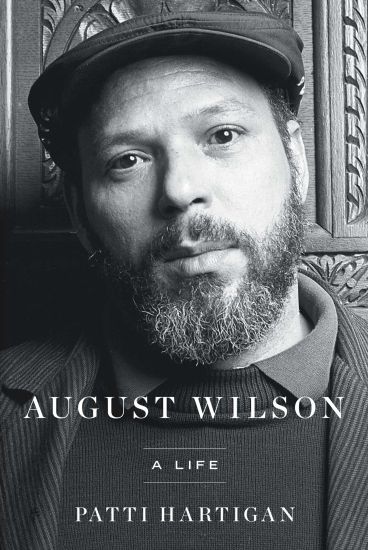
The first authoritative biography of August Wilson, the most important and successful American playwright of the late 20th century, by a theater critic who knew him. August Wilson wrote a series of ten plays celebrating African American life in the 20th century, one play for each decade. No other American playwright has completed such an ambitious oeuvre. Two of the plays became successful films, Fences, starring Denzel Washington and Viola Davis; and Ma Rainey's Black Bottom, starring Viola Davis and Chadwick Boseman. Fences and The Piano Lesson won the Pulitzer Prize for Drama; Fences won the Tony Award for Best Play, and years after Wilson's death in 2005, Jitney earned a Tony Award for Best Revival of a Play. Through his brilliant use of vernacular speech, Wilson developed unforgettable characters who epitomized the trials and triumphs of the African American experience. He said that he didn't research his plays but wrote from "the blood's memory," a sense of racial history that he believed African Americans shared. Author and theater critic Patti Hartigan traced his ancestry back to slavery, and his plays echo with uncanny similarities to the history of his ancestors. She interviewed Wilson many times before his death and traces his life from his childhood in Pittsburgh (where nine of the plays take place) to Broadway. She also interviewed scores of friends, theater colleagues and family members, and conducted extensive research to tell the story of a writer who left an indelible imprint on American theater and opened the door for future playwrights of color.
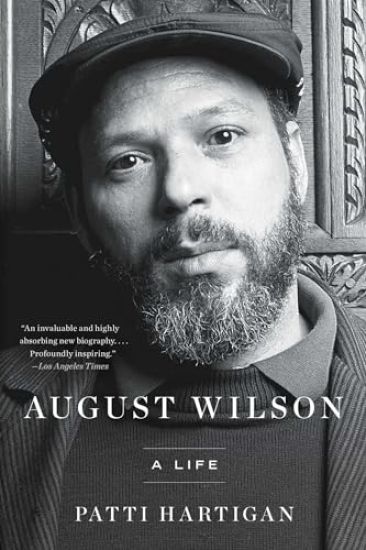
The "masterful" (The Wall Street Journal), "invaluable" (Los Angeles Times) first authoritative biography of August Wilson, the most important and successful American playwriting of the late 20th century, by a theater critic who knew him.August Wilson wrote a series of ten plays celebrating African American life in the 20th century, one play for each decade. No other American playwright has completed such an ambitious oeuvre. Two of the plays became successful films, Fences, starring Denzel Washington and Viola Davis; and Ma Rainey's Black Bottom, starring Viola Davis and Chadwick Boseman. Fences and The Piano Lesson won the Pulitzer Prize for Drama; Fences won the Tony Award for Best Play, and years after Wilson's death in 2005, Jitney earned a Tony Award for Best Revival of a Play. Through his brilliant use of vernacular speech, Wilson developed unforgettable characters who epitomized the trials and triumphs of the African American experience. He said that he didn't research his plays but wrote them from "the blood's memory," a sense of racial history that he believed African Americans shared. Author and theater critic Patti Hartigan traced his ancestry back to slavery, and his plays echo with uncanny similarities to the history of his ancestors. She interviewed Wilson many times before his death and traces his life from his childhood in Pittsburgh (where nine of the plays take place) to Broadway. She also interviewed scores of friends, theater colleagues and family members, and conducted extensive research to tell the "absorbing, richly detailed" (Chicago Tribune) story of a writer who left an indelible imprint on American theater and opened the door for future playwrights of color.
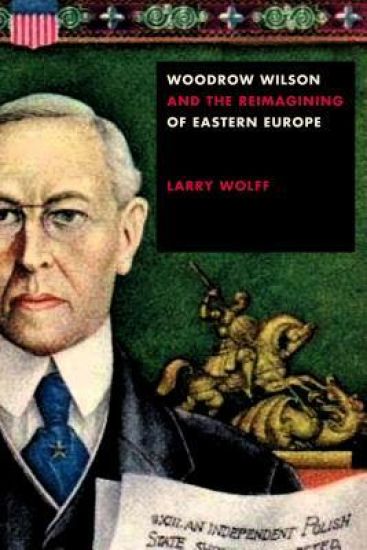
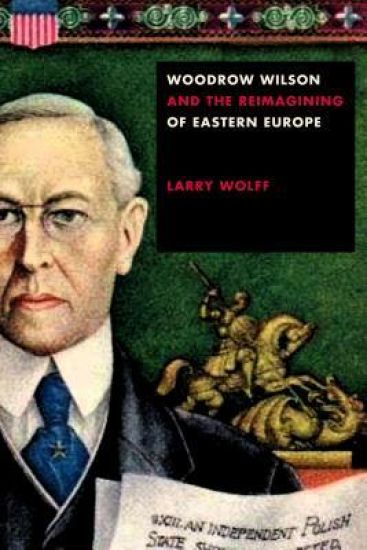
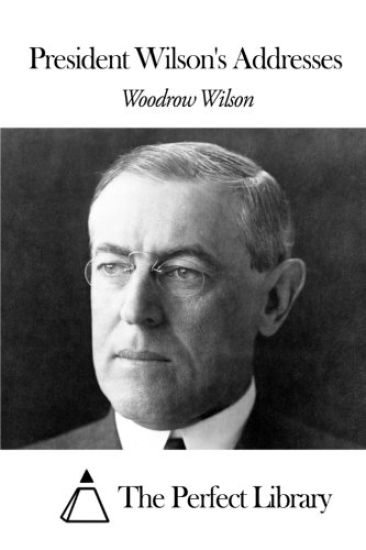
At the 1919 Paris Peace Conference, where the victorious Allied powers met to reenvision the map of Europe in the aftermath of World War I, President Woodrow Wilson's influence on the remapping of borders was profound. But it was his impact on the modern political structuring of Eastern Europe that would be perhaps his most enduring international legacy: neither Czechoslovakia nor Yugoslavia exist today, but their geopolitical presence persisted across the twentieth century from the end of World War I to the end of the Cold War. They were created in large part thanks to Wilson's advocacy, and in particular, his Fourteen Points speech of January 1918, which hinged in large part on the concept of national self-determination. But despite his deep involvement in the region's geopolitical transformation, President Wilson never set eyes on Eastern Europe, and never traveled to a single one of the eastern lands whose political destiny he so decisively influenced. Eastern Europe, invented in the age of Enlightenment by the travelers and philosophies of Western Europe, was reinvented on the map of the early twentieth century with the crucial intervention of an American president who deeply invested his political and emotional energies in lands that he would never visit. This book traces how Wilson's emerging definition of national self-determination and his practical application of the principle changed over time as negotiations at the Paris Peace Conference unfolded. Larry Wolff exposes the contradictions between Wilson's principles and their implementation in the peace settlement for Eastern Europe, and sheds light on how his decisions were influenced by both personal relationships and his growing awareness of the history of the Ottoman and Habsburg empires.
At the 1919 Paris Peace Conference, where the victorious Allied powers met to reenvision the map of Europe in the aftermath of World War I, President Woodrow Wilson's influence on the remapping of borders was profound. But it was his impact on the modern political structuring of Eastern Europe that would be perhaps his most enduring international legacy: neither Czechoslovakia nor Yugoslavia exist today, but their geopolitical presence persisted across the twentieth century from the end of World War I to the end of the Cold War. They were created in large part thanks to Wilson's advocacy, and in particular, his Fourteen Points speech of January 1918, which hinged in large part on the concept of national self-determination. But despite his deep involvement in the region's geopolitical transformation, President Wilson never set eyes on Eastern Europe, and never traveled to a single one of the eastern lands whose political destiny he so decisively influenced. Eastern Europe, invented in the age of Enlightenment by the travelers and philosophies of Western Europe, was reinvented on the map of the early twentieth century with the crucial intervention of an American president who deeply invested his political and emotional energies in lands that he would never visit. This book traces how Wilson's emerging definition of national self-determination and his practical application of the principle changed over time as negotiations at the Paris Peace Conference unfolded. Larry Wolff exposes the contradictions between Wilson's principles and their implementation in the peace settlement for Eastern Europe, and sheds light on how his decisions were influenced by both personal relationships and his growing awareness of the history of the Ottoman and Habsburg empires.
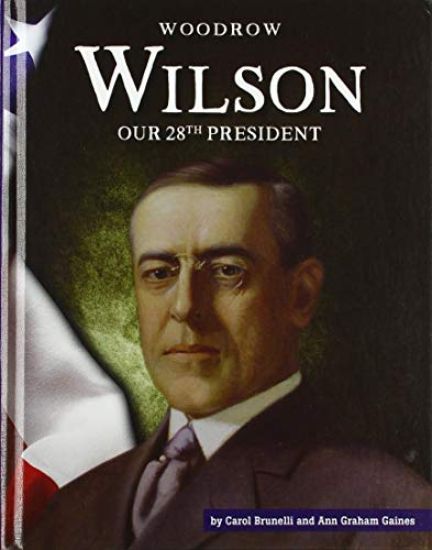
A thorough, illustrated biography discussing the childhood, career, family, and term of Woodrow Wilson, twenty-eighth president of the United States. Includes a table of contents, time line, phonetic glossary, sources for further research, an index, and detailed captions and sidebars to aid in comprehension.
This book is a volume in the Penn Press Anniversary Collection. To mark its 125th anniversary in 2015, the University of Pennsylvania Press rereleased more than 1,100 titles from Penn Press's distinguished backlist from 1899-1999 that had fallen out of print. Spanning an entire century, the Anniversary Collection offers peer-reviewed scholarship in a wide range of subject areas.