Kirjojen hintavertailu. Mukana 12 097 380 kirjaa ja 12 kauppaa.

Kirjahaku

Etsi kirjoja tekijän nimen, kirjan nimen tai ISBN:n perusteella.

1000 tulosta hakusanalla "Polymers"

Advance in Molecularly Imprinted Polymers
The "Advance in Molecularly Imprinted Polymers" Special Issue establishes a connection between original research papers and reviews that showcase recent progress in the formulation, creation, and wide-ranging utilization of molecularly imprinted polymers. The content within this Special Issue encompasses a range of subjects pertaining to the chemistry of MIPs, encompassing aspects such as molecular modeling, the utilization of novel monomers and innovative synthesis methods for crafting MIPs, the synthesis and application of ion-imprinted materials, the selective extraction of organic compounds, the preparation of sensors, and the implementation of MIPs in the field of medicine. The compilation of scientific papers presented in this collection demonstrates the diverse landscape of research within MIPs chemistry, ultimately leading to the enhancement of desired traits and the exploration of fresh potential applications for these materials.
Water Soluble Polymers
This book on water soluble polymers (WSP) contains contributions that deal with this extremely popular area of scientific investigation in polymer science and engineering, both in academic and industrial environments. The book contents cover a wide variety of topics, starting from polymerization kinetics (emphasis on multicomponent systems), clarification of factor effects (for example, ionic strength, pH, monomer concentration, and how they influence important chain characteristics and properties), mathematical modelling, parameter estimation, and process design, and ending with applications (i.e., using the well characterized polymer molecules to deliver specific desirable properties for specific applications (hydrogels, cosmetics, drug release, flocculation, nanotechnology, enhanced oil recovery, polymer flooding, absorbents, crosslinking, and many others)). This book contains 17 very high quality contributions from author groups that span the globe and represent currently active researchers in the WSP area.
Advance of Polymers Applied to Biomedical Applications
Since Langer's seminal work, polymers have been on every corner of tissue engineering. The roles of bioresorbable polymers, as a scaffold, are not merely structural, providing three-dimensional (3D) homing sites to cells, but also functional at their interface with the cells. The polymeric scaffolds actively act as both biochemical and physical cues for cell behaviors, such as adhesion, growth, proliferation, and differentiation. Polymers and cells could interact further with each other mutually, sensing and responding to the signals from the partner. Technological advances in this direction, including chemical modification of polymer scaffolds, highly cytocompatible hybrid materials/composites, dynamic scaffolds, control of juxtacrine interactions, and 3D bioprinting and microfluidic devices, ensure the advances in polymers as cell scaffolds. The detection and characterization methods for cell-material interactions and cell behaviors have been greatly improved, and new characterization techniques have emerged. Recent years have witnessed a quantum leap of progress in tissue engineering and regenerative medicine, and this edited book illustrates some of the advances in polymers as cell scaffolds.
Self-Assembly of Polymers
Nowadays, polymer self-assembly has become extremely attractive for both biological (drug delivery, tissue engineering, scaffolds) and non-biological (packaging, semiconductors) applications. In nature, a number of key biological processes are driven by polymer self-assembly, for instance protein folding. Impressive morphologies can be assembled from polymers thanks to a diverse range of interactions involved, e.g., electrostatics, hydrophobic, hots-guest interactions, etc. Both 2D and 3D tailor-made assemblies can be designed through modern powerful techniques and approaches such as the layer-by-layer and the Langmuir-Blodgett deposition, hard and soft templating. This Special Issue highlights contributions (research papers, short communications, review articles) that focus on recent developments in polymer self-assembly for both fundamental understanding the assembly phenomenon and real applications.
Advances in Mucoadhesive Polymers and Formulations for Transmucosal Drug Delivery
Mucoadhesive polymers are widely used in the design of dosage forms for transmucosal drug delivery to the eye, respiratory, gastrointestinal and reproductive tracts. These routes of drug administration offer a number of advantages including improved drug bioavailability, reduced frequency of administration, and the avoidance for the use of injections. This book represents a collection of reviews and original research articles in the area of mucoadhesive polymers and dosage forms. It covers the design of mucoadhesive forms from commercially-available water-soluble polymers, their mixture and complexes as well as some materials, whose mucoadhesive properties were enhanced through chemical modification. With contributions from leading experts in mucoadhesive polymers and formulations, this book will be a very useful source of information for researchers in polymer, pharmaceutical and formulation sciences.
Magneto-Active Polymers

Magneto-Active Polymers

Jean-Paul Pelteret; Paul Steinmann

De Gruyter
2019
sidottu
From fabrication to testing and modeling this monograph covers all aspects on the materials class of magneto active polymers. The focus is on computational modeling of manufacturing processes and material parameters. As other smart materials, these elastomers have the ability to change electrical and mechanical properties upon application of magnetic fields. This allows for novel applications ranging from biomedical engineering to mechatronics.
Shape Memory Polymers

Shape Memory Polymers

Hemjyoti Kalita

De Gruyter
2018
sidottu
The basic principles and mechanism of shape memory polymers, classification of shape memory polymers, and related characterization techniques are illustrated. Furthermore, an overview of the broad spectrum of applications in various fields for shape memory polymer is presented. Special focus will be given to hyperbranched, blended, interpenetrating and bio-based shape memory polymers, as well as shape memory polymer nanocomposites.
Water-Blown Cellular Polymers

Water-Blown Cellular Polymers

Chris Defonseka

De Gruyter
2019
isokokoinen pokkari
Drawing on over 45 years of hands-on experience, the author provides in-depth knowledge of water-blown cellular polymers, from their chemistry to formulation and process methodology. This book describes the manufacture of standard and specialty foams using new and emerging technologies. The author gives advice on the challenges foam producers commonly face with regard to formulations and makes recommendations for machinery and equipment.
Silicon-Based Polymers and Materials

Silicon-Based Polymers and Materials

Jerzy J. Chrusciel

De Gruyter
2022
sidottu
Silicon based materials and polymers are made of silicon containing polymers, mainly macromolecular siloxanes (silicones). This book covers the different kinds of siliconbased polymers: silicones, silsesquioxanes (POSS), and silicon-based copolymers. Other silicon containig polymers: polycarbosilanes, polysilazanes, siloxane-organic copolymers, silicon derived high-tech ceramics: silicon carbide and oxycarbide, silicon nitride, etc. have also a very important practical meaning and a hudge number of practical applications. These materials make up products in a variety of industries and products, including technical and medical applicatons. Polycrystalline silicon is the basic material for large scale photovoltaic (PV) applications as solar cells. Technical applications of crystalline (c-Si) and amorphous (a-Si) silicon (fully inorganic materials), silicon nanowires are still quickly growing, especially in the fi eld of microelectronics, optoelectronics, photonics. and photovoltaics, catalysts, and different electronic devices (e.g. sensors, thermoelectric devices). This book is ideal for researchers and as such covers the industrial perspective of using each class of silicon based materials. Discusses silanes, silane coupling agents (SCA), silica, silicates, silane modified fillers, silsesquioxanes, silicones, and other silicon polymers and copolymers for practical applications as polymeric materials and very useful ingredients in materials science.
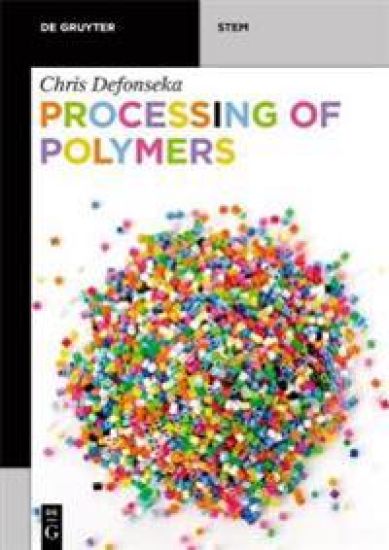
Processing of Polymers

Processing of Polymers

Chris Defonseka

De Gruyter
2020
isokokoinen pokkari
Polymers are converted into finished products through a series of steps which include mixing in additives and various types of forming. Following an introduction to polymer science and its importance to various fields, the author describes these processes from a practical, application-oriented perspective. Global suppliers of raw materials, machinery and equipment are also given, making this book an invaluable resource for industry practitioners.
Physical Chemistry of Polymers

Physical Chemistry of Polymers

Sebastian Seiffert

De Gruyter
2020
isokokoinen pokkari
This book introduces the concepts of physical chemistry of polymers. It provides a basis to bridge polymer chemistry, which targets microscopic chain structures, and polymer engineering, which targets macroscopic material properties and functions. Topics covered are single chain statistics, multi-chain interactions, and chain dynamics, both from a viewpoint of structure, properties (mostly mechanical ones), and their interrelation. In all that, the author encourages the reader to think conceptually.
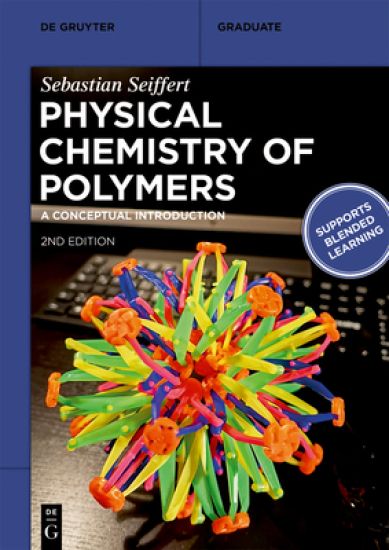
Physical Chemistry of Polymers

Physical Chemistry of Polymers

Sebastian Seiffert

De Gruyter
2023
isokokoinen pokkari
This book introduces the concepts of physical chemistry of polymers in a format targeted for a blended-learning approach. It provides a basis to bridge polymer chemistry, which targets microscopic chain structures, and polymer engineering, which targets macroscopic material properties and functions. Topics covered are single chain statistics, multi-chain interactions, and chain dynamics, both from a viewpoint of structure, properties (mostly mechanical ones), and their interrelation. In all that, the author encourages the reader to think conceptually. Explains complex facts through simplifying models, diagrams, and illustrations Accessible to chemists, chemical engineers, materials scientists, and physicists Tailored content for an interactive blended-learning format
Carbon-Based Molecularly-Imprinted Polymers
Molecular imprinting, a technique inspired by natural antibody-antigen interactions, allows the creation of synthetic polymers with selective binding capabilities. The infusion of carbon based materials into this field introduces a new dimension, leveraging the unique properties of carbon to enhance the design, performance, and applications of these polymers. Carbon-Based Molecularly Imprinted Polymers offers an in-depth exploration of the integration of carbon materials into the molecular imprinting-based smart carbon nanomaterials framework. It covers fundamental principles, design strategies, and performance evaluation of these materials, emphasizing their applications in environmental remediation, biomedical sciences and analytical chemistry. Readers will gain valuable insights into the synthesis techniques, surface engineering, and practical use of carbon-based molecularly imprinted polymers. The book is an essential reference for researchers, academics, and professionals seeking a holistic understanding of this cutting-edge intersection between polymer science and carbon nanomaterials.