Este libro consiste en la edición de 188 cartas inéditas que, desde 1906 hasta 1970, Pilar de Zubiaurre escribió y mayormente recibió de numerosos intelectuales y artistas del ámbito hispánico, desde José Ortega y Gassetobia Camprubí y María Martos de Baeza. ENGLISH VERSION A compilation of 206 unpublished letters written by Pilar de Zubiaurre from 1906 to 1970 to many Hispanic intellectuals and artists, ranging from José Ortega y Gasset toZenobia Camprubí and María Martos de Baeza.
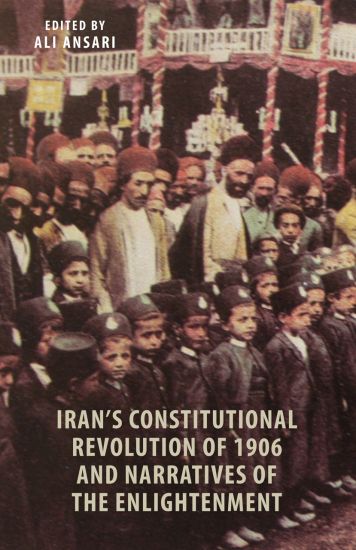
The Constitutional Revolution of 1906 opened the way for enormous change in Persia, heralding the modern era and creating a model for later political and cultural movements in the region. Broad in its scope, this multidisciplinary volume brings together essays from leading scholars in Iranian Studies to explore the significance of this revolution, its origins, and the people who made it happen. As the authors show, this period was one of unprecedented debate within Iran s burgeoning press. Many different groups fought to shape the course of the Revolution, which opened up seemingly boundless possibilities for the country s future and affected nearly every segment of its society. Exploring themes such as the role of women, the use of photography, and the uniqueness of the Revolution as an Iranian experience, the authors tell a story of immense transition, as the old order of the Shah subsided and was replaced by new institutions, new forms of expression, and a new social and political order. "
Walter Walsh (Walsh, Walter, 1857-1931) War is a state of armed conflict between societies. It is generally characterized by extreme aggression, destruction, and mortality, using regular or irregular military forces. An absence of war is usually called "peace". Warfare refers to the common activities and characteristics of types of war, or of wars in general. Total war is warfare that is not restricted to purely legitimate military targets, and can result in massive civilian or other non-combatant suffering and casualties. While some scholars see war as a universal and ancestral aspect of human nature, others argue it is a result of specific socio-cultural or ecological circumstances. The deadliest war in history, in terms of the cumulative number of deaths since its start, is the Second World War, from 1939 to 1945, with 60-85 million deaths, followed by the Mongol conquests at up to 60 million. As concerns a belligerent's losses in proportion to its prewar population, the most destructive war in modern history may have been the Paraguayan War (see Paraguayan War casualties). In 2013 war resulted in 31,000 deaths, down from 72,000 deaths in 1990. In 2003, Richard Smalley identified war as the sixth (of ten) biggest problem facing humanity for the next fifty years. War usually results in significant deterioration of infrastructure and the ecosystem, a decrease in social spending, famine, large-scale emigration from the war zone, and often the mistreatment of prisoners of war or civilians. For instance, of the nine million people who were on the territory of Soviet Belarus in 1941, some 1.6 million were killed by the Germans in actions away from battlefields, including about 700,000 prisoners of war, 500,000 Jews, and 320,000 people counted as partisans (the vast majority of whom were unarmed civilians). Another byproduct of some wars is the prevalence of propaganda by some or all parties in the conflict, and increased revenues by weapons manufacturers.
Robert Hugh Benson AFSC KC*SG KGCHS (18 November 1871 - 19 October 1914) was an English Anglican priest who in 1903 was received into the Roman Catholic Church in which he was ordained priest in 1904. He was a prolific writer of fiction and wrote the notable dystopian novel Lord of the World (1907). His output encompassed historical, horror and science fiction, contemporary fiction, children's stories, plays, apologetics, devotional works and articles. He continued his writing career at the same time as he progressed through the hierarchy to become a Chamberlain to the Pope in 1911 and subsequently titled Monsignor. Early life: Benson was the youngest son of Edward White Benson (Archbishop of Canterbury) and his wife, Mary, and the younger brother of Edward Frederic Benson and A. C. Benson. Benson was educated at Eton College and then studied classics and theology at Trinity College, Cambridge, from 1890 to 1893. In 1895, Benson was ordained a priest in the Church of England by his father, who was the then Archbishop of Canterbury. Career: After his father died suddenly in 1896, Benson was sent on a trip to the Middle East to recover his own health. While there he began to question the status of the Church of England and to consider the claims of the Roman Catholic Church. His own piety began to tend toward the High Church tradition, and he started exploring religious life in various Anglican communities, eventually obtaining permission to join the Community of the Resurrection. Benson made his profession as a member of the community in 1901, at which time he had no thoughts of leaving the Church of England. As he continued his studies and began writing, however, he became more and more uneasy with his own doctrinal position and, on 11 September 1903, he was received into the Catholic Church. He was awarded the Dignitary of Honour of the Order of the Holy Sepulchre. Benson was ordained as a Roman Catholic priest in 1904 and sent to Cambridge. He continued his writing career along with his ministry as a priest. Novelist: Like both his brothers, Edward Frederic Benson ("Fred") and Arthur Christopher Benson, Robert wrote many ghost and horror stories, as well as children's stories and historical fiction. His horror and ghost fiction are collected in The Light Invisible (1903) and A Mirror of Shallott (1907). His novel, Lord of the World (1907), is generally regarded as one of the first modern dystopian novels (see List of dystopian literature). The bibliography below reveals a prodigious output.
A collection of autobiographical essays first published in various magazines between 1904 and 1906 (1906) Joseph Conrad born J zef Teodor Konrad Korzeniowski; 3 December 1857 - 3 August 1924) was a Polish-British writer regarded as one of the greatest novelists to write in the English language. He joined the British merchant marine in 1878, and was granted British citizenship in 1886. Though he did not speak English fluently until his twenties, he was a master prose stylist who brought a non-English sensibility into English literature. He wrote stories and novels, many with a nautical setting, that depict trials of the human spirit in the midst of an impassive, inscrutable universe
This special edition of 'The Evolution of Our Native Fruits' was written by Liberty Hyde Bailey, and first published in 1906, making it well over a century old. This horticultural tome by the incredibly prolific Bailey explores the histories and evolution of fruits native to North America. The book covers topics like The Rise of the American Grape, The Strange History of the Mulberries, The Evolution of American Plums and Cherries, The Native Apples, Evolution of Blackberry and Dewberry Culture, The Origin of American Raspberry Growing, and more. An interesting old book and an essential addition to the libraries of anybody interested in the historical aspects of Fruit Culture in the US. IMPORTANT NOTE - Please read BEFORE buying THIS BOOK IS A REPRINT. IT IS NOT AN ORIGINAL COPY. This book is a reprint edition and is a perfect facsimile of the original book. It is not set in a modern typeface and has not been digitally enhanced. As a result, some characters and images might suffer from slight imperfections, blurring, or minor shadows in the page background. This book appears exactly as it did when it was first printed. DISCLAIMER: Due to the age of this book, some methods or practices may have been deemed unsafe or unacceptable in the interim years. In utilizing the information herein, you do so at your own risk. We republish antiquarian books without judgment, solely for their historical and cultural importance, and for educational purposes. If purchasing a book more than 50 years old, especially for a minor, please use due diligence and vet the text before gifting.
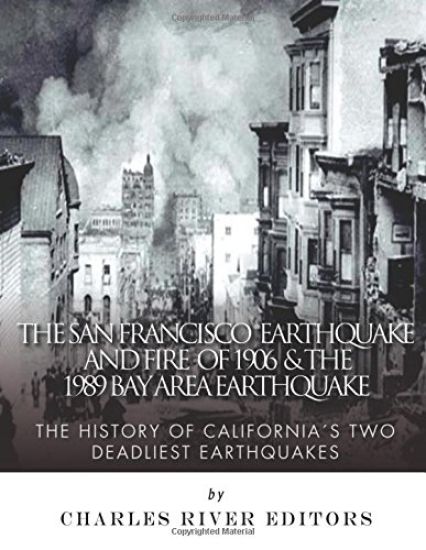
*Includes pictures *Includes accounts of the disasters made by survivors, firefighters, police officers, and more *Includes bibliographies for further reading *Includes a table of contents On April 18, 1906, most of the residents of the city of San Francisco were sound asleep when the ground started to shake around 5:15 a.m., but what started as fairly soft tremors turned into a violent shaking in all directions. The roar of the earthquake unquestionably woke up residents, at least those fortunate enough not to be immediately swallowed by the cracks opening up in the ground. The earthquake lasted about a minute, but it had enough destructive force to divert the course of entire rivers and level much of the 9th largest city in America at the time. Unfortunately for San Franciscans, the worst was yet to come. During the earthquake, the city's gas mains and water mains were ruptured, which had the effects of starting a number of fires and preventing the residents from being equipped to fight them. Without water to truly fight the blaze, the city's officials actually resorted to demolishing buildings in hopes of containing the fire, and witnesses reported seeing San Franciscans trapped in the burning buildings being shot by authorities instead of letting them burn alive. The fires lasted three days, and by the time they were done, 80% of the city was in ruins, about 60% of the residents were homeless, and an estimated 3,000-6,000 were dead. In fact, the fires were so devastating that contemporary San Franciscans called the disaster "The Fire." Although the resulting fires may have done the most damage, the widespread destruction made clear to city leaders that the new buildings would need better safety codes and protection against subsequent earthquakes. The city reinforced new buildings against earthquakes and fixed older surviving buildings to better deal with future earthquakes, and the city also created the Auxiliary Water Supply System to prevent a repeat of the 1906 disaster. On October 17, 1989, millions of Americans tuning in to watch the Oakland Athletics face the San Francisco Giants in the World Series watched the cameras suddenly start to shake violently for several seconds. The national broadcast had just caught an earthquake registering a 6.9 on the Richter scale striking the Bay Area, and by the time the earthquake and the resulting fires were over and dealt with, over 60 people were dead, making it San Francisco's deadliest earthquake since the 1906 earthquake and fire. The damage and devastation across the Bay Area was widespread, despite the precautions and changes that the region had made in the wake of the 1906 calamity. After that disaster, San Francisco began the process of reinforcing new buildings and seismic retrofitting of old ones to help structures brace for earthquakes, but even in the 1980s they were still more concerned about potential fires resulting from an earthquake. Furthermore, after the earthquake in 1906, San Francisco created an Auxiliary Water Supply System that could distribute water to any section of the city, and the city built it with stringent codes in the event of an earthquake. In fact, just a few years before 1989, San Francisco created a Portable Water Supply System and upgraded the fire departments. San Francisco's water supply systems worked perfectly, quickly allowing firefighters to put out a fire in the Marina District before it spread, but this time the biggest problem was "liquefaction," in which saturated soil literally melted away as it was unable to hold any more liquid. The shaking of the earthquake then created cracks in the liquefied soil, and attempts to protect buildings from the violent movements could not safeguard them from the land melting away from under it. The most noteworthy damage occurred to several sections of highways in the Bay Area that did not hold up during the earthquake.
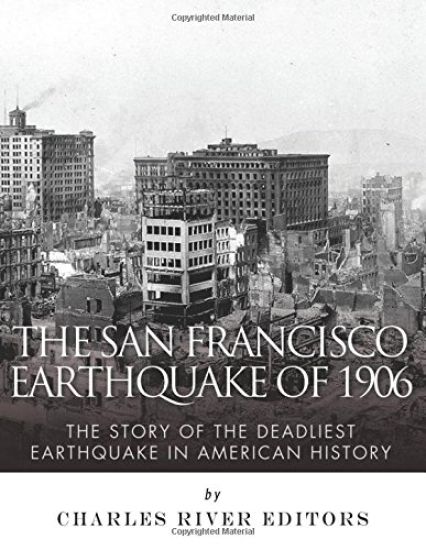
*Includes pictures *Includes accounts of the earthquake and fires *Includes a bibliography for further reading " I]t does not seem to have affected any one with a sense of final destruction, with any foreboding of irreparable disaster. Every one is talking of it this afternoon, and no one is in the least degree dismayed. I have talked and listened in two clubs, watched people in cars and in the street, and one man is glad that Chinatown will be cleared out for good; another's chief solicitude is for Millet's 'Man with the Hoe.' 'They'll cut it out of the frame, ' he says, a little anxiously. 'Sure.' But there is no doubt anywhere that San Francisco can be rebuilt, larger, better, and soon. Just as there would be none at all if all this New York that has so obsessed me with its limitless bigness was itself a blazing ruin. I believe these people would more than half like the situation." - H.G. Wells On April 18, 1906, most of the residents of the city of San Francisco were sound asleep when the ground started to shake around 5:15 a.m., but what started as fairly soft tremors turned into a violent shaking in all directions. The roar of the earthquake unquestionably woke up residents, at least those fortunate enough not to be immediately swallowed by the cracks opening up in the ground. The earthquake lasted about a minute, but it had enough destructive force to divert the course of entire rivers and level much of the 9th largest city in America at the time. Unfortunately for San Franciscans, the worst was yet to come. During the earthquake, the city's gas mains and water mains were ruptured, which had the effects of starting a number of fires and preventing the residents from being equipped to fight them. Without water to truly fight the blaze, the city's officials actually resorted to demolishing buildings in hopes of containing the fire, and witnesses reported seeing San Franciscans trapped in the burning buildings being shot by authorities instead of letting them burn alive. The fires lasted three days, and by the time they were done, 80% of the city was in ruins, about 60% of the residents were homeless, and an estimated 3,000-6,000 were dead. In fact, the fires were so devastating that contemporary San Franciscans called the disaster "The Fire." Although the resulting fires may have done the most damage, the widespread destruction made clear to city leaders that the new buildings would need better safety codes and protection against subsequent earthquakes. The city reinforced new buildings against earthquakes and fixed older surviving buildings to better deal with future earthquakes, and the city also created the Auxiliary Water Supply System to prevent a repeat of the 1906 disaster. At the same time, there was a determined sense of resolve to rebuild San Francisco into a bigger and better city, and financial assistance flowed to the shattered city from all across the country. Even as refugee camps were set up in parks and sheltered people for a few years, the U.S. Army and other volunteers helped provide for the people, and despite suffering damage amounting to the equivalent of over $6 billion in today's dollars, California governor George C. Pardee was right when he predicted, "This is not the first time that San Francisco has been destroyed by fire, I have not the slightest doubt that the City by the Golden Gate will be speedily rebuilt, and will, almost before we know it, resume her former great activity." The San Francisco Earthquake of 1906: The Deadliest Earthquake in American History chronicles the deadliest natural disaster in California's history and one of the most important seismic events on record. Along with pictures of important people, places, and events, you will learn about the San Francisco Earthquake of 1906 like never before, in no time at all.
De rime en rime: 1903-1906 / L.-L. RegnierDate de l'edition originale: 1906Ce livre est la reproduction fidele d'une oeuvre publiee avant 1920 et fait partie d'une collection de livres reimprimes a la demande editee par Hachette Livre, dans le cadre d'un partenariat avec la Bibliotheque nationale de France, offrant l'opportunite d'acceder a des ouvrages anciens et souvent rares issus des fonds patrimoniaux de la BnF.Les oeuvres faisant partie de cette collection ont ete numerisees par la BnF et sont presentes sur Gallica, sa bibliotheque numerique.En entreprenant de redonner vie a ces ouvrages au travers d'une collection de livres reimprimes a la demande, nous leur donnons la possibilite de rencontrer un public elargi et participons a la transmission de connaissances et de savoirs parfois difficilement accessibles.Nous avons cherche a concilier la reproduction fidele d'un livre ancien a partir de sa version numerisee avec le souci d'un confort de lecture optimal. Nous esperons que les ouvrages de cette nouvelle collection vous apporteront entiere satisfaction.Pour plus d'informations, rendez-vous sur www.hachettebnf.fr
L'Ecole d'anthropologie de Paris: 1876-1906Date de l'edition originale: 1907"Comprend: L'Ecole d'anthropologie depuis sa fondation"Ce livre est la reproduction fidele d une uvre publiee avant 1920 et fait partie d une collection de livres reimprimes a la demande editee par Hachette Livre, dans le cadre d un partenariat avec la Bibliotheque nationale de France, offrant l opportunite d acceder a des ouvrages anciens et souvent rares issus des fonds patrimoniaux de la BnF.Les uvres faisant partie de cette collection ont ete numerisees par la BnF et sont presentes sur Gallica, sa bibliotheque numerique.En entreprenant de redonner vie a ces ouvrages au travers d une collection de livres reimprimes a la demande, nous leur donnons la possibilite de rencontrer un public elargi et participons a la transmission de connaissances et de savoirs parfois difficilement accessibles.Nous avons cherche a concilier la reproduction fidele d un livre ancien a partir de sa version numerisee avec le souci d un confort de lecture optimal. Nous esperons que les ouvrages de cette nouvelle collection vous apporteront entiere satisfaction.Pour plus d informations, rendez-vous sur www.hachettebnf.fr
Conferences faites au Musee Guimet / par MM. H. Parmentier, Paul Pierret, Victor Henry, Mlle Menant, MM. Ph. Berger et A. MoretDate de l'edition originale: 1906"Comprend: La religion ancienne de l'Annam / par H. Parmentier; Les interpretations de la religion egyptienne / par Paul Pierret; Soma et haoma / par M. Victor Henry, ...; Anquetil Duperron a Surate / par M. D. Menant, chargee de mission dans l'Inde"Ce livre est la reproduction fidele d'une oeuvre publiee avant 1920 et fait partie d'une collection de livres reimprimes a la demande editee par Hachette Livre, dans le cadre d'un partenariat avec la Bibliotheque nationale de France, offrant l'opportunite d'acceder a des ouvrages anciens et souvent rares issus des fonds patrimoniaux de la BnF.Les oeuvres faisant partie de cette collection ont ete numerisees par la BnF et sont presentes sur Gallica, sa bibliotheque numerique.En entreprenant de redonner vie a ces ouvrages au travers d'une collection de livres reimprimes a la demande, nous leur donnons la possibilite de rencontrer un public elargi et participons a la transmission de connaissances et de savoirs parfois difficilement accessibles.Nous avons cherche a concilier la reproduction fidele d'un livre ancien a partir de sa version numerisee avec le souci d'un confort de lecture optimal. Nous esperons que les ouvrages de cette nouvelle collection vous apporteront entiere satisfaction.Pour plus d'informations, rendez-vous sur www.hachettebnf.fr
La conquete du peupleDate de l'edition originale: 1906Ce livre est la reproduction fidele d'une oeuvre publiee avant 1920 et fait partie d'une collection de livres reimprimes a la demande editee par Hachette Livre, dans le cadre d'un partenariat avec la Bibliotheque nationale de France, offrant l'opportunite d'acceder a des ouvrages anciens et souvent rares issus des fonds patrimoniaux de la BnF.Les oeuvres faisant partie de cette collection ont ete numerisees par la BnF et sont presentes sur Gallica, sa bibliotheque numerique.En entreprenant de redonner vie a ces ouvrages au travers d'une collection de livres reimprimes a la demande, nous leur donnons la possibilite de rencontrer un public elargi et participons a la transmission de connaissances et de savoirs parfois difficilement accessibles.Nous avons cherche a concilier la reproduction fidele d'un livre ancien a partir de sa version numerisee avec le souci d'un confort de lecture optimal. Nous esperons que les ouvrages de cette nouvelle collection vous apporteront entiere satisfaction.Pour plus d'informations, rendez-vous sur www.hachettebnf.fr
Les conditions d'existence a Tanger / signe R. L.]Date de l'edition originale: 1906Ce livre est la reproduction fidele d'une oeuvre publiee avant 1920 et fait partie d'une collection de livres reimprimes a la demande editee par Hachette Livre, dans le cadre d'un partenariat avec la Bibliotheque nationale de France, offrant l'opportunite d'acceder a des ouvrages anciens et souvent rares issus des fonds patrimoniaux de la BnF.Les oeuvres faisant partie de cette collection ont ete numerisees par la BnF et sont presentes sur Gallica, sa bibliotheque numerique.En entreprenant de redonner vie a ces ouvrages au travers d'une collection de livres reimprimes a la demande, nous leur donnons la possibilite de rencontrer un public elargi et participons a la transmission de connaissances et de savoirs parfois difficilement accessibles.Nous avons cherche a concilier la reproduction fidele d'un livre ancien a partir de sa version numerisee avec le souci d'un confort de lecture optimal. Nous esperons que les ouvrages de cette nouvelle collection vous apporteront entiere satisfaction.Pour plus d'informations, rendez-vous sur www.hachettebnf.fr
The year 2014 saw the 200th anniversary of Napoleon's downfall - and the restauration of the French monarchy under the house of Bourbon. With this as a starting point, Volker Sellin shows how the European monarchies restored and prolonged their reigns by giving their countries constitutions. This new angle results in an astonishing history of the 19th century in Europe from Spain to Russia.