Edited and with an Introduction by Michael Wala, Assistant Professor at Universitat Erlangen-Nurnberg This recently discovered study by Allen Dulles, written in the winter of 1947/48 when the acceptance of the Marshall Plan was still in doubt, not only offers fascinating insights into the early postwar period but may also serve as an inspiration to policy makers at a time when there is much discussion of recovery programmes for Eastern Europe and the Marshall Plan is often evoked as a possible model.
Astrophysicist and space pioneer James Van Allen (1914-2006), for whom the Van Allen radiation belts were named, was among the principal scientific investigators for twenty-four space missions, including Explorer 1 in 1958, the first successful U.S. satellite; Mariner 2's 1962 flyby of Venus, the first successful mission to another planet; and the 1970s Pioneer 10 and Pioneer 11, missions that surveyed Jupiter and Saturn. Although he retired as a University of Iowa professor of physics and astronomy in 1985, he remained an active researcher, using his campus office to monitor data from Pioneer 10 - on course to reach the edge of the solar system when its signal was lost in 2003 - until a short time before his death at the age of ninety-one. Now Abigail Foerstner blends space science drama, military agendas, cold war politics, and the events of Van Allen's lengthy career to create the first biography of this highly influential physicist. Drawing on Van Allen's correspondence and publications, years of interviews with him as well as with more than a hundred other scientists, and declassified documents from such archives as the Jet Propulsion Laboratory, the Kennedy Space Center, and the Applied Physics Laboratory, Foerstner describes Van Allen's life from his Iowa childhood to his first experiments at White Sands to the years of Explorer 1 until his death in 2006. Often called the father of space science, James Van Allen led the way to mapping a new solar system based on the solar wind, massive solar storms, and cosmic rays. Pioneer 10 alone sent him more than thirty years of readings that helped push our recognition of the boundary of the solar system billions of miles past Pluto. Abigail Foerstner's compelling biography charts the eventful life and time of this trailblazing physicist.
Will Allen is no ordinary farmer. A former basketball star, he's as tall as his truck, and he can hold a cabbage--or a basketball--in one hand. But what is most special about Farmer Will is that he can see what others can't see. When he looked at an abandoned city lot in Milwaukee he saw a huge table, big enough to feed the whole world. No space, no problem. Poor soil, there's a solution. Need help, found it. Farmer Will is a genius in solving problems. In 2008, the MacArthur Foundation named him one for his innovative urban farming methods, including aquaponics and hydroponics. Jacqueline Briggs Martin, author of the Caldecott Medal winner, Snowflake Bentley, and Alice Waters and the Trip to Delicious , along with debut artist Eric-Shabazz Larkin's striking artwork, tells the inspiring story of the African American innovator, educator, and community builder. Farmer Will Allen is the first book of Martin's Food Heroes series, followed by Alice Waters and the Trip to Delicious. In 2015, it was selected by Points of Light Foundation to set a new Guinness World Record for the most children reading the same book across the globe to promote literacy. Nearly 300,000 participated.
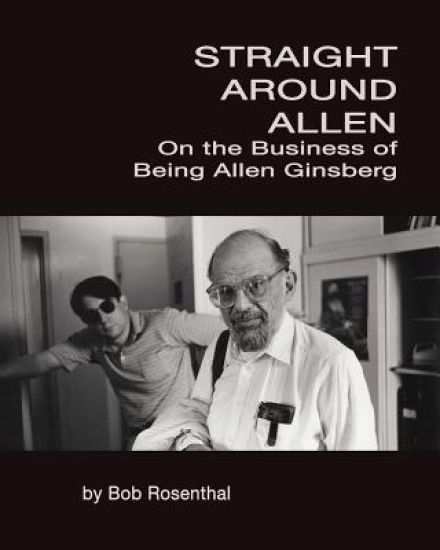
Allen Ginsberg was not just a poet; he was one of the most recognizable and outspoken public figures of the late twentieth century. From the mid-fifties onward, Ginsberg was rarely out of the public consciousness as he raised civic and spiritual awareness for all causes large and small. He traveled the world, reading poetry in more than sixty countries, and managed to organize university degrees and mentor young poets.Arranging Allen's life took a team of dedicated and talented people, and of these people poet Bob Rosenthal worked as Allen's personal secretary over two decades. In this intimate new book, he tells what it was like to be behind the scenes of the Allen Ginsberg industry. From first encounter to Ginsberg's death, Rosenthal recounts the highs and lows of employment in the internationally most-famous-living poet's circle, in a book that is in turns poignant and hilarious, always fascinating.
This book shows off the art of Elaine Allen who always use her maiden name Roennfeldt when signing her art. Elaine was a prolific painter, painting at every opportunity in water colours and during her 52 year stay in Kalamunda her husband estimates that she painted in excess of 1,000 paintings. Elaine married David Allen and they have three daughters. As well as attending to the needs of her family, she has managed to carry on with her painting and an active membership with the Kalamunda Arts and Crafts Group. Two or three times a week Elaine met up with fellow artists: Anne Silverton, Helen Sounness and Jean Mc Diamid and they visited numerous locations seeking out subjects of interest to paint: 'anything falling down or rusting away, very old homes and places with atmosphere like bush fires, water, mist and smoke'. Most of Elaine's art is of old houses and trees, bush scenes and landscapes of Kalamunda and surrounds and includes the vineyards in the Swan Valley, horses in local paddocks, the Swan River, views of Perth from Maylands and The Hills and beaches.
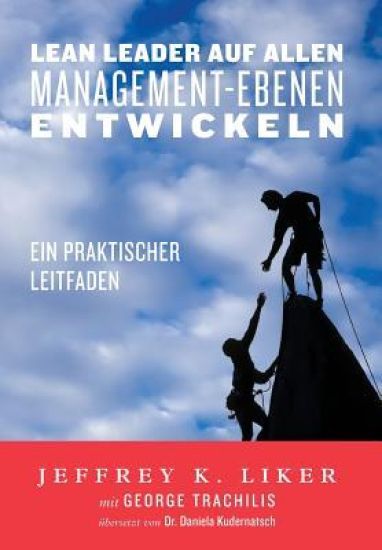
2016 Gewinner des SHINGO Forschung und berufliche VER FFENTLICHUNG AWARD, Entwicklung von Lean F hrungskr fte auf allen Ebenen: A Practical Guide ist ein Management-Must Read.Die Lean Leadership Development Model (LLDM) in diesem Buch ist intuitiv, und deckt sich gut mit den anerkannten Grunds tzen der operativen Exzellenz. Es dehnt sich deutlich auf die Elemente der Lean, strukturieren sie in einer bestimmten Weise, die durch schlanke Praktiker operationalisiert werden kann.Sie k nnen alles, was Sie ber den Toyota-Weg wollen zu lernen; k nnen Sie die Werkzeuge, die sie erstellt haben, zu implementieren, aber wenn Sie nicht ber die in Ihrer Kultur etabliert Verhaltensweisen, wird es nicht erfolgreich f r die langfristige Erhaltung der operativen Exzellenz sein. F hrung muss die Rede von der geografischen Nordrichtung in jedem Aspekt des Lean Leadership Development Model (LLDM) zu Fu , wie ausf hrlich von Dr. Liker in diesem letzten Shingo-Preis bermittelt Gewinnen buchen.Das Erfolgsgeheimnis von Toyota hinsichtlich der Entwicklung von F hrungskr ften haben Jeffrey Liker und Toyota-Veteran Gary Convis zum ersten Mal in ihrem Buch The Toyota Way to Lean Leadership gel ftet. Toyota-F hrungskr fte leben die Unternehmenswerte, verbessern das Unternehmen kontinuierlich und k nnen sich auf ein schnell ver nderndes Umfeld einstellen.F r Toyota-F hrungskr fte wird ein Kern-Set von F higkeiten vorausgesetzt. Dies zielt darauf ab, den richtigen Weg zu finden, um Wertschaffung f r die Kunden zu verbessern - unabh ngig f r welchen Unternehmensbereich (Verkauf, Logistik, Personal, Fertigung, Forschung & Entwicklung, Finanzen). Dieser Prozess wird oftmals mit den Ergebnissen des Prozesses verwechselt, welche als Werkzeuge bei einer Toyota-Werksbesichtigung anschaulich werden. Das Ph nomen eines jeden Toyota-Werkes ist, dass eine Kultur von Menschen geschaffen wird, die wohl durchdacht eine Methode des Definierens, der Analyse sowie der Probleml sung erlernt haben, um das Unternehmen weiter nach vorne zu bringen.
A fundraiser of the William Allen White Community Partnership. This volume contains pieces related to or about White. Includes 3 Kansas Poets Laureate. Author range from a student to professional writers with extensive credits.
This work has been selected by scholars as being culturally important and is part of the knowledge base of civilization as we know it.This work is in the public domain in the United States of America, and possibly other nations. Within the United States, you may freely copy and distribute this work, as no entity (individual or corporate) has a copyright on the body of the work.Scholars believe, and we concur, that this work is important enough to be preserved, reproduced, and made generally available to the public. To ensure a quality reading experience, this work has been proofread and republished using a format that seamlessly blends the original graphical elements with text in an easy-to-read typeface.We appreciate your support of the preservation process, and thank you for being an important part of keeping this knowledge alive and relevant.
This work has been selected by scholars as being culturally important and is part of the knowledge base of civilization as we know it.This work is in the public domain in the United States of America, and possibly other nations. Within the United States, you may freely copy and distribute this work, as no entity (individual or corporate) has a copyright on the body of the work.Scholars believe, and we concur, that this work is important enough to be preserved, reproduced, and made generally available to the public. To ensure a quality reading experience, this work has been proofread and republished using a format that seamlessly blends the original graphical elements with text in an easy-to-read typeface.We appreciate your support of the preservation process, and thank you for being an important part of keeping this knowledge alive and relevant.
This work has been selected by scholars as being culturally important and is part of the knowledge base of civilization as we know it.This work is in the public domain in the United States of America, and possibly other nations. Within the United States, you may freely copy and distribute this work, as no entity (individual or corporate) has a copyright on the body of the work.Scholars believe, and we concur, that this work is important enough to be preserved, reproduced, and made generally available to the public. To ensure a quality reading experience, this work has been proofread and republished using a format that seamlessly blends the original graphical elements with text in an easy-to-read typeface.We appreciate your support of the preservation process, and thank you for being an important part of keeping this knowledge alive and relevant.