Kirjojen hintavertailu. Mukana 11 590 110 kirjaa ja 12 kauppaa.

Kirjahaku

Etsi kirjoja tekijän nimen, kirjan nimen tai ISBN:n perusteella.

1000 tulosta hakusanalla Allen Wikgren

Historical Dictionary of Woody Allen

Historical Dictionary of Woody Allen

William Brigham

Rowman Littlefield
2019
sidottu
Woody Allen has accomplished that which no American filmmaker in the modern era has or perhaps ever will: directing to date 49 films (47 full-length theatrical releases, one short film in an anthology, and one television film), writing 42 of those films (and co-writing the remaining seven) and acting in 29 of them. Collectively, these films have earned Allen four Oscars (one for Best Director; three for Best Screenplay), as well as another six Academy Award nominations for Best Director, 13 for Best Screenplay and one for Best Actor. Actors, members of his film staff, and his producers have received seven Oscars and another 20 nominations. All told, his films have garnered 132 awards and another 209 nominations from American and international bodies. Historical Dictionary of Woody Allen contains a chronology, an introduction, a filmography, an appendix, and an extensive bibliography. The dictionary section has over 600 cross-referenced entries on the actors, actresses, cinematographers, editors, designers, and producers he’s worked with as well as his films and awards. This book is an excellent resource for students, researchers, and anyone wanting to know more about Woody Allen.

Coloring with Frank Louis Allen. Volume 1

Coloring with Frank Louis Allen. Volume 1

Frank Louis Allen

Createspace Independent Publishing Platform
2016
nidottu
This is Frank Louis Allen's first collection of Artwork to Color.Frank Louis Allen is an artist whose unique drawings have been successfully shown in Washington DC, New York, and galleries in the Midwest. Despite having a degenerative eye condition, and being on the Autistic Spectrum, he lets neither of these hold back his art and some of the time they are an asset to his art style. Originally from the UK, he now lives in the Midwestern US. He hopes you enjoy coloring with him.
Flute and violin, and other Kentucky tales and romances. By: James Lane Allen: Illustrated (World's classic's)
James Lane Allen(December 21, 1849 - February 18, 1925) was an American novelist and short story writer whose work, including the novel A Kentucky Cardinal, often depicted the culture and dialects of his native Kentucky. His work is characteristic of the late-19th century local color era, when writers sought to capture the vernacular in their fiction. Allen has been described as "Kentucky's first important novelist." Allen was born near Lexington, Kentucky, and his youth there during the Ante-bellum, Civil War, and Reconstruction periods heavily influenced his writing. He graduated from Transylvania University in 1872, delivering the Salutatorian address in Latin. In 1893 Allen moved to New York City, where he lived until his death. He was a contributor to Harper's Magazine, The Atlantic Monthly, and other popular magazines of the time. His novels include The Choir Invisible, which was a very popular best seller in 1897. Allen is buried in Lexington Cemetery. At the northern edge of Gratz Park in Lexington is the "Fountain of Youth", built in memory of Allen using proceeds willed to the city by him.James Lane Allen School, an elementary school off Alexandria Drive in Lexington, Kentucky is named in his honor.
The blue-grass region of Kentucky: and other Kentucky articles. By: James Lane Allen: illustrated novel (World's classic's)
James Lane Allen(December 21, 1849 - February 18, 1925) was an American novelist and short story writer whose work, including the novel A Kentucky Cardinal, often depicted the culture and dialects of his native Kentucky. His work is characteristic of the late-19th century local color era, when writers sought to capture the vernacular in their fiction. Allen has been described as "Kentucky's first important novelist." Allen was born near Lexington, Kentucky, and his youth there during the Ante-bellum, Civil War, and Reconstruction periods heavily influenced his writing. He graduated from Transylvania University in 1872, delivering the Salutatorian address in Latin. In 1893 Allen moved to New York City, where he lived until his death. He was a contributor to Harper's Magazine, The Atlantic Monthly, and other popular magazines of the time. His novels include The Choir Invisible, which was a very popular best seller in 1897. Allen is buried in Lexington Cemetery. At the northern edge of Gratz Park in Lexington is the "Fountain of Youth", built in memory of Allen using proceeds willed to the city by him.James Lane Allen School, an elementary school off Alexandria Drive in Lexington, Kentucky is named in his honor.
John Gray: a Kentucky tale of the olden time. By: James Lane Allen

John Gray: a Kentucky tale of the olden time. By: James Lane Allen

James Lane Allen

Createspace Independent Publishing Platform
2016
nidottu
James Lane Allen(December 21, 1849 - February 18, 1925) was an American novelist and short story writer whose work, including the novel A Kentucky Cardinal, often depicted the culture and dialects of his native Kentucky. His work is characteristic of the late-19th century local color era, when writers sought to capture the vernacular in their fiction. Allen has been described as "Kentucky's first important novelist." Allen was born near Lexington, Kentucky, and his youth there during the Ante-bellum, Civil War, and Reconstruction periods heavily influenced his writing. He graduated from Transylvania University in 1872, delivering the Salutatorian address in Latin. In 1893 Allen moved to New York City, where he lived until his death. He was a contributor to Harper's Magazine, The Atlantic Monthly, and other popular magazines of the time. His novels include The Choir Invisible, which was a very popular best seller in 1897. Allen is buried in Lexington Cemetery. At the northern edge of Gratz Park in Lexington is the "Fountain of Youth", built in memory of Allen using proceeds willed to the city by him.James Lane Allen School, an elementary school off Alexandria Drive in Lexington, Kentucky is named in his honor.
Aftermath; part second of "A Kentucky cardinal". By: James Lane Allen: (sequel to A Kentucky Cardinal)
James Lane Allen(December 21, 1849 - February 18, 1925) was an American novelist and short story writer whose work, including the novel A Kentucky Cardinal, often depicted the culture and dialects of his native Kentucky. His work is characteristic of the late-19th century local color era, when writers sought to capture the vernacular in their fiction. Allen has been described as "Kentucky's first important novelist." Allen was born near Lexington, Kentucky, and his youth there during the Ante-bellum, Civil War, and Reconstruction periods heavily influenced his writing. He graduated from Transylvania University in 1872, delivering the Salutatorian address in Latin. In 1893 Allen moved to New York City, where he lived until his death. He was a contributor to Harper's Magazine, The Atlantic Monthly, and other popular magazines of the time. His novels include The Choir Invisible, which was a very popular best seller in 1897. Allen is buried in Lexington Cemetery. At the northern edge of Gratz Park in Lexington is the "Fountain of Youth", built in memory of Allen using proceeds willed to the city by him.James Lane Allen School, an elementary school off Alexandria Drive in Lexington, Kentucky is named in his honor.
Summer in Arcady (1896). By: James Lane Allen

Summer in Arcady (1896). By: James Lane Allen

James Lane Allen

Createspace Independent Publishing Platform
2016
nidottu
James Lane Allen(December 21, 1849 - February 18, 1925) was an American novelist and short story writer whose work, including the novel A Kentucky Cardinal, often depicted the culture and dialects of his native Kentucky. His work is characteristic of the late-19th century local color era, when writers sought to capture the vernacular in their fiction. Allen has been described as "Kentucky's first important novelist." Allen was born near Lexington, Kentucky, and his youth there during the Ante-bellum, Civil War, and Reconstruction periods heavily influenced his writing. He graduated from Transylvania University in 1872, delivering the Salutatorian address in Latin. In 1893 Allen moved to New York City, where he lived until his death. He was a contributor to Harper's Magazine, The Atlantic Monthly, and other popular magazines of the time. His novels include The Choir Invisible, which was a very popular best seller in 1897. Allen is buried in Lexington Cemetery. At the northern edge of Gratz Park in Lexington is the "Fountain of Youth", built in memory of Allen using proceeds willed to the city by him.James Lane Allen School, an elementary school off Alexandria Drive in Lexington, Kentucky is named in his honor.
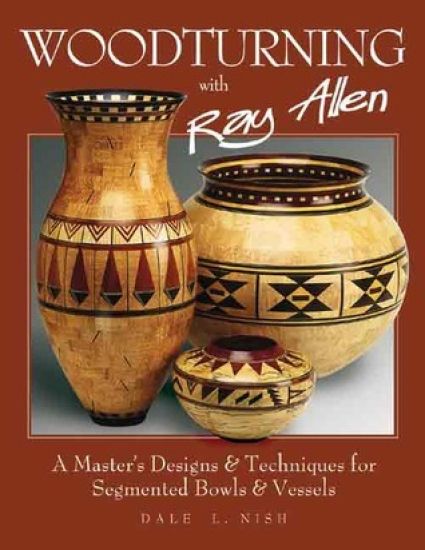
Woodturning with Ray Allen

Woodturning with Ray Allen

Dale Nish

Fox Chapel Publishing
2004
pokkari
Covering a technique popularised by master woodturner, Ray Allen, this manual moves beyond basic woodturning with the segmented woodturning technique. This creative approach is demonstrated in one complete step-by-step project that effectively guides woodturners through the complicated process of creating geometric, repeating patterns with a South-western feel. Detailed, illustrated instructions make this seemingly elaborate technique approachable. Additional information on common problems helps avoid mistakes along the way. A full-colour photograph gallery provides inspiration for future projects.
The Selected Letters Of Allen Ginsberg And Gary Snyder

The Selected Letters Of Allen Ginsberg And Gary Snyder

Gary Snyder; Allen Ginsberg

Counterpoint
2009
nidottu
One of the central relationships in the Beat scene was the long-lasting friendship of Allen Ginsberg and Gary Snyder. Ginsberg introduced Snyder to the East Coast Beat writers, including Jack Kerouac, while Snyder himself became the model for the serious poet that Ginsberg so wanted to become. Snyder encouraged Ginsberg to explore the beauty of the West Coast and, even more lastingly, introduced Ginsberg to Buddhism, the subject of so many long letter exchanges between them.Beginning in 1956 and continuing through 1995, the two men exchanged more than 850 letters. Bill Morgan, Ginsberg's biographer and an important editor of his papers, has selected the most significant correspondence from this long friendship. The letters themselves paint the biographical and poetic portraits of two of America's most important  and most fascinating  poets.
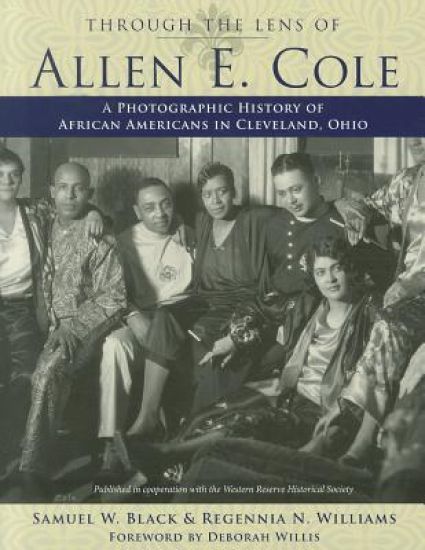
Through the Lens of Allen E. Cole

Through the Lens of Allen E. Cole

Samuel W. Black; Regennia N. Williasm; Deborah Willis

Kent State University Press
2012
sidottu
A remarkable visual record of Cleveland's African American community spanning five decades During the Great Depression, photographer Allen Eugene Cole posted a sign in front of his studio in Cleveland's Central neighborhood: somebody, somewhere, wants your photograph. An entrepreneurial businessman with a keen ability to market his images of Cleveland's black experience, Cole was deeply immersed in civic life. A founder and treasurer of the Progressive Business League, Cole was an officer of the Dunbar Life Insurance Co., a member of St. James African Methodist Episcopal Church, and active in the Elks and Masons. For years he was the only black member of the Cleveland Society of Professional Photographers. Well into the 1960s his photographs appeared regularly in the Call & Post, Cleveland's African American weekly newspaper.A migrant to Cleveland in 1917, Allen Cole developed an interest in photography while employed as a waiter at the Cleveland Athletic Club. By 1922 he had opened his first studio at home, enlarging it over the years. It was in this studio that he photographed Perry B. Jackson, Ohio's first African American judge.The images of Jackson and the hundreds of other African Americans included in this volume were chosen from the thousands of photographs in the Allen Cole Collection at the Western Reserve Historical Society. They illustrate the diverse experiences among Cleveland's vibrant African American community. Social organizations, women's and men's clubs, civic and church groups, schoolchildren and teachers, businessmen, and politicians are all included in this charming and unique collection. In the accompanying text authors Samuel Black and Regennia Williams place Cole and his comprehensive visual catalog in the context of African American history and the Great Migration.Through the Lens of Allen E. Cole mines Cole's exceptional midtwentieth-century photographic chronicle of African American life and will be an invaluable resource for anyone interested in American history, as well as specialists in African studies, history, sociology, urban affairs, and the photographic arts.
Inventing Ethan Allen

Inventing Ethan Allen

John J. Duffy; H. Nicholas Muller

Dartmouth College Press
2014
nidottu
Since 1969, Ethan Allen has been the subject of three biographical studies, all of which indulge in sustaining and revitalizing the image of Allen as a physically imposing Vermont yeoman, a defender of the rights of Americans, an eloquent military hero, and a master of many guises, from rough frontiersman to gentleman philosopher. Seeking the authentic Ethan Allen, the authors of this volume ask: How did that Ethan Allen secure his place in popular culture? As they observe, this spectacular persona leaves little room for a more accurate assessment of Allen as a self-interested land speculator, rebellious mob leader, inexperienced militia officer, and truth-challenged man who would steer Vermont into the British Empire.Drawing extensively from the correspondence in Ethan Allen and his Kin and a wide range of historical, political, and cultural sources, Duffy and Muller analyze the factors that led to Ethan Allen's two-hundred-year-old status as the most famous figure in Vermont's past. Placing facts against myths, the authors reveal how Allen acquired and retained his iconic image, how the much-repeated legends composed after his death coincide with his life, why recollections of him are synonymous with the story of Vermont, and why some Vermonters still assign to Allen their own cherished and idealized values.
The Gracie Allen Murder Case

The Gracie Allen Murder Case

S.S. Van Dine

Felony Mayhem
2021
pokkari
Gracie Allen breaks the Philo Phormula in a number of ways. First is its title: this is the only book in the series to modify “Murder Case” with more than one word, much less with the name of a character. And then there’s that character: Gracie Allen was a very real, much-loved comedienne in the 1930s, famous for her double act with George Burns, and in fact the plot revolves around her. Gracie’s centrality is no accident: Van Dine wrote the story as a vehicle for Allen, and actually created the novel only after the film had come out. So do all these departures pay off? We’d be lying if we said that Gracie hits every single mark, but Van Dine does a surprisingly entertaining job of translating Ms. Allen’s delicious Ditzy Blonde persona to the page, and she makes a charming foil for Philo’s evergreen erudition.
Journal of Allen Brock

Journal of Allen Brock

Quentin Candela

Writers Branding LLC
2023
pokkari
The Journal of Allen Brock weaves a narrative through the twists of an older and much different Earth. Negative energy has imposed physical challenges through Rift Space. This phenomenon wreaks havoc on electrical equipment and on weaponry. Wars rage; heroes rise and fall, hence the weave of the tapestry.The focus of Brock's narrative is Junipero Heights, a contested ground in the Highland. Highland, tucked in the eastern part of the Northern continent, is a rugged area, not easily assailed. For decades it has prevailed against the Hexas, Junipero's unrelenting enemy in the west who view themselves intellectually and culturally superior to the Native-born.In the backdrop stands Brock, the reticent hero. He is no saint, yet never the villain. Rouges and connivers peopled his world. Even friendlies have their agendas. Yet, the overarching questions remain unanswered, Why has victory over the Hexas been deferred? Why is that so many of the Native-born kinfolk remain pressed? How was it that the Hexas gained supremacy over half of the land?One day, while nursing a pint of ale in a remote casino in the Central Mosaic, Brock decides he's had enough. His words and actions reverberate from one end of the Northern Continent to the other. The future is altered, but not in the way Brock had intended.
I Climb the Mesas: Selected Poems of Paula Gunn Allen
An overdue retrospective of a pathbreaking feminist Native American poet, with a foreword from activist and educator Lee Francis IV I Climb the Mesas: Collected Poems of Paula Gunn Allen span the landscapes of the Southwest, excavate popular misunderstandings of Native women through history, and perhaps most importantly shines a light on a foremother of Native poetry, who was herself an icon to feminist legends like Gloria Steinem. Including forewords from her nephew, activist and educator Lee Francis IV, as well as her daughter, this volume of the Laguna Pueblo poet spans her decades-long career, including hard-to-find, limited edition chapbooks.