Kirjojen hintavertailu. Mukana 11 627 622 kirjaa ja 12 kauppaa.

Kirjahaku

Etsi kirjoja tekijän nimen, kirjan nimen tai ISBN:n perusteella.

1000 tulosta hakusanalla Barry Cornwall

Seeing, Knowing, Understanding

Seeing, Knowing, Understanding

Barry Stroud

Oxford University Press
2018
sidottu
Barry Stroud presents nineteen of his philosophical essays written since 2001, on topics to do with knowing, seeing, and understanding. He discusses the nature of philosophy, sense experience, the possibility of perceptual knowledge, intentional action and self-knowledge, the reality of the colours of things, alien thought and the limits of understanding, moral knowledge, meaning, use, and understanding of language.
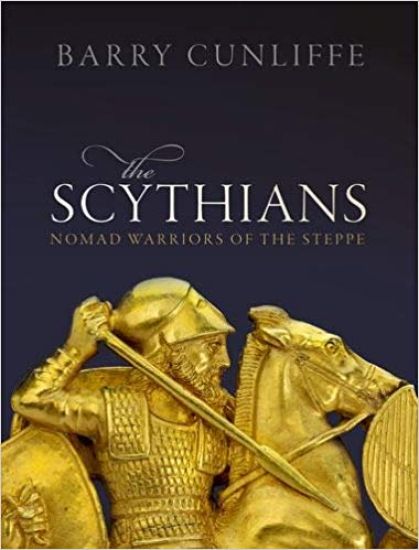
The Scythians

The Scythians

Barry Cunliffe

Oxford University Press
2019
sidottu
Brilliant horsemen and great fighters, the Scythians were nomadic horsemen who ranged wide across the grasslands of the Asian steppe from the Altai mountains in the east to the Great Hungarian Plain in the first millennium BC. Their steppe homeland bordered on a number of sedentary states to the south - the Chinese, the Persians and the Greeks - and there were, inevitably, numerous interactions between the nomads and their neighbours. The Scythians fought the Persians on a number of occasions, in one battle killing their king and on another occasion driving the invading army of Darius the Great from the steppe. Relations with the Greeks around the shores of the Black Sea were rather different - both communities benefiting from trading with each other. This led to the development of a brilliant art style, often depicting scenes from Scythian mythology and everyday life. It is from the writings of Greeks like the historian Herodotus that we learn of Scythian life: their beliefs, their burial practices, their love of fighting, and their ambivalent attitudes to gender. It is a world that is also brilliantly illuminated by the rich material culture recovered from Scythian burials, from the graves of kings on the Pontic steppe, with their elaborate gold work and vividly coloured fabrics, to the frozen tombs of the Altai mountains, where all the organic material - wooden carvings, carpets, saddles and even tattooed human bodies - is amazingly well preserved. Barry Cunliffe here marshals this vast array of evidence - both archaeological and textual - in a masterful reconstruction of the lost world of the Scythians, allowing them to emerge in all their considerable vigour and splendour for the first time in over two millennia.
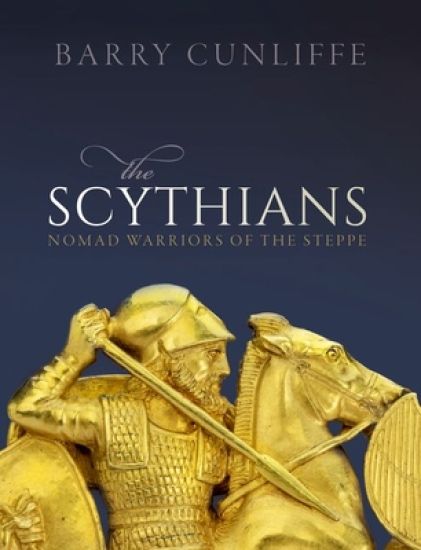
The Scythians

The Scythians

Barry Cunliffe

Oxford University Press
2021
nidottu
Brilliant horsemen and great fighters, the Scythians were nomadic horsemen who ranged wide across the grasslands of the Asian steppe from the Altai mountains in the east to the Great Hungarian Plain in the first millennium BC. Their steppe homeland bordered on a number of sedentary states to the south - the Chinese, the Persians and the Greeks - and there were, inevitably, numerous interactions between the nomads and their neighbours. The Scythians fought the Persians on a number of occasions, in one battle killing their king and on another occasion driving the invading army of Darius the Great from the steppe. Relations with the Greeks around the shores of the Black Sea were rather different - both communities benefiting from trading with each other. This led to the development of a brilliant art style, often depicting scenes from Scythian mythology and everyday life. It is from the writings of Greeks like the historian Herodotus that we learn of Scythian life: their beliefs, their burial practices, their love of fighting, and their ambivalent attitudes to gender. It is a world that is also brilliantly illuminated by the rich material culture recovered from Scythian burials, from the graves of kings on the Pontic steppe, with their elaborate gold work and vividly coloured fabrics, to the frozen tombs of the Altai mountains, where all the organic material - wooden carvings, carpets, saddles and even tattooed human bodies - is amazingly well preserved. Barry Cunliffe here marshals this vast array of evidence - both archaeological and textual - in a masterful reconstruction of the lost world of the Scythians, allowing them to emerge in all their considerable vigour and splendour for the first time in over two millennia.
Woodrow Wilson

Woodrow Wilson

Barry Hankins

Oxford University Press
2018
nidottu
When Woodrow Wilson was elected as a ruling elder in the Presbyterian Church in 1897, his preacher father allegedly remarked, "I would rather that he held that position than be president of the United States." Fifteen years later he was both. Easily one of the most religious presidents in American history, almost all of Wilson's policies and important speeches were infused with religious concepts. The son, grandson, and nephew of southern Presbyterian divines, with six consecutive generations of preachers on his mother's side, Wilson viewed his political career as a sacred calling. As he remarked to a Democratic Party leader just before his inauguration in 1913, "God ordained that I should be the next president of the United States." As a scholar, Princeton University president, governor of New Jersey, then president, Wilson spent his entire career trying to further the cause of public righteousness. In 1905, he uttered his life's credo: "There is a mighty task before us and it welds us together. It is to make the United States a mighty Christian nation and to Christianize the World." Nonetheless, the 28th president was not principally a religious figure, and he didn't fit comfortably in any religious camp, either in his own time or today. In Woodrow Wilson: Ruling Elder, Spiritual President, Barry Hankins tells the story of Wilson's religion as he moved from the Calvinist orthodoxy of his youth to a progressive, spiritualized religion short on doctrine and long on morality.
Oxford Guides to Chaucer: Troilus and Criseyde

Oxford Guides to Chaucer: Troilus and Criseyde

Barry Windeatt

Oxford University Press
2023
nidottu
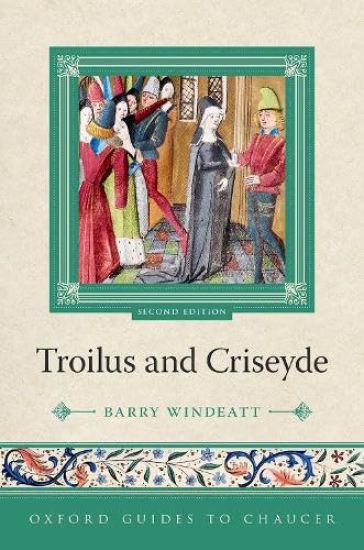
This is a comprehensive critical guide to Chaucer's Troilus and Criseyde. This new edition has been comprehensively revised in light of the latest scholarly and critical research and with a fully updated bibliography. It includes a full account of Chaucer's imaginative deployment of his sources, and an extended survey of this narrative poem's innovative combination of a range of generic identities. The chapters explain how Chaucer builds thematic significance into his poem's symmetrical structure, and the poem's distinctive variety in style and language, as well as a full commentary on the poem's concerns with love in the contexts of time and mutability and human free will. The Guide explores the poem as an extended debate about the nature and value of love, and how love was conceptualized and experienced as a form of service in quest of compassionate reward, a quasi-religious devotion, and a potentially fatal illness always in hope of cure. The subjectivities of the chief protagonists are fully analysed, as is the poem's problematic ending. Alongside discussions of theme and structure, there is also an account of what the extant manuscripts of Troilus and Criseyde may reveal about the poem's early genesis, and a unique survey of responses to Troilus from its own times to the present day. Barry Windeatt's contribution to the series is a comprehensive single-volume guide to Troilus and Criseyde, bringing together a wide range of material and providing a readable commentary on all aspects of the work. Combining the informative substance of a reference book with the coherence of a critical reading, the Guide has taken its place as the standard introduction to Troilus and Criseyde since its first publication in 1992.
Rethinking Sino-Japanese Alienation

Rethinking Sino-Japanese Alienation

Barry Buzan; Evelyn Goh

Oxford University Press
2020
sidottu
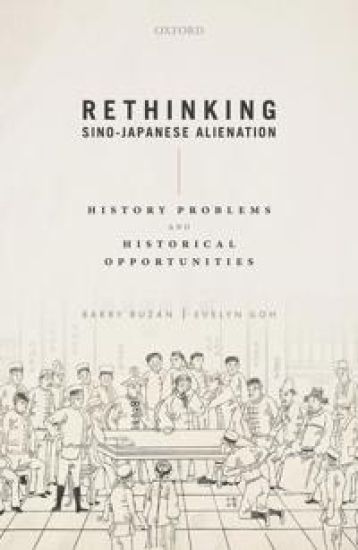
Bitterly contested memories of war, colonisation, and empire among Japan, China, and Korea have increasingly threatened regional order and security over the past three decades. In Sino-Japanese relations, identity, territory, and power pull together in a particularly lethal direction, generating dangerous tensions in both geopolitical and memory rivalries. Buzan and Goh explore a new approach to dealing with this history problem. First, they construct a more balanced and global view of China and Japan in modern world history. Second, building on this, they sketch out the possibilities for a 21st century great power bargain between them. Buzan puts Northeast Asia's history since 1840 into both a world historical and a systematic normative context, exposing the parochial nature of the China-Japan history debate in relation to what is a bigger shared story about their encounter with modernity and the West, within which their modern encounter with each other took place. Arguing that regional order will ultimately depend substantially on the relationship between these two East Asian great powers, Goh explores the conditions under which China and Japan have been able to reach strategic bargains in the course of their long historical relationship, and uses this to sketch out the main modes of agreement that might underpin a new contemporary great power bargain between them in a variety of future scenarios for the region. The frameworks adopted here consciously blend historical contextualisation, enduring concerns with wealth, power and interest, and the complex relationship between Northeast Asian states' evolving encounters with each other and with global international society.
Rethinking Sino-Japanese Alienation

Rethinking Sino-Japanese Alienation

Barry Buzan; Evelyn Goh

Oxford University Press
2020
nidottu
Bitterly contested memories of war, colonisation, and empire among Japan, China, and Korea have increasingly threatened regional order and security over the past three decades. In Sino-Japanese relations, identity, territory, and power pull together in a particularly lethal direction, generating dangerous tensions in both geopolitical and memory rivalries. Buzan and Goh explore a new approach to dealing with this history problem. First, they construct a more balanced and global view of China and Japan in modern world history. Second, building on this, they sketch out the possibilities for a 21st century great power bargain between them. Buzan puts Northeast Asia's history since 1840 into both a world historical and a systematic normative context, exposing the parochial nature of the China-Japan history debate in relation to what is a bigger shared story about their encounter with modernity and the West, within which their modern encounter with each other took place. Arguing that regional order will ultimately depend substantially on the relationship between these two East Asian great powers, Goh explores the conditions under which China and Japan have been able to reach strategic bargains in the course of their long historical relationship, and uses this to sketch out the main modes of agreement that might underpin a new contemporary great power bargain between them in a variety of future scenarios for the region. The frameworks adopted here consciously blend historical contextualisation, enduring concerns with wealth, power and interest, and the complex relationship between Northeast Asian states' evolving encounters with each other and with global international society.
Bretons and Britons

Bretons and Britons

Barry Cunliffe

Oxford University Press
2021
sidottu
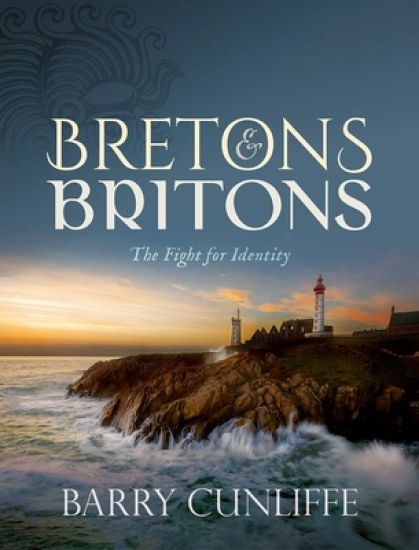
What is it about Brittany that makes it such a favourite destination for the British? To answer this question, Bretons and Britons explores the long history of the Bretons, from the time of the first farmers around 5400 BC to the present, and the very close relationship they have had with their British neighbours throughout this time. More than simply a history of a people, Bretons and Britons is also the author's homage to a country and a people he has come to admire over decades of engagement. Underlying the story throughout is the tale of the Bretons' fierce struggle to maintain their distinctive identity. As a peninsula people living on a westerly excrescence of Europe they were surrounded on three sides by the sea, which gave them some protection from outside interference, but their landward border was constantly threatened - not only by succeeding waves of Romans, Franks, and Vikings, but also by the growing power of the French state. It was the sea that gave the Bretons strength and helped them in their struggle for independence. They shared in the culture of Atlantic-facing Europe, and from the eighteenth century, when a fascination for the Celts was beginning to sweep Europe, they were able to present themselves as the direct successors of the ancient Celts along with the Cornish, Welsh, Scots, and Irish. This gave them a new strength and a new pride. It is this spirit that is still very much alive today.
Oxford Guides to Chaucer: Troilus and Criseyde

Oxford Guides to Chaucer: Troilus and Criseyde

Barry Windeatt

Oxford University Press
2023
sidottu
This is a comprehensive critical guide to Chaucer's Troilus and Criseyde. This new edition has been comprehensively revised in light of the latest scholarly and critical research and with a fully updated bibliography. It includes a full account of Chaucer's imaginative deployment of his sources, and an extended survey of this narrative poem's innovative combination of a range of generic identities. The chapters explain how Chaucer builds thematic significance into his poem's symmetrical structure, and the poem's distinctive variety in style and language, as well as a full commentary on the poem's concerns with love in the contexts of time and mutability and human free will. The Guide explores the poem as an extended debate about the nature and value of love, and how love was conceptualized and experienced as a form of service in quest of compassionate reward, a quasi-religious devotion, and a potentially fatal illness always in hope of cure. The subjectivities of the chief protagonists are fully analysed, as is the poem's problematic ending. Alongside discussions of theme and structure, there is also an account of what the extant manuscripts of Troilus and Criseyde may reveal about the poem's early genesis, and a unique survey of responses to Troilus from its own times to the present day. Barry Windeatt's contribution to the series is a comprehensive single-volume guide to Troilus and Criseyde, bringing together a wide range of material and providing a readable commentary on all aspects of the work. Combining the informative substance of a reference book with the coherence of a critical reading, the Guide has taken its place as the standard introduction to Troilus and Criseyde since its first publication in 1992.
Driven by the Monsoons

Driven by the Monsoons

Barry Cunliffe

Oxford University Press
2025
sidottu
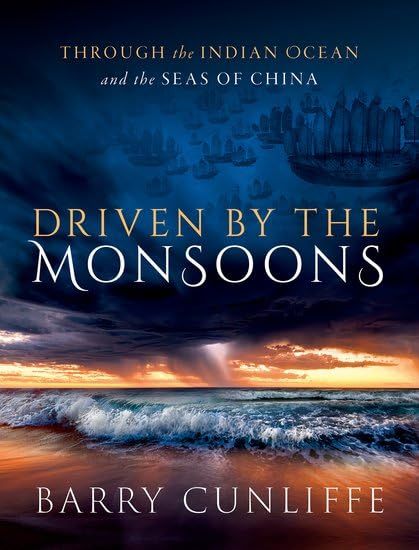
The Silk Road may be one origin of globalization, but the Indian Ocean is another. Barry Cunliffe examines the beginning of maritime trade using the evidence of archaeology and the tales of great travellers such as Marco Polo, Ibn Battuta, and the Chinese Admiral, Zheng He. This story complements that of the land routes, showing how humans have been driven across thousands of years to create and maintain networks whatever the difficulties. Driven by the Monsoons illuminates maritime connections between the Indian Ocean and its surrounding water routes: the Arabian Gulf and the Red and China Seas. It begins with the movement of humans into South-East Asia and ends about 1600 CE when European companies emerge to takeover. It is tale of exotic goods, material needs, adventure, and desire. While conditions at sea and the abilities of the maritime communities provided a degree of stability, the direction and intensity of trade and the types of commodities on the move was determined by the fortunes and aspirations of distant empires, those of China in the east and South-West Asia and the Mediterranean in the west. This ever-changing pressure provided the dynamic situation in which society and economies in East Africa, India and South-East Asia flourished. Driven by the Monsoons explores the birth of the modern, connected, world.
Laws of Nature and Chances

Laws of Nature and Chances

Barry Loewer

Oxford University Press
2024
sidottu
Barry Loewer presents a novel account of the metaphysics of law of nature, chances, fundamental ontology, and the space-time arena they occupy. He calls this the Package Deal Account. This aims to answer Stephen Hawking's question "What is it that breathes fire into the equations and makes a universe for them to describe?" Loewer's account stands on the shoulders of David Lewis's Humean Best Systems Account of laws and chances, but rejects Lewis' Humean ontology of natural properties, and instead lets the criteria that physicists employ for evaluating candidate fundamental theories of everything, together with reality, determine the universe's fundamental ontology. The Package Deal Account thus advances the project of naturalizing metaphysics. Loewer discusses the history of the concept of laws of nature, current philosophical accounts of the metaphysics of laws, and arguments for and against each of these. He then shows how the Package Deal Account overcomes objections to each, and how, unlike Lewis's Humean account and its non-Humean rivals, it is able to accommodate recent developments in physics, including proposals for theories of quantum gravity that reject the fundamentality of space-time. Loewer provides in addition an account of the laws and chances that occur in non-fundamental special sciences and how they are related to those of fundamental physics.
The Market in Global International Society

The Market in Global International Society

Barry Buzan; Robert Falkner

Oxford University Press
2025
sidottu
The Market in Global International Society tracks the idea and practice of the market through both modern and premodern times, and its evolution as a primary institution in international relations over the past two centuries. It develops a new approach to understanding the relationship between the market and other social and political institutions of global international society. Buzan and Falkner view the market as a political ideology in support of a liberal system of governance, and not just as an economic practice or economy-wide structural feature. In doing so, they draw attention to the market's powerful impact on international order. This historical grounding brings into close contact two areas of study that have for much too long stood back-to-back: the English School of International Relations (ES), and International Political Economy (IPE). For the ES, the book fills in the large economic gap in its understanding and portrayal of the primary institutions of international society. Adding in the economic sector has a major impact on how the other primary institutions of international society both work in themselves, and interact with each other. For IPE, the book opens up a new and usefully detailed view of the constant and wide-ranging interaction of the market with the other social and political institutions of global international society. The approach through primary institutions fills in the middle ground between the big-picture classical approaches to IPE, and the current focus on intergovernmental organisations and regimes.
On the Ocean

On the Ocean

Barry Cunliffe

Oxford University Press
2025
nidottu
For humans the sea is, and always has been, an alien environment. Ever moving and ever changing in mood, it is a place without time, in contrast to the land which is fixed and scarred by human activity giving it a visible history. While the land is familiar, even reassuring, the sea is unknown and threatening. By taking to the sea humans put themselves at its mercy. It has often been perceived to be an alien power teasing and cajoling. The sea may give but it takes. Why, then, did humans become seafarers? Part of the answer is that we are conditioned by our genetics to be acquisitive animals: we like to acquire rare materials and we are eager for esoteric knowledge, and society rewards us well for both. Looking out to sea most will be curious as to what is out there - a mysterious island perhaps but what lies beyond? Our innate inquisitiveness drives us to explore. Barry Cunliffe looks at the development of seafaring on the Mediterranean and the Atlantic, two contrasting seas — the Mediterranean without a significant tide, enclosed and soon to become familiar, the Atlantic with its frightening tidal ranges, an ocean without end. We begin with the Middle Palaeolithic hunter gatherers in the eastern Mediterranean building simple vessels to make their remarkable crossing to Crete and we end in the early years of the sixteenth century with sailors from Spain, Portugal and England establishing the limits of the ocean from Labrador to Patagonia. The message is that the contest between humans and the sea has been a driving force, perhaps the driving force, in human history.
Criminal Lives

Criminal Lives

Barry S. Godfrey; David J. Cox; Stephen Farrall

Oxford University Press
2007
sidottu
This book uses historical data to directly address modern criminological debates. There is currently a huge growth of interest in histories of crime, and intellectual conversations and connections between historians and criminologists are becoming much more frequent. However, published work which uses historical data to this extent is rare. This book's aim is to draw a wide audience from the worlds of criminology, history, and social policy and engage in a genuinely interdisciplinary debate. This book addresses a number of important questions about offenders' persistence in, or desistance from, crime and questions the current theoretical frameworks that are given to explain why some people stop, or slow down, their offending, and why offenders' children become involved in crime. By using criminal registers, census material, and newspaper reports from 1880 -1940 for one industrial town in North-West England, this book asks how and why did some people stop offending, and what part did employment, relationship formation, and family responsibility play in that process; was criminality passed on from parent to child, and if so, how; and to what extent were persistent offenders also persistent victims?
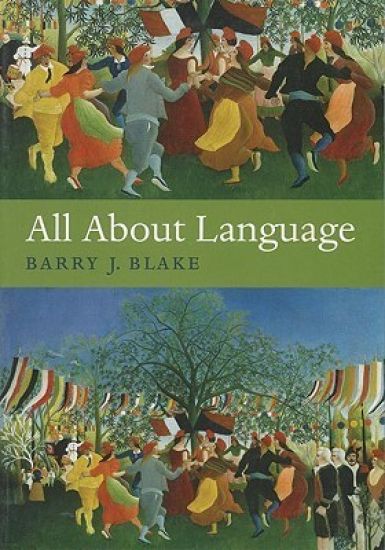
All About Language

All About Language

Barry J. Blake

Oxford University Press
2008
sidottu
In clear, congenial style Barry Blake explains how language works. He describes the make-up of words and how they're built from sounds and signs and put together in phrases and sentences. He examines the dynamics of conversation and the relations between the sound and meaning. He shows how languages help their users connect to each other and to the world, how they vary around the world, why they never stop changing, and that no two people speak a language in the same way. He looks at how language is acquired by infant children, how it relates to thought, and its operations in the brain. He investigates current trends and issues such as the levelling of linguistic class differences and the rise of new secret or in-group languages such as argot and teenspeak. He describes the history of writing from its origins to digital diffusion, and ends by looking at how language might have originated and then evolved among our distant hominid and primate ancestors. Language is crucial to every aspect of our lives whether we're thinking, talking, or dreaming. Barry Blake reveals the wonders that lie beneath the surface of everyday communication, enriching his exposition with a unique blend of anecdote and humour. His engaging guide is for everyone curious about language or who needs to know more about it.
All About Language

All About Language

Barry J. Blake

Oxford University Press
2008
nidottu
In clear, congenial style Barry Blake explains how language works. He describes the make-up of words and how they're built from sounds and signs and put together in phrases and sentences. He examines the dynamics of conversation and the relations between the sound and meaning. He shows how languages help their users connect to each other and to the world, how they vary around the world, why they never stop changing, and that no two people speak a language in the same way. He looks at how language is acquired by infant children, how it relates to thought, and its operations in the brain. He investigates current trends and issues such as the levelling of linguistic class differences and the rise of new secret or in-group languages such as argot and teenspeak. He describes the history of writing from its origins to digital diffusion, and ends by looking at how language might have originated and then evolved among our distant hominid and primate ancestors. Language is crucial to every aspect of our lives whether we're thinking, talking, or dreaming. Barry Blake reveals the wonders that lie beneath the surface of everyday communication, enriching his exposition with a unique blend of anecdote and humour. His engaging guide is for everyone curious about language or who needs to know more about it.
Understanding Human Knowledge

Understanding Human Knowledge

Barry Stroud

Clarendon Press
2002
nidottu
Barry Stroud has, since the 1970s, been a key contributor to the philosophical study of human knowledge. This book presents the best of his essays in this area. More than half are concerned with identifying clearly the question or issue that philosophical theories of knowledge are meant to answer.
Financial Crises and What to Do About Them

Financial Crises and What to Do About Them

Barry Eichengreen

Oxford University Press
2002
sidottu
In this study, the author provides a critical assessment of the official sector's efforts to more effectively manage financial crises in emerging markets. Professor Eichengreen reviews international initiatives on both the crisis prevention and crisis resolution fronts.
Financial Crises and What to Do About Them

Financial Crises and What to Do About Them

Barry Eichengreen

Oxford University Press
2002
nidottu
This work explains the patterns behind financial crises, examines international financial architecture, makes recommendations for avoiding the dangers of crises (and managing them better when they do occur), and shows how official efforts to strengthen the international financial system may have made life more difficult for the poorest countries.