Memoir of Colonel Benjamin Tallmadge is a book written by Benjamin Tallmadge, an American military officer who served during the American Revolutionary War. The book was first published in 1858 and is an autobiographical account of Tallmadge's experiences during the war, including his involvement in several key battles and his interactions with notable figures such as George Washington and Benedict Arnold. Tallmadge was a member of the Culper Spy Ring, which was instrumental in providing intelligence to the Continental Army during the war. He was also responsible for organizing and leading several successful missions, including the capture of British Major John Andr�����, who was involved in the plot to betray West Point to the British. In addition to his military experiences, Tallmadge also provides insight into his personal life, including his upbringing, education, and family relationships. The book offers a unique perspective on the Revolutionary War and provides readers with a firsthand account of the challenges and triumphs of the American forces during this pivotal time in history.This Is A New Release Of The Original 1858 Edition.This scarce antiquarian book is a facsimile reprint of the old original and may contain some imperfections such as library marks and notations. Because we believe this work is culturally important, we have made it available as part of our commitment for protecting, preserving, and promoting the world's literature in affordable, high quality, modern editions, that are true to their original work.
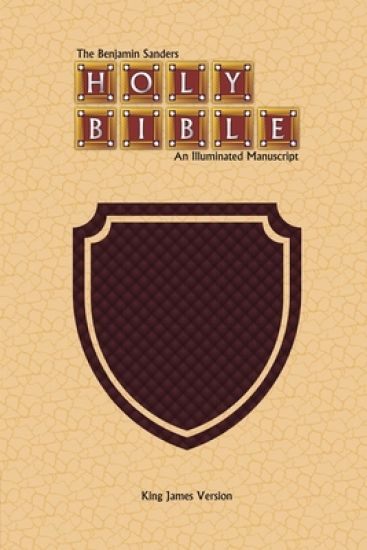
Open the beautiful first volume of Benjamin Sanders' Illuminated Manuscript of the Bible, and experience the Majesty of our Lord. Presented in the King James Version, this first volume of the Bible is a perfect gift or study tool for any Bible student. This volume includes Genesis through Psalms. Look for Proverbs through Revelation in the second volume of this magnificent book.
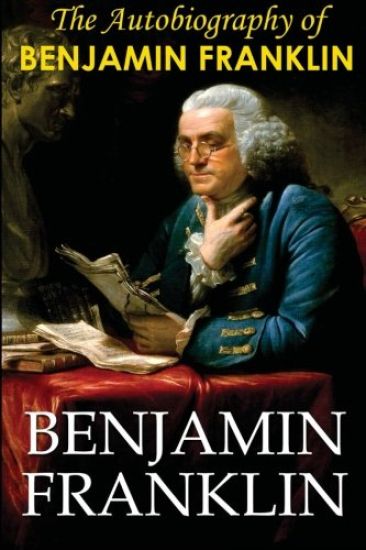
"There will be sleeping enough in the grave." --- Benjamin Franklin, The Autobiography of Benjamin Franklin The Autobiography of Benjamin Franklin is the traditional name for the unfinished record of his own life written by Benjamin Franklin from 1771 to 1790; however, Franklin himself appears to have called the work his Memoirs. Although it had a tortuous publication history after Franklin's death, this work has become one of the most famous and influential examples of an autobiography ever written. Franklin's account of his life is divided into four parts, reflecting the different periods at which he wrote them. There are actual breaks in the narrative between the first three parts, but Part Three's narrative continues into Part Four without an authorial break (only an editorial one). Reactions to the work Franklin's Autobiography has received widespread praise, both for its historical value as a record of an important early American and for its literary style. It is often considered the first American book to be taken seriously by Europeans as literature. William Dean Howells in 1905 asserted that "Franklin's is one of the greatest autobiographies in literature, and towers over other autobiographies as Franklin towered over other men." However, Mark Twain's essay "The Late Benjamin Franklin" (1870) provides a less exalted reaction, albeit somewhat tongue-in-cheek (for example, claiming that his example had "brought affliction to millions of boys since, whose fathers had read Franklin's pernicious biography"). D. H. Lawrence wrote a notable invective against "Middle-sized, sturdy, snuff-coloured Doctor Franklin" in 1923, finding considerable fault with Franklin's attempt at crafting precepts of virtue and at perfecting himself. Nevertheless, responses to The Autobiography have generally been more positive than Twain's or Lawrence's, with most readers recognizing it as a classic of literature and relating to the narrative voice of the author. In this work, Franklin's persona comes alive and presents a man whose greatness does not keep him from being down-to-earth and approachable, who faces up to mistakes and blunders ("Errata") he has committed in life, and who presents personal success as something within the reach of anyone willing to work hard enough for it.
Open The Benjamin Sanders Holy Bible: An Illuminated Manuscript, and experience the beauty and majesty of God's word. This single-volume Bible combines readability with illuminated chapter markers for all sixty-six books of the Bible. Presented in the King James Version, this Bible promises elegant reading in your daily walk with the Lord.
Benjamin Franklin FRS FRSE (January 17, 1706 O.S. January 6, 1705 - April 17, 1790) was an American polymath and one of the Founding Fathers of the United States. Franklin was a leading author, printer, political theorist, politician, freemason, postmaster, scientist, inventor, humorist, civic activist, statesman, and diplomat. As a scientist, he was a major figure in the American Enlightenment and the history of physics for his discoveries and theories regarding electricity. As an inventor, he is known for the lightning rod, bifocals, and the Franklin stove, among other inventions. He founded many civic organizations, including Philadelphia's fire department and the University of Pennsylvania. Franklin earned the title of "The First American" for his early and indefatigable campaigning for colonial unity, initially as an author and spokesman in London for several colonies. As the first United States Ambassador to France, he exemplified the emerging American nation. Franklin was foundational in defining the American ethos as a marriage of the practical values of thrift, hard work, education, community spirit, self-governing institutions, and opposition to authoritarianism both political and religious, with the scientific and tolerant values of the Enlightenment. In the words of historian Henry Steele Commager, "In a Franklin could be merged the virtues of Puritanism without its defects, the illumination of the Enlightenment without its heat." To Walter Isaacson, this makes Franklin "the most accomplished American of his age and the most influential in inventing the type of society America would become." 6] Franklin became a successful newspaper editor and printer in Philadelphia, the leading city in the colonies, publishing the Pennsylvania Gazette at the age of 23. 7] He became wealthy publishing this and Poor Richard's Almanack, which he authored under the pseudonym "Richard Saunders". After 1767, he was associated with the Pennsylvania Chronicle, a newspaper that was known for its revolutionary sentiments and criticisms of British policies. He pioneered and was first president of Academy and College of Philadelphia which opened in 1751 and later became the University of Pennsylvania. He organized and was the first secretary of the American Philosophical Society and was elected president in 1769. Franklin became a national hero in America as an agent for several colonies when he spearheaded an effort in London to have the Parliament of Great Britain repeal the unpopular Stamp Act. An accomplished diplomat, he was widely admired among the French as American minister to Paris and was a major figure in the development of positive Franco-American relations. His efforts proved vital for the American Revolution in securing shipments of crucial munitions from France. He was promoted to deputy postmaster-general for the British colonies in 1753, having been Philadelphia postmaster for many years, and this enabled him to set up the first national communications network. During the Revolution, he became the first United States Postmaster General. He was active in community affairs and colonial and state politics, as well as national and international affairs. From 1785 to 1788, he served as governor of Pennsylvania. He initially owned and dealt in slaves but, by the 1750s, he argued against slavery from an economic perspective and became one of the most prominent abolitionists. His colorful life and legacy of scientific and political achievement, and his status as one of America's most influential Founding Fathers, have seen Franklin honored more than two centuries after his death on coinage and the $100 bill, warships, and the names of many towns, counties, educational institutions, and corporations, as well as countless cultural references.
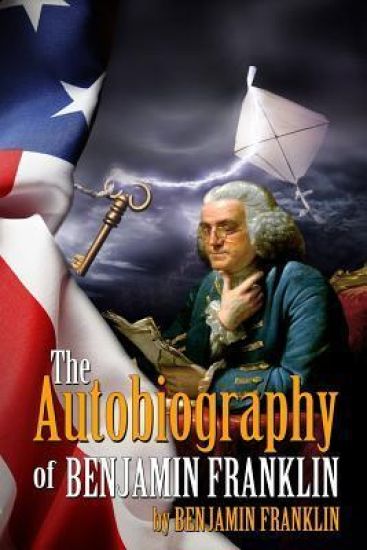
The Autobiography of Benjamin Franklin is the traditional name for the unfinished record of his own life written by Benjamin Franklin from 1771 to 1790; however, Franklin himself appears to have called the work his Memoirs. Although it had a tortuous publication history after Franklin's death, this work has become one of the most famous and influential examples of an autobiography ever written. Franklin's account of his life is divided into four parts, reflecting the different periods at which he wrote them. There are actual breaks in the narrative between the first three parts, but Part Three's narrative continues into Part Four without an authorial break (only an editorial one). Reactions to the work Franklin's Autobiography has received widespread praise, both for its historical value as a record of an important early American and for its literary style. It is often considered the first American book to be taken seriously by Europeans as literature. William Dean Howells in 1905 asserted that "Franklin's is one of the greatest autobiographies in literature, and towers over other autobiographies as Franklin towered over other men." However, Mark Twain's essay "The Late Benjamin Franklin" (1870) provides a less exalted reaction, albeit somewhat tongue-in-cheek (for example, claiming that his example had "brought affliction to millions of boys since, whose fathers had read Franklin's pernicious biography"). D. H. Lawrence wrote a notable invective against the "middle-sized, sturdy, snuff-coloured Doctor Franklin" in 1923, finding considerable fault with Franklin's attempt at crafting precepts of virtue and at perfecting himself. Nevertheless, responses to The Autobiography have generally been more positive than Twain's or Lawrence's, with most readers recognizing it as a classic of literature and relating to the narrative voice of the author. In this work, Franklin's persona comes alive and presents a man whose greatness does not keep him from being down-to-earth and approachable, who faces up to mistakes and blunders ("Errata") he has committed in life, and who presents personal success as something within the reach of anyone willing to work hard enough for it.