Kirjojen hintavertailu. Mukana 11 342 296 kirjaa ja 12 kauppaa.

Kirjahaku

Etsi kirjoja tekijän nimen, kirjan nimen tai ISBN:n perusteella.

1000 tulosta hakusanalla Bennett Alan

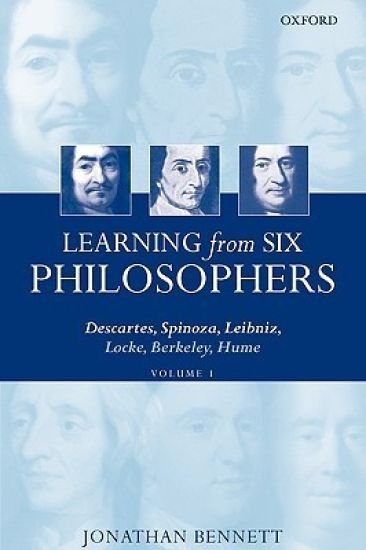
Learning from Six Philosophers, Volume 1

Learning from Six Philosophers, Volume 1

Jonathan Bennett

Clarendon Press
2003
nidottu
Jonathan Bennett engages with the thought of six great thinkers of the early modern period: Descartes, Spinoza, Leibniz, Locke, Berkeley, Hume. While not neglecting the historical setting of each, his chief focus is on the words they wrote. What problem is being tackled? How exactly is the solution meant to work? Does it succeed? If not, why not? What can we learn from its success or its failure? These questions reflect Bennett's dedication to engaging with philosophy as philosophy, not as museum exhibit, and they require a close and demanding attention to textual details; these being two features that characterize all Bennett's work on early modern philosophy. For newcomers to the early modern scene, this clearly written work is an excellent introduction to it. Those already in the know can learn how to argue with the great philosophers of the past, treating them as colleagues, antagonists, students, teachers. Volume 1: In this volume Jonathan Bennett examines the views of Descartes, Spinoza, and Leibniz on matter and space, the foundations of physics, atomism and alternatives to it, causation, knowledge of necessary truths, how mind relates to body, the nature and significance of human desires, our perception of the material world, and other topics. While exhibiting and celebrating the wonderful breadth, depth, and boldness of the thinking of these philosophers, Bennett also tracks them into the details, where the life is, evaluating their doctrines and arguments on their own merits and in relation to current philosophical problems and interests.
Learning from Six Philosophers, Volume 2

Learning from Six Philosophers, Volume 2

Jonathan Bennett

Clarendon Press
2003
nidottu
Jonathan Bennett engages with the thought of six great thinkers of the early modern period: Descartes, Spinoza, Leibniz, Locke, Berkeley, Hume. While not neglecting the historical setting of each, his chief focus is on the words they wrote. What problem is being tackled? How exactly is the solution meant to work? Does it succeed? If not, why not? What can we learn from its success or its failure? These questions reflect Bennett's dedication to engaging with philosophy as philosophy, not as museum exhibit, and they require a close and demanding attention to textual details; these being two features that characterize all Bennett's work on early modern philosophy. For newcomers to the early modern scene, this clearly written work is an excellent introduction to it. Those already in the know can learn how to argue with the great philosophers of the past, treating them as colleagues, antagonists, students, teachers. Volume 2: In this volume Jonathan Bennett examines the views of Locke, Berkeley, and Hume on thought and sensation, meaning, language, classification, innate ideas and knowledge, our knowledge of necessary truths (bringing in Descartes and Leibniz as well), the basis for our belief that we live in a world of material things, causation, the fundamental difference between colours and shapes, the passage of time and our ability to live through it. While finding much to criticize, Bennett shows that we can learn much about these and other topics under the guidance and inspiration of the energy, courage, and insight of these three great British philosophers.
Law of Marine Insurance

Law of Marine Insurance

Howard Bennett

Oxford University Press
2006
sidottu
The law of marine insurance constitutes a major branch of the law of international trade and shipping law which is of considerable international importance. This new edition gives a clear, updated account of English marine insurance law, combining detailed analysis of modern statute and case law with a clear comprehension of practice and commerce in the shipping world. The discussion embraces not only the constantly evolving case law, but also standard forms and clauses (including the 2003 International Hull Clauses), and the rules of mutual insurance associations. Coverage includes all relevant areas of general insurance contract law as well as all issues of specifically marine insurance law. The entire text of the second edition has been considered afresh and includes significant new or additional material in particular relating to: historical background, insurable interest, policy formation, the doctrine of utmost good faith, premiums, policy interpretation, excluded losses, third party rights, losses, claims, aversion and minimisation of loss, insurers' contribution rights, and composite policies. Presenting a revised structure with the practitioner in mind, this new edition includes a new chapter on interpretation and rectification of insurance contracts.
Last Dictatorship in Europe: Belarus Under Lukashenko

Last Dictatorship in Europe: Belarus Under Lukashenko

Brian Bennett

Oxford University Press, USA
2011
sidottu
Belarus is an isolated country dominated by one man. Few tourists go there, despite its fascinating, cultured past and beautiful countryside. Belarussians are friendly and hospitable yet they rarely have the chance to speak their minds and are deprived of access to unbiased information. They have been removed from the flow of European history by a tyrannical regime described by Condoleezza Rice, the former US Secretary of State, as "the last dictatorship in Europe." The people of Belarus were not ready for independence in 1991 and were misled into believing that the young, unsophisticated Alexander Lukashenko would lead them into a bright future. Instead he foisted upon them a dictatorship little different from what they had known before. Brian Bennett's book tracks the history of Belarus from the collapse of the Soviet Union to the eventual establishment of dictatorship in 2006. It takes the reader through the excitement and mistakes of the first presidential election in 1994, undemocratic referendums and elections, suspicious disappearances of critics of the regime and the suppression of opposition. It ends with a close look at the enigmatic Alexander Lukashenko and hazards a guess as to how his regime will end. Belarus deserves to be better known; this book pulls back the curtain.
Six Moments of Crisis

Six Moments of Crisis

Gill Bennett

Oxford University Press
2013
sidottu
Former Whitehall insider Gill Bennett unravels the story of six crucial British foreign policy challenges since the Second World War, from the Korean War to the Falklands conflict, offering an inside account of episodes that shaped Britain's position in the world for decades to come - and in some cases still arouse controversy to this day. Lifting the lid on the making of British foreign policy from Clement Attlee to Margaret Thatcher, Bennett reveals each decision in a way that has never been done before: telling the story from the inside out and without hindsight. The result is a book that explains not just why these controversial decisions were taken, but one that shows us how history is actually made - and also just how difficult these big decisions really were. Gill Bennett considers exactly what ministers knew at the time; how personal experience, relationships, past events and prevailing circumstance influenced the decision-making process; and how the balance of history was tipped in each case: by argument, moral imperative, obligation - or even sheer force of personality.
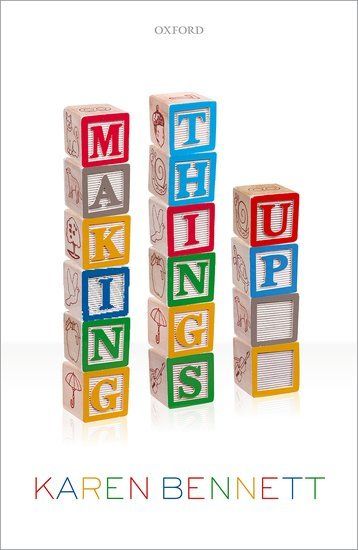
Making Things Up

Making Things Up

Karen Bennett

Oxford University Press
2017
sidottu
A certain kind of talk is ubiquitous among both philosophers and so-called "ordinary people": talk of one phenomenon generating or giving rise to another, or talk of one phenomenon being based in or constructed from another. For example, your computer screen is built of atoms in a complex configuration, and the picture on the screen is based in the local illumination of various individual pixels. Karen Bennett calls the family of relations invoked by such talk 'building relations'. Grounding is one currently popular such relation; so too are composition, property realization, and-controversially-causation. In chapters 2 and 3 Bennett argues that despite their differences, building relations form an interestingly unified family, and characterizes what all building relations have in common. In chapter 4 she argues that it's a mistake to think there is a strict divide between causal and noncausal determination. Chapters 5 and 6 turn to the connections between building and fundamentality. Bennett argues at length that both absolute and relative fundamentality are best understood in terms of building, and that to say that one thing is more fundamental than another is to say no more than that certain patterns of building obtain. In chapter 7 Bennett argues that facts about what builds what must be themselves built: if a builds b, there is something in virtue of which that is the case. She also argues that the answer is a itself. Finally, in chapter 8 she defends an assumption that runs throughout the rest of the book, namely that there indeed are nonfundamental, built entities. Doing so involves substantive discussion about the scope of Ockham's Razor. Bennett argues that some nonfundamentalia are among the proper subject-matter of metaphysics, and thus that metaphysics is not best understood as the study of the fundamental nature of reality.
Oral History and Delinquency

Oral History and Delinquency

James Bennett

University of Chicago Press
1988
nidottu
From Henry Mayhew's classic study of Victorian slums to Studs Terkel's presentations of ordinary people in modern America, oral history has been used to call attention to social conditions. By analyzing the nature and circumstances of the production of such histories of delinquency, James Bennett argues that oral history is a rhetorical device, consciously chosen as such, and is to be understood in terms of its persuasive powers and aims. Bennett shows how oral or life histories of juvenile delinquents have been crucial in communicating the human traits of offenders within their social context, to attract interest in resources for programs to prevent delinquency. Although life history helped to establish the discipline of sociology, Bennett suggests concepts for understanding oral histories generated in many fields.
The Lawyer's Myth

The Lawyer's Myth

Walter Bennett

University of Chicago Press
2002
sidottu
Lawyers today are in a moral crisis. The popular perception of the lawyer, both within the legal community and beyond, is no longer the Abe Lincoln of American mythology, but is often a greedy, cynical manipulator of access and power. In "The Lawyer's Myth", Walter Bennett goes beyond the caricatures to explore the deeper causes of why lawyers are losing their profession and what it will take to bring it back. Bennett draws on his experience as a lawyer, judge and law teacher, as well as upon oral histories of lawyers and judges, in his exploration of how and why the legal profession has lost its ennobling mythology. Effectively using examples from history, philosophy, psychology, mythology and literature, Bennett shows that the loss of professionalism is more than merely the emergence of win-at-all-cost strategies and a scramble for personal wealth. It is something more profound - a loss of professional community and soul. Bennett identifies the old heroic myths of American lawyers and shows how they informed the values of professionalism through the middle of the last century. He shows why, in our more diverse society, those myths are inadequate guides for today's lawyers. And he also discusses the profession's agony over its trickster image and demonstrates how that archetype is not only a psychological reality, but a necessary component of a vibrant professional mythology for lawyers. At the heart of Bennett's eloquently written book is a call to reinvigorate the legal professional community. To do this, lawyers must revive their creative capacities and develop a meaningful, professional mythology - one based on a deeper understanding of professionalism and a broader, more compassionate ideal of justice.
The Third City

The Third City

Larry Bennett

University of Chicago Press
2010
sidottu
Our traditional image of Chicago - as a gritty metropolis carved into ethnically defined enclaves where the game of machine politics overshadows its ends - is such a powerful shaper of the city's identity that many of its closest observers fail to notice that a new Chicago has emerged over the past two decades. Larry Bennett here tackles some of our more commonly held ideas about the Windy City - inherited from such icons as Theodore Dreiser, Carl Sandburg, Daniel Burnham, Robert Park, Sara Paretsky, and Mike Royko - with the goal of better understanding Chicago as it is now: the third city. Bennett calls contemporary Chicago the third city to distinguish it from its two predecessors: the first city, a sprawling industrial center whose historical arc ran from the Civil War to the Great Depression; and the second city, the rustbelt exemplar of the period from around 1950 to 1990. The third city features a dramatically revitalized urban core, a shifting population mix that includes new immigrant streams, and a growing number of middle-class professionals working in new economy sectors. It is also a city utterly transformed by the top-to-bottom reconstruction of public housing developments and the ambitious provision of public works like Millennium Park. It is, according to Bennett, a work in progress spearheaded by Richard M. Daley, a self-consciously innovative mayor whose strategy of neighborhood revitalization and urban renewal is a prototype of city governance for the twenty-first century. "The Third City" ultimately contends that to understand Chicago under Daley's charge is to understand what metropolitan life across North America may well look like in the coming decades.
The Third City

The Third City

Larry Bennett

University of Chicago Press
2015
nidottu
Our traditional image of Chicago-as a gritty metropolis carved into ethnically defined enclaves where the game of machine politics overshadows its ends-is such a powerful shaper of the city's identity that many of its closest observers fail to notice that a new Chicago has emerged over the past two decades. Larry Bennett here tackles some of our more commonly held ideas about the Windy City-inherited from such icons as Theodore Dreiser, Carl Sandburg, Daniel Burnham, Robert Park, Sara Paretsky, and Mike Royko-with the goal of better understanding Chicago as it is now: the third city. Bennett calls contemporary Chicago the third city to distinguish it from its two predecessors: the first city, a sprawling industrial center whose historical arc ran from the Civil War to the Great Depression; and the second city, the Rustbelt exemplar of the period from around 1950 to 1990. The third city features a dramatically revitalized urban core, a shifting population mix that includes new immigrant streams, and a growing number of middle-class professionals working in new economy sectors. It is also a city utterly transformed by the top-to-bottom reconstruction of public housing developments and the ambitious provision of public works like Millennium Park. It is, according to Bennett, a work in progress spearheaded by Richard M. Daley, a self-consciously innovative mayor whose strategy of neighborhood revitalization and urban renewal is a prototype of city governance for the twenty-first century. The Third City ultimately contends that to understand Chicago under Daley's charge is to understand what metropolitan life across North America may well look like in the coming decades.
Dryland Gardening: Plants That Survive and Thrive in Tough Conditions
The world is getting warmer -- and the weather less predictable. This is bad news for many of today's gardens. Dryland Gardening is your guide to selecting and growing plants especially suited to survive in today's tough conditions. Based on gardening techniques that favor not only water conservation, but also low-maintenance, easy-care plants, Dryland Gardening offers time-tested techniques and strategies for: Selecting tough plants Coping with limited access to water Dealing with trees under stress Nurturing ground covers and grasses Starting bulbs, perennials and vines Growing herbs and annuals. Dryland Gardening is packed with practical advice and extensive plant lists for grasses, ground covers, bulbs. Perennials, annuals, herbs and shrubs: all chosen specifically to survive in the hotter, dryer, windier new climate of the 21st century.
Afterlife and Narrative in Contemporary Fiction

Afterlife and Narrative in Contemporary Fiction

Alice Bennett

Palgrave Macmillan
2012
sidottu
Afterlife and Narrative explores why life after death is such a potent cultural concept today, and why it is such an attractive prospect for modern fiction. The book mines a rich vein of imagined afterlives, from the temporal experiments of Martin Amis's Time's Arrow to narration from heaven in Alice Sebold's The Lovely Bones .
Language Tree Reading Scheme: Reader KA

Language Tree Reading Scheme: Reader KA

Leonie Bennett

Macmillan Caribbean
2012
nidottu
Key features: • A strong phonic element• Gentle start and gradual build-up of skills• Lots of extra reading and practice material provided in the Workbooks and online• Caribbean content, including traditional stories and rhymes• Material which appeals to boys• Contemporary design and high quality artwork• Variety of text types
Language Tree Reading Scheme KB WorkBook

Language Tree Reading Scheme KB WorkBook

Leonie Bennett

Macmillan Caribbean
2013
nidottu
The reading scheme will be linked to Language Tree, so that topics and characters familiar to teachers and students can be used. The scheme can also be used independently with other Language Arts courses. Strong emphasis on phonics, repetition, alliteration, simple vocabulary at the lower levels. Focus on the Infant years where the need for reading practice is greatest. Contemporary stories and artwork Photographs will be included: they are essential to meet syllabus requirements of associating reading material with real life
Language Tree Reading Scheme KA WorkBook

Language Tree Reading Scheme KA WorkBook

Leonie Bennett

Macmillan Caribbean
2013
nidottu
The reading scheme will be linked to Language Tree, so that topics and characters familiar to teachers and students can be used. The scheme can also be used independently with other Language Arts courses. Strong emphasis on phonics, repetition, alliteration, simple vocabulary at the lower levels. Focus on the Infant years where the need for reading practice is greatest. Contemporary stories and artwork Photographs will be included: they are essential to meet syllabus requirements of associating reading material with real life
Language Tree Reading Scheme: Reader KB

Language Tree Reading Scheme: Reader KB

Leonie Bennett

Macmillan Caribbean
2012
nidottu
The reading scheme will be linked to Language Tree, so that topics and characters familiar to teachers and students can be used. The scheme can also be used independently with other Language Arts courses. Strong emphasis on phonics, repetition, alliteration, simple vocabulary at the lower levels. Focus on the Infant years where the need for reading practice is greatest. Contemporary stories and artwork Photographs will be included: they are essential to meet syllabus requirements of associating reading material with real life