Kirjojen hintavertailu. Mukana 12 023 884 kirjaa ja 12 kauppaa.

Kirjahaku

Etsi kirjoja tekijän nimen, kirjan nimen tai ISBN:n perusteella.

1000 tulosta hakusanalla Bonnie Sharp

Skimpy Coverage

Skimpy Coverage

Bonnie M. Hagerman

UNIVERSITY OF VIRGINIA PRESS
2023
pokkari
Skimpy Coverage explores Sports Illustrated’s treatment of female athletes since the iconic magazine’s founding in 1954. The first book-length study of its kind, this accessible account charts the ways in which Sports Illustrated—arguably the leading sports publication in postwar America—engaged with the social and cultural changes affecting women’s athletics and the conversations about gender and identity they spawned.Bonnie Hagerman examines the emergence of the magazine’s archetypal female athlete—good-looking, straight, and white—and argues that such qualities were the same ones the magazine prized in the women who appeared in its wildly successful Swimsuit Issue. As Hagerman shows, the female athlete and the swimsuit model, at least for the magazine, were essentially one and the same. Despite this conflation, and the challenges it poses, Hagerman also tracks the distance that sportswomen—including Wilma Rudolph, Billie Jean King, Serena Williams, and Megan Rapinoe—have traveled both within Sports Illustrated’s pages and without. Blending sports with gender history, Skimpy Coverage profiles numerous sportswomen who have used athletics and the platform sport offers to push for empowerment, freedom, equality, and acceptance in ways that have complemented and inspired broader feminist agendas.
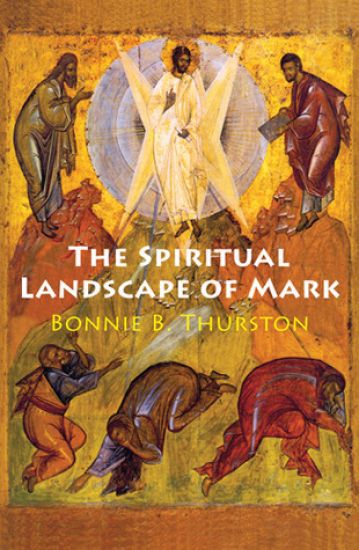
The Spiritual Landscape of Mark

The Spiritual Landscape of Mark

Bonnie B. Thurston

Liturgical Press
2008
pokkari
2009 Catholic Press Association Award Winner! To read the Gospel of Mark is to embark on a journey that begins in a desert and ends with a boulder rolled away from the tomb. In between, Jesus teaches his disciples, calls them to journey and learn what it means to follow him, and guides them to Jerusalem, the scene of the Passion.In The Spiritual Landscape of Mark, Bonnie Thurston has adapted a retreat that she gave to the Society of the Sacred Cross at Tymawr Convent in Wales, thereby inviting all of us to embark on this spiritual journey. Mark's gospel is full of places' desert, house, sea, valley, mountain, city, cross, garden and the winding roads between them. Thurston's prose invites us to go away to a quiet place and reflect awhile on what it means to be Jesus's disciple, to follow him across the hard landscape. Along the way there will be glimpses of his glory when he stills the storm and is transfigured on the mountain, when he heals the sick and feeds the hungry. Still, the primary lesson is the difficult way to which we are called, along with the great joy of knowing that Jesus has initiated the journey and leads us exactly where we need to go.Bonnie B. Thurston, PhD, lives in West Virginia in solitude. She is ordained in the Christian Church (Disciples of Christ) and the author of several books, including Philippians in the Sacra Pagina series and Religious Vows, the Sermon on the Mount, and Christian Living (Liturgical Press), and Preaching Mark (Fortress Press).
Sacra Pagina

Sacra Pagina

Bonnie B. Thurston; Judith Ryan

Liturgical Press
2004
sidottu
Although relatively brief, Philippians is one of the most interesting and beloved of Paul’s undisputed epistles. In Philippians and Philemon, Bonnie Thurston makes a convincing case that canonical Philippians is as Paul wrote it, one letter. Although there is not enough specific evidence to “name names,” she suggests a number of possible audiences. A translation conforming as closely as possible to the original Greek is provided, along with a careful analysis of the language of the letter that yields insights into the context and theological underpinning of this epistle.The apostle’s very brief letter to Philemon stands solidly within the Pauline collection of authentic and canonical letters. In this volume, Judith Ryan argues that Philemon makes two specific appeals. The first seeks to elicit Philemon’s partnership and his community’s support in welcoming Onesimus back as both beloved brother and honored guest. The second requests that Onesimus be allowed to use the freedom he already has to serve Christ and his Gospel. In this commentary Ryan provides a fresh translation, critical notes for each verse, and interpretation on defined sections. She situates the letter in the historical context of slavery in the ancient world and shows how Paul combined his theology with contemporary rhetorical strategies to produce an effective challenge to his audience.Bonnie B. Thurston, PhD, lives in West Virginia in solitude. She is ordained in the Christian Church (Disciples of Christ) and the author of several books, including The Spiritual Landscape of Mark and Religious Vows, the Sermon on the Mount, and Christian Living (Liturgical Press) and Preaching Mark (Fortress Press).Judith M. Ryan, PhD,STL, is associate professor of New Testament at the University of St. Thomas School of Theology at St. Mary's Seminary, Houston, Texas. Previously she taught at Catholic University of America, Fordham University, the University of Scranton, College Misericordia, and St. Mary's Seminary and University, Baltimore, Maryland.
Sacra Pagina

Sacra Pagina

Bonnie B. Thurston; Judith Ryan

Liturgical Press
2009
pokkari
Although relatively brief, Philippians is one of the most interesting and beloved of Paul’s undisputed epistles. In Philippians and Philemon, Bonnie Thurston makes a convincing case that canonical Philippians is as Paul wrote it, one letter. Although there is not enough specific evidence to “name names,” she suggests a number of possible audiences. A translation conforming as closely as possible to the original Greek is provided, along with a careful analysis of the language of the letter that yields insights into the context and theological underpinning of this epistle.The apostle’s very brief letter to Philemon stands solidly within the Pauline collection of authentic and canonical letters. In this volume, Judith Ryan argues that Philemon makes two specific appeals. The first seeks to elicit Philemon’s partnership and his community’s support in welcoming Onesimus back as both beloved brother and honored guest. The second requests that Onesimus be allowed to use the freedom he already has to serve Christ and his Gospel. In this commentary Ryan provides a fresh translation, critical notes for each verse, and interpretation on defined sections. She situates the letter in the historical context of slavery in the ancient world and shows how Paul combined his theology with contemporary rhetorical strategies to produce an effective challenge to his audience.Bonnie B. Thurston, PhD, lives in West Virginia in solitude. She is ordained in the Christian Church (Disciples of Christ) and the author of several books, including The Spiritual Landscape of Mark and Religious Vows, the Sermon on the Mount, and Christian Living (Liturgical Press) and Preaching Mark (Fortress Press).Judith M. Ryan, PhD,STL, is associate professor of New Testament at the University of St. Thomas School of Theology at St. Mary's Seminary, Houston, Texas. Previously she taught at Catholic University of America, Fordham University, the University of Scranton, College Misericordia, and St. Mary's Seminary and University, Baltimore, Maryland.
The Stones of the Last Week

The Stones of the Last Week

Bonnie B. Thurston

Liturgical Press
2024
pokkari
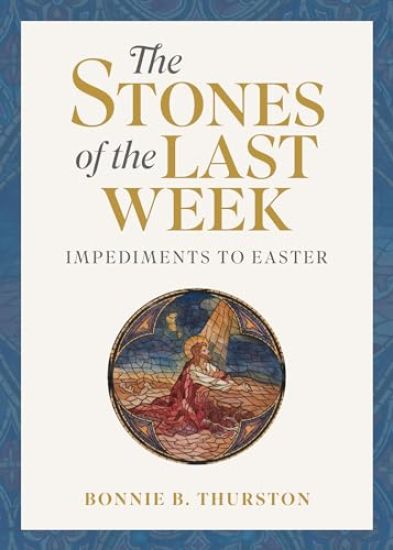
By taking a closer look at the “stones” that impeded Jesus’s last week, we are challenged to identify the obstructions to our spiritual lives. When Jesus descends the Mount of Olives into Jerusalem to the acclamation of the crowd, he announces “I tell you, if these were silent, the stones would shout out.” In TheStones of the Last Week, Bonnie B. Thurston reflects on the Passion narratives in Luke 19-24, and explores the many references to stones, both literal and spiritual, that impeded Jesus’s last week with a view to their significance for our own journey to the fullness of life that resurrection offers. The Stones of the Last Week reflects on the impediments to Easter, challenging us to consider our own “stones,”—the difficulties, hindrances, and obstructions in our spiritual lives—from the perspective of talking stones, stones of destruction, impermanent stones, stones that measure distances, and the stone marking life and death. Turn to this enriching resource as Lent unfolds into Easter, or for personal reading and reflection throughout the year.
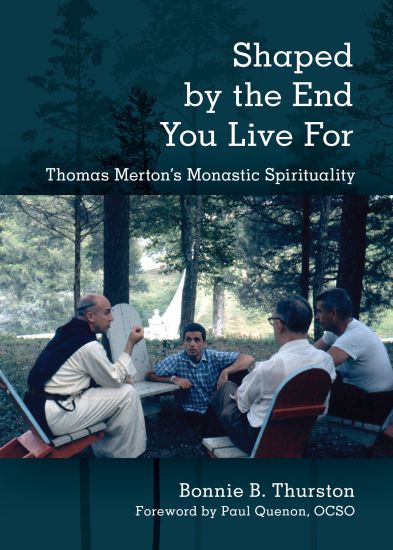
Shaped by the End You Live For

Shaped by the End You Live For

Bonnie B. Thurston; Paul Quenon

Liturgical Press
2020
pokkari
To understand the life and thought of Thomas Merton, one must understand him as a monk. After introducing his vocation and entrance into the Trappist order, this book highlights some of his basic spiritual presuppositions. Relying primarily on Merton's writing, Bonnie B. Thurston surveys his thought on fundamental aspects of monastic formation and spirituality, particularly obedience, silence, solitude, and prayer. She also addresses some of the temptations and popular misunderstandings surrounding monastic life. Accessible and conversational in style, the book suggests how monastic spirituality is relevant, not only for all Christians, but also for serious spiritual seekers.
Across the Boundaries of Race & Class

Across the Boundaries of Race & Class

Bonnie T. Dill

CRC Press Inc
1993
sidottu
First published in 1994. Almost fifteen years after this study was written, many social changes have occurred affecting domestic service; yet some things remain the same. Among the changes are the increased labor force participation rates of women and the resultant rise in the demand for private household help. This volume is part of the Studies on African American History and Culture series, looking at the role, occupation, impact of race and employee relationships of black domestic servants. It also includes three case studies, stories of resistant and families and children. Across the Boundaries of Race and Class was one of the earliest attempts to examine the ways the structure and organization of housework as women’s work influenced the work and family lives of domestic workers. As pointed out in the book, the women who were the subjects of this study exemplified a pattern of domestic work that was fading even as it was being studied: most worked for one family for twenty to thirty years.
Social Rage

Social Rage

Bonnie Berry

CRC Press Inc
1999
sidottu
This book defines and describes the meaning of social rage by examining the influence of social forces such as economic conditions, population diversity and power shifts. The role of media, in particular its encouragement of social rage through sensationalism, is also handled in this book. The author apporaches the issue of social rage on both an individual and a collective level with the goal of revealing its motivations and its impact.
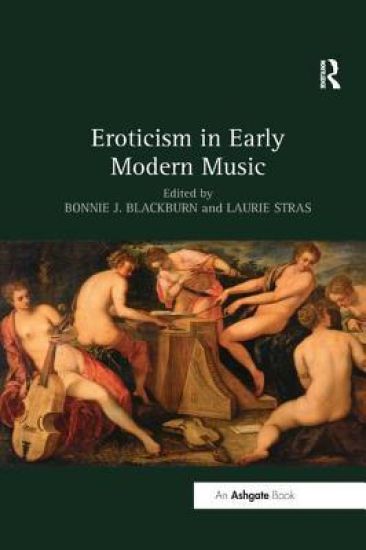
Eroticism in Early Modern Music

Eroticism in Early Modern Music

Bonnie J. Blackburn; Laurie Stras

CRC Press Inc
2017
nidottu
Eroticism in Early Modern Music contributes to a small but significant literature on music, sexuality, and sex in sixteenth- and seventeenth-century Europe. Its chapters have grown from a long dialogue between a group of scholars, who employ a variety of different approaches to the repertoire: musical and visual analysis; archival and cultural history; gender studies; philology; and performance. By confronting musical, literary, and visual sources with historically situated analyses, the book shows how erotic life and sensibilities were encoded in musical works. Eroticism in Early Modern Music will be of value to scholars and students of early modern European history and culture, and more widely to a readership interested in the history of eroticism and sexuality.
Oyster Wars and the Public Trust

Oyster Wars and the Public Trust

Bonnie J. McCay

University of Arizona Press
1998
sidottu
Who owns tidal waters? Are oyster beds common holdings or private property? Questions first raised in colonial New Jersey helped shape American law by giving rise to the public trust doctrine. Today that concept plays a critical role in public advocacy and environmental law. Bonnie McCay now puts that doctrine in perspective by tracing the history of attempts to defend common resources against privatization. She tells of conflicts in New Jersey communities over the last two centuries: how fishermen dependent on common-use rights employed poaching, piracy, and test cases to protect their stake in tidal resources, and how oyster planters whose businesses depended on the enclosure of marine commons engineered test cases of their own to seek protection for their claims. McCay presents some of the most significant cases relating to fishing and waterfront development, describing how the oyster wars were fought on the waters and in the courtrooms and how the public trust doctrine was sometimes reinterpreted to support private interests. She explores the events and people behind the proceedings and addresses the legal, social, and ecological issues these cases represent.Oyster Wars and the Public Trust is an important study of contested property rights from an anthropological perspective that also addresses significant issues in political ecology, institutional economics, environmental history, and the evolution of law. It contributes to our understanding of how competing claims to resources have evolved in the United States and shows that making nature a commodity remains a moral problem even in a market-driven economy.
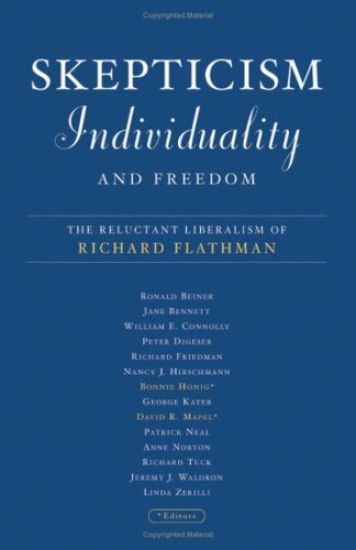
Skepticism, Individuality, and Freedom

Skepticism, Individuality, and Freedom

Bonnie Honig

University of Minnesota Press
2002
sidottu
As one of liberal theory's most important gadflies, Richard Flathman has during the past four decades produced a significant body of work that is iconoclastic, idiosyncratic, and increasingly influential. Flathman criticizes liberal theory's role in justifying a politics of governance that has drifted substantially from liberalism's central commitments to individuality and freedom. It is this challenge, and its implications for the future of liberal theory, that brings together the diverse and distinguished authors of this volume. Topics include the relationships between theory and practice, skepticism and knowledge, individuality and egoism, negative and positive freedom, Hobbes and liberalism, as well as the uneasy connections among liberalism, feminism, and democratic politics.
Skepticism, Individuality, and Freedom

Skepticism, Individuality, and Freedom

Bonnie Honig

University of Minnesota Press
2002
nidottu
Major thinkers grapple with the challenge of this renowned liberal thinker.As one of liberal theory’s most important gadflies, Richard Flathman has during the past four decades produced a significant body of work that is iconoclastic, idiosyncratic, and increasingly influential. Flathman criticizes liberal theory’s role in justifying a politics of governance that has drifted substantially from liberalism’s central commitments to individuality and freedom. It is this challenge, and its implications for the future of liberal theory, that brings together the diverse and distinguished authors of this volume. Topics include the relationships between theory and practice, skepticism and knowledge, individuality and egoism, negative and positive freedom, Hobbes and liberalism, as well as the uneasy connections among liberalism, feminism, and democratic politics. Contributors: Ronald Beiner, U of Toronto; Jane Bennett, Goucher; William E. Connolly, Johns Hopkins; Peter Digeser, U of California, Santa Barbara; Richard Friedman, SUNY, Buffalo; Nancy J. Hirschmann, Cornell; George Kateb, Princeton; Patrick Neal, U of Vermont; Anne Norton, U of Pennsylvania; Richard Tuck, Harvard; Jeremy J. Waldron, Columbia; Linda Zerilli, Northwestern.
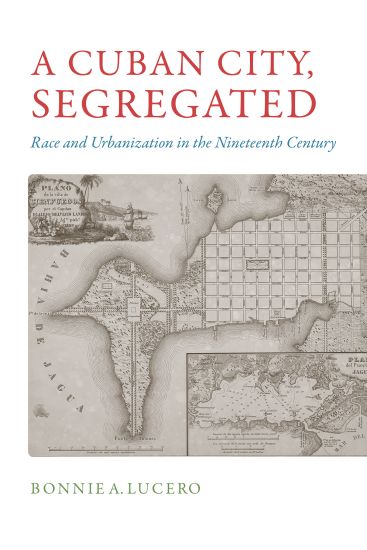
A Cuban City, Segregated

A Cuban City, Segregated

Bonnie A. Lucero

The University of Alabama Press
2019
sidottu
A microhistory of racial segregation in Cienfuegos, a central Cuban port city. Founded as a white colony in 1819, Cienfuegos quickly became home to people of African descent, both free and enslaved, and later a small community of Chinese and other immigrants. Despite the racial, ethnic, and cultural diversity defining the city's population, the urban landscape was characterized by distinctive racial boundaries, separating the white city center from the heterogeneous peripheries. A Cuban City, Segregated: Race and Urbanization in the Nineteenth Century explores how the de facto racial segregation was constructed and perpetuated in a society devoid of explicitly racial laws. Drawing on the insights of intersectional feminism, Bonnie A. Lucero shows that the key to understanding racial segregation in Cuba is recognizing the often unspoken ways specifically classed notions and practices of gender shaped the historical production of race and racial inequality. In the context of nineteenth-century Cienfuegos, gender, race, and class converged in the concept of urban order, a complex and historically contingent nexus of ideas about the appropriate and desired social hierarchy among urban residents, often embodied spatially in particular relationships to the urban landscape. As Cienfuegos evolved subtly over time, the internal logic of urban order was driven by the construction and defense of a legible, developed, aesthetically pleasing, and, most importantly, white city center. Local authorities produced policies that reduced access to the city center along class and gendered lines, for example, by imposing expensive building codes on centric lands, criminalizing poor peoples' leisure activities, regulating prostitution, and quashing organized labor. Although none of these policies mentioned race outright, this new scholarship demonstrates that the policies were instrumental in producing and perpetuating the geographic marginality and discursive erasure of people of color from the historic center of Cienfuegos during its first century of existence.
Fate of the Wild

Fate of the Wild

Bonnie B. Burgess

University of Georgia Press
2003
pokkari
Given widespread concern over the worldwide loss of biodiversity and popular crusades to "save" endangered species and habitats, why has the Endangered Species Act remained unauthorized since October 1992? In Fate of the Wild Bonnie B. Burgess offers an illuminating assembly of facts about biodiversity and straightforward analysis of the legislative stalemate surrounding the Endangered Species Act. Fate of the Wild surveys the history of and analyzes the conflict over the legislation itself, the heated issues regarding its enforcement, and the land-use and habitat battles waged between conservationists, environmental activists, and private property proponents.Burgess's meticulous and exhaustive research makes Fate of the Wild a valuable resource for professionals in conservation biology, public policy, environmental law, and environmental organizations, while the narrative clarity of the book will appeal to anyone interested in the fate of nonhuman species.Burgess explains how wilderness has been consumed by concrete and asphalt, the effects of toxins on plants and animals, strip mine tailings, oil slicks, and smog. She exposes, as well, the "invisible" damage that manifests itself in the subtle degradation of natural systems and in the increased incidence and number of diseases, the rise in human infertility, and the drastic alteration of weather patterns and landscapes.Fate of the Wild presents a factual and balanced discussion of the various sides of the contemporary debate over the Endangered Species Act, alongside the author's clearly stated position: We are overpopulating, polluting, and overdeveloping our environment, and as a species we have embarked on a crash course toward a sixth great extinction event on this Earth.
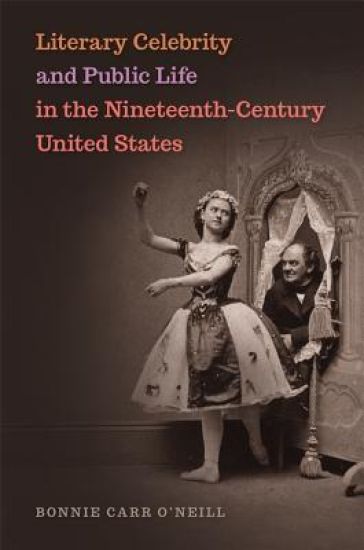
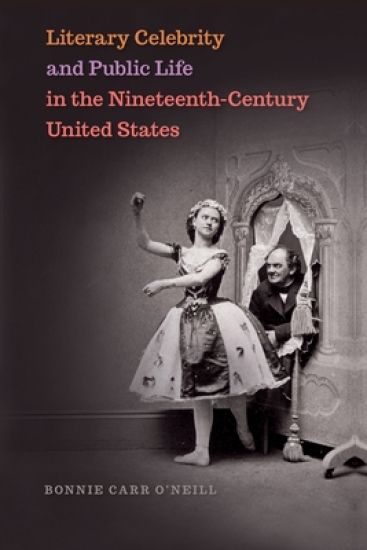
Literary Celebrity and Public Life in the Nineteenth-Century United States
Through extended readings of the works of P. T. Barnum, Walt Whitman, Ralph Waldo Emerson, Frederick Douglass, and Fanny Fern, Bonnie Carr O’Neill shows how celebrity culture authorizes audiences to evaluate public figures on personal terms and in so doing reallocates moral, intellectual, and affective authority and widens the public sphere. O’Neill examines how celebrity culture creates a context in which citizens regard one another as public figures while elevating individual public figures to an unprecedented personal fame. Although this new publicity fosters nationalism, it also imbues public life with personal feeling and transforms the public sphere into a site of divisive, emotionally intense debate. Further, O’Neill analyzes how celebrity culture’s scrutiny of the lives and personalities of public figures collapses distinctions between the public and private spheres and, as a consequence, challenges assumptions about the self and personhood. Celebrity culture intensifies the complex emotions and debates surrounding already-fraught questions of national belonging and democratic participation even as, for some, it provides a means of redefining personhood and cultural identity. O’Neill offers a new critical approach within the growing scholarship on celebrity studies by exploring the relationship between the emergence of celebrity culture and civic discourse. Her careful readings unravel the complexities of a form of publicity that fosters both mass consumption and cultural criticism.
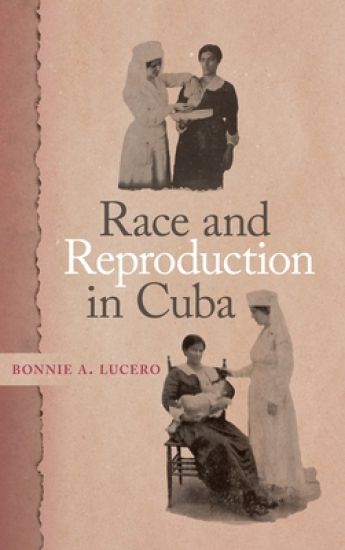
Race and Reproduction in Cuba

Race and Reproduction in Cuba

Bonnie A. Lucero

UNIVERSITY OF GEORGIA PRESS
2022
sidottu
Women’s reproduction, including conception, pregnancy, childbirth, breastfeeding, and other physical acts of motherhood (as well as the rejection of those roles), played a critical role in the evolution and management of Cuba’s population. While existing scholarship has approached Cuba’s demographic history through the lens of migration, both forced and voluntary, Race and Reproduction in Cuba challenges this male-normative perspective by centering women in the first book-length history of reproduction in Cuba.Bonnie A. Lucero traces women’s reproductive lives, as well as key medical, legal, and institutional interventions influencing them, over four centuries. Her study begins in the early colonial period with the emergence of the island’s first charitable institutions dedicated to relieving poor women and abandoned white infants. The book’s centerpiece is the long nineteenth century, when elite interventions in women’s reproduction hinged not only on race but also legal status. It ends in 1965 when Cuba’s nascent revolutionary government shifted away from enforcing antiabortion laws that had historically targeted impoverished women of color.Questioning how elite demographic desires—specifically white population growth and nonwhite population management—shaped women’s reproduction, Lucero argues that elite men, including judges, physicians, philanthropists, and public officials, intervened in women’s reproductive lives in racially specific ways. Lucero examines how white supremacy shaped tangible differences in the treatment of women and their infants across racial lines and outlines how those reproductive outcomes were crucial in sustaining racial hierarchies through moments of tremendous political, economic, and social change.
Race and Reproduction in Cuba

Race and Reproduction in Cuba

Bonnie A. Lucero

UNIVERSITY OF GEORGIA PRESS
2022
pokkari
Women’s reproduction, including conception, pregnancy, childbirth, breastfeeding, and other physical acts of motherhood (as well as the rejection of those roles), played a critical role in the evolution and management of Cuba’s population. While existing scholarship has approached Cuba’s demographic history through the lens of migration, both forced and voluntary, Race and Reproduction in Cuba challenges this male-normative perspective by centering women in the first book-length history of reproduction in Cuba.Bonnie A. Lucero traces women’s reproductive lives, as well as key medical, legal, and institutional interventions influencing them, over four centuries. Her study begins in the early colonial period with the emergence of the island’s first charitable institutions dedicated to relieving poor women and abandoned white infants. The book’s centerpiece is the long nineteenth century, when elite interventions in women’s reproduction hinged not only on race but also legal status. It ends in 1965 when Cuba’s nascent revolutionary government shifted away from enforcing antiabortion laws that had historically targeted impoverished women of color.Questioning how elite demographic desires—specifically white population growth and nonwhite population management—shaped women’s reproduction, Lucero argues that elite men, including judges, physicians, philanthropists, and public officials, intervened in women’s reproductive lives in racially specific ways. Lucero examines how white supremacy shaped tangible differences in the treatment of women and their infants across racial lines and outlines how those reproductive outcomes were crucial in sustaining racial hierarchies through moments of tremendous political, economic, and social change.
Literary Celebrity and Public Life in the Nineteenth-Century United States
Through extended readings of the works of P. T. Barnum, Walt Whitman, Ralph Waldo Emerson, Frederick Douglass, and Fanny Fern, Bonnie Carr O’Neill shows how celebrity culture authorizes audiences to evaluate public figures on personal terms and in so doing reallocates moral, intellectual, and affective authority and widens the public sphere. O’Neill examines how celebrity culture creates a context in which citizens regard one another as public figures while elevating individual public figures to an unprecedented personal fame. Although this new publicity fosters nationalism, it also imbues public life with personal feeling and transforms the public sphere into a site of divisive, emotionally intense debate. Further, O’Neill analyzes how celebrity culture’s scrutiny of the lives and personalities of public figures collapses distinctions between the public and private spheres and, as a consequence, challenges assumptions about the self and personhood. Celebrity culture intensifies the complex emotions and debates surrounding already-fraught questions of national belonging and democratic participation even as, for some, it provides a means of redefining personhood and cultural identity. O’Neill offers a new critical approach within the growing scholarship on celebrity studies by exploring the relationship between the emergence of celebrity culture and civic discourse. Her careful readings unravel the complexities of a form of publicity that fosters both mass consumption and cultural criticism.
Metaphors of Oppression in Lusophone Historical Drama

Metaphors of Oppression in Lusophone Historical Drama

Bonnie S Wasserman

Peter Lang Publishing Inc
2003
sidottu
Lusophone playwrights who wrote under repressive regimes and during politically chaotic times often depicted events in their nations' histories that were oppressive in nature - including the Inquisition, slavery, and colonialism. Using techniques derived from Bertolt Brecht, the playwrights intended to make their audiences reconsider not only the action taking place onstage, but also its relevance to the contemporary sociopolitical situation. This characteristic can be observed in Brazilian and Portuguese plays written during the 1960s and 1970s, as well as Angolan plays written in the 1980s. The seven dramatic works analyzed in this book exemplify how contemporary Lusophone playwrights portray themes of past oppression to covertly discuss political repression and the seeds of civil wars in the second half of the twentieth century.