Kirjojen hintavertailu. Mukana 11 244 527 kirjaa ja 12 kauppaa.

Kirjahaku

Etsi kirjoja tekijän nimen, kirjan nimen tai ISBN:n perusteella.

1000 tulosta hakusanalla Brian E. Butler

Brian Boru

Brian Boru

Maire Ni Mhaonaigh

The History Press Ltd
2006
nidottu
Brian Boru King of Munster, was among the most successful of all medieval Irish monarchs. This is a biography of the most famous of Ireland's High Kings.
Brian Lara

Brian Lara

Brian Scovell

The History Press Ltd
2007
sidottu
In the 1990s Brian Lara established himself as the best batsman in the world, with a 375 against England, a 501 for Warwickshire and a 400 not out in Antigua among his world records. At 37, he is still the dominant force in the West Indies side going into 2007, but it seems likely that the forthcoming World Cup and tours of India and England will form his international swansong. But this is not simply a story of runs and of world records. Three times the captain of West Indies, rows, strike action and threats to walk out have ensured a turbulent career and a continuing struggle with officialdom. His wayward love life has also added colour to the story of a man who is essentially a gentle, respectful character with a Corinthian approach to cricket. This is the complete account of one of the true greats of world cricket.
Brian Crutcher

Brian Crutcher

Tom Wareham

The History Press Ltd
2008
nidottu
Arguably the best English rider never to win a World Final, Brian Crutcher was truly brilliant and naturally gifted. The ‘Nipper’ rode for Poole, Wembley, Southampton and England in the 1950s, competing against some of speedway’s greatest ever riders, such as Ove Fundin and Barry Briggs. Often captaining his country, he is also one of the all-time top points scorers in World Finals, his best finish being a second place in 1954. This book not only gives an insight into the life of one of speedway’s heroes, but also into the world of speedway itself during its heyday in the 1950s.
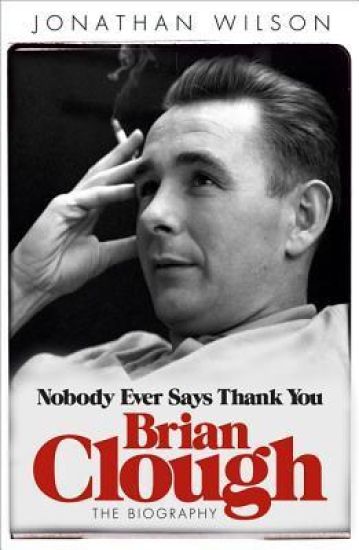
Brian Clough: Nobody Ever Says Thank You

Brian Clough: Nobody Ever Says Thank You

Jonathan Wilson

Orion (an Imprint of The Orion Publishing Group Ltd )
2012
pokkari
The final word on Brian CloughIn this first full, critical biography, Jonathan Wilson draws an intimate and powerful portrait of one of England's greatest football managers, Brian Clough, and his right-hand man, Peter Taylor. It was in the unforgiving world of post-war football where their identities and reputations were made - a world where, as Clough and Taylor's mentor Harry Storer once said, 'Nobody ever says thank you.'Nonetheless, Clough brought the gleam of silverware to the depressed East Midlands of the 1970s. Initial triumph at Derby was followed by a sudden departure and a traumatic 44 days at Leeds. By the end of a frazzled 1974, Clough was set up for life financially, but also hardened to the realities of football. By the time he was at Forest, Clough's mask was almost permanently donned: a persona based on brashness and conflict. Drink fuelled the controversies and the colourful character; it heightened the razor-sharp wit and was a salve for the highs of football that never lasted long enough, and for the lows that inevitably followed. Wilson's account is the definitive portrait of this complex and enduring man.
Brian Sutton-Smith, Playful Scholar

Brian Sutton-Smith, Playful Scholar

UNIVERSITY PRESS OF AMERICA
2024
nidottu
This book honors the legacy of Dr. Brian Sutton-Smith, Professor Emeritus of Psychology and Folklore at the University of Pennsylvania. Dr. Sutton-Smith was considered the premier play scholar of his generation, with numerous publications in the fields of developmental psychology, folklore, anthropology, sociology of sport, education, and philosophy. We present an eclectic array of essays written in honor of the centennial of his birth, ranging from the scholarly to the overtly playful. There are essays distilling his work to their key ideas and some that offer a robust and respectful critique. There are personal anecdotes honoring his memory, and original works of fiction celebrating his legacy. The book is a joint publication between the International Journal of Play and the TASP biannual Play and Culture Studies and includes photographs of Brian Sutton-Smith, as well as heartfelt appreciation from scores of colleagues.
Brian Sweet Notecard Folio

Brian Sweet Notecard Folio

POMEGRANATE COMMUNICATIONS INC,US
2015
muu
Two of Sweets daydream-inducing images are included in this folio of notecards featuring the iconic Scottish castle on Eilean Donan, a picturesque and strategically important island first fortified during the Iron Age.
Avengers By Brian Michael Bendis - Volume 4 (avx)
AVX tie-in When the cosmic Phoenix Force threatens the planet, it's up to Earth's Mightiest Heroes to stop it - but the X-Men have a different plan. The struggle between the two teams becomes a battle unlike any the Avengers have ever faced - and every Avenger will be challenged like never before. For Captain America, an encounter with A.I.M. could provide a win he sorely needs, even if the accompanying morale boost proves to be tragically short-lived. For Red Hulk, following his brilliant strategic instincts against his team's wishes could prove to be a miscalculation - one that could cost him his life. For Wolverine, taking sides means fighting old friends and recruiting an unlikely ally. And for one Avenger, the war against the Phoenix will lead to betrayal COLLECTING: Avengers 25-30
Brian Dickson

Brian Dickson

Robert Sharpe; Kent Roach

University of Toronto Press
2003
sidottu
When Brian Dickson was appointed in 1973, the Supreme Court of Canada was preoccupied with run-of-the-mill disputes. By the time he retired as Chief Justice of Canada in 1990, the Court had become a major national institution, very much in the public eye. The Court's decisions, reforming large areas of private and public law under the Charter of Rights, were the subject of intense public interest and concern. Brian Dickson played a leading role in this transformation. Engaging and incisive, Brian Dickson: A Judge's Journey traces Dickson's life from a Depression-era boyhood in Saskatchewan, to the battlefields of Normandy, the boardrooms of corporate Canada and high judicial office, and provides an inside look at the work of the Supreme Court during its most crucial period. Dickson's journey was an important part of the evolution of the Canadian judiciary and of Canada itself. Sharpe and Roach have written an accessible biography of one of Canada's greatest legal figures that provides new insights into the work of Canada's highest court.
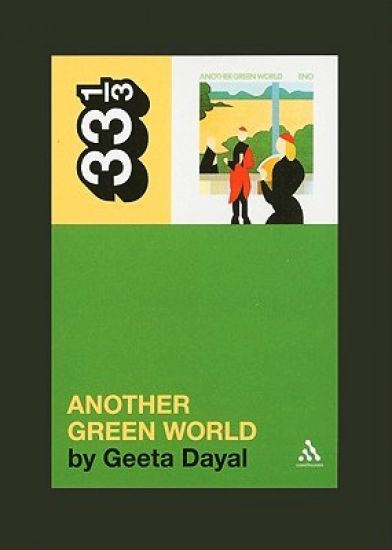
Brian Eno's Another Green World

Brian Eno's Another Green World

Geeta Dayal

Continuum International Publishing Group Ltd.
2010
nidottu
It was the strange and mystical "Another Green World" (1975) that was the cosmic bridge between Old Eno and New Eno, between Rock and Ambient, between the guitar and the synthesizer, between the old world and electronic music as we know it. "Another Green World" was a total paradigm shift, an introduction to a new way of thinking: for Eno, and for the world of popular music. Geeta Dayal interviews Eno, and his many collaborators on the album. She digs into the album, excavates its odd past, and untangles how, exactly, it was a link to the future of electronic music - by foreshadowing how powerful, personal and emotional this music could be."Thirty-Three and a Third" is a series of short books about critically acclaimed and much-loved albums of the past 40 years. By turns obsessive, passionate, creative and informed, the books in this series demonstrate many different ways of writing about music.
Brian Weil, 1979–95
The first career retrospective of activist photographer Brian Weil, whose work and practice explored insular cultures.This book offers the first career retrospective of Brian Weil (1954-1996), an artist whose photographs pushed viewers into a deeply unsteadying engagement with insular communities and subcultures. A younger contemporary of such participant-observer photographers as Larry Clark and Nan Goldin, Weil took photographs that foreground the complex relationships between photographer and subject, and between photograph and viewer. Weil was a member of ACT UP and the founder of New York City's first needle exchange, and his photographs became inextricably tied to his activist practice. His late work, an extensive series of portraits whose subjects bear witness to the emerging AIDS pandemic, is included here, along with selections from several earlier and concurrent projects: Sex (underground sex and bondage participants), Miami Crime (homicide scenes investigated by the Miami Police Department), Hasidim (populations of Hasidic Jews in Brooklyn and the Catskills), and an extensive video project with members of nascent transgender support groups.This book commemorates a 2013 exhibition of Brian Weil's work at the Institute of Contemporary Art at the University of Pennsylvania and includes in-depth essays on Weil by Stamatina Gregory and Jennifer Burris, an interiew with the artist by Claudia Gould, and reprints of archival edited notes discussing crime and photographic evidence based on a series of interviews conducted by Sylvere Lotringer with filmmaker George Diaz in the 1980s.
Brian Ulrich: Close Out

Brian Ulrich: Close Out

Anderson Gallery, Virginia Commonwealth University
2014
pokkari
Over the past four years, American photographer Brian Ulrich (born 1971) has collected found images and objects that offer an idiosyncratic history of postwar consumerism. Featured in this volume are images printed by Ulrich from long-buried newspaper negatives documenting the "Great Prosperity" of the 1940s and 50s that he acquired from private collectors on eBay. He explains: "Almost all of the pictures were taken with a Speed Graphic press camera equipped with flash bulbs, which produces a very specific and, in my opinion, wonderful photographic language that goes well beyond our understanding of Weegee's street photographs, for instance." An extensive cache of salvaged Polaroids depicting shoplifters evokes one consequence of the "Great Regression" of the 1980s and 90s, reinforcing just how successfully the previous era manufactured and exalted desire as the indelible core of a consumer culture. Objects such as neon signage, department store door pulls, architectural plans and an array of other documents extend this captivating narrative.