Kirjojen hintavertailu. Mukana 11 342 296 kirjaa ja 12 kauppaa.

Kirjahaku

Etsi kirjoja tekijän nimen, kirjan nimen tai ISBN:n perusteella.

1000 tulosta hakusanalla Bridgette Sharp

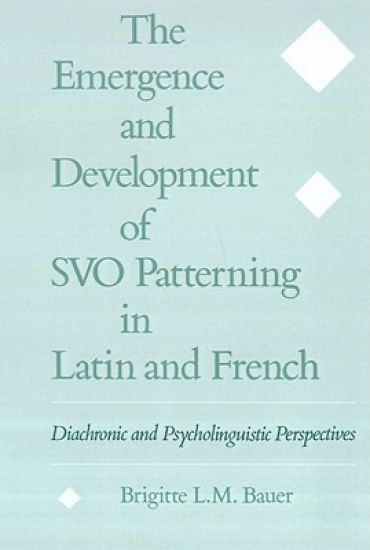
The Emergence and Development of SVO Patterning in Latin and French

The Emergence and Development of SVO Patterning in Latin and French

Brigitte L. M. Bauer

Oxford University Press Inc
1995
sidottu
This book analyses--in terms of branching--the pervasive reorganization of Latin syntactic and morphological structures: in the development from Latin to French, a shift can be observed from the archaic, left-branching structures (which Latin inherited from Proto-Indo-European) to modern right-branching equivalents. Brigitte Bauer presents a detailed analysis of this development based on the theoretical discussion and definition of "branching" and "head." Subsequently she relates the diachronic shift to psycholinguistic evidence, arguing that the difficuly of LB complex structures as reflected in their painstaking and delayed acquisition accounts for the extensive typological shift from left to right branching that took place in Latin/French and the other Indo-European languages. The author uses data from child language acquisition studies to support her thought-provoking claim.
Servants

Servants

Bridget Hill

Clarendon Press
1996
sidottu
The importance of domestic service in the eighteenth century has long been recognized by historians but apart from a number of recent controversial articles, this IS the first detailed study of the subject since J. Jean Hecht's book of 1956. Bridget Hill's essays question the stereotype of the domestic servant - usually male and most often in large households employing many servants where a strict hierarchy prevailed - that has dominated all discussion hitherto. Using eighteenth-century diaries, journals and memoirs as well as the press and literature of the period, she examines the lives of the majority of domestic servants, who were employed in more modest establishments, or in single or two-servant households. The book looks at the life of the pauper apprentices to service, paid little or nothing for their efforts, and at the frequency with which both near and distant kin were employed as unpaid, or badly-paid, domestic servants. It also examines the vulnerability of female domestic servants to sexual harassment and discusses the sexuality of servants. Bridget Hill's fascinating and detailed essays provide a new perspective on an important facet of English domestic life in the eighteenth century.
Compliance: Regulation and Environment

Compliance: Regulation and Environment

Bridget M. Hutter

Clarendon Press
1997
sidottu
Regulation touches upon areas of vital importance to our lives and the economy, but it is still very much a 'grey area' of criminal law and social control, subject to very little academic scrutiny. This book combines an analysis of the broader structural factors which influence regulation and its definition at the everyday level with a discussion of empirical data, to reach a thorough understanding of the subject. The empirical data focuses on the regulation of economic activities in the areas of occupational health and safety and the environment in England and Wales in the 1980s.
A Magnificent Faith

A Magnificent Faith

Bridget Heal

Oxford University Press
2017
sidottu
A Magnificent Faith explains how and why Lutheranism - a confession that derived its significance from the promulgation of God's Word - became a visually magnificent faith, a faith whose adherents sought to captivate Christians' hearts and minds through seeing as well as through hearing. Although Protestantism is no longer understood as an exclusively word-based religion, the paradigm of evangelical ambivalence towards images retains its power. This is the first study to offer an account of the Reformation origins and subsequent flourishing of the Lutheran baroque, of the rich visual culture that developed in parts of the Holy Roman Empire during the later seventeenth and early eighteenth centuries. The volume opens with a discussion of the legacy of the Wittenberg Reformation. Three sections then focus on the confessional, devotional, and magnificent image, exploring turning points in Lutherans' attitudes towards religious art. Drawing on a wide variety of archival, printed, and visual sources from two of the Empire's most important Protestant territories - Saxony, the heartland of the Reformation, and Brandenburg - A Magnificent Faith shows the extent to which Lutheran culture was shaped by territorial divisions. It traces the development of a theologically-grounded aesthetic, and argues that images became prominent vehicles for the articulation of Lutheran identity not only amongst theologians but also amongst laymen and women. By examining the role of images in the Lutheran tradition as it developed over the course of two centuries, A Magnificent Faith offers a new understanding of the relationship between Protestantism and the visual arts.
Us and Them?

Us and Them?

Bridget Anderson

Oxford University Press
2015
nidottu
Us and Them? explores the distinction between migrant and citizen through using the concept of 'the community of value'. The community of value is comprised of Good Citizens and is defined from outside by the Non-Citizen and from the inside by the Failed Citizen, that is figures like the benefit scrounger, the criminal, the teenage mother etc. While Failed Citizens and Non-Citizens are often strongly differentiated, the book argues that it is analytically and politically productive to to consider them together. Judgments about who counts as skilled, what is a good marriage, who is suitable for citizenship, and what sort of enforcement is acceptable against 'illegals', affect citizens as well as migrants. Rather than simple competitors for the privileges of membership, citizens and migrants define each other through sets of relations that shift and are not straightforward binaries. The first two chapters on vagrancy and on Empire historicise migration management by linking it to attempts to control the mobility of the poor. The following three chapters map and interrogate the concept of the 'national labour market' and UK immigration and citizenship policies examining how they work within public debate to produce 'us and them'. Chapters 6 and 7 go on to discuss the challenges posed by enforcement and deportation, and the attempt to make this compatible with liberalism through anti-trafficking policies. It ends with a case study of domestic labour as exemplifying the ways in which all the issues outlined above come together in the lives of migrants and their employers.
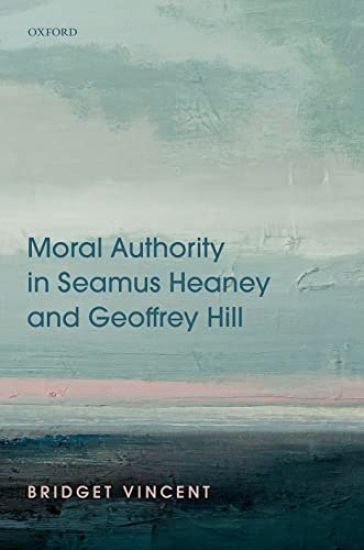
Moral Authority in Seamus Heaney and Geoffrey Hill

Moral Authority in Seamus Heaney and Geoffrey Hill

Bridget Vincent

Oxford University Press
2022
sidottu
How do poems communicate moral ideas? Can they express concepts in ways that are unique and impossible to replicate in other forms of writing? This book explores these questions by turning to two of the late twentieth century's most important poets: Seamus Heaney and Geoffrey Hill. Their work shows that a poem can act as an example of a moral concept, rather than simply a description or discussion of it. Exploring these two poets via their shared preoccupation with poetry's moral exemplarity opens up new perspectives on their work. The concept of exemplarity is shown to play an important role in these poets' most significant preoccupations, from moral complicity to the nature of lyric speech to literary influence to memorialisation, responsibility, and aesthetic autonomy. Through this new analysis of poetry, critical prose, drama, and archival materials, this book offers a major new study of ethics in the later period of these two writers--including recent underexplored posthumous works. In turn, the book also makes an important intervention in larger debates about literature and morality, and about the field of ethical criticism itself: this is the first book-length study to expand ethical criticism beyond its customary narrative focus. The ethical criticism of fiction is often an exercise in methodological advocacy, urging the use of more literary examples in moral philosophy. As this book shows, including poetry among these examples introduces new, lyric-inflected caveats about the use of literature as a form of moral example: caveats which remain invisible in narrative-centred ethical criticism.
Regulation and Risk

Regulation and Risk

Bridget M. Hutter

Oxford University Press
2001
sidottu
Regulating the risks associated with economic activities is a feature of modern societies and one in which the state increasingly seeks to co-opt the regulatory powers of corporations. This book examines the impact of a system of enforced self-regulation on the corporate life of British Railways. It uses this case study of occupational health and safety regulation to focus on broader theoretical and empirical discussions of regulation, risk, and corporate activities. A central organizing perspective of this book is that regulation is a form of risk management. It examines how workplace risks in modern societies are managed by businesses and the individuals within them and considers what influence the law has in this. The tensions between the constitutive and controlling aspects of regulatory law are analysed with reference to in-depth empirical data about corporate and individual compliance and non-compliance. Related concerns about the social control of organizational and economic life are explored and their policy and theoretical implications examined. These issues are especially significant following the privatization of Britain's rail network and the introduction of regulatory systems which are highly reliant on industry self-regulation. More generally, their significance is highlighted by the increasing popularity of risk-based approaches to corporate governance. The book argues that if regulation is to be an effective way of managing risk we need to pay more attention to the assumptions we make about corporate life and be more prepared to use the full range of regulatory sources and tools available to us.
The Making of the Modern Supermarket

The Making of the Modern Supermarket

Bridget Salmon; Andrew Godley

Oxford University Press
2025
sidottu
The Making of the Modern Supermarket describes the emergence and growth of the modern supermarket format in Britain, showing how the original American innovation of self-service was adapted to the different postwar British context in a number of ways. During the early 1960s various retailers began to experiment with larger formats, which became known as supermarkets. Sainsbury's was a late mover into self-service, but began to develop a different supermarket model, emphasising fresh foods and perishable goods. This led it to pursue a more expensive path of development as it invested in self-service, creating its novel supermarket format by the end of the 1960s. The book explores in detail how this Sainsbury's format evolved. It was driven by the company's historic commitment to selling fresh meat and other perishable goods, which demanded a much greater commitment to refrigeration in Sainsbury's self-service format than was the case for its peers. Because most consumers were suspicious of buying fresh meat and perishables through self-service outlets in the early 1960s, Sainsbury's also had to retain high levels of staffing to support their self-service offering. During the 1960s as they extended their product range, they facilitated the development of one-stop shopping in the UK, where customers were able to buy all their food requirements in one shop, rather than shopping around. This became the most popular version of the supermarket format, and it was the template that others copied as they tried to follow Sainsbury's example.
Us and Them?

Us and Them?

Bridget Anderson

Oxford University Press
2013
sidottu
Us and Them? explores the distinction between migrant and citizen through using the concept of 'the community of value'. The community of value is comprised of Good Citizens and is defined from outside by the Non-Citizen and from the inside by the Failed Citizen, that is figures like the benefit scrounger, the criminal, the teenage mother etc. While Failed Citizens and Non-Citizens are often strongly differentiated, the book argues that it is analytically and politically productive to consider them together. Judgments about who counts as skilled, what is a good marriage, who is suitable for citizenship, and what sort of enforcement is acceptable against 'illegals', affect citizens as well as migrants. Rather than simple competitors for the privileges of membership, citizens and migrants define each other through sets of relations that shift and are not straightforward binaries. The first two chapters on vagrancy and on Empire historicise migration management by linking it to attempts to control the mobility of the poor. The following three chapters map and interrogate the concept of the 'national labour market' and UK immigration and citizenship policies examining how they work within public debate to produce 'us and them'. Chapters 6 and 7 go on to discuss the challenges posed by enforcement and deportation, and the attempt to make this compatible with liberalism through anti-trafficking policies. It ends with a case study of domestic labour as exemplifying the ways in which all the issues outlined above come together in the lives of migrants and their employers.
Phonological Architecture

Phonological Architecture

Bridget D. Samuels

Oxford University Press
2011
sidottu
Phonological Architecture bridges linguistic theory and the biological sciences, presenting a comprehensive view of phonology from a biological perspective. Its back-to-basics approach breaks phonology into primitive operations and representations and investigates their possible origins in cognitive abilities found throughout the animal kingdom. Bridget Samuels opens the discussion by considering the general properties of the externalisation system in a theory-neutral manner, using animal cognition studies to identify which components of phonology may not be unique to humans and/or to language. She demonstrates, on the basis of behavioural and physiological studies on primates, songbirds, and a wide variety of other species, that the cognitive abilities underlying human phonological representations and operations are present in creatures other than Homo sapiens (even if not to the same degree) and in domains other than phonology or, indeed, language proper. The second, more linguistically technical half of the book explores what is necessarily unique about phonology. The author discusses the properties of the phonological module which are dictated by the interface requirements of the syntactic module of Universal Grammar as well as different components of the human sensory-motor system (ie audition, vision, and motor control). She proposes a repertoire of phonological representations and operations which are consistent with Universal Grammar and human cognitive evolution. She illustrates the application of these operations with analyses of representative phonological data such as vowel harmony, reduplication, and tone spreading patterns. Finally, the author addresses the issue of cross-linguistic and inter-speaker variation.
Phonological Architecture

Phonological Architecture

Bridget D. Samuels

Oxford University Press
2011
nidottu
Phonological Architecture bridges linguistic theory and the biological sciences, presenting a comprehensive view of phonology from a biological perspective. Its back-to-basics approach breaks phonology into primitive operations and representations and investigates their possible origins in cognitive abilities found throughout the animal kingdom. Bridget Samuels opens the discussion by considering the general properties of the externalisation system in a theory-neutral manner, using animal cognition studies to identify which components of phonology may not be unique to humans and/or to language. She demonstrates, on the basis of behavioural and physiological studies on primates, songbirds, and a wide variety of other species, that the cognitive abilities underlying human phonological representations and operations are present in creatures other than Homo sapiens (even if not to the same degree) and in domains other than phonology or, indeed, language proper. The second, more linguistically technical half of the book explores what is necessarily unique about phonology. The author discusses the properties of the phonological module which are dictated by the interface requirements of the syntactic module of Universal Grammar as well as different components of the human sensory-motor system (ie audition, vision, and motor control). She proposes a repertoire of phonological representations and operations which are consistent with Universal Grammar and human cognitive evolution. She illustrates the application of these operations with analyses of representative phonological data such as vowel harmony, reduplication, and tone spreading patterns. Finally, the author addresses the issue of cross-linguistic and inter-speaker variation.

Murder in the Courtroom

Murder in the Courtroom

Brigitte Vallabhajosula

Oxford University Press Inc
2015
nidottu
Answers to many legal questions often depend on our understanding of the relationship between the human brain and behavior. While there is no evidence to suggest that violence is the sole result of cognitive impairment, research does suggest that frontal lobe impairment in particular may contribute to the etiology of violent behavior. Murder in the Courtroom presents a comprehensive and detailed analysis of issues most relevant to answering questions regarding the link between cognitive functioning and violence. It is the first book to focus exclusively on the etiology and assessment of cognitive impairment in the context of violent behavior and the challenges courts face in determining the reliability of neuroscience evidence; provide objective discussions of currently available neuropsychological tests and neuroimaging techniques, and their strengths and limitations; provide a methodology for the assessment of cognitive dysfunction in the context of violent behavior that is likely to withstand a Daubert challenge; and include detailed discussions of criminal cases to illustrate important points. Clinical and forensic psychologists and psychiatrists, cognitive neuroscientists, and legal professionals will be able to use this book to further their understanding of the relationship between brain function and extreme violence.
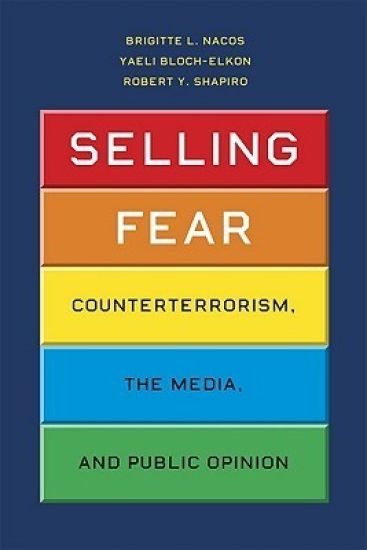
Selling Fear

Selling Fear

Brigitte L. Nacos; Yaeli Bloch-Elkon; Robert Y. Shapiro

University of Chicago Press
2011
sidottu
While we've long known that the strategies of terrorism rely heavily on media coverage of attacks, "Selling Fear" is the first detailed look at the role played by media in counterterrorism - and the ways that, in the wake of 9/11, the Bush administration manipulated coverage to maintain a climate of fear. Drawing on in-depth analysis of counterterrorism in the years after 9/11 - including the issuance of terror alerts and the decision to invade Iraq - the authors present a compelling case that the Bush administration hyped fear, while obscuring civil liberties abuses and concrete issues of preparedness. The media, meanwhile, largely abdicated its watchdog role, choosing to amplify the administration's message while downplaying issues that might have called the administration's statements and strategies into question. The book extends through Hurricane Katrina, and the more skeptical coverage that followed, then the first year of the Obama administration, when an increasingly partisan political environment presented the media, and the public, with new problems of reporting and interpretation. "Selling Fear" is a hard-hitting analysis of the intertwined failures of government and media - and their costs to our nation.
Selling Fear

Selling Fear

Brigitte L. Nacos; Yaeli Bloch-Elkon; Robert Y. Shapiro

University of Chicago Press
2011
nidottu
While we've long known that the strategies of terrorism rely heavily on media coverage of attacks, "Selling Fear" is the first detailed look at the role played by media in counterterrorism - and the ways that, in the wake of 9/11, the Bush administration manipulated coverage to maintain a climate of fear. Drawing on in-depth analysis of counterterrorism in the years after 9/11 - including the issuance of terror alerts and the decision to invade Iraq - the authors present a compelling case that the Bush administration hyped fear, while obscuring civil liberties abuses and concrete issues of preparedness. The media, meanwhile, largely abdicated its watchdog role, choosing to amplify the administration's message while downplaying issues that might have called the administration's statements and strategies into question. The book extends through Hurricane Katrina, and the more skeptical coverage that followed, then the first year of the Obama administration, when an increasingly partisan political environment presented the media, and the public, with new problems of reporting and interpretation. "Selling Fear" is a hard-hitting analysis of the intertwined failures of government and media - and their costs to our nation.
What Ails France?

What Ails France?

Brigitte Granville

McGill-Queen's University Press
2021
sidottu
As evidenced by the yellow vests protest movement that began in France in 2018, the state of the French nation inspires gloom among many of its citizens. Brigitte Granville views this malaise as a peculiarly French symptom of the difficulties experienced by many advanced industrial democracies in the face of globalization, technology, and mass immigration.Granville brings trenchant criticism to bear in this wide-ranging survey of the political economy of contemporary France, building her case for the prosecution on the self-reinforcing rigidity produced by a narrow Parisian oligarchy that is both entitled and intellectually hidebound. What Ails France? applies an economist's vision to the monetary and fiscal pathologies flowing from this ideologically motivated technocratic rule, reflected in Europe's flawed monetary union, runaway indebtedness, and chronically high structural unemployment. The author marshals academic research from a wide range of disciplines to fuel a provocative and at times contentious analysis, proposing various treatments for French ailments that would reinvigorate the republican value of liberté with a new local slant.A refreshing, ideologically freewheeling discussion, What Ails France? provides a positive take on the innovations of our digital age, exploring their potential to bring about a more representative democracy and a fairer society.