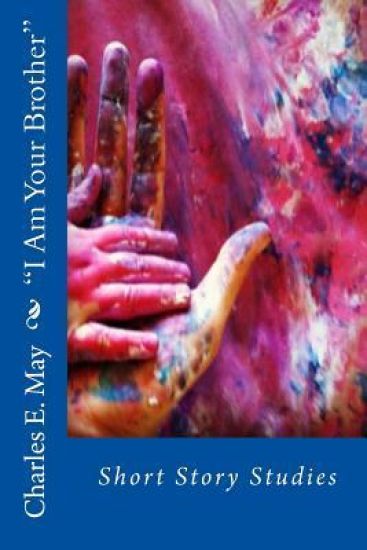
"I Am Your Brother": Short Story Studies is a study of the short story as a genre, written both for academic and general readers. After establishing the origins of the short story in myth, the book examines issues of genre and history, discusses the difference between the short story and the novel, and analyzes the importance of obsession, mystery, and metaphoric motivation in the form. Chapters also are devoted to mythic perception in the short fiction of John Steinbeck and Bernard Malamud, love and separateness in the short stories of Eudora Welty, and the birth of the modern short story by Anton Chekhov. The final two chapters are extended discussions of the short stories of Raymond Carver and Alice Munro.
With Urban Kingz, upcoming urban fiction author Charles E. Jordan brings you this first book in his three part series. James 'Czar' Green is a hustler, pimp and drug dealer with the reputation of being ruthless in a game that already has no rules, just new levels. The question is, will Czar and his crew be able to survive the consequences of their wrong doings? Will jail, the Cartel or possibly even his own family lead to their downfall? Carter Collins is a good D.E.A. agent, but he has a lot on his plate to deal with. From keeping his city safe to dealing with a family he never knew he had, he is feeling the pressure. What will cause him to cross the line, and once across, will he be able to return from a life he has always fought against? Read along as each of these men play their positions on the streets, from Shreveport, LA to Orlando, FL and back around to Dallas, TX. Will the game be the end of them all...or only the beginning?
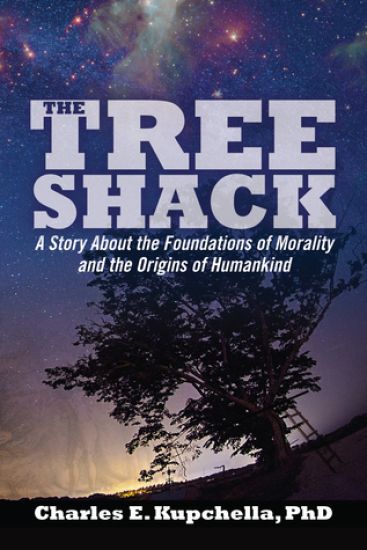
Casparians have come back to Earth to reconnect with the people their ancestors had shaped and nurtured here -- genetically and other ways - over the eons. They engage a young Pennsylvanian to help them, telling him they are in the final stages of an effort started by their people millions-of-years earlier to refine humankind on Earth with the ultimate goal of partnering in civilizing the cosmos. In the beginning, Chuck is really only a semi-willing study-subject. But in his initial encounter and in a series of follow-up encounters over the next sixty years -- including a visit to Casparia -- Chuck learns amazing things about space, time, creation, genes, souls, prayer, miracles, the Bible and the afterlife and gains a totally new understanding about the origin of humans on Earth and the very foundations of morality. Eventually he comes to see the need to free Earthlings from the bonds of superstition and gets involved ever more deeply. The Tree Shack uses the cloak of fiction to address very real and deep questions such as, why humans? Why religion? Where does morality really come from? Why are so many sure that the supernatural is at work beneath it all? The Tree Shack is, in a way, one agnostic's answer to The Shack. Whereas Young's book uses fictional characters to explain who God is and why he/she/she made things the way they are with all the evil and craziness in the world, The Tree Shack uses fictional characters to offer arguably even-more-plausible explanations for how thing got to be the way they are - with humanistic rather than theistic reasons why we must do better. Despite the many and varied theistic explanations for it, human nature will probably always be a profound wonder. Who are we, how did we get here, and why? Are we entirely a God's doing or are we a work in progress driven by something perhaps more tangible - something natural rather than supernatural? The Tree Shack suggests some answers quite different from those most people blindly accept. While The Tree Shack is a light and pleasurable read, it is so much more; it is also an unflinching look at some profound, age-old questions and old answers that always leave at least one more "why."So what if humans from another galaxy engineered the evolution of human beings on Earth and shaped us in their own image? What if our general view of God is actually derived from aliens having been mistakenly identified as spirit-world gods by primitive earthlings? How might this have happened and how might it have evolved into today's religions and into today's views of God, souls, angels, and the afterlife? The Tree Shack explores these and other compelling "what-if" questions as it examines the grabbing power of religion, the human inclination to believe in a supernatural realm, the biological foundations of morality, and the trajectory of human evolution. Although it may well be hard to take lovingly-held beliefs and upend them to think from a completely different point of view, it is worth the ride, and in Kupchella's book, it also happens to make for a really great read. His story-telling ability is only outmatched by the intellectual level of the questioning that is a driving theme below the more visible layers of the story. The tale is of an otherworldly plausible way in which Earth came to be. In The Tree Shack, the basis for morality, ethics, and the genesis of humankind is found not in the supernatural, but in the essence of the physical universe and in our very essence as human beings.
Book Discription: This is a three volume book on the history of astronomy and the development of mathematics to solve the problems of planetary motion as observed from the earth from the time of ancient Greece to Isaac Newton in the 17th century. It shows how the ancient Greek mathematicians used propositions from Euclid, Archimedes, Aristarchus, and Ptolemy to determine how an earth centered universe worked. Several chapters explain how Ptolemy developed a table of chords and arcs and invented trigonometry and spherical trigonometry.Then the book discusses the details of the Copernican system of a sun centered universe published in 1543, the data of Tycho Brahe, and how Kepler, using Tycho Brahe's data, discovered the theory of the elliptical orbits for the planets.The work of Gallileo on the acceleration of gravity, the pendulum, and projectiles is discussed and demonstrated. The details of Gallileo's experiments and methods, and how he supported the Copernican system is given.The last chapters are a description of the work of Isaac Newton and the development of the infinitesimal calculus, and how Newton used calculus to describe his laws of motion and universal gravitation. Descriptions of the work of Newton's contemporaries, Descartes, Barrow and Wallis are given, and how their work influenced Newton.A detailed mathematical discussion of how Newton's laws led to a demonstration of why the planets can orbit in ellipses.The book contains numerous geometrical drawings and demonstrations used by these mathematicians. In addition the modern notations used in algebra, analytic geometry, and calculus are presented so the reader can see and compare the modern expressions of mathematics to the way the earlier mathematicians expressed their work. The arguments in the book are developed so any reader with a high school education can follow the arguments and demonstrations.The goal of the book is to encourage readers to read the great classics of Euclid, Archimedes, Apollonius, Ptolemy, Copernicus, Kepler, Gallileo and Newton by giving a basic understanding of these works.