

Kirjahaku
Etsi kirjoja tekijän nimen, kirjan nimen tai ISBN:n perusteella.
1000 tulosta hakusanalla Clive Smallman
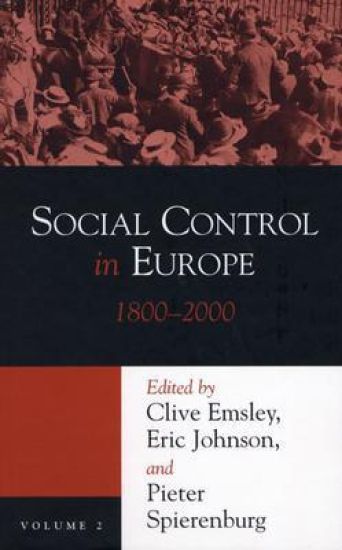
Social Control in Europe, 1800-2000
Clive Emsley; Eric Johnson; Pieter Spierenburg
Ohio State University Press
2004
sidottu
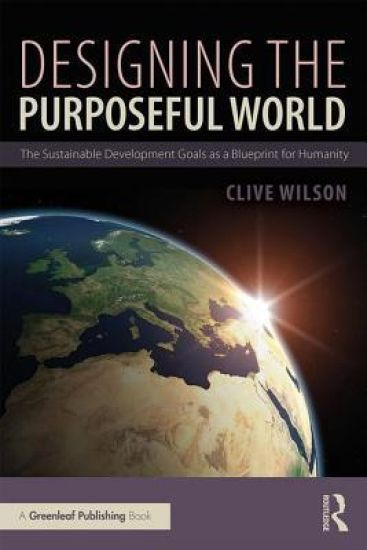
In September 2015, at the United Nations, world leaders agreed on seventeen Sustainable Development Goals or SDGs. This book extrapolates the SDGs into the idea of a purposeful world. In this context, the purpose for humanity is to thrive sustainably alongside other life forms and to consciously celebrate the process. The SDGs serve as a powerful vision, time-stamped at the 2030 time horizon, not just for world leaders but for us all. However, faced with the challenges of implementing the SDGs, we (including business leaders, government leaders and anyone wishing to make a difference) can feel overwhelmed.Wilson takes the reader on a journey of thought and invites them to work out their personal role in sustainability as well as their collaborative role alongside others in their communities and organisations. Written in a very accessible style, the book celebrates some of the many achievements made by ordinary people as a catalyst for hope, sets out a number of achievable goals and provides exercises to enable the reader to adopt practices that help to make a difference. It is the perfect book to help turn the SDGs into action at every level – governmental, organisational and personal.
In September 2015, at the United Nations, world leaders agreed on seventeen Sustainable Development Goals or SDGs. This book extrapolates the SDGs into the idea of a purposeful world. In this context, the purpose for humanity is to thrive sustainably alongside other life forms and to consciously celebrate the process. The SDGs serve as a powerful vision, time-stamped at the 2030 time horizon, not just for world leaders but for us all. However, faced with the challenges of implementing the SDGs, we (including business leaders, government leaders and anyone wishing to make a difference) can feel overwhelmed.Wilson takes the reader on a journey of thought and invites them to work out their personal role in sustainability as well as their collaborative role alongside others in their communities and organisations. Written in a very accessible style, the book celebrates some of the many achievements made by ordinary people as a catalyst for hope, sets out a number of achievable goals and provides exercises to enable the reader to adopt practices that help to make a difference. It is the perfect book to help turn the SDGs into action at every level – governmental, organisational and personal.
A Concordance to Finnegans Wake was first published in 1963. Minnesota Archive Editions uses digital technology to make long-unavailable books once again accessible, and are published unaltered from the original University of Minnesota Press editions.This concordance, the first full-scale work dealing with the language of James Joyce's last period, provides a finding-list and analytical index for his last work, Finnegans Wake. There are three parts: the first consisting of a complete alphabetical index to the vocabulary of Finnegans Wake,the second comprising a list of syllabifications (showing the inner parts of compound words), and the third providing a list of some 10,000 English words suggested by Joycean distortions.The primary word-index, similar in most respects to those which have already been published for Joyce's Ulysses and Stephen Hero, list in alphabetical order all of the 63,924 different words which make up the vocabulary of Finnegans Wake and provides page-line references for every occurrence of all but a small handful of the most common English words. Except for punctuation marks, every typographical unit in the book is accounted for, and each is listed just as it appears in the text.The second on syllabification lists in alphabetical order the inner parts of over 10,000 complex words in Finnegans Wake which are built up out of simpler elements and which would be impossible to find from the primary index alone.In the last section, called "Overtones," the aim is to list the English words suggested by Joyce's puns and distortions. Much information gleaned from the Joycean research of the past decade is gathered together here.
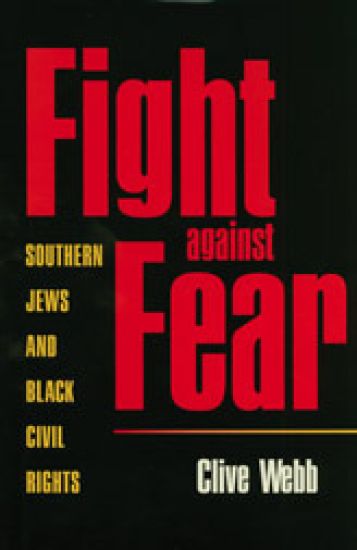
In the uneasily shared history of Jews and blacks in America, the struggle for civil rights in the South may be the least understood episode. Fight against Fear is the first book to focus on Jews and African Americans in that remarkable place and time. Mindful of both communities' precarious and contradictory standings in the South, Clive Webb tells a complex story of resistance and complicity, conviction and apathy.Webb begins by ranging over the experiences of southern Jews up to the eve of the civil rights movement—from antebellum slaveowners to refugees who fled Hitler's Europe only to arrive in the Jim Crow South. He then shows how the historical burden of ambivalence between Jews and blacks weighed on such issues as school desegregation, the white massive resistance movement, and business boycotts and sit-ins.As many Jews grappled as never before with the ways they had become—and yet never could become—southerners, their empathy with African Americans translated into scattered, individual actions rather than any large-scale, organized alliance between the two groups. The reasons for this are clear, Webb says, once we get past the notion that the choices of the much larger, less conservative, and urban-centered Jewish populations of the North define those of all American Jews. To understand Jews in the South we must look at their particular circumstances: their small numbers and wide distribution, denominational rifts, and well-founded anxiety over defying racial and class customs set by the region's white Protestant majority.For better or worse, we continue to define the history of Jews and blacks in America by its flash points. By setting aside emotions and shallow perceptions, Fight against Fear takes a substantial step toward giving these two communities the more open and evenhanded consideration their shared experiences demand.
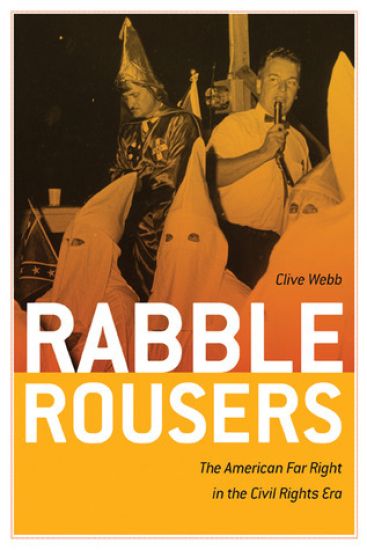
The decade following the 1954 Brown v. Board of Education decision saw white southerners mobilize in massive resistance to racial integration. Most segregationists conceded that ultimately they could only postpone the demise of Jim Crow. Some militant whites, however, believed it possible to win the civil rights struggle. Histories of the black freedom struggle, when they mention these racist zealots at all, confine them to the margin of the story.These extremist whites are caricatured as ineffectual members of the lunatic fringe. Civil rights activists, however, saw them for what they really were: calculating, dangerous opponents prepared to use terrorism in their stand against reform. To dismiss white militants is to underestimate the challenge they posed to the movement and, in turn, the magnitude of civil rights activists’ accomplishments. The extremists helped turn massive resistance into a powerful political phenomenon. While white southern elites struggled to mobilize mass opposition to racial reform, the militants led entire communities in revolt.Rabble Rousers turns traditional top-down models of massive resistance on their head by telling the story of five far-right activists—Bryant Bowles, John Kasper, Rear Admiral John Crommelin, Major General Edwin Walker, and J. B. Stoner—who led grassroots rebellions. It casts new light on such contentious issues as the role of white churches in defending segregation, the influence of anti-Semitism in southern racial politics, and the divisive impact of class on white unity. The flame of the far right burned brilliantly but briefly. In the final analysis, violent extremism weakened the cause of white southerners. Tactical and ideological tensions among massive resisters, as well as the strength and unity of civil rights activists, accelerated the destruction of Jim Crow.
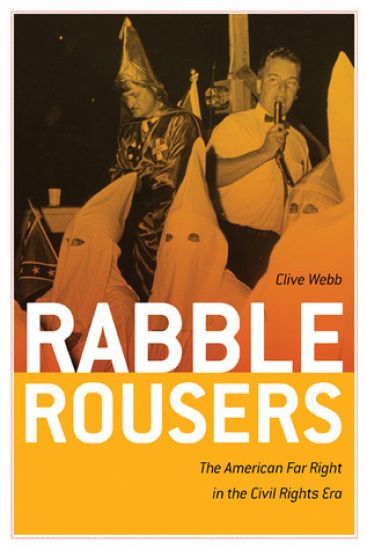
The decade following the 1954 Brown v. Board of Education decision saw white southerners mobilize in massive resistance to racial integration. Most segregationists conceded that ultimately they could only postpone the demise of Jim Crow. Some militant whites, however, believed it possible to win the civil rights struggle. Histories of the black freedom struggle, when they mention these racist zealots at all, confine them to the margin of the story.These extremist whites are caricatured as ineffectual members of the lunatic fringe. Civil rights activists, however, saw them for what they really were: calculating, dangerous opponents prepared to use terrorism in their stand against reform. To dismiss white militants is to underestimate the challenge they posed to the movement and, in turn, the magnitude of civil rights activists’ accomplishments. The extremists helped turn massive resistance into a powerful political phenomenon. While white southern elites struggled to mobilize mass opposition to racial reform, the militants led entire communities in revolt.Rabble Rousers turns traditional top-down models of massive resistance on their head by telling the story of five far-right activists—Bryant Bowles, John Kasper, Rear Admiral John Crommelin, Major General Edwin Walker, and J. B. Stoner—who led grassroots rebellions. It casts new light on such contentious issues as the role of white churches in defending segregation, the influence of anti-Semitism in southern racial politics, and the divisive impact of class on white unity. The flame of the far right burned brilliantly but briefly. In the final analysis, violent extremism weakened the cause of white southerners. Tactical and ideological tensions among massive resisters, as well as the strength and unity of civil rights activists, accelerated the destruction of Jim Crow.
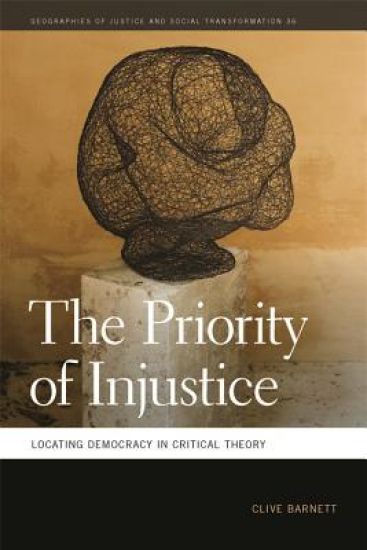
This original and ambitious work looks anew at a series of intellectual debates about the meaning of democracy. Clive Barnett engages with key thinkers in various traditions of democratic theory and demonstrates the importance of a geographical imagination in interpreting contemporary political change.Debates about radical democracy, Barnett argues, have become trapped around a set of oppositions between deliberative and agonistic theories—contrasting thinkers who promote the possibility of rational agreement and those who seek to unmask the role of power or violence or difference in shaping human affairs. While these debates are often framed in terms of consensus versus contestation, Barnett unpacks the assumptions about space and time that underlie different understandings of the sources of political conflict and shows how these differences reflect deeper philosophical commitments to theories of creative action or revived ontologies of “the political.” Rather than developing ideal theories of democracy or models of proper politics, he argues that attention should turn toward the practices of claims-making through which political movements express experiences of injustice and make demands for recognition, redress, and re pair. By rethinking the spatial grammar of discussions of public space, democratic inclusion, and globalization, Barnett develops a conceptual framework for analyzing the crucial roles played by geographical processes in generating and processing contentious politics.
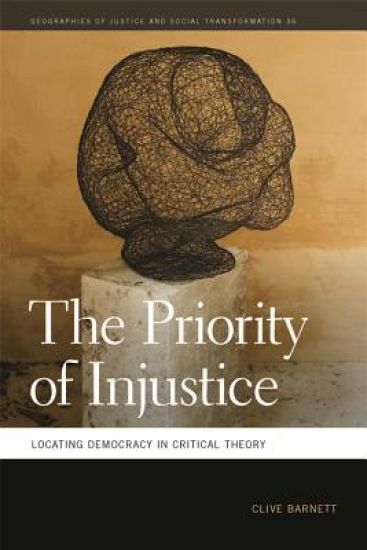
This original and ambitious work looks anew at a series of intellectual debates about the meaning of democracy. Clive Barnett engages with key thinkers in various traditions of democratic theory and demonstrates the importance of a geographical imagination in interpreting contemporary political change.Debates about radical democracy, Barnett argues, have become trapped around a set of oppositions between deliberative and agonistic theories—contrasting thinkers who promote the possibility of rational agreement and those who seek to unmask the role of power or violence or difference in shaping human affairs. While these debates are often framed in terms of consensus versus contestation, Barnett unpacks the assumptions about space and time that underlie different understandings of the sources of political conflict and shows how these differences reflect deeper philosophical commitments to theories of creative action or revived ontologies of “the political.” Rather than developing ideal theories of democracy or models of proper politics, he argues that attention should turn toward the practices of claims-making through which political movements express experiences of injustice and make demands for recognition, redress, and re pair. By rethinking the spatial grammar of discussions of public space, democratic inclusion, and globalization, Barnett develops a conceptual framework for analyzing the crucial roles played by geographical processes in generating and processing contentious politics.

Private Participation in Infrastructure in Developing Countries
Clive Harris
World Bank Publications
2003
nidottu
The rapid growth of private participation in infrastructure (PPI) in developing countries during the 1990s was followed by a subsequent decline in investments and the re-negotiation and cancellation of some projects. This work explains the factors behind the growth and decline of PPI, its impact and the policy lessons that have been learnt from this experience. It concentrates on the experience with the private provision of infrastructure from the 1990s. The text assesses the impact that the private provision of infrastructure has had on service delivery. It also reviews the main policy lessons that can be drawn, and what governments need to do moving forward if they are to ensure that the supply of infrastructure service does not become an impediment to growth.

The Regulation of Investment in Utilities
Clive Harris; Ian Alexander
World Bank Publications
2005
nidottu
Regulatory institutions and the regimes that they establish have a significant impact on the environment for new investment in utility and infrastructure industries. This is especially true when the investment is provided by the private sector. Although some aspects of the regulation of infrastructure utilities have been well covered relatively little has been written on techniques developed by regulators over the past decade to deal with how investment issues have been factored into regulatory price controls. ""The Regulation of Investment in Utilities"" examines the common approaches that have been adopted by regulators over the last 10 to 15 years and finds that the different techniques that were developed have had varying levels of success, and were often only developed to respond to a particular situation - large investments with uncertain timing, an uncertain volume of smaller investments, etc. This paper provides assessments of the various approaches, which are complemented by a set of short case studies. It also provides some guidance on when to use the different approaches that will be beneficial for regulators in new agencies.

This brilliant little book tells the story of the African National Congress (ANC) Youth League from its origins in the 1940s to the present and the controversies over Julius Malema and his influence in contemporary youth politics. Glaser analyzes the ideology and tactics of its founders, some of whom (notably Nelson Mandela and Oliver Tambo) later became iconic figures in South African history as well as inspirational figures such as A. P. Mda (father of author Zakes Mda) and Anton Lembede. It shows how the early Youth League gave birth not only to the modern ANC but also to its rival, the Pan Africanist Congress. Dormant for many years, the Youth League reemerged in the transition era under the leadership of Peter Mokaba—infused with the tradition of the militant youth politics of the 1980s. Throughout its history the Youth League has tried to "dynamize" and criticize the ANC from within, while remaining devoted to the mother body and struggling to find a balance between loyalty and rebellion.
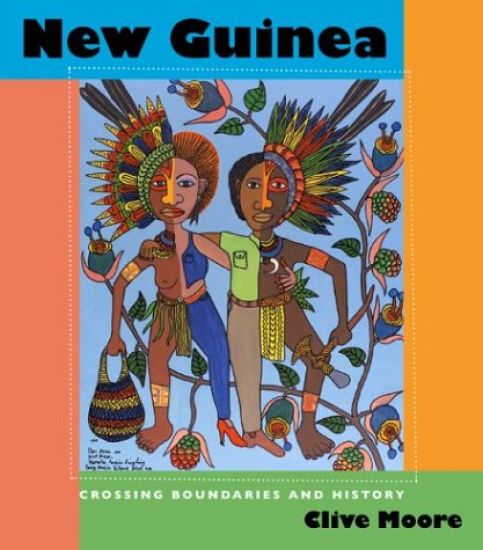
New Guinea, the world's largest tropical island, is a land of great contrasts, ranging from small glaciers on its highest peaks to broad mangrove swamps in its lowlands and hundreds of smaller islands and coral atolls along its coasts. Divided between two nations, the island and its neighboring archipelagos form Indonesia's Papua Province (or Irian Jaya) and the independent nation of Papua New Guinea, both former European colonies. Most books on New Guinea have been guided by these and other divisions, separating east from west, prehistoric from historic, precontact from postcontact, colonial from postcolonial. This is the first work to consider New Guinea and its 40,000-year history in its entirety. The volume opens with a look at the Melanesian region, arguing that interlocking exchange systems and associated human interchanges are the ""invisible government"" through which New Guinea societies operate. Succeeding chapters review the history of encounters between outsiders and New Guinea's populations. The impact of colonial rule, economic and social change, World War II, decolonization, and independence are discussed in the final chapter.

This is a comprehensive book about fan films, covering the secret history of the burgeoning movement creating the cinema of tomorrow.Who would risk his life swinging six stories above the ground without a net, just for a homemade Spiderman movie? What would drive a young couple with a newborn baby to spend their life savings on a Star Wars film that has been seen by 4 million people - but from which they can never profit? And why would Steven Spielberg praise three nobodies for a home movie they made as teenagers in the Eighties? They're fan filmmakers, creating the cinema of tomorrow: quick, bitesized movies, starring world-famous characters from Superman to Captain Kirk to Lara Croft. The flicks are fun, free and totally illegal.Now, thanks to Internet sites like YouTube and file sharing technologies like Bit Torrent, this controversial filmmaking movement is starting to rise to the surface. Likewise, Hollywood is taking notice: However, there is no comprehensive book about fan films. There's no tome devoted to the controversies surrounding this unlawful brand of filmmaking and how they're already changing today's media. There's no guide that tells you which movies to search out - and which ones to leave hidden under their rocks. "Homemade Hollywood: The Fan Film Phenomenon" can be that book.

This is a comprehensive book about fan films, covering the secret history of the burgeoning movement creating the cinema of tomorrow.Who would risk his life swinging six stories above the ground without a net, just for a homemade Spiderman movie? What would drive a young couple with a newborn baby to spend their life savings on a Star Wars film that has been seen by 4 million people - but from which they can never profit? And why would Steven Spielberg praise three nobodies for a home movie they made as teenagers in the Eighties? They're fan filmmakers, creating the cinema of tomorrow: quick, bite-sized movies, starring world-famous characters from Superman to Captain Kirk to Lara Croft. The flicks are fun, free and totally illegal.Now, thanks to Internet sites like YouTube and file sharing technologies like Bit Torrent, this controversial filmmaking movement is starting to rise to the surface. Likewise, Hollywood is taking notice: However, there is no comprehensive book about fan films. There's no tome devoted to the controversies surrounding this unlawful brand of filmmaking and how they're already changing today's media. There's no guide that tells you which movies to search out - and which ones to leave hidden under their rocks. "Homemade Hollywood: The Fan Film Phenomenon" can be that book.
Revised and expanded, this edition provides a comprehensive introduction to all aspects of the European Union. Covering both past developments and future prospects, it outlines the history of European ingegration and the academic debate about its nature. Archer describes and explans the institutions of the EU and the major policies as well as analyzing its external relations. This edition includes an examination of the changes made to EU institutions and practice through the Treaty of Amsterdam, explains the move to Economic and Monetary Union at the end of 1999, and pays particular attention to the plans for and the consequences of enlargement to the East.
School Management and Effectiveness in Developing Countries
Clive Harber; Lynn Davies
Continuum International Publishing Group Ltd.
2005
nidottu
This book is quite different from existing 'Western' books on school effectiveness. It describes and analyses the way in which schools operate in developing countries and also tries to explain why they are as they are. Examining them at three levels - the macro, the meso and the micro - the authors use a theoretical framework that they have termed 'post-bureaucracy.' The book has four interlinked sections. First the authors examine the existing economic and theoretical contexts around school effectiveness, including an analysis of the causes of economic crisis and its impact on school management. In the second section the analysis of schools as bureaucratic facades is proposed. The reality of school life, from which any theory of school effectiveness must derive, is illustrated by an ethnographic account of the job of the headteacher in developing countries. The third section explores different ways to understand this reality, operating on three levels: global relationships, national and community cultures, and individual agency. In the final section Haber and Davies draw these levels and realities together.They argue for the democratization of schools as the only way forward for effective education fordevelopment.
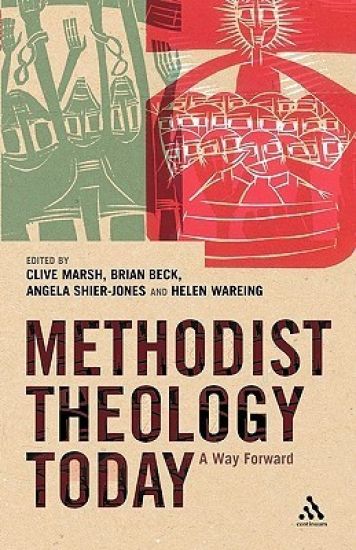
British Methodism is reshaping itself. At a time of uncertainty about the future, owing to declining numbers and an ever-closer relationship with the Church of England, a collection of the liveliest theological minds in contemporary Methodism have written a book which shows how recent theology can be a resource for the future. Methodism has always had an active concern with both evangelism and social welfare and by means of its central organization it is able to coordinate efforts in these areas. The book asks challenging questions about how this may develop in the complex post-modern secular world.

Many Christians acknowledge that they love Jesus but are disillusioned about their spiritual condition. They come to Christ to drink from the well of his new life, yet find that their thirst remains. Why has the Christian life not met their expectations for spiritual growth and how can they satisfy this craving for their Christian walk to have a deeper impact? Do you desperately yearn for a deeper relationship with God? Clive Calver pastor, preacher and longtime church statesman can relate. As a young preacher and fairly new Christian, he felt deeply frustrated in his efforts to experience spiritual transformation. Then it dawned on him that Jesus' death on the cross achieved two things: how to die and how to live. Crucified love was God's gift to us; resurrected life with Christ was his purpose for us. For far too long we have been presented with a version of the Christian faith that majors on what we get rather than on what we give. The cross has been portrayed as the place where Jesus died for us and where we receive from him but rarely as the location of our joint crucifixion with him. The uncomfortable truth is that Jesus calls us to share his cross. If anyone would come after me, he must deny himself and take up his cross and follow me (Matthew 16:24). Fortunately, we don't have to be some kind of a Super Christian to allow God's power to work through us. Calver shows how a number of ordinary believers have discovered the paradoxical fulfillment of the crucified life as they die to self and serve God and other people. By dying to live, you too can know the joy of resurrection."