
Kirjahaku
Etsi kirjoja tekijän nimen, kirjan nimen tai ISBN:n perusteella.
1000 tulosta hakusanalla Cook

Cooke, J: How Our National Debt Can Be Paid
Jay Cooke; William Elder
KESSINGER PUBLISHING, LLC
2009
nidottu
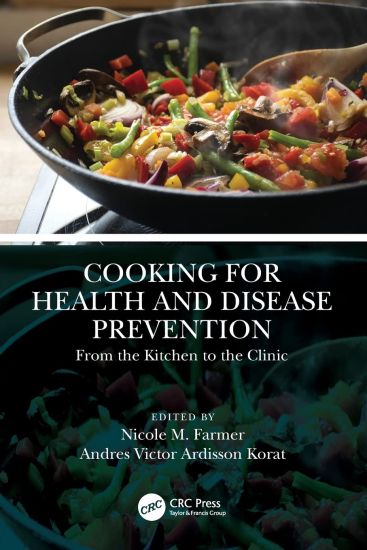
Cooking for Health and Disease Prevention
TAYLOR FRANCIS LTD
2022
nidottu
Poor diet and substandard nutrition are underlying causes of many diseases including cardiovascular disease, diabetes, and cancer. Collectively, these ailments are the leading causes of premature death, most of which are preventable. Cooking for Health and Disease Prevention: From the Kitchen to the Clinic helps demonstrate cooking as a fundamental bridge between ideal nutrition and long-term health. Clinicians, patients, and the public often lack adequate knowledge to help select and prepare foods for optimal disease management. This book provides information to clinicians and their patients about foods and cooking principles to help prevent common health conditions.Features:Focuses on disease endpoints, reviewing the disease biology and epidemiology and presenting dietary interventions for disease prevention.Provides recommendations for translating dietary and culinary principles of health prevention into clinical practice and includes a recipe appendix with practical examples.Features information on healthy cooking techniques as well as food selection, storage, and preparation to help maximize nutritional value. Introduces the reader to fundamental concepts in nutrition and culinary principles explaining the relationship between food processing and food preparation and nutritional quality of foods. This book is accessible to patients and offers evidence-based practical interventions for healthcare professionals. It is authored by Nicole Farmer, physician scientist at the NIH Clinical Center, and nutrition researcher Andres Ardisson Korat, awarded a doctorate degree in nutrition and epidemiology from the Harvard T.H. Chan School of Public Health.
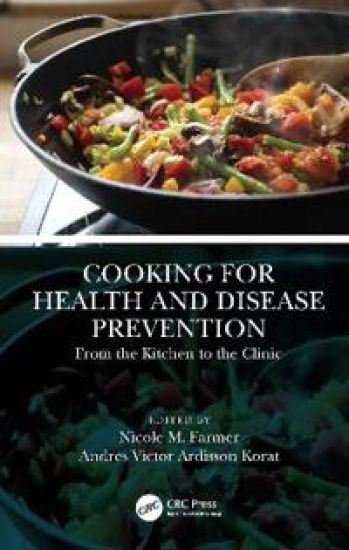
Cooking for Health and Disease Prevention
TAYLOR FRANCIS LTD
2022
sidottu
Poor diet and substandard nutrition are underlying causes of many diseases including cardiovascular disease, diabetes, and cancer. Collectively, these ailments are the leading causes of premature death, most of which are preventable. Cooking for Health and Disease Prevention: From the Kitchen to the Clinic helps demonstrate cooking as a fundamental bridge between ideal nutrition and long-term health. Clinicians, patients, and the public often lack adequate knowledge to help select and prepare foods for optimal disease management. This book provides information to clinicians and their patients about foods and cooking principles to help prevent common health conditions.Features:Focuses on disease endpoints, reviewing the disease biology and epidemiology and presenting dietary interventions for disease prevention.Provides recommendations for translating dietary and culinary principles of health prevention into clinical practice and includes a recipe appendix with practical examples.Features information on healthy cooking techniques as well as food selection, storage, and preparation to help maximize nutritional value. Introduces the reader to fundamental concepts in nutrition and culinary principles explaining the relationship between food processing and food preparation and nutritional quality of foods. This book is accessible to patients and offers evidence-based practical interventions for healthcare professionals. It is authored by Nicole Farmer, physician scientist at the NIH Clinical Center, and nutrition researcher Andres Ardisson Korat, awarded a doctorate degree in nutrition and epidemiology from the Harvard T.H. Chan School of Public Health.

With this book, students are able to perform experiments and then make observations that they will frequently see in the kitchen and other food preparation and processing areas and learn the science behind these phenomena. The second edition of Cooking as a Chemical Reaction: Culinary Science with Experiments features new chapters on food hygiene and safety, kitchen terminology, and taste pairing, as well as an expanded chapter on the role of food additives in culinary transformations.The text uses experiments and experiences from the kitchen, and other food preparation areas, rather than theory, as the basic means of explaining the scientific facts and principles behind food preparation and food processing. It engages students in their own learning process. This textbook is designed so that students can first perform certain experiments and record their observations in tables provided in the book. The book then explains the science behind their observations. Features: Experiments and recipes form the basic means of teaching culinary chemistry Features new chapters on food hygiene and safety, kitchen terminology, and taste pairing Employs real kitchen practices to explain the subjects Covers traditional food chemistry including water in culinary transformations, protein, carbohydrates, fats, sensorial propertiesMany concepts throughout the book are marked with a symbol that indicates the concept is one that they will come across frequently not just in this text, but in the kitchen and other food preparation and processing areas. A second symbol precedes the scientific explanation of the observation made during the experiments in the chapter. At the end of each chapter, students are presented with important points to remember, more ideas to try, and study questions to reinforce concepts that were presented in the chapter. The book is designed for each chapter to be read and studied in chronological order, as the concepts of each chapter will reoccur in subsequent chapters.Written at the undergraduate level, this book is designed for students in culinary arts, nutrition, dietetics, food science and technology, and gastronomy programs. It is intended for students with limited scientific background who are studying different aspects of food preparation and processing.


Cooking with the Pennsylvania Dutch
Kessinger Publishing
2010
pokkari

Cooking 'Way Down South in Dixie
Kessinger Publishing
2010
pokkari

Cookies and More Cookies
Kessinger Publishing
2010
pokkari
Cookery, and Pastry. as Taught and Practised by Mrs Maciver, Teacher of Those Arts in Edinburgh. the Third Edition.
Susanna Maciver
Gale Ecco, Print Editions
2010
pokkari
Cookery and Pastry, as Taught and Practised by Mrs Maciver, ... to Which Are Added, Figures of Dinner and Supper Courses, ... Also, a Correct List of Every Thing in Season for Every Month in the Year. a New Edition, with Additions.
Susanna Maciver
Gale Ecco, Print Editions
2010
pokkari
Cookery, and Pastry. as Taught and Practised by Mrs Maciver, Teacher of Those Arts in Edinburgh.
Susanna Maciver
Gale Ecco, Print Editions
2010
pokkari
Cookery, and Pastry. as Taught and Practised by Mrs Maciver, Teacher of Those Arts in Edinburgh. the Second Edition.
Susanna Maciver
Gale Ecco, Print Editions
2010
pokkari


Cooking with Spirits: Recipes Featuring the Judicious Use of Spirits
Ruth Vendley Neumann; Marguerite Lyons; Richard Baer
Literary Licensing, LLC
2011
nidottu

