Kirjojen hintavertailu. Mukana 12 390 323 kirjaa ja 12 kauppaa.

Kirjahaku

Etsi kirjoja tekijän nimen, kirjan nimen tai ISBN:n perusteella.

1000 tulosta hakusanalla Cotten Seiler

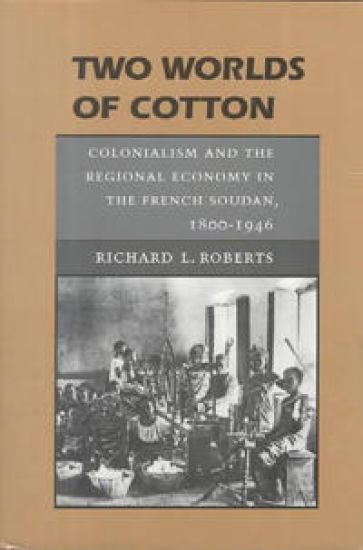
Two Worlds of Cotton

Two Worlds of Cotton

Roberts Richard L.

Stanford University Press
1996
sidottu
A major new approach to the study of the social and economic history of colonial French West Africa, this book traces French efforts to establish a cotton export economy in the French Soudan from the early nineteenth century through the end of World War II. Cotton cultivation and handicraft cotton textile production had long been an important part of the indigenous regional economies of West Africa. During the nineteenth century, the French metropolitan cotton textile industry developed and expanded, and securing new sources for raw cotton became a central concern for French industrialists and the emerging technocratic leadership of the French state. Controlling the French West Africa cotton harvest thus became of paramount importance to the French colonial endeavor.
The Blue Cotton Gown

The Blue Cotton Gown

Patricia Harman

Beacon Press
2009
pokkari
A 2008 Indie Next Pick Despite nurse-midwife Patsy Harman's own financial and personal medical trials, including her private battle with uterine cancer, she devotes herself to her patients' well-being in all aspects of their lives. They, in turn, tell her intimate stories both heartbreaking and uplifting.
The Emergence of the Cotton Kingdom in the Old Southwest

The Emergence of the Cotton Kingdom in the Old Southwest

John Hebron Moore

Louisiana State University Press
1988
nidottu
The Old South's Cotton Kingdom arose simultaneously in two widely separated localities, the backcountry of the South Atlantic states and the east bank of the Mississippi River. Spreading from these places of origin and later merging, the east and west branches of the upland short-staple cotton industry developed along similar lines until the Civil War. John Hebron Moore's The Emergence of the Cotton Kingdom in the Old Southwest: Mississippi, 1770-1860 traces the evolution of cotton culture in the region bordering the Mississippi River. Moore examines the society supported by that industry, emphasising technological changes that transformed cotton plantations into agricultural equivalents of factories and slaves into Mule-drawn equipment led to the introduction of improved methods of managing plantation slaves, and that in turn altered the nature of plantation slavery significantly.Moore focuses on Mississippi as both the pioneer cotton state of the Old Southwest and the Old South's leading producer of cotton between 1835 and 1860. Progressive planters made major contributions ot the success of the antebellum upland cotton industry, including the breeding of superior varieties of cotton, the introduction of improved farm implements and machinery, the development of effective methods of combating soil erosion, and systems for managing slaves based upon incentives rather than coercion. In addition, unlike other studies of antebellum southern agriculture, this book examines the contributions to the success of cotton industry made by steamboats and railroads, manufacturing establishments, and the urban population.
Transforming the Cotton Frontier

Transforming the Cotton Frontier

Daniel S. Dupre

Louisiana State University Press
1997
sidottu
In this innovative study, Daniel S. Dupre offers a history of the first generation of one community on the cotton frontier of the Old Southwest, from the speculative schemes of the late eighteenth century to the Panic of 1837 that ended the ""flush times."" Rural Madison County, in north Alabama's fertile Tennessee Valley, attracted a diverse population of planters, slaves, and yeoman farmers that differed from that of Huntsville, the commercial heart of the county, which developed into an ambitious mercantile and professional center. Dupre's examinations of settlement, banking, land relief, internal improvements, crime, benevolence and reform, religion, factional and party conflict, and slave disorder clearly reveal the tensions and bonds existing among these opposing groups as the region struggled to transcend its frontier origins.In tracking Madison County's development, Dupre stresses the interplay of commercial and subsistence ideals, the expansion westward of a venturesome market economy and of a more conservative set of agrarian values. When settlers cleared the land, Dupre explains, they sought to secure the independence that came from subsistence and to set the stage for economic development. But the cotton boom of 1818 and the Panic of 1819 fractured these objectives and polarized the community through the 1820s and 1830s.Dupre traces the emergence of two broad ideologies, a booster's vision of progress through consensus, order, and commercial vitality versus a preoccupation with the preservation of liberty coupled with a suspicious attitude toward economic and governmental power. These modes of thinking, sharpened through local disputes over economic policy, social reform, and political culture, provided the foundation for the Second American Party System in north Alabama.In the process of building societies on the cotton frontier, citizens struggled to reconcile the aims of subsistence and commerce, debated the proper balance of liberty and order, and argued about representation and democracy. Thus, more than a local history, Transforming the Cotton Frontier explores the intersection of community and ideology and provides a glimpse of the broad forces of change sweeping through the early American republic.
Agricultural Progress in the Cotton Belt Since 1920

Agricultural Progress in the Cotton Belt Since 1920

Fulmer John Leonard

The University of North Carolina Press
2011
nidottu
This book tells the story of the changes that have taken place in the cotton belt during the past twenty-five years, points out the toals that are still to be reached, and suggests remedies for still-existing agricultural ills in the region.A UNC Press Enduring Edition -- UNC Press Enduring Editions use the latest in digital technology to make available again books from our distinguished backlist that were previously out of print. These editions are published unaltered from the original, and are presented in affordable paperback formats, bringing readers both historical and cultural value.
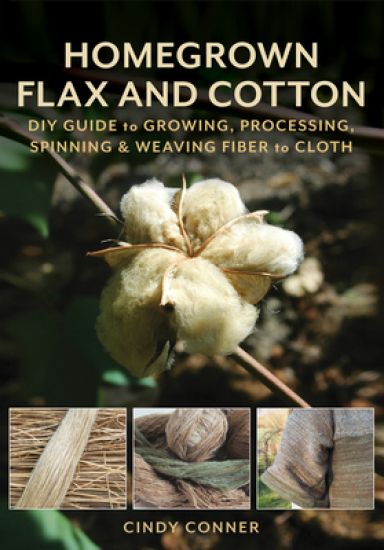
Homegrown Flax and Cotton

Homegrown Flax and Cotton

Cindy Conner

STACKPOLE BOOKS
2023
pokkari
Grow your own sustainable clothes!From seed to shirt, Cindy Conner shows you how to plant, grow, harvest, process, spin, and weave cotton and flax into cloth from which you can sew your own clothes. And since cotton and flax are made from plants, when your clothes' usefulness has passed they can also return to the environment without causing harm--a truly renewable and sustainable option for clothing. Whether you live in colder climates where flax can thrive, or warmer climates where cotton does best, there is a sustainable option (or two, if you live in the temperate zone) for you. And it takes much less space than you would think; a backyard garden will do! This complete guide includes in-depth instructions on growing and harvesting, preparing the fiber for spinning, the spinning process for each fiber; the basics of weaving cloth; and suggestions on patterns and how to weave the pieces you need for clothing, and how to sew your woven pieces together. Cindy has been growing her own clothes for years and teaches the process in classes, so she includes all of her knowledge on potential pitfalls and how to avoid them in her thorough instructions on each phase. You can grow your own flax and cotton and make clothes to your own style preferences. It's time to take the next step in sustainable living and make your own clothes in breathable and comfortable natural cotton and flax grown in your own backyard!
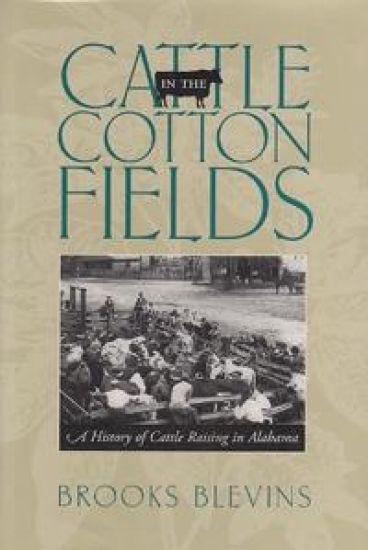
Cattle in the Cotton Fields

Cattle in the Cotton Fields

Brooks Blevins

The University of Alabama Press
2014
nidottu
Cattle raising today is the most widely practiced form of agriculture in Alabama and ranks second only to the poultry industry in terms of revenue. Brooks Blevins not only relates the development and importance of the industry to agricultural practices but also presents it as an integral component of southern history, inextricably linked to issues of sectional politics, progressivism, race and class struggles, and rural depopulation. Most historians believe cattle were first introduced by the Spanish explorers and missionaries during the early decades of the 16th century. Native Americans quickly took up cattle raising, and the practice was reinforced with the arrival of the French and the British. By 1819--after massive immigration of Anglo-American herders, farmers, and planters--cattle played an integral role in the territory's agriculture and economy. Despite the dominance of the cotton industry during the antebellum period, cattle herding continued to grow and to become identified as an important part of the region's agriculture. In the early decades of the 20th century, the boll weevil drove many planters out of the cotton business. These planters adopted a midwestern model of cattle raising consisting of purebred English breeds, enclosed pastures, scientific breeding and feeding practices, and intimate cooperation among cattlemen, government agents, and business interests. This model of farming gradually replaced the open range herding tradition.
Joseph Seamon Cotter Jr.

Joseph Seamon Cotter Jr.

Joseph Seaman Cotter

University of Georgia Press
1990
sidottu
Joseph Seamon Cotter, Jr.: Complete Poems brings together for the first time all the poems of an accomplished African-American poet of the years just preceding the 1920s renaissance in black American literature.Born in Louisville, Kentucky, in 1895, Joseph Seamon Cotter, Jr., was a precocious child, reared in a strong family tradition of poetry. His father, a local educator, wrote poetry himself, and the family maintained a close friendship with the prominent poet Paul Laurence Dunbar. Encouraged by this environment, Cotter displayed literary leanings from an early age. As his father recalled, Keats was his son's favorite poet among the many writers in their extensive family library: "He never tired of the 'Ode on a Grecian Urn.'" After completing high school, Cotter attended Fisk University in Nashville, Tennessee, for two years until he contracted tuberculosis and was forced to return home. Cotter then wrote almost incessantly—and published one collection of poetry, The Band of Gideon—before his death in 1919 at age twenty-three.Rejecting the popular dialect style of his father and other highly regarded poets of his day, Cotter reflected in his poetry the broad impact of the most devastating event of the time, World War I. Though not limited to war themes, Cotter was unquestionably among the finest poets of the Great War. Displaying empathy for the experience of black soldiers, he perceives that the true enemy of these servicemen is not Germany but racial injustice, as shown in Cotter's "Sonnet to Negro Soldiers": "They shall go down unto Life's Borderland, / Walk unafraid within that Living Hell, / Nor heed the driving rain of shot and shell / That 'round them falls; but with uplifted hand / Be one with mighty hosts, an armed band / Against man's wrong to man-for such full well / They know. And from their trembling lips shall swell / A song of hope the world can understand. / All this to them shall be a glorious sign, / A glimmer of that resurrection morn, / When age-long Faith crowned with a grace benign / Shall rise and from their brows cast down the thorn / Of prejudice. E'en though through blood it be, / There breaks this day their dawn of Liberty."Cotter's poems, from the explorations of prejudice in The Band of Gideon through the later sonnet sequence "Out of the Shadows," place him among the poetic innovators of the second decade of this century.In Joseph Seamon Cotter, Jr.: Complete Poems, James Robert Payne has assembled the entire canon of a diverse poet rarely included in contemporary anthologies because his work has been inaccessible. Payne established reliable text of all of Cotter's poetry, including seven recently discovered poems that are published here for the first time. This collection includes a biographical essay, the poems, a textual commentary, and an apparatus, bringing the productive final years of Joseph Seamon Cotter, Jr., sharply into focus.
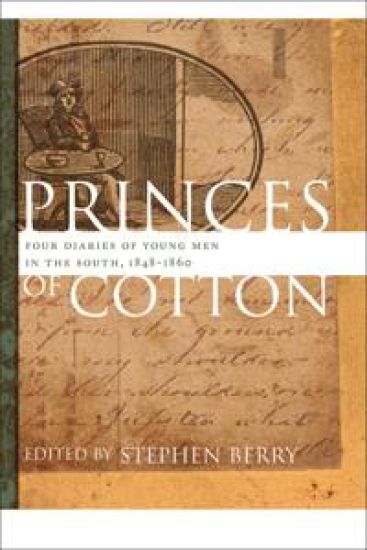
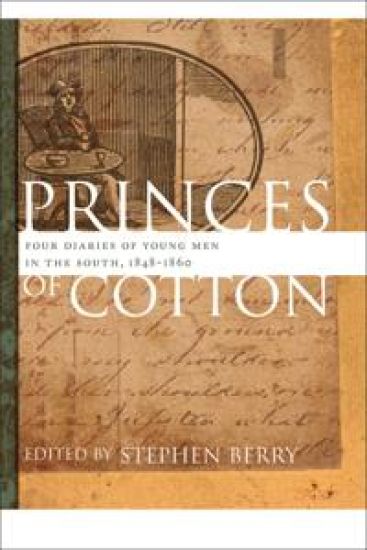
Princes of Cotton

Princes of Cotton

University of Georgia Press
2007
sidottu
A rogue, a megalomaniac, a plodder, and a depressive: the men whose previously unpublished diaries are collected in this volume were four very different characters. But they had much in common too. All were from the Deep South. All were young, between seventeen and twenty-five. All had a connection to cotton and slaves. Most obviously, all were diarists, enduring night upon night of cramped hands and candle bugs to write out their lives.Down the furrows of their fathers' farms, through the thickets of their local woods, past the familiar haunts of their youth, Harry Dixon, Henry Hughes, John Coleman, and Henry Craft arrive at manhood via journeys they narrate themselves. All would be swept into the Confederate Army, and one would die in its service. But if their manhood was tested in the war, it was formed in the years before, when they emerged from their swimming holes, sopping with boyhood, determined to become princes among men.Few books exist about the inner lives of southern males, especially those in adolescence and early adulthood. Princes of Cotton begins to remedy this shortage. These diaries, along with Stephen Berry's introduction, address some of the central questions in the study of southern manhood: how masculine ideals in the Old South were constructed and maintained; how males of different ages and regions resisted, modified, or flouted those ideals; how those ideals could be expressed differently in public and private; and how the Civil War provoked a seismic shift in southern masculinity.
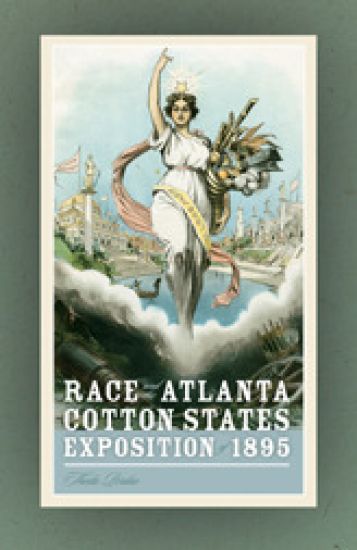
Race and the Atlanta Cotton States Exposition of 1895

Race and the Atlanta Cotton States Exposition of 1895

Theda Perdue

University of Georgia Press
2010
sidottu
The Cotton States Exposition of 1895 was a world’s fair in Atlanta held to stimulate foreign and domestic trade for a region in an economic depression. Theda Perdue uses the exposition to examine the competing agendas of white supremacist organizers and the peoples of color who participated.White organizers had to demonstrate that the South had solved its race problem in order to attract business and capital. As a result, the exposition became a venue for a performance of race that formalized the segregation of African Americans, the banishment of Native Americans, and the incorporation of other people of color into the region’s racial hierarchy.White supremacy may have been the organizing principle, but exposition organizers gave unprecedented voice to minorities. African Americans used the Negro Building to display their accomplishments, to feature prominent black intellectuals, and to assemble congresses of professionals, tradesmen, and religious bodies. American Indians became more than sideshow attractions when newspapers published accounts of the difficulties they faced. And performers of ethnographic villages on the midway pursued various agendas, including subverting Chinese exclusion and protesting violations of contracts. Close examination reveals that the Cotton States Exposition was as much about challenges to white supremacy as about its triumph.
Race and the Atlanta Cotton States Exposition of 1895

Race and the Atlanta Cotton States Exposition of 1895

Theda Perdue

University of Georgia Press
2011
pokkari
The Cotton States Exposition of 1895 was a world’s fair in Atlanta held to stimulate foreign and domestic trade for a region in an economic depression. Theda Perdue uses the exposition to examine the competing agendas of white supremacist organizers and the peoples of color who participated.White organizers had to demonstrate that the South had solved its race problem in order to attract business and capital. As a result, the exposition became a venue for a performance of race that formalized the segregation of African Americans, the banishment of Native Americans, and the incorporation of other people of color into the region’s racial hierarchy.White supremacy may have been the organizing principle, but exposition organizers gave unprecedented voice to minorities. African Americans used the Negro Building to display their accomplishments, to feature prominent black intellectuals, and to assemble congresses of professionals, tradesmen, and religious bodies. American Indians became more than sideshow attractions when newspapers published accounts of the difficulties they faced. And performers of ethnographic villages on the midway pursued various agendas, including subverting Chinese exclusion and protesting violations of contracts. Close examination reveals that the Cotton States Exposition was as much about challenges to white supremacy as about its triumph.
Princes of Cotton

Princes of Cotton

University of Georgia Press
2013
pokkari
A rogue, a megalomaniac, a plodder, and a depressive: the men whose previously unpublished diaries are collected in this volume were four very different characters. But they had much in common too. All were from the Deep South. All were young, between seventeen and twenty-five. All had a connection to cotton and slaves. Most obviously, all were diarists, enduring night upon night of cramped hands and candle bugs to write out their lives.Down the furrows of their fathers' farms, through the thickets of their local woods, past the familiar haunts of their youth, Harry Dixon, Henry Hughes, John Coleman, and Henry Craft arrive at manhood via journeys they narrate themselves. All would be swept into the Confederate Army, and one would die in its service. But if their manhood was tested in the war, it was formed in the years before, when they emerged from their swimming holes, sopping with boyhood, determined to become princes among men.Few books exist about the inner lives of southern males, especially those in adolescence and early adulthood. Princes of Cotton begins to remedy this shortage. These diaries, along with Stephen Berry's introduction, address some of the central questions in the study of southern manhood: how masculine ideals in the Old South were constructed and maintained; how males of different ages and regions resisted, modified, or flouted those ideals; how those ideals could be expressed differently in public and private; and how the Civil War provoked a seismic shift in southern masculinity.
Strategies for Cotton in West and Central Africa

Strategies for Cotton in West and Central Africa

Ilhem Baghdadli; Hela Cheikhrouhou

World Bank Publications
2007
nidottu
Based on comprehensive empirical studies, the paper identifies key reforms and defines strategies to enhance the competitiveness of the cotton sector in West and Central Africa. Lessons learned from the 1990s suggest that transferring public property to private enterprises is not enough, by itself, to put the sector back on a sustainable path.The cotton sector in most West and Central African countries is critical in terms of its contribution to GDP and exports as well as poverty reduction. Until recently, the cotton sector was characterized by a vertically integrated monopolistic structure, whereby all transactions in the chain including, ginning, transportation and input supply were handled by the State Owned cotton company. However during the late 1990s, a number of internal and external factors created the need to reassess the structure of the cotton industries in the region.This assessment revealed that, in this new context, vertically integrated monopolies were too costly to ensure vertical coordination of the cotton supply chain. Areas of improvement are associated with the following three targets: increasing yields to produce larger volumes, reducing cost and increasing the reliability of grading, and enhancing sales revenues. The paper explains how these targets can be effectively pursued through sector reforms.
Organization and Performance of Cotton Sectors in Africa
Cotton is a rare economic success story in Sub-Saharan Africa. While the continent's share of the world's agricultural trade fell by about half from 1980 to 2005, its share of world cotton exports more than doubled. Cotton is a major source of foreign exchange earnings in more than 15 countries of the continent and is a crucial source of income for millions of rural people. ""Organization and Performance of Cotton Sectors in Africa"" provides an in-depth comparative analysis of the outcomes of the reforms that have been implemented in Sub-Saharan cotton sectors and of the linkages between sector organization and performance. The book highlights challenges facing cotton sectors in Sub-Saharan Africa and demonstrates how reform in the sectors is the key to sustaining growth, improving competitiveness and reducing rural poverty. It provides national and regional policy makers with a number of recommendations based upon the observable lessons of past reform programs.
Natural History of the Cotton Tribe

Natural History of the Cotton Tribe

Paul A. Fryxell

Texas A M University Press
2000
sidottu
Here, for the first time, what is known of the tribe Gossypieae (the cotton tribe) is brought together in a single study that examines, on a global basis, the systematics and evolution of the eight genera (about one hundred species) in the tribe and presents a unified interpretation of these diverse plants, including a consideration of their phytogeography, ecology, karyology, and reproductive biology. The tribe Gossypieae is an especially valuable subject for such a study because it comprises an entire gamut of plants ranging from those that are exceedingly rare (on the verge of extinction) to those that have been eminently successful in adaptational terms. The tribe includes the cultivated cottons, which have had a long history of domestication and can shed light on patterns of crop evolution and, to some extent, human prehistory. It also includes plants that are less intensively used by man (often for their fibers or as ornamentals) and still others that are not used at all or whose uses have not yet been discovered. Thus we find, in this single group of plants, the complete range of possible interaction of plants with man. This book examines the place and value of broad natural history studies as a means of gaining a deeper knowledge of the biological world and man's place therein.
William Kay: Cotton manufacturer and liberal benefactor. 1775 - 1846.
A thriving and prosperous textile industry built on the mechanisation of Lancashire's textile mills during the Industrial Revolution and the importance of the mass production of cotton to the region, saw the rise of many significant and wealthy families in the north west of England, particularly in and around the developing towns of Bolton, Bury, Oldham, Manchester and Rochdale. That wealth was then invested in related industries and commerce, from banking and insurance, to transport and shipping, to gas and waterworks, as well as into the building and funding of hospitals, churches, schools and education.This book is about one such Lancashire family; a family that revolved around clothing, fustian, cotton spinning and woollen, calico and cotton manufacture for well over 200 years prior to the Industrial Revolution, and believed to date back to at least the 1500s.It is the story of William Kay and his children and grandchildren - as well as his parents, grandparents, brothers and sisters - that have been researched and recorded over a period of more than a century, looking at where this particular Kay family and ancestors lived in Bass Lane, Walmersley, their occupations and business relationships, their church affiliations, and the charities, dispensaries, schools and hospitals that they supported.It is also a story of wealth created, spread throughout a family, and ultimately largely given away to the poor and disadvantaged, for overseas missionary works and to charities.
From Smuggling to Cotton Kings -  The Greg Story

From Smuggling to Cotton Kings - The Greg Story

Michael Janes; Chris Newton

Memoirs Publishing
2010
nidottu
In 1715 John Greg, a descendant of the McGregor clan, sailed from the family home in Ayrshire to seek his fortune in Ulster. He soon built a successful business as a merchant, his own sons becoming successful businessmen. Half a century later two of his grandsons, Thomas and Samuel, sailed back to Britain and founded businesses of their own at opposite ends of England, Thomas in banking and finance, Samuel in textiles. Helped by the patronage and finance of Robert Hyde, Samuel became a prominent figure in the development of the cloth industry. He helped to take the industry forward by investing heavily in the adoption of water power, and founded Quarry Bank Mill in north Cheshire, which today is open to visitors as a National Trust property. Meanwhile brother Thomas made a prudent entry into the marine insurance business, at a time when Britain's overseas trade was expanding at a prodigious rate. By the end of the 18th Century they had built up large fortunes.After a serious setback caused by the economic slump in the aftermath of the Napoleonic Wars in the early 19th Century, business recovered and by the time the brothers died in the 1830s they were both, in today's terms, multi-millionaires. Their descendants kept the family businesses running successfully for several decades and diversified into agriculture, literature and politics, but the 1860s recession saw the end of the great wealth the Gregs and their associates had built up.