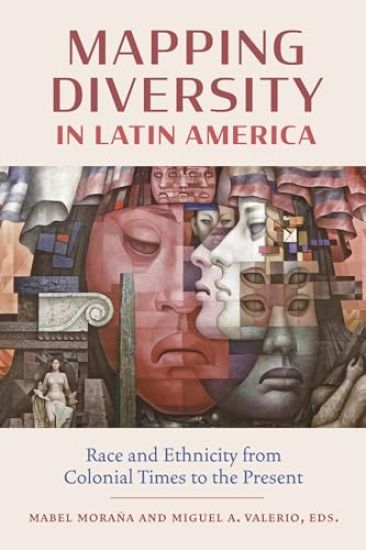
Mapping Diversity in Latin America offers ample critical coverage of recent approaches to the historical study of race and ethnicity in Latin America since the arrival of Spanish and Portuguese colonizers to the present. Bringing together the work of leading scholars, this volume presents readers with a thorough and updated examination of the formation and evolution of ideas surrounding race and ethnicity, social movements, and political processes in Latin America that provides multiple routes for future research on the topic. The book’s nineteen chapters establish the basis for a productive comparative analysis of racial developments in the whole continent to allow for a combination of diachronic and synchronic study of regional processes. Both the scope of the book and the historical and geocultural coverage on these topics are unique in the field of Latin American Studies. Taking an interdisciplinary approach to understanding issues of collective identity, otherness, alterity, and the like, Mapping Diversity in Latin America sheds light on histories that have been traditionally overlooked in texts on race in Latin America, such as the rich history of diasporic Asian, Syrian Lebanese, and Jewish communities, and the more recent emergence of Latinx populations in the United States. The book includes a critical examination of fundamental concepts such as mestizaje, mulataje, creolization, negritud, and blanquitud, as well as critical and theoretical approaches to the study of these issues in postcolonial societies.

Provides an encompassing overview of migration routes and dispersal of human populations around the world World on the Move brings together the current state of knowledge about migration and displacement in a single, easily accessible volume. Written as a companion to “World on the Move: 250,000 Years of Human Migration,” a traveling exhibition developed by the American Anthropological Association and the Smithsonian Center for Folklife and Cultural Heritage, this thought-provoking book helps us reframe the ways we think and talk about migration. World on the Move opens by describing the basic patterns and processes of migration and discussing the evidence used to measure migration, displacement, and their impacts. Subsequent chapters trace major population movements through human history, review the different reasons that propel the movement of human populations, and illustrate the many ways that migration affects us all. The final section focuses on international and national policies on immigration and displacement, including perspectives on birthright citizenship, migrant mothers and their children, and migration driven by climate change. Drawing on a wealth of case studies of diverse cultures from across human history, World on the Move: Employs the “Crossroads” concept, an innovative narrative device that reveals connections between peoples, cultures, and moments when crucial decisions are madeDiscusses ways research on migration and displacement have been used to support public policyHighlights the roles of ever-evolving genetic, archaeological, and linguistic evidence in reshaping understanding of human population movementsExplains basic terms, patterns, and processes of migration and displacement, as well as various evaluation and interpretation methodsAddresses timely and complex issues such as enslavement and trafficking, border walls, immigration policy, and climate change Presenting the latest scholarship on the peopling of the continents, World on the Move: 250,000 Years of Human Migration is an excellent textbook for undergraduate courses in anthropology, sociology, political science, cultural geography, and immigration studies, particularly those exploring migration, displacement, diaspora, and immigration policy.
This work has been selected by scholars as being culturally important and is part of the knowledge base of civilization as we know it.This work is in the public domain in the United States of America, and possibly other nations. Within the United States, you may freely copy and distribute this work, as no entity (individual or corporate) has a copyright on the body of the work.Scholars believe, and we concur, that this work is important enough to be preserved, reproduced, and made generally available to the public. To ensure a quality reading experience, this work has been proofread and republished using a format that seamlessly blends the original graphical elements with text in an easy-to-read typeface.We appreciate your support of the preservation process, and thank you for being an important part of keeping this knowledge alive and relevant.
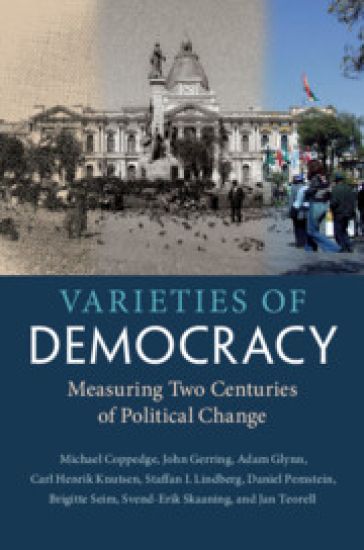
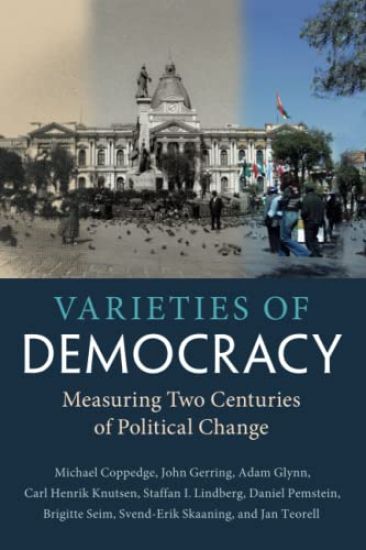
Varieties of Democracy is the essential user's guide to The Varieties of Democracy project (V-Dem), one of the most ambitious data collection efforts in comparative politics. This global research collaboration sparked a dramatic change in how we study the nature, causes, and consequences of democracy. This book is ambitious in scope: more than a reference guide, it raises standards for causal inferences in democratization research and introduces new, measurable, concepts of democracy and many political institutions. Varieties of Democracy enables anyone interested in democracy - teachers, students, journalists, activists, researchers and others - to analyze V-Dem data in new and exciting ways. This book creates opportunities for V-Dem data to be used in education, research, news analysis, advocacy, policy work, and elsewhere. V-Dem is rapidly becoming the preferred source for democracy data.
David G. Anderson; Derek T. Anderson; Katherine McMillan Barry; Kara Bridgman Sweeney; Samuel O. Brookes; Adam M. Burke; Stephen B. Carmody; Philip J. Carr; William A. Childress; I. Randolph Daniel; Ryan Duggins; Grayal E. Farr; Michael K. Faught; Brendan Fenerty; Jay D. Franklin; Lauren M. Franklin; J. Christopher Gillam; Joseph A. M. Gingerich; Jessi J. Halligan; Kandace D. Hollenbach; Vance T. Holliday; Thomas A. Jennings; K. C. Jones; Shawn A. Joy; Jerald Ledbetter; Greg J. Maggard; Steven M. Meredith; D. Shane Miller
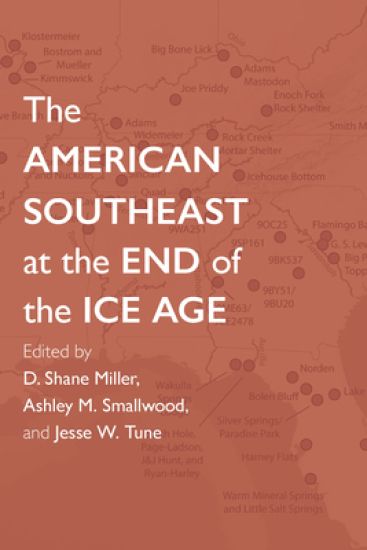
The definitive book on what is known about the Late Pleistocene and Early Holocene archaeological record in the Southeast The 1996 benchmark volume The Paleoindian and Early Archaic Southeast, edited by David G. Anderson and Kenneth E. Sassaman, was the first study to summarize what was known of the peoples who lived in the Southeast when ice sheets covered the northern part of the continent and mammals such as mammoths, saber-toothed cats, and ground sloths roamed the landscape.The American Southeast at the End of the Ice Age provides an updated, definitive synthesis of current archaeological research gleaned from an array of experts in the region. It is organized in three parts: state records, the regional perspective, and reflections and future directions. Chapters survey a diversity of topics including the distribution of the earliest archaeological sites in the region, chipped-stone tool technology, the expanding role of submerged archaeology, hunter-gatherer lifeways, past climate changes and the extinction of megafauna on the transitional landscape, and evidence of demographic changes at the end of the Ice Age. Discussion of the ethical responsibilities regarding the use of private collections and the relationship of archaeologists and the avocational community, insight from outside the Southeast, and considerations for future research round out the volume.
Searching for happiness in our modern world of stress and struggle is common; finding it is more unusual. This guide explores and explains how to find joy through a time-honored, creative--and surprisingly practical--approach based on Kabbalah and the teachings of Jewish mystics.The very core of the Jewish mystical tradition is centered on the belief that if our focus is spiritual, then true appreciation of our lives, and true joy, are possible. Step by step, Finding Joy describes the basis of happiness in the context of Jewish mystical tradition and shows, in an easy-to-understand way, how we can use its concept of the 10 divine "rays of light," the Sefirot, to remedy the everyday unhappiness in our lives.Clear, creative, personal and down-to-earth, Finding Joy introduces the ancient insights of the Jewish mystics, and offers practical week-by-week exercises for the soul which bring them into our daily routines. Finding Joy is not an instant cure for modern life's burdens. Instead, it's a guide to a time-honored method for thinking and living ... and finding real joy.
On Dragonfly Wings - a Skeptic's Journey to Mediumship, is a candid and personal search for the meaning of life, of death and of grief. It aims to give hope to those who have lost a loved one and to those who are about to pass beyond - hope that this is not an end. Written for lay people, rather than experienced spiritualists or mediums, and for anyone who is curious about exploring further, it provides practical tools to help readers find their own spiritual truth and path.
In Collecting Feathers, Daniela I. Norris blends pitch-perfect storytelling and a keen spiritual awareness to bring us a beautiful and haunting set of tales from the beyond. A feast for the heart, mind and soul, each story is layered with unfolding intrigue, and each one will stay with you long after the pages have been turned.
Premonitions hints at past lives and common experiences, as it draws subtle connections between people on their personal quests for adventure, love and family. Amelia Rothman, a foreign-rights editor from New York, has a turbulent personal life. Adele Durand, a young French woman, marries the wrong man in 18th century revolutionary France. What do these two women have in common? Is it possible that an apprentice medicine-man in 15th century Africa and an ancient sword hold the answers to a question which transcends time itself? Premonitions in the second book in the Recognitions trilogy.
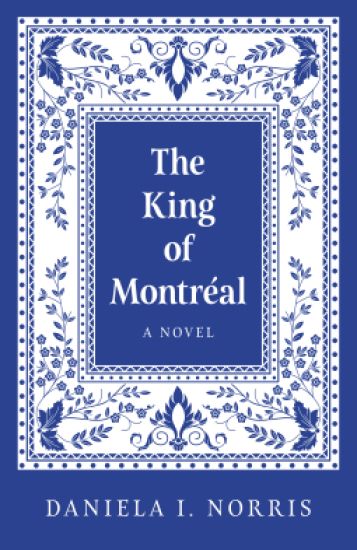
The year is 1800 when LouisCharles, only fifteen years old, arrives in Montr?al. Known to everyone as Charles, he has escaped France aboard the illfated packet ship Freedom. Rescued by Basque fishermen, Charles is taken to the port of Montr?al and left there to fend for himself as he bears the heavy secret of his true identity. A story of adventure, resilience, and historical mystery, The King of Montr?al?takes place in one of North America?s most beautiful cities.
With the exciting sport of fencing steadily becoming more mainstream in the UK, US and around the world, parents are spending thousands each year to help and encourage their children to train and excel in this unique Olympic sport. Fencing can be a mysterious world to the uninitiated, and parents and young fencers will have many questions about the sport, the fencer’s potential and the dos and don’ts. From Last to First aims to answer all these questions and many more. Written by a team comprising Jon Salfield, a leading Youth Development and High Performance coach (London Olympics 2012), and Daniela I. Norris, an experienced author and fencing-parent of an international youth fencer, with input from Strength and Conditioning and Psychology experts, and a foreword from a multiple champion and highly-regarded author, it is meant for anyone who wants to know how to support their young fencer from the start of their fencing adventure, all the way through to success at international competitions.