Infrastructure development and maintenance is vital for a country's economy but the delivery of projects is becoming ever more challenging because of the economic and legislative environment. This book provides a comprehensive overview of the management of infrastructure projects, from project appraisal to supply chain to implementing practices. The authors incorporate contemporary approaches to project management and provide more linkage between techniques, risk, agile approaches and integrated supply chains, making this a comprehensive reference for students on infrastructure focussed project management modules at undergraduate and postgraduate level.
This book is intended to guide practicing structural engineers familiar with ear lier ACI building codes into more profitable routine designs with the ACI 1995 Building Code (ACI 318-95). Each new ACI Building Code expresses the latest knowledge of reinforced concrete in legal language for safe design application. Beginning in 1956 with the introduction of ultimate strength design, each new code offered better uti lization of high-strength reinforcement and the compressive strength of the con crete itself. Each new code thus permitted more economy as to construction material, but achieved it through more detailed and complicated design calcula tions. In addition to competition requiring independent structural engineers to follow the latest code for economy, it created a professional obligation to fol low the latest code for accepted levels of structural safety. The increasing complexity of codes has encouraged the use of computers for design and has stimulated the development of computer-based handbooks. Before computer software can be successfully used in the structural design of buildings, preliminary sizes of structural elements must be established from handbook tables, estimates, or experienced first guesses for input into the com puter.
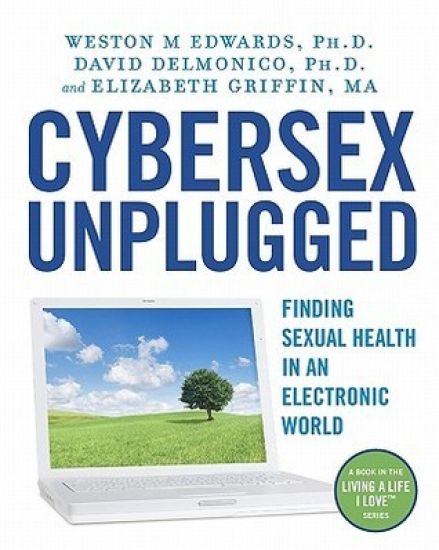
How do you know if you have a cybersex problem? What do you do about it if you do? Maybe someone you care about is struggling with cybersex. This workbook builds on our experience in sexual compulsivity to focus on the nuances of Internet sexual compulsivity. We break down the complex elements of treating cybersex problems into the basic elements for the individual to address. We also highlight issues unique to cybersex including topics such as: psychology of the Internet, cybersex user categories, and understanding, assessing, and managing your Internet use. The three of us represent over 50 years of clinical and research work.One way to help determine if a behavior is problematic is to take a self administered screening test. The Internet Sex Screening Test (included in the workbook) has been taken by thousands of individuals and can be used to help gauge how problematic your online sexual behavior may be.People who exhibit problematic sexual behavior on the Internet tend to fall into one of the three groups: Discovery Group: those who have no previous problem with online sex or any history of problematic sexual behavior.Predisposed Group: those who have had their first out-of-control sexual behavior on the Internet while obsessing over unacted-on sexual fantasies and urges.Lifelong Sexually Compulsive Group: those whose out-of-control sexual behavior on the Internet is part of an ongoing and severe sexual behavior problem.Through this book, you will have opportunities to examine your online sexual behaviors and assess the level of compulsiveness, address related treatment issues to your cybersex behaviors, and develop plans to find sexual health in an electronic world.We hope you find this workbook useful as you strive to find sexual health in an electronic world. One of the major goals of this workbook is to assist you in clarifying healthy sexual behavior, both offline and online. We believe that in order to be healthy online, sexually or otherwise, you must develop healthy sexuality offline as well
For twenty years, Ancient Paths has sought to publish quality literature on subtle Christian themes. This installment features the work of three promising poets (Nicholas Samaras, Paul David Adkins, and Carol A. Oberg) and two arresting authors (Mark McKenna and Edoardo Albert). Join in this sometimes sweet, sometimes sad, but always surprising journey of faith.
Authored by a team of experts, the new edition of this bestseller presents practical techniques for managing inventory and production throughout supply chains. It covers the current context of inventory and production management, replenishment systems for managing individual inventories within a firm, managing inventory in multiple locations and firms, and production management. The book presents sophisticated concepts and solutions with an eye towards today’s economy of global demand, cost-saving, and rapid cycles. It explains how to decrease working capital and how to deal with coordinating chains across boundaries.
Selected as a Doody’s Essential Title for 2025! For more than 30 years, Perez and Brady's Principles and Practice of Radiation Oncology has been the must-have standard reference for radiation oncologists and radiation oncology residents who need a comprehensive text covering both the biological and physical science aspects of this complex field as well as disease site-specific information on the integrated, multidisciplinary management of patients with cancer. The book has established itself as the discipline’s "text-of-record," belonging on the shelf of all of those working in the field. The Seventh Edition continues this tradition of excellence with extensive updates throughout, many new chapters, and more than 1,400 full-color illustrations that highlight key concepts in tumor pathogenesis, diagnosis, and targeted radiation therapy. Comprehensive coverage of the current state of knowledge of cancer biology; medical radiation physics; clinical radiation oncology; and radiation oncology economics, ethics, and public policy. Regular, twice-yearly content updates available with the digital version of the text. Ideal for radiation oncologists, radiation oncology residents, radiation biologists, medical radiation physicists, oncologists, physicists-in-training, radiation dosimetrists, and nurses and physician assistants working in radiation oncology departments. New chapters include: Proton and Carbon Ion Beam Dosimetry and Treatment Planning; Stereotactic Radiation Therapy; Re-Irradiation; Error Avoidance; Undergraduate, Graduate, and Continuing Medical Education in Radiation Oncology; and a completely rewritten chapter on the economics of radiation oncology. Designed to provide a better understanding of the natural history of cancer, the physical and technological methods of radiation application, the effects of irradiation on normal tissues, and the most judicious ways in which radiation therapy can be employed in the treatment of patients with cancer, either as a single modality or as part of a multi-modality treatment program. All references printed in the book are now streamlined for quick access to further information. Site-specific chapters include relevant background information on each tumor—including epidemiology, pathology, diagnostic work-up, prognostic factors, treatment techniques, applications of surgery, chemotherapy, immunotherapy and biological therapy, end results, and more. Increased focus on new approaches and technologies with new and updated chapters. Greater emphasis on palliative and supportive care reflects the role of radiation treatment in non-curative roles. An international group of expert chapter authors keeps you well-informed. A completely revised first chapter is designed to provide an overview of the discipline of radiation oncology. This will be particularly useful for residents beginning training and medical students beginning a radiation oncology clinical clerkship. The chapter is supplemented with multiple sidebars to augment the reader's understanding of the field. Enhance Your eBook Reading Experience: Read directly on your preferred device(s), such as computer, tablet, or smartphone. Easily convert to audiobook, powering your content with natural language text-to-speech.
Electromagnetic Boundary Problems introduces the formulation and solution of Maxwell’s equations describing electromagnetism. Based on a one-semester graduate-level course taught by the authors, the text covers material parameters, equivalence principles, field and source (stream) potentials, and uniqueness, as well as:Provides analytical solutions of waves in regions with planar, cylindrical, spherical, and wedge boundariesExplores the formulation of integral equations and their analytical solutions in some simple casesDiscusses approximation techniques for problems without exact analytical solutionsPresents a general proof that no classical electromagnetic field can travel faster than the speed of lightFeatures end-of-chapter problems that increase comprehension of key concepts and fuel additional researchElectromagnetic Boundary Problems uses generalized functions consistently to treat problems that would otherwise be more difficult, such as jump conditions, motion of wavefronts, and reflection from a moving conductor. The book offers valuable insight into how and why various formulation and solution methods do and do not work.
In this collection, no fewer than 30 of Edward S. Herman and David Peterson's essays in the critique of the "Art of Deceit" spanning a period of close to 20 years have been published together in one volume for the first time. They bring impressive levels of skepticism and scholarship to bear on the often hidden-in plain-sight systems of false belief (or ideologies) that rule both intellectual and popular culture. They cover the real as opposed to the ideological uses of the word 'terrorism'; the long-term U.S. and media misrepresentations of the Islamic Republic of Iran and Honduras, the former Yugoslavia, and Rwanda; the warmongering work of the late writer Christopher Hitchens, as well as the multiple systematic falsehoods of the "New Humanitarians," who shared a penchant for advocating War in the name of Peace and Human Rights. As long-time Herman collaborator Noam Chomsky remarked, the result constitutes "A real triumph." This collection demands to be read and studied closely and carefully. "This collection of essays and articles by Edward S. Herman and David Peterson is some of the finest media analysis I have ever read. Herman is mandatory reading for anyone serious about news media analysis, and in Peterson he has a worthy collaborator. This book is also a compendium of the great global political struggles of the past three decades. For media critics and political observers alike, this is a book worth reading and keeping around as an invaluable reference book. It is Herman and Peterson at their best." - ROBERT W. McCHESNEY, Gutgsell Endowed Professor, Department of Communications, University of Illinois at Urbana-Champaign "As humanity owes Hannah Arendt for the courage of her pen, so we owe Edward Herman for a lifetime's revelations of the banality of evil in our midst. This extraordinary collection with David Peterson is a truth teller's guide." - JOHN PILGER, journalist, war correspondent, film-maker and author of Freedom Next Time: Resisting the Empire "A forensic demolition of the corporate media which is saturated with propaganda serving elite and oppressive state-corporate interests that are now actually threatening human survival in an age of climate chaos. This is a truly indispensable book." - DAVID CROMWELL, Co-Editor, Media Lens "The greatest political writing partnership since Herman and Chomsky, Herman and Peterson are a crucial antidote to the extremist corporate media system sometimes described as 'mainstream'. At close to 900 pages, Like A Cuttlefish Spurting Out Ink, is a treasure trove of razor-sharp but ultimately compassionate analysis derailing the deceptions that keep the West's Perpetual War machine on track and killing with impunity. Don't miss it."- DAVID EDWARDS, Co-Editor, Media Lens Edward S. Herman (1925-2017) was professor of finance at the Wharton School, University of Pennsylvania, and wrote extensively on economics, political economy, and the media. Among his books were Corporate Control, Corporate Power (Cambridge University Press, 1981), The Real Terror Network (South End Press, 1982), and, with Noam Chomsky, the two-volume The Political Economy of Human Rights (South End Press, 1979; Haymarket Books, 2014), and Manufacturing Consent (Pantheon, 2nd. Ed., 2002). David Peterson is an independent journalist and researcher based in Chicago. Together, they were coauthors of The Politics of Genocide (Monthly Review Press, 2nd. Ed., 2011), and Enduring Lies: The Rwandan Genocide in the Propaganda System, 20 Years Later (The Real News Books, 2014).
In this impressive book, Edward S. Herman and David Peterson examine the uses and abuses of the word "genocide." They argue persuasively that the label is highly politicized and that in the United States it is used by the government, journalists, and academics to brand as evil those nations and political movements that in one way or another interfere with the imperial interests of U.S. capitalism. Thus the word "genocide" is seldom applied when the perpetrators are U.S. allies (or even the United States itself), while it is used almost indiscriminately when murders are committed or are alleged to have been committed by enemies of the United States and U.S. business interests. One set of rules applies to cases such as U.S. aggression in Vietnam, Israeli oppression of Palestinians, Indonesian slaughter of so-called communists and the people of East Timor, U.S. bombings in Serbia and Kosovo, the U.S. war of "liberation" in Iraq, and mass murders committed by U.S. allies in Rwanda and the Republic of Congo. Another set applies to cases such as Serbian aggression in Kosovo and Bosnia, killings carried out by U.S. enemies in Rwanda and Darfur, Saddam Hussein, any and all actions by Iran, and a host of others.With its careful and voluminous documentation, close reading of the U.S. media and political and scholarly writing on the subject, and clear and incisive charts, The Politics of Genocide is both a damning condemnation and stunning expose of a deeply rooted and effective system of propaganda aimed at deceiving the population while promoting the expansion of a cruel and heartless imperial system.
A landmark collected edition of the Pulitzer Prize-winning author and world-renowned biologist, illuminating the marvels of biodiversity in a time of climate crisis and mass extinction. Library of America presents three environmental classics from two-time Pulitzer Prize-winner E. O. Wilson, a masterful writer-scientist whose graceful prose is equal to his groundbreaking discoveries. These books illuminate the evolution and complex beauty of our imperiled ecosystems and the flora, fauna, and civilization they sustain, even as they reveal the personal evolution of one of the greatest scientific minds of our age. Here are the lyrical, thought-provoking essays of Biophilia, a field biologist's reflections on the manifold meanings of wilderness. Here too is his magisterial, dazzlingly informative Diversity of Life a sweeping tour of global biodiversity and a prophetic call to preserve the planet, filled on every page with little-known creatures, unique habitats, and fascinating ecological detail. Also included is Wilson's moving autobiography, Naturalist. Following him from his outdoor boyhood in Alabama and the Florida panhandle to the rainforests of Surinam and New Guinea--from his first discoveries as a young ant specialist to his emergence as a champion of conservation and rewilding--it rounds out a collection that will inspire wonder, curiosity, and love for a natural world now rapidly disappearing. Thirty-two pages of photographs and numerous illustrations accompany these works, which are introduced by David Quammen, one of America's leading science and nature writers.
Edward W. Said discusses the centrality of popular resistance to his understanding of culture, history, and social change. He reveals his thoughts on the war on terrorism, the war in Afghanistan, and the Israeli-Palestinian conflict, and lays out a compelling vision for a secular, democratic future in the Middle East—and globally. Edward W. Said’s books include Orientalism, The Question of Palestine, Covering Islam, Culture and Imperialism, and The Politics of Dispossession. He has also published a memoir, Out of Place. David Barsamian is the producer of the critically acclaimed program Alternative Radio.
The definitive book on reverse shoulder arthroplasty from leading orthopaedic shoulder surgeons This masterful book from top experts provides clinical insights on reverse shoulder arthroplasty gleaned from hands-on refinement of shoulder replacement techniques. Years of significant biomechanical and clinical research yielded invaluable knowledge that led to important improvements in functional outcome and implant durability. Among these refinements were stronger polyethylene derivatives, better ingrowth technology, and improved connection devices. As the durability and longevity of implant technology increased, younger active patients became suitable candidates for this procedure. In fact, RSA has played a pivotal role in making shoulder arthroplasty the fastest growing implant technology. In the first two sections, the authors take the reader through the history and evolution of RSA, followed by step-by-step surgical techniques for specific injuries and conditions. The next three sections discuss past and recent outcomes, complications, and rehabilitation. The last section covers special considerations including patient specific instrumentation, convertible humeral and glenoid components, and the future potential of stemless humeral technology. Key Features The latest trends in patient-specific components, guide systems, and instrument designThe use of RSA for rotator cuff repair, shoulder arthritis, and acute and complex fracturesIn-depth discussion of techniques to improve deltoid function, avoid impingement, and increase implant longevityClinical pearls on how to recognize and handle complications that occur: instability, infection, scapular notching, component loosening, glenoid and humeral bone loss, and RSA failureHigh quality videos and 300 superb illustrations further delineate techniquesThis book is a practical resource that enables learning complex procedures, putting them into practice, and handling complications should they arise. It is an essential tool for all orthopaedic surgeons who treat shoulder conditions.
Two historians--one American and one British--examine the ways in which rivalries and personality conflicts among Allied commanders adversely affected the D-Day invasion and its aftermath. In anticipation of the 75th anniversary of D-Day comes this fresh perspective on the Normandy invasion -- -the beginning of the end of World War II. The book highlights the conflicting egos, national rivalries, and professional abilities of the principal D-Day commanders who planned and executed the OVERLORD Operation and its aftermath. Two historians, one American and one British, show how lack of cooperation and bad decisions lengthened the war, increased casualties, and allowed the later Soviet domination of Eastern Europe. From their in-depth analysis of past D-Day literature, primary and archival sources, the authors provide insightful answers to the many controversies that have long surrounded the OVERLORD campaign. Among the questions addressed are: What caused the two-month delay for the Allied breakout from the Normandy beachhead. Why did the bulk of the German army escape from the Falaise Pocket? Who stopped Patton's August 1944 advance into Germany? Why did it take so long to open the Port of Antwerp needed for securing the required supplies for the Allied advance into Germany? The evidence presented in this book makes it clear that the problems raised by these questions and many other difficulties could have been avoided if the Allied commanders had been less contentious, a factor that sometimes led to catastrophic battlefield outcomes. Complete with maps that illustrate the campaign's progression and photographs of the commanders and the forbidding battlefield terrain, this new examination of the war in Europe makes a major contribution to our understanding of the decision-making behind these pivotal historic events.
Two historians--one American and one British--examine the ways in which rivalries and personality conflicts among Allied commanders adversely affected the D-Day invasion and its aftermath.In anticipation of the 75th anniversary of D-Day comes this fresh perspective on the Normandy invasion -- -the beginning of the end of World War II. The book highlights the conflicting egos, national rivalries, and professional abilities of the principal D-Day commanders who planned and executed the OVERLORD Operation and its aftermath. Two historians, one American and one British, show how lack of cooperation and bad decisions lengthened the war, increased casualties, and allowed the later Soviet domination of Eastern Europe.From their in-depth analysis of past D-Day literature, primary and archival sources, the authors provide insightful answers to the many controversies that have long surrounded the OVERLORD campaign. Among the questions addressed are: What caused the two-month delay for the Allied breakout from the Normandy beachhead. Why did the bulk of the German army escape from the Falaise Pocket? Who stopped Patton's August 1944 advance into Germany? Why did it take so long to open the Port of Antwerp needed for securing the required supplies for the Allied advance into Germany?The evidence presented in this book makes it clear that the problems raised by these questions and many other difficulties could have been avoided if the Allied commanders had been less contentious, a factor that sometimes led to catastrophic battlefield outcomes. Complete with maps that illustrate the campaign's progression and photographs of the commanders and the forbidding battlefield terrain, this new examination of the war in Europe makes a major contribution to our understanding of the decision-making behind these pivotal historic events.
In 2003, a cadre of researchers set out to determine what combination of supplemental or natural nutrition and white-tailed deer population density would produce the largest antlers on bucks without harming vegetation. They would come to call this combination “the sweet spot.” Over the course of their 15-year experiment, conducted through the Caesar Kleberg Wildlife Research Institute at Texas A&M University–Kingsville, Timothy E. Fulbright, Charles A. DeYoung, David G. Hewitt, Don A. Draeger, and 25 graduate students tracked the effects of deer density and enhanced versus natural nutrition on vegetation conditions. Through wet years and dry, in a semiarid environment with frequent droughts, they observed deer nutrition and food habits and analyzed population dynamics. Containing the results of this landmark, longitudinal study, in keeping with the Kleberg Institute’s mission, this volume provides science-based information for enhancing the conservation and management of Texas wildlife. Advanced White-Tailed Deer Management: The Nutrition–Population Density Sweet Spot presents this critical research for the first time as a reference for hunters, landowners, wildlife managers, and all those who work closely with white-tailed deer populations. It explains the findings of the Comanche-Faith Project and the implications of these findings for white-tailed deer ecology and management throughout the range of the species with the goal of improving management.
"Angel's been kidnapped."When Dane Maddock and Bones Bonebrake receive a disturbing message, the two former Navy SEALs set off in hot pursuit. They soon find themselves ensnared in a deadly game where the unexpected lurks around every corner and nothing is as it seems. With familiar enemies pulling the strings, can they survive the BRAINWASH?Praise for The Dane Maddock Adventures "A great read that provides lots of action, and thoughtful insight as well, into strange realms that are sometimes best left unexplored." Paul Kemprecos, author of Cool Blue Tomb"Dane and Bones.... Together they're unstoppable. Rip-roaring action from start to finish. Wit and humor throughout. Just one question - how soon until the next one? Because I can't wait." Graham Brown, author of Shadows of the Midnight Sun"A non-stop thrill ride triple threat- smart, funny and mysterious " Jeremy Robinson, author of Instinct and Threshold"Ancient cave paintings? Cities of gold? Secret scrolls? Sign me up A twisty tale of adventure and intrigue that never lets up and never lets go " Robert Masello, author of The Medusa Amulet "David Wood has done it again. Quest takes you on an expedition that leads down a trail of adventure and thrills " David L. Golemon, Author of the Event Group series