
Kirjahaku
Etsi kirjoja tekijän nimen, kirjan nimen tai ISBN:n perusteella.
1000 tulosta hakusanalla Debbie Sharp


This book is about a little bear named Brody who goes on a field trip. Brody's teacher has announced they will be going to the beach. Brody has a problem, he does not know how to swim. Brody bear goes on an adventure to learn just how. With the help of his friends Missy, Ronnie and Charlie, Brody bear finally learns how to swim.
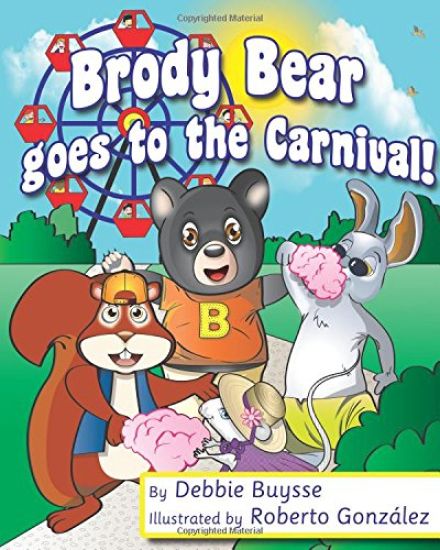
This book is about a little bear named Brody who wants to go to the carnival. The problem is, he has no money. Brody bear needs to find a way to earn twenty dollars so he can go with his friends Missy, Ronnie and Charlie. With the help of his friends, Brody bear learns how to do some life skills and how to solve problems while helping others.


Through the Storm: A Story of Hope, Faith, and Love
Debbie Morgan
Still Standing Publishing
2017
nidottu
Have you ever been through a difficult time in life? Have you ever felt like you were in the middle of a storm with no way out? Have you been so overwhelmed with life's challenges that you didn't know where to turn? Through The Storm is a true story of how a family was faced with a huge storm in life; a fire. Storms in life can overwhelm you physically, but through these trials, it's important to keep your faith in God who can truly help you with the storms in life. Although they faced many trials and had so much tragedy happen in a short period of time, they found hope in God's promises. Material things can be replaced and are not important in life. Your relationship with God and your family are the most important things in life. 1 Timothy says There is no safety in things. It is important to cherish the life God has given you because it can be taken away in the blink of an eye.
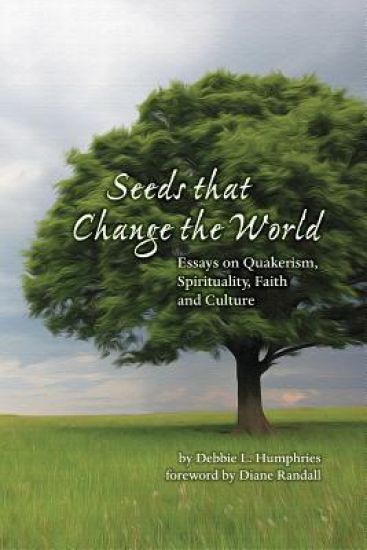
Seeds That Change the World: Essays on Quakerism, Spirituality, Faith and Culture
Debbie L. Humphries
Quakerpress of Fgc
2017
nidottu
The Quaker tradition at its best is a practice-based religious path that embodies the ability to hold paradoxical truths with deep love and a minimum of hierarchy. Each of these three elements is an important capability, that the world as a whole needs today. These capacities are developed through regular exercise of both individual and corporate spiritual practices, that can be taught and strengthened. The ongoing divisions and separations among us speak to our failure to live up to our potential. As stewards of this tradition, we need to better embody the truths of the Quaker tradition.
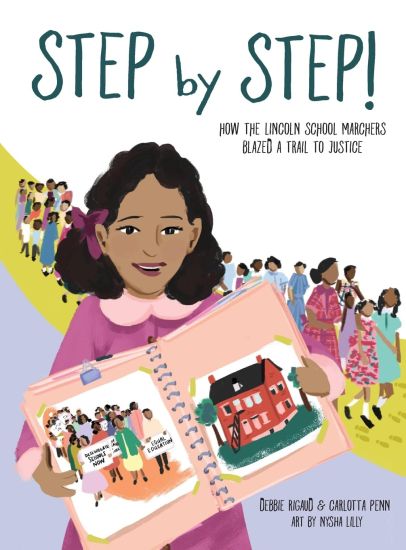
"Imagine you had to walk 600 miles to get fair treatment at school " Twelve-year-old Joyce Clemons introduces a fictional memory book documenting the little-known true story of nineteen Black mothers, thirty-seven children, and their two-year march to integrate an Ohio elementary school. Following the landmark Brown v. Board of Education decision, Black mothers in Hillsboro, OH, attempted to enroll their children at the all-white Webster School. However, the local school board refused the call for integration. Demanding equal education, a group of Black mothers and children marched to and from Webster daily-until Black students were admitted. In Step by Step , New York Times bestselling author Debbie Rigaud and coauthor Carlotta Penn thoughtfully capture the voice of a young activist and emphasize the power of Black mothers' leadership. Nysha Lilly's expressive illustrations, with historical primary sources interspersed throughout, immerse readers in the Lincoln School Marchers' fight. Rigaud and Penn simultaneously convey the challenges the marchers faced with the uplifting joy of a united community, encouraging readers to "keep on marching" for justice. Step by Step is a collaboration between Ohio nonprofit organization Ohio Humanities, Daydreamers Press, and a small group of Lincoln School alumni who resolved to share their story with the world.
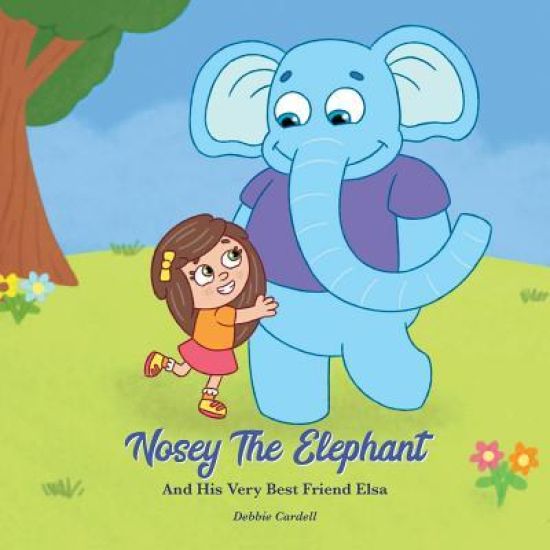
Nosey is an elephant with a very, very, very long trunk that sometimes can get in the way and cause him trouble He was born on a farm and grew up with his best friend, a girl named Elsa. They are such good friends that Nosey decided to take Elsa to school on her very first day. When they arrive at school all of the kids laugh and make fun of them. Later in the day disaster strikes the school and everyone soon finds out that being different can sometimes save the day


Cambridge IGCSE™ and O Level Accounting Workbook with Digital Access (2 Years)
Debbie Malpas; Sharon Puttick
Cambridge University Press
2025
muu
This print and digital workbook provides additional exercises and practice questions to enable students to develop their skills. The activities can be used in class or outside the classroom as homework. It follows the same chapter structure as the coursebook, so you can confidently use it to support your lessons. Activities increase in difficulty to support students as they progress through the course, focusing on key skills such as evaluation and analysis. This workbook supports the Cambridge IGCSE™ , IGCSE (9-1) and O Level Accounting syllabuses (0452/0985/7707) for examination from 2027. Answers to activities are available to teachers via Cambridge GO.

This second edition of Applied Multivariate Statistical Concepts covers the classic and cutting-edge multivariate techniques used in today’s research.Through clear writing and engaging pedagogy and examples using real data, Hahs-Vaughn walks students through the most used methods to learn why and how to apply each technique. A conceptual approach with a higher than usual text-to-formula ratio helps readers master key concepts so they can implement and interpret results generated by today’s sophisticated software. Additional features include examples using real data from the social sciences; templates for writing research questions and results that provide manuscript-ready models; step-by-step instructions on using R and SPSS statistical software with screenshots and annotated output; clear coverage of assumptions, including how to test them and the effects of their violation; and conceptual, computational, and interpretative example problems that mirror the real-world problems students encounter in their studies and careers. This edition features expanded coverage of topics, such as propensity score analysis, path analysis and confirmatory factor analysis, and centering, moderation effects, and power as related to multilevel modelling. New topics are introduced, such as addressing missing data and latent class analysis, while each chapter features an introduction to using R statistical software. This textbook is ideal for courses on multivariate statistics/analysis/design, advanced statistics, and quantitative techniques, as well as for graduate students broadly in social sciences, education, and behavioral sciences. It also appeals to researchers with no training in multivariate methods.
The Autism Resource Manual for Families is a treasure trove of practical, realistic and achievable strategies to support neurodivergent young people and their families with everyday life. Clearly laid out for easy use and access, it explains autism in context and provides ideas that are relevant not just for parents and carers, but for family support workers, social workers and family intervention teams.The resource covers a wide range of situations and offers an array of supports, with key topics ranging from anxiety, behaviour, and communication, to socialising, family life, and moving towards independence. With the lived experiences of parents and autistic children and young people in mind, this empowering manual includes:A wealth of situations from daily life, clearly addressed with examples of how autistic individuals may experience these and practical strategies for effective supportEncouragement for parents and mini mantras for autistic children and young people to use in different situationsStrategies for supporting autistic children in daily family life, including working with siblings, family holidays and eating outAdvice for helping autistic young people through school, including attendance, homework and after-school exhaustionGuidance on initiating and carrying out productive conversations, as well as downloadable resources for visual conversation support.This book will be an essential tool for parents and carers of neurodivergent children and young people, as well as family or parent support workers and family intervention teams. It will also be valuable reading for pastoral teams, CAMHS, and social workers supporting these families.
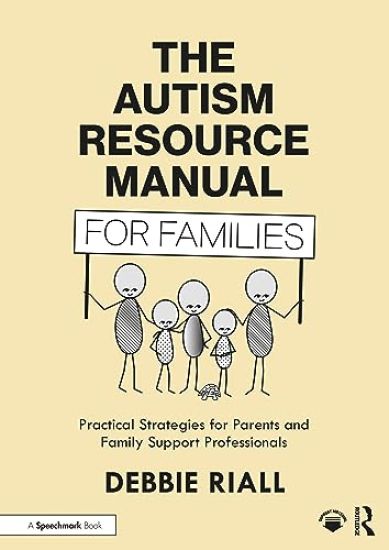
The Autism Resource Manual for Families is a treasure trove of practical, realistic and achievable strategies to support neurodivergent young people and their families with everyday life. Clearly laid out for easy use and access, it explains autism in context and provides ideas that are relevant not just for parents and carers, but for family support workers, social workers and family intervention teams.The resource covers a wide range of situations and offers an array of supports, with key topics ranging from anxiety, behaviour, and communication, to socialising, family life, and moving towards independence. With the lived experiences of parents and autistic children and young people in mind, this empowering manual includes:A wealth of situations from daily life, clearly addressed with examples of how autistic individuals may experience these and practical strategies for effective supportEncouragement for parents and mini mantras for autistic children and young people to use in different situationsStrategies for supporting autistic children in daily family life, including working with siblings, family holidays and eating outAdvice for helping autistic young people through school, including attendance, homework and after-school exhaustionGuidance on initiating and carrying out productive conversations, as well as downloadable resources for visual conversation support.This book will be an essential tool for parents and carers of neurodivergent children and young people, as well as family or parent support workers and family intervention teams. It will also be valuable reading for pastoral teams, CAMHS, and social workers supporting these families.
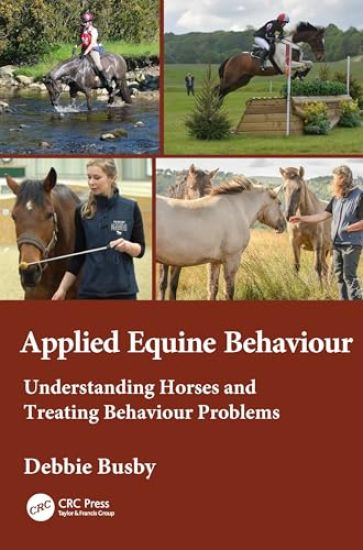
Combining an in-depth exploration of equine behaviour with clinical practice from a new progressive perspective, Equine Behaviour in Practice: Understanding Horses and Treating Behaviour Problems focuses not just on the horse’s behaviour but also on the behaviour of the human interacting with the horse. Acclaimed Clinical Equine Behaviourist Debbie Busby delivers evidence-based knowledge that will equip readers with the understanding and skills to become effective equine behaviour consultants. Supported by considered discussion of how and why horses sometimes struggle to cope, the book comprehensively explains how to consult on and treat a range of equine behaviour problems. Rather than providing a formulaic "here’s the problem; here’s how to fix it", Busby encourages readers to develop a critical biopsychosocial evaluation based on an understanding of how horses evolved, their ethological and physiological adaptations, how they learn, and how their welfare and wellbeing can be assessed. KEY FEATURES:Part 1 explains theories of equine evolution and the thin veneer of domesticationPart 2 describes psychological and physiological theories of how horses learn, and how this can be applied in training and behaviour modificationPart 3 illustrates this with reference to relevant legislation and widely used animal welfare models, as well as assessments of abnormal and stereotypic behaviour and practical aspects of measuring welfarePart 4 turns to the theory and practice of behaviour consulting, in three chapters divided into elements of behavioural assessment and treatment planningPart 5 examines the use of psychopharmaceuticals in behaviour therapy, discussing the roles of the behaviour consultant and the referring veterinary surgeonBridging the gap between science and practice, this book is a must-read for equine behaviour and veterinary students, equine behaviour consultants and practitioners, horse trainers, interested leisure riders and competition riders. It will empower equine professionals to combine behavioural and welfare knowledge with counselling and coaching skills to support horse owners in a mutual flourishing, enriching the lives of both species.
Combining an in-depth exploration of equine behaviour with clinical practice from a new progressive perspective, Equine Behaviour in Practice: Understanding Horses and Treating Behaviour Problems focuses not just on the horse’s behaviour but also on the behaviour of the human interacting with the horse. Acclaimed Clinical Equine Behaviourist Debbie Busby delivers evidence-based knowledge that will equip readers with the understanding and skills to become effective equine behaviour consultants. Supported by considered discussion of how and why horses sometimes struggle to cope, the book comprehensively explains how to consult on and treat a range of equine behaviour problems. Rather than providing a formulaic "here’s the problem; here’s how to fix it", Busby encourages readers to develop a critical biopsychosocial evaluation based on an understanding of how horses evolved, their ethological and physiological adaptations, how they learn, and how their welfare and wellbeing can be assessed. KEY FEATURES:Part 1 explains theories of equine evolution and the thin veneer of domesticationPart 2 describes psychological and physiological theories of how horses learn, and how this can be applied in training and behaviour modificationPart 3 illustrates this with reference to relevant legislation and widely used animal welfare models, as well as assessments of abnormal and stereotypic behaviour and practical aspects of measuring welfarePart 4 turns to the theory and practice of behaviour consulting, in three chapters divided into elements of behavioural assessment and treatment planningPart 5 examines the use of psychopharmaceuticals in behaviour therapy, discussing the roles of the behaviour consultant and the referring veterinary surgeonBridging the gap between science and practice, this book is a must-read for equine behaviour and veterinary students, equine behaviour consultants and practitioners, horse trainers, interested leisure riders and competition riders. It will empower equine professionals to combine behavioural and welfare knowledge with counselling and coaching skills to support horse owners in a mutual flourishing, enriching the lives of both species.